
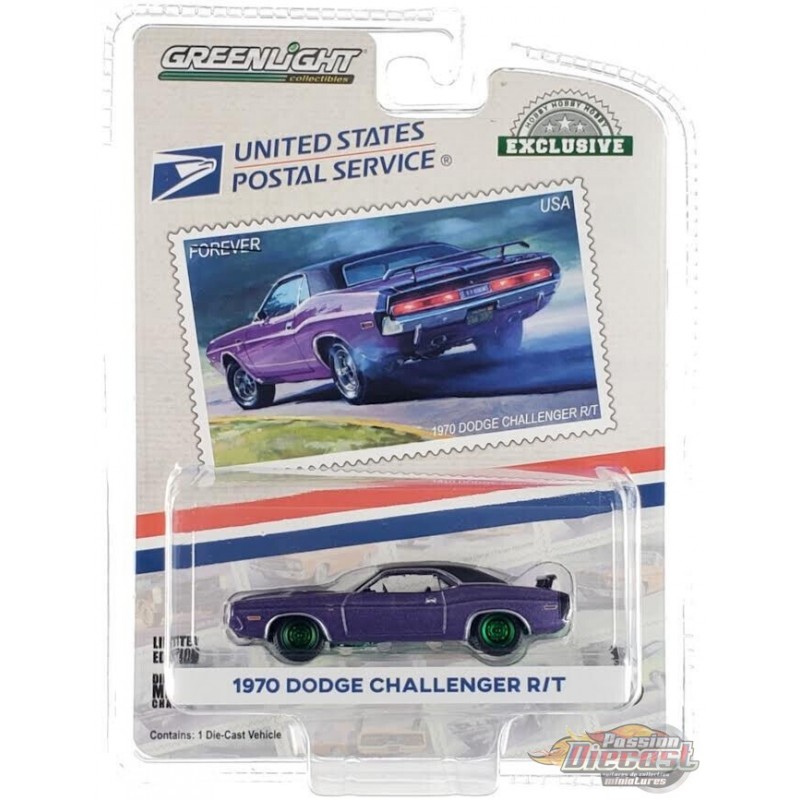
The 1970 Dodge Challenger emerged as Dodge’s compelling answer to the iconic Ford Mustang and Chevrolet Camaro, entering the pony car arena in the fall of 1969. This debut coincided with Plymouth’s release of a redesigned Barracuda. While sharing a familial resemblance, the Barracuda featured a two-inch shorter wheelbase and distinct E-Body panels, with only the windshield being common. In contrast, the Dodge Charger, a veteran since 1966, occupied a different segment, targeting the mid-size market akin to the Plymouth Satellite/GTX/Roadrunner.
The development of the Challenger and its ‘Cuda sibling proved both a late and costly endeavor. The automotive landscape was shifting, with insurance constrictions, corporate horsepower limitations, and the looming specter of federal emissions regulations casting a shadow over the pony car segment. Consequently, the Challenger’s era of prominence was destined to be relatively brief.
Launched with a 110-inch wheelbase, the Challenger was conceived to compete with established models like the Mercury Cougar and Pontiac Firebird. Despite initial aspirations of selling 200,000 units annually, 1970 marked the model’s peak performance, with 83,032 units sold.
The Challenger lineup comprised 53,337 hardtops, starting at $2,851. A more luxurious Special Edition (SE) hardtop variant was available for $3,083, alongside 3,173 convertibles priced at $3,120. The performance-oriented R/T model offered 14,889 hardtops (from $3,266) and 1,070 convertibles ($3,535). The SE R/T hardtop found 3,979 buyers at $3,498. The SE package distinguished itself with a vinyl roof, a distinctive Imperial-style rear window, leather interior accents, and a host of luxury appointments. A third distinct model was the T/A, engineered in the spirit of the popular Trans Am racing series. This variant featured Dodge’s 340 cubic-inch V-8 engine, de-stroked to meet the 305 cubic-inch limit, and equipped with three two-barrel carburetors, a four-main bearing setup, and offset valves. The aggressively styled T/A, adorned with distinctive striping, attracted 2,400 buyers, with prices starting at $4,096.
Powertrain Options and Performance
The Challenger offered a diverse range of eight engines, spanning from the economical slant-six to the formidable 425 bhp 426 cid Hemi V-8. The intricate details of engine and transmission combinations were meticulously documented. Optional engines included the 290 bhp 383 cid V-8, the 350 bhp 383 cid Magnum, the 350 bhp 440 cid Magnum, the 375 bhp 440 cid Magnum, the 390 bhp 440 Magnum Six Pack, and the king of the hill, the 425 bhp 426 cid Hemi V-8. Transmission choices consisted of a standard 3-speed manual, an optional 4-speed manual, and a 3-speed automatic transmission.
R/T and Optional Features
The R/T model came standard with the 383 cid V-8 engine, a Rallye instrument panel, a Rallye suspension with a sway bar, and heavy-duty drum brakes. Convenience options were plentiful, including power steering, power brakes, air conditioning, and an AM/FM radio. Exterior styling could be personalized with longitudinal stripes or a rear bumble bee stripe. Hood designs ranged from a smooth appearance to dummy intakes, a cold-air intake, and the iconic shaker-style hood. Gearshift levers offered variety, from column-mounted options to pistol-grip 4-speeds and the “slap-stick” console automatics.
A Spectrum of Color
Dodge provided an extensive palette of 22 paint colors for the Challenger, with 10 designated as “high impact” shades. The standard colors included Silver (A1), Light Blue (B3), Bright Blue (B5), Dark Blue (B7), Bright Red (E5), Light Green (F3), Dark Green (F8), Dark Burnt Orange (K5), Beige (L1), Dark Tan (T6), Light Gold (Y4), White (Y1), and Black (X9). The eye-catching high-impact colors were SubLime (J5), Go Mango (K2), Hemi Orange (V2), Plum Crazy (C7), Top Banana (Y1), Bright Green (F6), and Citron Yellow (Y3). Two additional colors were introduced later in the model year: Green Go (J6) and Panther Pink (M3). Interior color options featured vinyl, leather, and combinations of cloth. A split bench seat was exclusively available on the base model.
Performance figures, naturally, varied based on equipment and the testing publication, but the results were undeniably impressive. The 340 Six Pack version could achieve 0-60 mph in seven seconds and cover the quarter-mile in 15.2 seconds. The R/T 440 Six Pack model demonstrated its prowess with a 0-60 mph time of 6.2 seconds and a quarter-mile run of 13.7 seconds at 105 mph. The legendary 426 Hemi delivered a blistering 0-60 mph in 6.3 seconds and a quarter-mile in 13.1 seconds at 107.1 mph.
The 1970 Dodge Challenger stands as a testament to American muscle car engineering, offering a potent blend of performance, style, and customization that continues to captivate enthusiasts today. Its brief but brilliant run cemented its status as a desirable classic, representing a golden era of automotive design and power.
What are your thoughts on the 1970 Dodge Challenger and its place in muscle car history? Share your opinions in the comments below!