
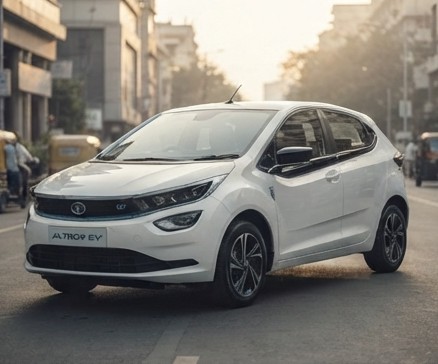
The estimated ex-showroom price of the Tata Altroz EV is expected to range between ₹12.00 lakh and ₹15.00 lakh in India. It is built on the ALFA architecture, powered by Ziptron technology, and targets an ARAI-claimed driving range of over 300 km per charge with a launch window anticipated around January 2027.
If you’re trying to decide whether to reserve a Tata Altroz EV or wait for a rival electric hatchback, the two numbers that actually matter are the expected price band and the real on-road cost in your city — both shift once RTO, insurance, and financing enter the picture. This guide walks through the expected price range, battery and range figures, city-wise on-road cost estimates, EMI math, charging times, and how the Altroz EV stacks up against the Citroen e-C3 and Tata Nexon EV, so you can size a budget and compare value before putting down a booking amount.
The Tata Altroz EV is expected to carry an ex-showroom price between ₹12.00 lakh and ₹15.00 lakh in India, positioning it below the Nexon EV and roughly alongside the Citroen e-C3. Reported specifications point to a lithium-ion battery pack in the 26 kWh to 30.2 kWh range, an ARAI-claimed driving range estimated between 306 km and over 400 km depending on variant, and a launch window expected around January 2027. Every figure here is unofficial until Tata Motors confirms pricing and specifications closer to launch, so treat these as planning numbers rather than a quote.
Tata Altroz EV Overview and Expected Launch Timeline
Tata Motors has positioned the Altroz EV as the electric counterpart to its long-running premium hatchback, built on the agile light flexible advanced (ALFA) architecture that already underpins the petrol and diesel Altroz. The expected launch date of January 2027 would slot it into Tata’s electric portfolio between the Tiago EV at the entry end and the Nexon EV and Curvv EV further up. The car is reported to come in White, Red, and Black colour options, and a seating capacity of five with an automatic transmission is expected to carry over from the broader Altroz range.
What makes the Altroz EV worth tracking is less the badge and more the pricing gap it’s aimed at. Most electric hatchbacks sold in India today either sit close to ₹8-9 lakh with compromised range, or jump past ₹14 lakh into small-SUV territory. An expected starting price near ₹12 lakh with a 300+ km range would put the Altroz EV in a narrow band that current options don’t cleanly fill.
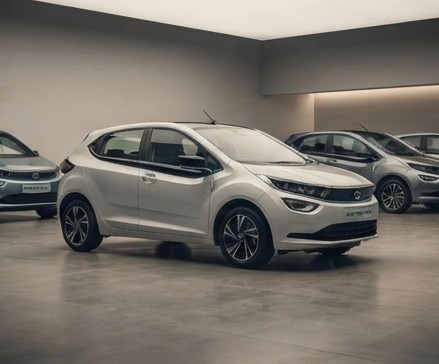
The target buyer here is someone cross-shopping a second car for daily commuting — city driving, predictable charging at home or work, and a familiar hatchback footprint rather than an SUV. If that’s your use case, the specification and cost sections below are where the real decision-making happens, not the launch date itself.
Battery Capacity, Motor Output, and Driving Range
The Altroz EV runs on Tata’s Ziptron powertrain, the same electric drivetrain platform used across the Tiago EV, Nexon EV, and Curvv EV, adapted here to the smaller ALFA-based hatchback body. Before getting into the powertrain details, it helps to see how the reported battery and range figures compare against Tata’s own larger EV for reference.
Variant Comparison Table
| Variant | Battery Capacity (kWh) | Motor Power (est.) | ARAI Range (est.) |
|---|---|---|---|
| Standard Range variant | 26 kWh (estimated) | ~95-100 bhp Ziptron PMSM motor (estimated) | 300+ km per charge, ARAI cycle (estimated) |
| Long Range variant | 30.2 kWh (estimated) | ~95-100 bhp Ziptron PMSM motor (estimated) | 400+ km per charge, ARAI cycle (estimated) |
| Tata Nexon EV (for reference) | 40.5 kWh (as launched) | 127 bhp (as launched) | 489 km per charge, ARAI (as launched) |
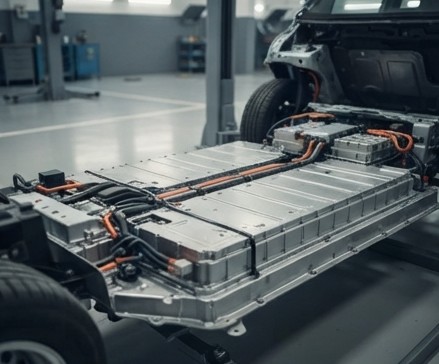
The gap between the Altroz EV’s estimated range and the Nexon EV’s launched figure isn’t a flaw — it reflects a smaller, lighter battery pack tuned for a hatchback that’s meant for shorter daily loops rather than long highway runs. A 306 km ARAI figure on the base pack typically translates to something closer to 220-250 km in mixed city and highway use once air-conditioning, passenger load, and stop-start traffic are factored in; that gap between claimed and real-world range is standard across ARAI-cycle EVs, not specific to this model.
Ziptron Powertrain and Performance
Ziptron uses a permanent magnet synchronous motor (PMSM), the same motor family Tata has run since the original Nexon EV, chosen for its efficiency at low and mid speeds where city driving happens most of the time. Multi-level regenerative braking is expected to carry over from other Ziptron models, letting the driver adjust how aggressively the car recovers energy on lift-off — a setting worth checking on a test drive, since a regen level set too aggressive can feel like engine braking to drivers used to a manual petrol car.
One detail intermediate buyers often overlook: motor output on paper doesn’t map directly to daily driveability. A 95-100 bhp estimate (unconfirmed) is adequate for city merges and highway overtakes in a car this size, but the more relevant number for a hatchback bought as a daily driver is torque delivery at low RPM, since that determines how the car feels pulling away from a signal — a spec Tata has not yet disclosed for this model.

Battery Safety and Thermal Management
Tata’s Ziptron battery packs across the existing lineup carry an IP67 dust and water resistance rating, and liquid cooling for thermal management rather than passive air cooling — both are reasonable expectations to carry over to the Altroz EV, since Tata has kept this baseline consistent across the Tiago EV, Nexon EV, and Curvv EV. A liquid-cooled pack matters in Indian summer conditions specifically because sustained high ambient temperature is one of the more common triggers for DC fast-charging speed to throttle down mid-session — if you notice charging speed drop noticeably after the first 10-15 minutes on a hot afternoon, that’s the battery management system protecting the cells, not a charger fault.
On crash safety, Global NCAP has not yet rated the Altroz EV, and no official test date has been announced. The ALFA platform’s ICE variants have previously scored well in NCAP testing, which is a reasonable signal of structural intent, but a battery-equipped variant with different weight distribution and added underbody protection needs its own independent rating before that can be treated as confirmed rather than assumed.
On-Road Price Breakdown and Estimated EMI Options
Every figure in this section is an estimate, not a quoted price — the Altroz EV has not been officially launched, and Tata has not published city-wise pricing, so the numbers below are extrapolated from the reported ex-showroom range and typical RTO and insurance patterns for this price segment.
City-Wise Price Estimates
| City | Ex-Showroom Price (est.) | RTO + Insurance (est.) | On-Road Price (est.) | Estimated Monthly EMI |
|---|---|---|---|---|
| Delhi | ₹12.5 lakh (estimated) | ₹1.1 lakh (estimated) | ₹13.6 lakh (estimated) | ₹22,800/month (estimated, 5-year loan) |
| Mumbai | ₹12.5 lakh (estimated) | ₹1.4 lakh (estimated) | ₹13.9 lakh (estimated) | ₹23,300/month (estimated, 5-year loan) |
| Bangalore | ₹12.5 lakh (estimated) | ₹1.3 lakh (estimated) | ₹13.8 lakh (estimated) | ₹23,100/month (estimated, 5-year loan) |
| Chennai | ₹12.5 lakh (estimated) | ₹1.2 lakh (estimated) | ₹13.7 lakh (estimated) | ₹22,900/month (estimated, 5-year loan) |

For context, one source of actual pricing that already exists is the ICE Altroz’s Bangalore on-road figures, which give a sense of how ex-showroom price translates to final cost in that city: a base variant with an ex-showroom price of ₹10.00 lakh carries roughly ₹38.20K in insurance and ₹4.00K in RTO charges, while the top variant’s ₹13.00 lakh ex-showroom price includes ₹41.40K insurance and lands at a ₹13.61 lakh on-road total. The Altroz EV’s insurance load is likely to run higher than these petrol figures, since EV comprehensive premiums typically price in battery replacement cost, which is the single largest line item in an EV insurance claim.
That insurance gap is worth double-checking with your insurer before you finalize a budget — it’s the line most buyers underestimate.
The EMI figures above follow a standard reducing-balance loan formula, shown below so you can recalculate for your own down payment and interest rate rather than taking the table at face value.
EMI = [P × r × (1+r)^n] / [(1+r)^n − 1], where loan amount P = 80% of on-road price, r = monthly interest rate, and n = loan tenure in months.
- P (Principal): the loan amount, assumed here as 80% of the vehicle’s on-road price, i.e. a 20% down payment.
- r (Monthly rate): derived from an assumed annual interest rate of 9% divided by 12.
- n (Tenure): assumed as a 5-year loan, or 60 months.
For an on-road price of ₹13.6 lakh, as in the Delhi estimate, that gives a principal of ₹10.88 lakh, a monthly rate of about 0.75%, and a tenure of 60 months — working through the formula produces an estimated EMI of roughly ₹22,800 per month (estimated; actual EMI depends on lender terms and your credit profile). None of these calculations account for any state EV subsidy or road-tax waiver, since no state government has issued official notification confirming Altroz EV eligibility as of 2026; treat any subsidy claim you see elsewhere with caution until a state transport department confirms it in writing.

Charging Specifications and Official Booking Procedures
Tata Motors has not opened official bookings for the Altroz EV and has not published a confirmed deposit amount or refund policy as of 2026 — anyone claiming to take bookings ahead of an official announcement should be treated as unverified. Industry practice for compact EV launches in India has typically required a token booking amount in the ₹11,000 to ₹21,000 range, refundable before the allotment stage, but that pattern is a general estimate drawn from how Tata and its competitors have handled prior EV launches, not a confirmed figure for this specific model.
Charging time is one area where the reported specifications are more concrete. At home, the vehicle requires an estimated charging time of roughly 8 hours at 230V, which lines up with a standard single-phase AC wallbox setup rather than a public fast charger.
Charging Options Table
| Charger Type | Charging Range | Battery Capacity Covered | Estimated Time |
|---|---|---|---|
| DC Fast Charger | 10% to 80% state of charge | 26-30.2 kWh (estimated) | Approximately 60 minutes (estimated) |
| AC Home Wallbox Charger | 0% to 100% state of charge | 26-30.2 kWh (estimated) | Approximately 7-8 hours (estimated) |
| Standard AC Portable Charger | 0% to 100% state of charge | 26-30.2 kWh (estimated) | Longer than wallbox charging, typically overnight (estimated) |
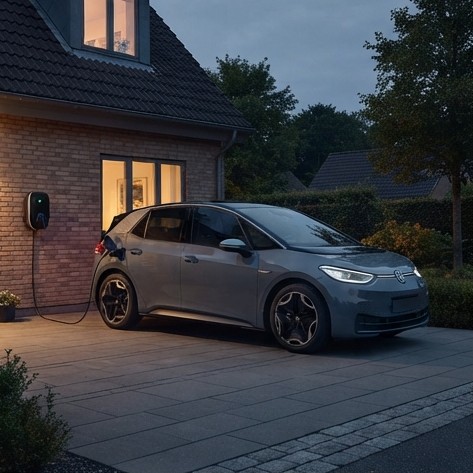
The practical takeaway from that table: if your daily driving stays under 100 km, an overnight AC top-up covers you without ever needing a public DC charger. A home wallbox installation for a car in this battery range typically requires a dedicated circuit and, depending on your existing electrical panel capacity, may need an electrician to run new wiring — budget for that as a separate line item, since it’s rarely bundled into the vehicle’s on-road price and installation cost varies by home.
On battery and drivetrain warranty, Tata has not announced Altroz EV-specific terms. Other Ziptron-based models in the lineup, including the Nexon EV and Tiago EV, have commonly carried battery and motor warranty coverage structured around an 8-year period with a distance cap, which is the industry-standard structure for lithium-ion EV packs in India — a reasonable baseline expectation for the Altroz EV, though it should be confirmed against the actual warranty card at the time of delivery rather than assumed from sibling models.
Cabin Interior, Boot Space, and Platform Impact
Building an EV on a platform designed first for internal combustion, like the ALFA architecture underneath the Altroz, almost always means the battery pack has to be packaged into space that wasn’t originally reserved for it. In most ICE-to-EV conversions of this type, that shows up as a modestly reduced boot capacity compared with the petrol version’s factory-quoted figure, since a slice of underfloor space gets absorbed by the battery pack and its structural mounting — a pattern already visible across other Ziptron models built on shared ICE platforms.
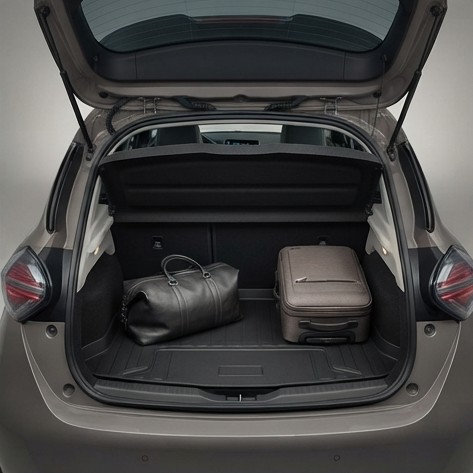
Cabin space for passengers is less affected than boot space in this style of conversion, since the battery pack sits low and under the floor rather than intruding into legroom or headroom. If rear-seat space is a priority, it’s worth sitting in the current petrol Altroz to gauge headroom and knee room, since the EV’s cabin dimensions are expected to closely mirror the ICE variant.
On features, the Accomplished X 55 variant is expected to include a sunroof, suggesting Tata is carrying its higher trim feature set over from the petrol range rather than stripping the EV down to a bare-bones configuration. Expect the usual mid-2020s connected-car features — app-based remote climate pre-conditioning, charge status monitoring, and geofencing alerts — though Tata has not published a confirmed feature list broken down by variant for this model yet.
Direct Rivals and Segment Competitor Comparison
The Altroz EV’s closest rivals in the Indian market are the Tata Nexon EV, Kia Syros EV, Citroen e-C3 X, Tata Tiago EV, and Tata Curvv EV, though not all of them compete on the same terms — some are SUVs at a higher price point, others are smaller hatchbacks below it. Buyers exploring budget-friendly options might also compare these models against luxury cars in india under 10 lakhs or check rival specifications such as mg ev range to understand the broader market.
Rival Comparison Table
| Model | Price Range (est.) | Battery Capacity | ARAI Range (est.) |
|---|---|---|---|
| Tata Altroz EV | ₹12.5-15 lakh (estimated) | 26-30.2 kWh (estimated) | 300-400+ km (estimated) |
| Citroen e-C3 | ₹12.7-14.3 lakh (as launched) | 29.2 kWh (as launched) | 320 km, ARAI (as launched) |
| Tata Nexon EV | ₹12.5-17 lakh (as launched) | 40.5 kWh (as launched) | 489 km, ARAI (as launched) |
The Citroen e-C3 is the more direct price-band competitor of the two — similar battery size, similar range, overlapping price. The Nexon EV competes on a different axis entirely: it costs more at the top end but delivers meaningfully more range per charge, which matters if your commute regularly exceeds 150-200 km round trip or if you don’t have reliable daily home charging.
Deciding between a hatchback-sized EV and an SUV-sized one usually comes down to two practical questions rather than badge preference: how much luggage you actually carry, and what kind of roads you drive on regularly.
- Check your typical road conditions — if you regularly face broken roads or speed breakers, prioritize the model with higher ground clearance.
- Measure the luggage or cargo you carry most often — if it regularly exceeds hatchback capacity, prioritize the model with a larger boot.
- Compare the on-road price gap between the Altroz EV and Nexon EV using the price table above before deciding based on space needs alone.
- Confirm whether tight urban parking matters more than cargo space for your daily use.
On running costs, the maintenance gap between an EV and its petrol sibling is real but easy to overstate without doing the math yourself. Electric motors have far fewer moving parts than a petrol engine — no oil changes, no spark plugs, no exhaust system — which is why EV service costs tend to run lower over a car’s life. The bigger and more calculable saving, though, is fuel versus electricity cost per kilometre.
Cost per km (EV) = (Electricity tariff per kWh ÷ Range per full charge in km) × Battery capacity in kWh; Cost per km (ICE) = Fuel price per litre ÷ Mileage in km per litre.
- Electricity tariff: your average residential electricity price per kWh, which varies by state.
- Range per full charge: the estimated real-world driving distance from one full charge, not the ARAI figure.
- Fuel price: the prevailing petrol price per litre in your city.
- Mileage: the fuel efficiency of the petrol Altroz variant in km per litre.
At an electricity tariff of ₹8/kWh and a 300 km range from a 26 kWh battery, the cost per km works out to roughly ₹0.69 (estimated). At a petrol price of ₹100/litre and 18 km/litre mileage for the petrol Altroz, the cost per km comes to roughly ₹5.56 (estimated) — a gap of roughly eight times per kilometre, though your own numbers will shift with local tariffs and how much of your driving is stop-start city traffic versus steady-speed roads, since urban stop-go conditions typically push real-world electricity consumption per km up by somewhere around 15-20% compared with steady highway cruising, due to more frequent acceleration cycles offsetting some of the regenerative braking gains.
Run that formula with your own city’s electricity tariff and petrol price before you decide the EV premium is worth paying — for some usage patterns it pays back within a couple of years, for others it takes considerably longer, and the honest answer depends entirely on how many kilometres you actually drive each month.