
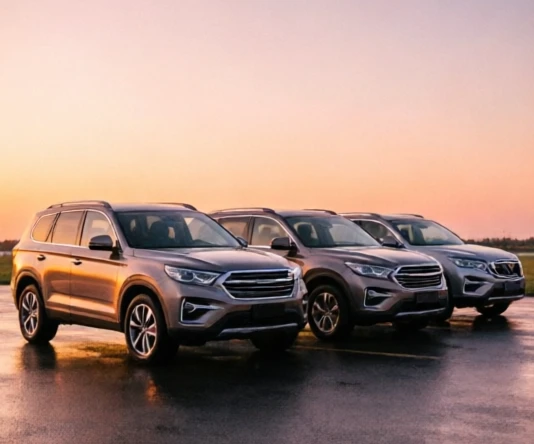
- Tata Nexon (Global NCAP / Bharat NCAP)
- Tata Punch (Global NCAP)
- Mahindra Scorpio-N (Global NCAP)
- Tata Harrier / Safari (Global NCAP / Bharat NCAP)
- Volkswagen Taigun (Global NCAP)
- Skoda Kushaq (Global NCAP)
- Mahindra XUV700 (Global NCAP)
- Kia Seltos (Bharat NCAP)
Choosing an SUV that prioritizes occupant safety is one of the most critical decisions a family can make. Finding a unified, detailed overview of which Indian SUVs actually hold verified 5-star safety certifications ensures a secure purchase. This article provides the comprehensive comparison needed to identify the safest SUV models in India according to Global NCAP and Bharat NCAP standards, along with price brackets that match your budget.
India’s automotive safety landscape has undergone significant transformation in recent years. Multiple SUV models now achieve five-star safety ratings from internationally recognized testing organizations. The Tata Nexon, Tata Punch, Mahindra Scorpio-N, Tata Harrier, Tata Safari, Volkswagen Taigun, Skoda Kushaq, Mahindra XUV700, Kia Seltos, and Nissan Magnite have all secured 5-star certifications. These vehicles demonstrate that premium safety features are increasingly available across multiple price segments in the Indian SUV market.
Overview of 5-Star Safety Certified SUVs in the Indian Market
Modern Indian automotive safety standards have evolved considerably since the introduction of Global NCAP testing in the early 2010s. Today’s 5-star safety-rated SUVs represent a fundamental shift in how manufacturers approach occupant protection. The prominence of these models stems from several interconnected factors: growing consumer awareness of crash test data, competitive pressure among manufacturers to lead in safety benchmarks, and the introduction of stricter domestic testing protocols.
Safety ratings serve a crucial function in the Indian market because they provide standardized, third-party verification of how a vehicle performs during simulated collisions. Unlike marketing claims or feature lists, crash test scores reflect engineering decisions around frame rigidity, restraint system design, and impact energy absorption.
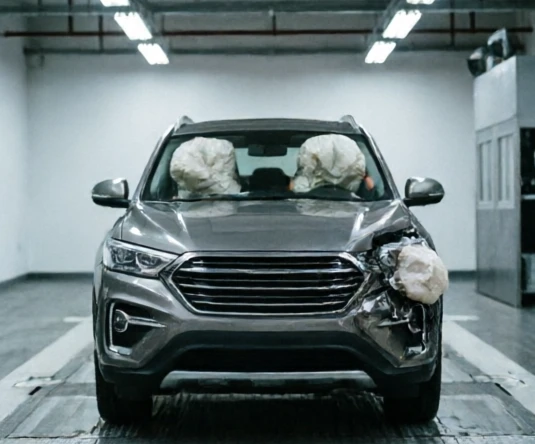
Understanding Crash Test Protocols: Global NCAP vs Bharat NCAP
Both Global NCAP and Bharat NCAP operate as independent safety assessment programs, but they differ in scope, test stringency, and participation requirements. Understanding these differences helps buyers evaluate which rating framework applies to a specific vehicle.
Global NCAP evaluation criteria and adult/child safety scoring
Global NCAP operates on a voluntary testing model where manufacturers request crash tests or permit independent vehicle acquisition. The testing procedure involves frontal offset crashes, side-impact collisions, and pole-side impact scenarios. The organization publishes two primary scores: adult occupant protection (AOP) and child occupant protection (COP), each rated on a scale where 5 stars represents the highest safety level.
Adult occupant protection metrics assess how well the vehicle’s structure and restraint systems (airbags, seatbelts, pre-tensioners) protect the driver and front passenger. Child occupant protection evaluates restraint system effectiveness for rear passengers aged 1.5 and 3 years using standardized test dummies. A 5-star rating in both categories indicates comprehensive occupant protection across different age groups and seating positions. Global NCAP’s test procedures have evolved significantly; the current protocol applies more demanding collision speeds and impact angles than older test cycles.
Recent published test results show that vehicles like the Volkswagen Taigun and Skoda Kushaq achieved full 5-star ratings in both adult and child categories, while others like the Nissan Magnite secured 5-star adult protection with 3-star child ratings.
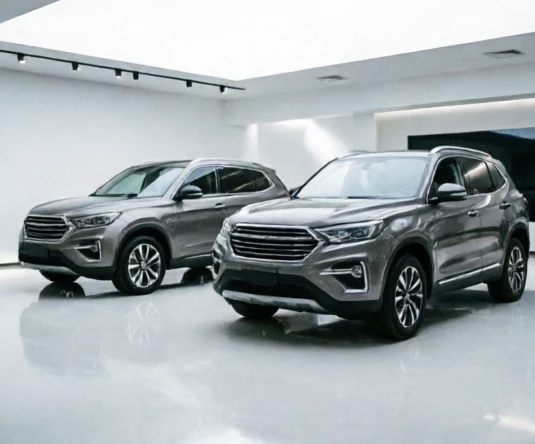
Bharat NCAP implementation and domestic road safety standards
Bharat NCAP represents India’s domestically managed vehicle safety assessment program, designed to reflect Indian road conditions, vehicle usage patterns, and manufacturing capabilities. Unlike Global NCAP’s voluntary structure, Bharat NCAP incorporates both mandatory and optional rating categories, allowing manufacturers to voluntarily pursue higher-tier certifications beyond baseline requirements.
The Bharat NCAP framework applies similar crash test scenarios to Global NCAP but with parameters adjusted for Indian highway speeds and accident patterns. Adult occupant and child occupant scores are calculated identically to Global NCAP’s methodology. A significant advantage of Bharat NCAP participation is that it reflects how vehicles perform under locally relevant road conditions.
Recent results demonstrate that models like Tata Nexon, Mahindra XUV 3XO, and Kia Seltos have all earned 5-star Bharat NCAP certifications. The Kia Seltos notably achieved a record-high adult occupant protection score of 31.70 out of 32 points in Bharat NCAP testing as of 2026.
Comprehensive List of 5-Star Rated SUV Models in India
The following table summarizes the leading 5-star safety-rated SUVs available in the Indian market, organized by testing authority and key performance metrics.
| SUV Model | Testing Agency | Adult Occupant Score | Child Occupant Score | Estimated Price Range |
|---|---|---|---|---|
| Tata Nexon | Global NCAP / Bharat NCAP | 32.23 / 34.00 | 44.52 / 45.00 | ₹7.40 – 14.40 Lakhs |
| Nissan Magnite | Global NCAP | 29.64 / 34.00 | 42.00 / 49.00 | ₹5.65 – 11.13 Lakhs |
| Tata Punch | Global NCAP | 33.05 / 34.00 | 45.00 / 49.00 | ₹5.49 – 10.00 Lakhs |
| Volkswagen Taigun | Global NCAP | 29.64 / 34.00 | 42.00 / 49.00 | ₹10.50 – 17.90 Lakhs |
| Skoda Kushaq | Global NCAP | 29.64 / 34.00 | 42.00 / 49.00 | ₹10.69 – 17.50 Lakhs |
| Mahindra Scorpio-N | Global NCAP | 32.27 / 34.00 | 35.00 / 49.00 | ₹13.49 – 24.95 Lakhs |
| Tata Harrier / Safari | Global NCAP / Bharat NCAP | 33.05 / 34.00 | 45.00 / 49.00 | ₹13.00 – 27.34 Lakhs |
| Mahindra XUV700 | Global NCAP | 16.03 / 17.00 | 41.66 / 49.00 | ₹13.99 – 26.54 Lakhs |
| Mahindra XUV 3XO | Bharat NCAP | 29.36 / 32.00 | 43.00 / 49.00 | ₹7.28 – 14.40 Lakhs |
| Kia Seltos | Bharat NCAP | 31.70 / 32.00 | 40.00 / 49.00 | ₹10.99 – 21.82 Lakhs |
Each model in this list has demonstrated robust performance in frontal and side-impact crash tests. The variation in child occupant protection scores reflects differences in rear-seat design, anchor point engineering, and the range of child restraint configurations tested. For practical buyers, a child occupant score above 40 out of 49 indicates strong protection for rear-seat passengers using standard child safety seats.
Budget-Specific Filtering: 5-Star Safety SUVs Under 15 Lakhs
One of the most significant content gaps in existing Indian automotive resources is the absence of filtered lists matching specific price brackets with verified safety ratings. Buyers with budgets under 15 lakhs often face the impression that premium safety requires premium pricing.
Affordable safe suv models in India under the 15-lakh threshold
The good news is that several 5-star safety SUVs start well below the 15-lakh price ceiling, providing genuine choice for budget-conscious families. The Nissan Magnite enters the market at ₹5.65 lakhs, making it the most affordable 5-star safety SUV currently available. The Tata Punch, positioned just above it at ₹5.49 to ₹10.00 lakhs, offers excellent child occupant protection at comparable price points.
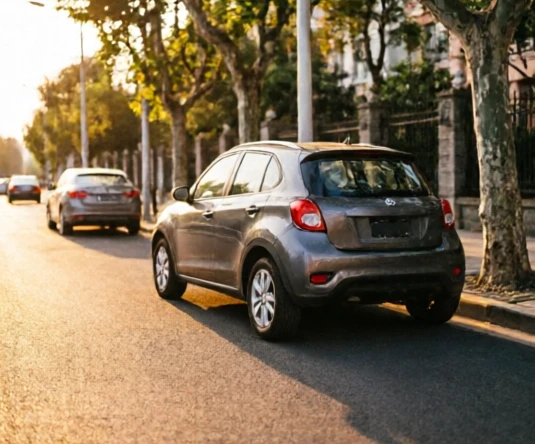
The Tata Nexon occupies a middle ground in the affordability tier, ranging from ₹7.40 to ₹14.40 lakhs. Notably, the base variant starts at ₹7.40 lakhs and still includes 6 standard airbags and electronic stability control—features that directly contributed to its 5-star crash test performance. Mahindra’s XUV 3XO similarly prices from ₹7.28 lakhs and achieved a 5-star Bharat NCAP rating with adult occupant protection scores of 29.36 out of 32.
Within the 12-15 lakh range, the Volkswagen Taigun and Skoda Kushaq become accessible. Both vehicles achieved 5-star ratings in Global NCAP’s most demanding test protocol, with identical adult occupant scores of 29.64 out of 34—a remarkable achievement for models in this price segment.
Mid-range and premium segment choices with top safety credentials
Buyers with flexibility above 15 lakhs can access models offering additional features alongside safety certification. The Kia Seltos, priced from ₹10.99 lakhs, represents exceptional value at the segment’s lower boundary while delivering the highest adult occupant protection score on Bharat NCAP as of 2026: 31.70 out of 32. This score surpasses all other domestically tested vehicles.
In the 15-20 lakh range, options expand to include higher-specification variants of the Volkswagen Taigun and Skoda Kushaq, as well as entry-level versions of the Mahindra Scorpio-N (starting at ₹13.49 lakhs). The Scorpio-N’s frame-based construction—a legacy design characteristic—paradoxically contributed to its strong structural performance in crash tests, achieving adult occupant protection of 32.27 out of 34.
Above 20 lakhs, buyers can choose from the full range of the Tata Harrier (starting at ₹13.00 lakhs and extending to ₹26.44 lakhs), the Tata Safari (starting at ₹16.19 lakhs and extending to ₹27.34 lakhs), the Mahindra Scorpio-N’s premium variants, and the Mahindra XUV700 (starting at ₹13.99 lakhs). The Tata Safari’s 7-seater configuration combined with its 5-star rating makes it particularly valuable for families prioritizing both passenger count and crash test verification.
Core Safety Features Equipped in Top-Rated Indian SUVs
A 5-star crash test rating does not occur accidentally. Understanding which safety systems consistently appear across certified vehicles helps buyers verify that base-model variants actually include the protective equipment that generated the crash test scores.
Mandatory and advanced protective equipment in modern SUVs
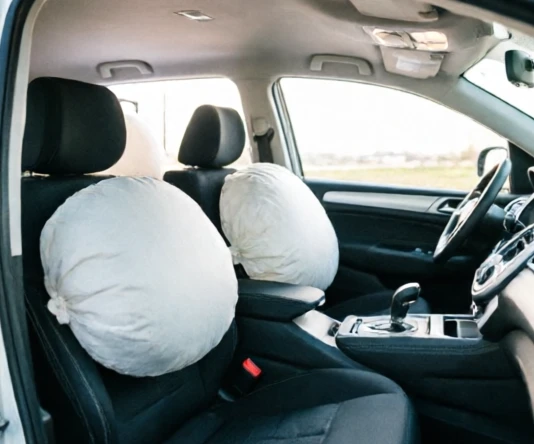
All vehicles achieving 5-star ratings in India carry a minimum airbag configuration of 6 units: dual driver and passenger front airbags, side-impact airbags for the front occupants, and curtain airbags spanning the window line. Some models like the Nissan Magnite offer this standard 6-airbag setup across all variants, eliminating the risk that a cheaper base variant sacrifices protection. This distinction is important because downmarket variants sometimes reduce airbag counts, potentially affecting real-world safety unless buyers specifically choose variants with enhanced protection.
Electronic Stability Control (ESC), also called Electronic Stability Program, appears standard on all 5-star certified SUVs reviewed. ESC prevents skidding during emergency braking or sharp turns by automatically adjusting brake pressure to individual wheels. This technology has demonstrated measurable reduction in rollover accidents and loss-of-control collisions, making its availability across all trim levels a regulatory and engineering expectation.
Anti-lock Braking System (ABS) is equally universal among these vehicles. ABS prevents wheel lockup during hard braking, maintaining steering control on slippery surfaces—a critical safety feature for Indian highways where sudden obstacles and variable road surface quality demand responsive braking.
Advanced Driver Assistance Systems (ADAS) are increasingly common in higher trim levels of vehicles like the Mahindra XUV700, which includes Level-2 ADAS functionality. ADAS features encompass adaptive cruise control, autonomous emergency braking, lane-keeping assist, and blind-spot monitoring. While not universally standard across all price points, ADAS presence in premium variants demonstrates how manufacturers are layering protective technology beyond traditional restraint systems.
Structural integrity and crash energy management
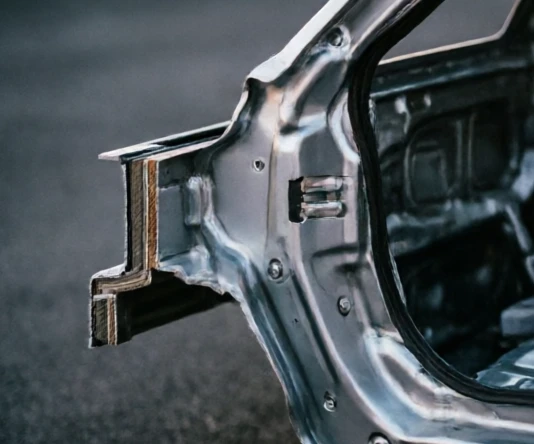
The frame structure represents the vehicle’s skeleton in a collision. Vehicles achieving 5-star ratings employ high-strength steel in critical areas: the A-pillars (front door frame supports), B-pillars (center pillars), and the roof rail. Tata’s Nexon, Punch, Harrier, and Safari all utilize advanced high-strength steel (AHSS) in these load-bearing zones, enabling the frame to absorb impact energy without crushing the passenger compartment.
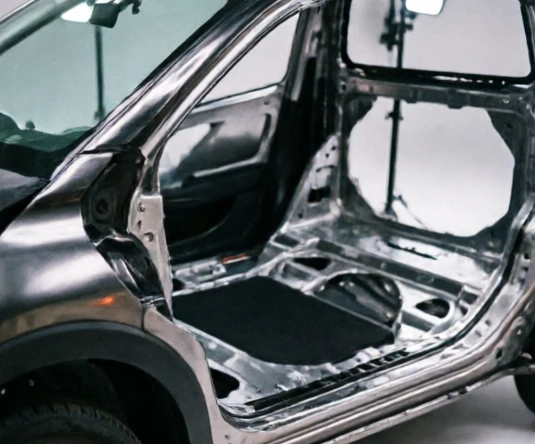
Energy management involves deliberate design of crumple zones—areas intended to deform and absorb collision force without transmitting that force directly into the passenger cabin. Vehicles like the Mahindra Scorpio-N, despite its frame-based construction (as opposed to monocoque designs), achieved strong protection by engineering the frame itself to absorb frontal impact energy through controlled deformation rather than rigid resistance.
Pedestrian protection compliance, though not formally part of the 5-star rating system in India, influences bumper and hood design. Models tested under Global NCAP’s latest protocols reflect these design considerations, reducing injury risk to pedestrians struck by the vehicle.
Comparative Analysis of Maintenance, Insurance, and Ownership Costs
A 5-star safety rating directly influences two ongoing cost categories: insurance premiums and long-term maintenance expense patterns.
Insurance premium reductions tied to safety ratings typically range from 5% to 10% on comprehensive (all-risks) policies. Insurers recognize that vehicles with superior crash test performance and advanced restraint systems generate lower claim frequencies. The Nissan Magnite, starting at ₹5.65 lakhs, would incur annual comprehensive insurance of approximately ₹25,000-₹35,000 depending on region and driving profile. The 5-star Global NCAP rating allows buyers to qualify for insurer discounts that reduce this cost by ₹1,500-₹3,500 annually.
Maintenance cost differentials between 5-star and lower-rated SUVs emerge primarily in brake system wear and collision repair economics. Because 5-star vehicles employ more sophisticated crumple-zone engineering, accident repairs require more labor and specialized parts, increasing body shop costs when damage occurs. However, the reduced accident probability (inferred from superior structural protection) typically offsets this repair-cost increase over the ownership lifetime.
For compact SUVs under 15 lakhs (Nissan Magnite, Tata Punch, Tata Nexon), annual routine maintenance averages ₹5,000-₹8,000. Mid-range SUVs (Volkswagen Taigun, Skoda Kushaq, Mahindra XUV 3XO) average ₹8,000-₹12,000 annually. Premium models (Tata Harrier, Tata Safari, Mahindra Scorpio-N above 20 lakhs) range from ₹12,000-₹20,000 annually, primarily reflecting engine complexity and transmission servicing intervals.
Resale values for 5-star safety SUVs generally command premiums of 8-12% over equivalent non-rated vehicles at the 3-year mark. This reflects both reduced accident probability (lower total-loss risk for used-car buyers) and market perception of safety as a durable value attribute. A Tata Nexon purchased new at ₹8.50 lakhs would retain approximately ₹6.50-₹7.00 lakhs in resale value after 3 years—a retention rate boosted partially by its 5-star credential.
Buying Guide: How to Choose the Safest SUV for Your Family
Safety ratings are a starting point, not an endpoint, in vehicle selection. The final purchase decision should incorporate verification of actual equipment, understanding how specific needs map to available models, and confirmation that higher-rated variants haven’t been compromised in lower trim levels.
Begin by cross-referencing the crash test fact sheet published by either Global NCAP or Bharat NCAP with your vehicle’s trim level. Manufacturers sometimes adjust airbag counts or electronic stability control configuration between base and mid-tier variants. The Tata Nexon’s base variant at ₹7.40 lakhs, for example, retains the full 6-airbag setup that generated its 5-star rating—a transparency that not all competitors offer.
Verify that rear-seat child anchor points meet ISOFIX standards. ISOFIX is an international standardized child seat mounting system that eliminates seatbelt routing errors. All 5-star rated SUVs in this list feature ISOFIX anchors in rear-outboard seats. Physically inspect the child seat mounting points during a dealer visit to confirm they are clearly labeled and functional.
Electronic Stability Control must be standard equipment across all trim levels, not an optional upgrade. If a base variant is quoted without ESC, that configuration likely does not represent the tested vehicle and may not achieve the advertised safety rating in real-world accidents.
During a test drive, evaluate the brake-pedal responsiveness under simulated emergency stops. ABS-equipped vehicles typically exhibit a distinctive pulsing sensation at the brake pedal during hard braking on low-friction surfaces—a sign the system is functioning correctly. Request a test drive on different road surfaces (smooth asphalt, gravel, or wet parking lot) to experience how the vehicle’s stability control responds to reduced traction.
Review insurance quotes from multiple insurers before purchase. While all 5-star vehicles qualify for similar discounts, insurer risk assessment can vary by region and claims history. Obtaining comparative quotes ensures full safety-related premium savings available to the budget tier.
Verify ownership support and spare parts availability, particularly for safety components like airbags and stability control modules. Tata, Mahindra, Volkswagen, Nissan, and Kia all maintain robust service networks across India. Confirm that the preferred dealership stocks critical safety-system components and can complete repairs within reasonable timeframes (ideally within 24-48 hours for component failures).
Compare ADAS feature availability when prioritizing collision-avoidance technology. Models like the Mahindra XUV700 offer integrated autonomous emergency braking that can reduce impact severity if a frontal collision becomes unavoidable. For daily commuting in congested urban traffic, these features justify premium pricing despite not being mandatory for a 5-star rating.
Use the buyer’s checklist below to systematically evaluate candidates during the decision phase:
- Confirm the specific crash test fact sheet (Global NCAP or Bharat NCAP) applies to the target variant—check model year, transmission type, and airbag count.
- Verify that 6 standard airbags and Electronic Stability Control are included in the base trim, not optional add-ons.
- Test ISOFIX anchor functionality in rear-outboard seats using a child seat or a dealer-provided demonstration unit.
- Request insurance quotes from at least three providers and document the 5-star safety premium discount explicitly.
- Schedule a test drive on varied road surfaces to experience braking performance and stability control response.
- Confirm spare parts availability for airbags, ABS modules, and ESC components at the nearest authorized dealer.
- Compare total 3-year cost of ownership: purchase price + fuel + maintenance + insurance + registration—not just the vehicle price.
Once these elements are verified across finalists, the choice distills to personal preference regarding seating capacity, infotainment features, and brand loyalty. The safety foundation is established across all 5-star models in this list—the remaining decision is which vehicle’s secondary features and price point align with daily requirements.
When comparing two candidates with identical 5-star ratings, prioritize the model whose lowest-trim variant includes all core safety equipment rather than relegating airbags or stability control to expensive option packages. The Nissan Magnite’s standard 6-airbag configuration across all variants, for instance, makes it a more straightforward safety choice than competitors requiring trim-level upgrades to access full protection.
FAQ
Which SUV has a 5 star safety rating in India?
Several SUVs hold verified 5-star safety ratings in India from Global NCAP and Bharat NCAP, including the Tata Nexon, Tata Punch, Mahindra Scorpio-N, Tata Harrier, Tata Safari, Volkswagen Taigun, Skoda Kushaq, Mahindra XUV700, Kia Seltos, and Nissan Magnite.
Which is the best 5 star SUV in India?
The "best" 5-star SUV depends on your budget and seating needs. Models like the Tata Nexon and Nissan Magnite offer great affordability under 15 lakhs, while the Mahindra XUV700, Tata Safari, and Mahindra Scorpio-N provide premium features, higher occupant protection scores, and larger seating capacities.
What is the no. 1 safest SUV available in the Indian market?
Safety rankings feature several top performers. For instance, the Kia Seltos achieved a record-high adult occupant protection score of 31.70 out of 32 points in Bharat NCAP testing, while models like the Tata Punch and Tata Harrier boast strong adult and child protection scores under Global NCAP.
Which SUV is best for family safety and crash protection?
SUVs with robust high-strength steel frames, 6 standard airbags, Electronic Stability Control (ESC), and high child/adult occupant scores—such as the Tata Safari, Tata Nexon, and Mahindra XUV700—are among the best choices for comprehensive family crash protection.
Are there 5-star safety rated SUVs available under 15 lakhs in India?
Yes, several 5-star safety-rated SUVs are available under 15 lakhs, including the Nissan Magnite, Tata Punch, Tata Nexon, Mahindra XUV 3XO, Volkswagen Taigun, and Skoda Kushaq.
How do Global NCAP and Bharat NCAP safety ratings differ?
Global NCAP operates on a voluntary international testing model focusing on independent vehicle assessments. Bharat NCAP is India’s official domestic vehicle safety assessment program designed to reflect local road conditions, featuring both mandatory and optional rating categories.