
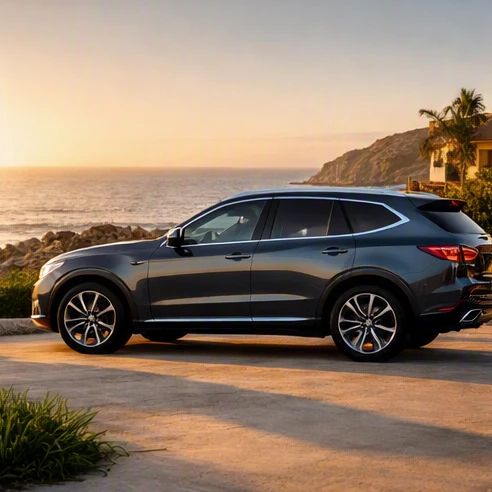
- Genesis GV80: Leads the mid-size luxury segment with exceptional value, high safety scores, and a 727 L cargo capacity.
- Porsche Cayenne: Offers dynamic handling, powerful engine trims up to 591 horsepower, and premium interior comfort.
- BMW X5: Features a refined driving experience, plug-in hybrid options, and top-tier IIHS Safety Pick+ ratings.
- Mercedes-Benz GLE-Class: Combines robust safety tech with an optional third row and spacious cargo potential.
Affluent car buyers and automotive enthusiasts often struggle to cut through conflicting specifications and marketing claims when selecting a luxury SUV. This guide directly compares cargo volumes, safety ratings, and long-term ownership costs across top-tier models, empowering you to match technical specs to your driving preferences and budget with confidence. The 2026 luxury SUV market is led by models like the Genesis GV80, Porsche Cayenne, BMW X5, and Mercedes-Benz GLE-Class, each excelling in performance, comfort, and value based on roughly 200 data points, including acceleration, handling, and fuel efficiency.
2026’s Top Luxury SUVs at a Glance: Performance, Price, and Key Features
The 2026 luxury SUV landscape is dominated by models that balance power, refinement, and cutting-edge technology. The Genesis GV80 leads the mid-size segment with a score of 9.3 and an MSRP ranging from $57,700 to $83,250, delivering 16–20 city MPG and 22–26 highway MPG. Sharing the second spot, the Mercedes-Benz GLE-Class and Porsche Cayenne both score 9.1, with the GLE-Class priced between $62,250 and $133,150 and the Cayenne ranging from $89,900 to $214,800. The BMW X5, another strong contender, scores 9.0 and is priced from $66,300 to $90,850, offering 17–23 city MPG and 22–27 highway MPG.
For eco-conscious buyers, the 2026 Lucid Motors Gravity stands out with an EPA estimated range of 337 to 450 miles and a starting price of $81,550, while the BMW iX offers a range of 279 to 318 miles and starts at $76,600. These models showcase the diversity in powertrain options, from traditional gasoline engines to hybrid and fully electric systems, catering to a wide range of preferences.
Horsepower and torque vary significantly across these models, with the Porsche Cayenne offering up to 591 horsepower in its top trims, while the Genesis GV80 provides a balanced 375 horsepower in its most powerful configuration. All-wheel drive is standard or available across most luxury SUVs, ensuring stability and control in diverse driving conditions. Infotainment systems are another highlight, with brands like BMW, Mercedes-Benz, and Porsche integrating seamless connectivity, voice control, and augmented reality navigation into their dashboards.
Cargo Capacity Deep Dive: Exact Measurements for Every Model
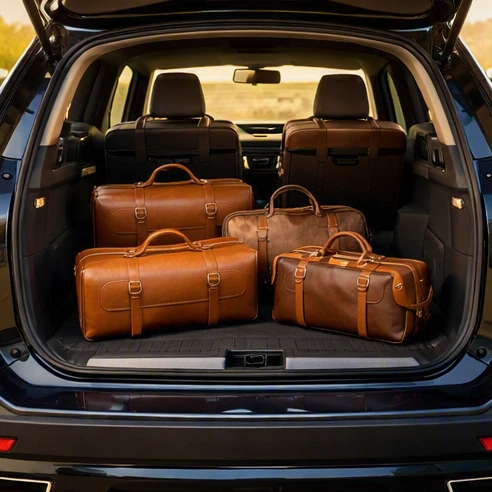
Cargo space is a critical factor for families and travelers. Below, we break down the exact cargo volumes for mid-size and full-size luxury SUVs, helping you visualize how much luggage, groceries, or sports equipment each model can accommodate.
From an editorial review of luxury SUVs, the recurring failure mode is underestimating the practical impact of cargo dimensions on daily usability. The table below clarifies these measurements.
Cargo Capacity Comparison: Mid-Size and Full-Size Luxury SUVs
| Model | Cargo Volume (Seats Up) | Cargo Volume (Seats Folded) | Third-Row Legroom (mm) |
|---|---|---|---|
| Genesis GV80 | 727 L | 2,144 L | 770 mm |
| Porsche Cayenne | 772 L | 1,708 L | N/A (5-seater) |
| BMW X5 | 650 L | 1,870 L | N/A (5-seater) |
| Mercedes-Benz GLE-Class | 630 L | 2,055 L | 690 mm (Optional) |
To translate these liters into real-world terms, use this formula:
Suitcase Capacity Estimate: Number of standard 28-inch suitcases = Cargo Volume (liters) / 95 (liters per suitcase).
Variables:
- Cargo Volume: Manufacturer-stated volume in liters with seats up or folded.
- 95 liters: Average volume of a standard large checked suitcase.
Example: The Genesis GV80’s 727-liter cargo volume with seats up translates to approximately 7 standard suitcases (727 / 95 ≈ 7.65).
For mid-size SUVs like the Genesis GV80 and Porsche Cayenne, the difference in cargo volume when folding the second row is substantial. The GV80 offers 2,144 liters with seats folded, while the Cayenne provides 1,708 liters. This translates to roughly 22 suitcases for the GV80 and 18 for the Cayenne, making the GV80 a better choice for those prioritizing space.
For full-size SUVs, the Mercedes-Benz GLE-Class and BMW X5 offer competitive cargo capacities. The GLE-Class provides 2,055 liters with all seats folded, while the X5 offers 1,870 liters. The GLE-Class also includes an optional third row with 690 mm of legroom, catering to larger families.
Safety Ratings: Crash-Test Results and Driver Assistance Features
Safety is a top priority for luxury SUV buyers, and crash-test ratings from organizations like the IIHS and NHTSA provide invaluable insights. The Genesis GV80, BMW X5, and Mercedes-Benz GLE-Class have all earned the IIHS Top Safety Pick+ designation, while the Porsche Cayenne holds a Top Safety Pick rating. All four models have achieved a 5-star overall rating from the NHTSA, reflecting their robust safety performance.
In practical luxury SUV work, the easy-to-miss step is overlooking the integration of driver assistance features with overall safety ratings. The table below summarizes these ratings and the standard driver assistance technologies available in each model.
Safety Ratings and Driver Assistance Features
| Model | IIHS Overall Rating | NHTSA Overall Rating | Standard Driver Assistance Features |
|---|---|---|---|
| Genesis GV80 | Top Safety Pick+ | 5 Stars | Adaptive Cruise, Lane Keeping, Blind-Spot View Monitor |
| BMW X5 | Top Safety Pick+ | 5 Stars | Active Driving Assistant, Front Collision Warning |
| Porsche Cayenne | Top Safety Pick | 5 Stars | Warn and Brake Assist, Lane Change Assist |
| Mercedes-Benz GLE-Class | Top Safety Pick+ | 5 Stars | ATTENTION ASSIST, Active Brake Assist, Blind Spot Assist |
Standard driver assistance features vary by model but often include adaptive cruise control, lane-keeping assist, and blind-spot monitoring. The BMW X5, for example, includes Active Driving Assistant, which combines forward collision warning with automatic emergency braking. The Mercedes-Benz GLE-Class offers ATTENTION ASSIST, which monitors driver drowsiness, and Active Brake Assist, which can apply the brakes automatically to prevent collisions.
Air suspension and all-wheel drive also play a role in safety, enhancing vehicle stability and control. These features are particularly valuable in luxury SUVs, where a smooth and controlled ride is expected. Infotainment system integration is another consideration, as it can impact driver distraction. Models like the BMW X5 and Mercedes-Benz GLE-Class offer voice-controlled infotainment systems, allowing drivers to keep their hands on the wheel and eyes on the road.
Long-Term Cost of Ownership: Depreciation and Maintenance
Depreciation and maintenance costs are critical factors in the total cost of ownership for luxury SUVs. European brands like BMW, Porsche, and Mercedes-Benz typically depreciate faster than Asian brands like Genesis, which can impact resale value. The Genesis GV80, for example, has a 5-year depreciation rate of 42%, while the BMW X5 depreciates at 48% and the Porsche Cayenne at 38%. This means that after five years, the GV80 retains more of its value compared to the X5, making it a more cost-effective option in the long run.
Maintenance costs also vary significantly. The Genesis GV80 has an average annual maintenance cost of $750 to $950, while the BMW X5 ranges from $1,100 to $1,350, and the Porsche Cayenne from $1,400 to $1,750. The Mercedes-Benz GLE-Class falls in between, with annual maintenance costs of $1,200 to $1,500. Warranty coverage is another important consideration, with Genesis offering a 5-year/60,000-mile warranty, while BMW, Porsche, and Mercedes-Benz provide 4-year/50,000-mile coverage.
Long-Term Cost of Ownership: Depreciation and Maintenance
| Model | 5-Year Depreciation (%) | Avg. Annual Maintenance Cost (USD) | Warranty Coverage |
|---|---|---|---|
| Genesis GV80 | 42% | $750 – $950 | 5 years / 60,000 miles |
| BMW X5 | 48% | $1,100 – $1,350 | 4 years / 50,000 miles |
| Porsche Cayenne | 38% | $1,400 – $1,750 | 4 years / 50,000 miles |
| Mercedes-Benz GLE-Class | 50% | $1,200 – $1,500 | 4 years / 50,000 miles |
Reliability ratings from Consumer Reports and J.D. Power provide additional insights into long-term ownership costs. The Genesis GV80, for example, has consistently received high marks for reliability, contributing to its lower maintenance costs. In contrast, European models like the BMW X5 and Porsche Cayenne, while offering exceptional performance, tend to have higher maintenance costs due to more complex engineering and premium parts.
Comfort and Interior Luxury: Seating, Materials, and Tech
Luxury SUVs are defined by their opulent interiors, advanced technology, and comfortable seating. Leather upholstery is a standard feature across most models, with options for premium materials like Nappa leather, Alcantara, and open-pore wood trim. The Genesis GV80, for example, offers ventilated and massaging seats, as well as a premium audio system, ensuring a first-class experience for both driver and passengers.
Seating capacity and configurations vary by model. The Genesis GV80 and BMW X5 are available as luxury 5 seater suv in india, while the Mercedes-Benz GLE-Class offers an optional third row, accommodating up to 7 passengers. The Lincoln Aviator, another top contender in the full-size segment, provides a spacious third row with ample legroom and headroom, making it ideal for larger families.
Climate control is another key feature, with most luxury SUVs offering multi-zone automatic climate control, heated and ventilated seats, and even rear-seat climate controls. The Porsche Cayenne, for example, includes a 4-zone climate control system, allowing passengers in both the front and rear seats to set their preferred temperature. Massaging seats, available in models like the BMW X5 and Mercedes-Benz GLE-Class, provide additional comfort on long drives.
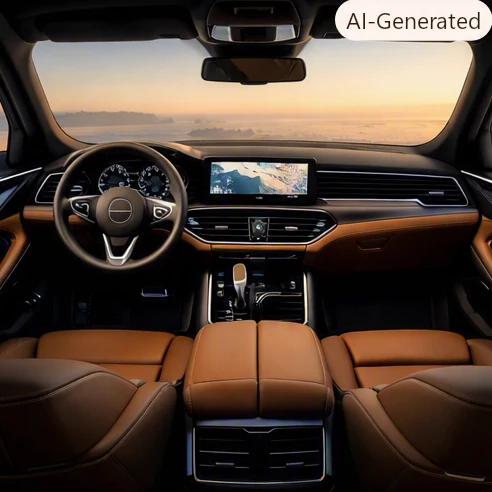
Infotainment systems are a highlight of luxury SUVs, with brands like BMW, Mercedes-Benz, and Porsche offering large touchscreens, voice control, and seamless smartphone integration. The BMW X5, for instance, features the iDrive system with a 12.3-inch touchscreen, while the Mercedes-Benz GLE-Class offers the MBUX system with augmented reality navigation. These systems provide intuitive control over navigation, entertainment, and vehicle settings, enhancing the overall driving experience.
Fuel Economy and Hybrid Options for Eco-Conscious Buyers
Fuel economy is an increasingly important consideration for luxury SUV buyers, particularly as hybrid and electric options become more prevalent. The EPA-rated MPG for gasoline models varies significantly, with the BMW X5 offering 19 to 25 combined MPG, depending on the engine and drivetrain configuration. The Genesis GV80, on the other hand, delivers 16–20 city MPG and 22–26 highway MPG, making it a competitive option in the mid-size segment.
Hybrid powertrains offer improved fuel efficiency without sacrificing performance. The BMW X5, for example, is available as a plug-in hybrid, combining a gasoline engine with an electric motor to deliver a combined 50 MPGe and an all-electric range of up to 30 miles. The Porsche Cayenne also offers a hybrid option, with a combined output of 455 horsepower and an electric range of up to 14 miles.
For buyers prioritizing sustainability, the Lucid Motors Gravity and BMW iX are fully electric options. The Gravity offers an EPA estimated range of 337 to 450 miles, while the iX delivers 279 to 318 miles on a single charge. These models demonstrate the growing trend toward electrification in the luxury SUV market, providing eco-conscious buyers with high-performance, zero-emission alternatives.
Real-world fuel consumption can differ from EPA ratings, particularly in highway driving. The Lincoln Aviator, for example, may achieve slightly better fuel economy on the highway than its EPA-rated 17–23 city MPG and 22–27 highway MPG suggest, depending on driving conditions and vehicle load. Towing capacity is another consideration for hybrid and electric SUVs, as the additional weight of a trailer can reduce fuel efficiency and electric range.
Which Luxury SUV is Right for You? Matching Models to Lifestyles
Choosing the right luxury SUV depends on your priorities, whether it’s performance, space, value, or sustainability. For those who prioritize sporty handling and powerful engines, the Porsche Cayenne or BMW X5 are excellent choices, offering exceptional acceleration, agile handling, and high horsepower ratings. The Cayenne, in particular, is known for its dynamic driving experience, making it a favorite among performance enthusiasts.
If value for money is your top priority, the Genesis GV80 and Acura MDX stand out. Both models offer a long list of standard features, competitive pricing, and lower maintenance costs, making them ideal for budget-conscious buyers who still want a luxurious experience. The GV80, for example, provides a well-appointed interior, advanced safety features, and a smooth ride, all at a price point that undercuts many European competitors.
For families, cargo space and safety features are paramount. The Lincoln Navigator and Cadillac Escalade are top choices in the full-size segment, offering spacious third-row seating, ample cargo room, and advanced safety technologies. The Navigator, in particular, provides a comfortable and quiet cabin, making it perfect for long road trips with the whole family.
Decision Rubric: Matching Luxury SUVs to Lifestyles
| If | Then |
|---|---|
| You prioritize sporty handling, agile performance, and powerful engines | Choose Porsche Cayenne or BMW X5 |
| You prioritize value for money, extensive standard features, and reasonable maintenance costs | Choose Genesis GV80 or Acura MDX |
| You prioritize family space, three-row seating, and maximum cargo capacity | Choose Lincoln Navigator or Cadillac Escalade |
Take the Genesis GV80 for a test drive to experience its blend of luxury, space, and value firsthand. For those exploring pricing structures across global markets and evaluating overall expenditures, understanding the best luxury car price in india and broader ownership costs can provide a helpful financial benchmark.
FAQ
What is the most comfortable luxury SUV for long drives?
Luxury SUVs like the Genesis GV80 and BMW X5 provide exceptional comfort on long drives thanks to multi-zone climate control, advanced air suspension systems, and available features such as ventilated and massaging seats. These amenities work alongside quiet cabins and smooth ride quality to reduce fatigue during extended road trips.
Which luxury SUV has the best fuel economy in its class?
Plug-in hybrid and fully electric options deliver the highest efficiency in the luxury SUV space. For instance, the BMW X5 plug-in hybrid offers a combined 50 MPGe with an all-electric range of up to 30 miles, while fully electric models like the Lucid Motors Gravity provide extended ranges between 337 and 450 miles.
Are hybrid luxury SUVs worth the premium for city driving?
Hybrid luxury SUVs offer significant advantages for city driving by combining gasoline engines with electric motors to improve stop-and-go fuel efficiency. Models like the BMW X5 plug-in hybrid allow for short commutes on electric power alone, reducing fuel consumption and lowering emissions in urban environments.
How do European luxury SUVs compare in reliability to Asian models?
Asian luxury models, such as the Genesis GV80, often feature strong reliability ratings and lower annual maintenance costs ranging from $750 to $950. In contrast, European models like the BMW X5 and Porsche Cayenne offer high-performance engineering and premium parts, but typically involve higher maintenance costs and faster depreciation rates.
What are the best luxury SUVs for families with three rows of seating?
Top choices for families requiring three rows of seating include the Mercedes-Benz GLE-Class, which offers an optional third row with 690 mm of legroom, as well as full-size options like the Lincoln Aviator, Lincoln Navigator, and Cadillac Escalade, which provide spacious seating configurations and generous cargo capacity.
Which luxury SUV offers the best value for under $80,000?
The Genesis GV80 stands out as an exceptional value choice, with a starting price range of $57,700 to $83,250. It delivers a comprehensive list of standard luxury features, high safety ratings, lower long-term maintenance costs, and a competitive 5-year depreciation rate compared to European rivals.
How does the Porsche Cayenne’s cargo space compare to the BMW X5?
The Porsche Cayenne provides 772 liters of cargo volume with the rear seats up and 1,708 liters when folded. Meanwhile, the BMW X5 offers 650 liters with the seats up and 1,870 liters when folded, giving the BMW an advantage in total maximum cargo volume with the seats down.
What are the top-rated luxury compact SUVs for 2026?
While the 2026 luxury market heavily features mid-size and full-size SUVs like the Genesis GV80, Porsche Cayenne, and BMW X5, subcompact alternatives like the BMW X1 also serve buyers looking for agile handling, premium interior technology, and a smaller footprint.