
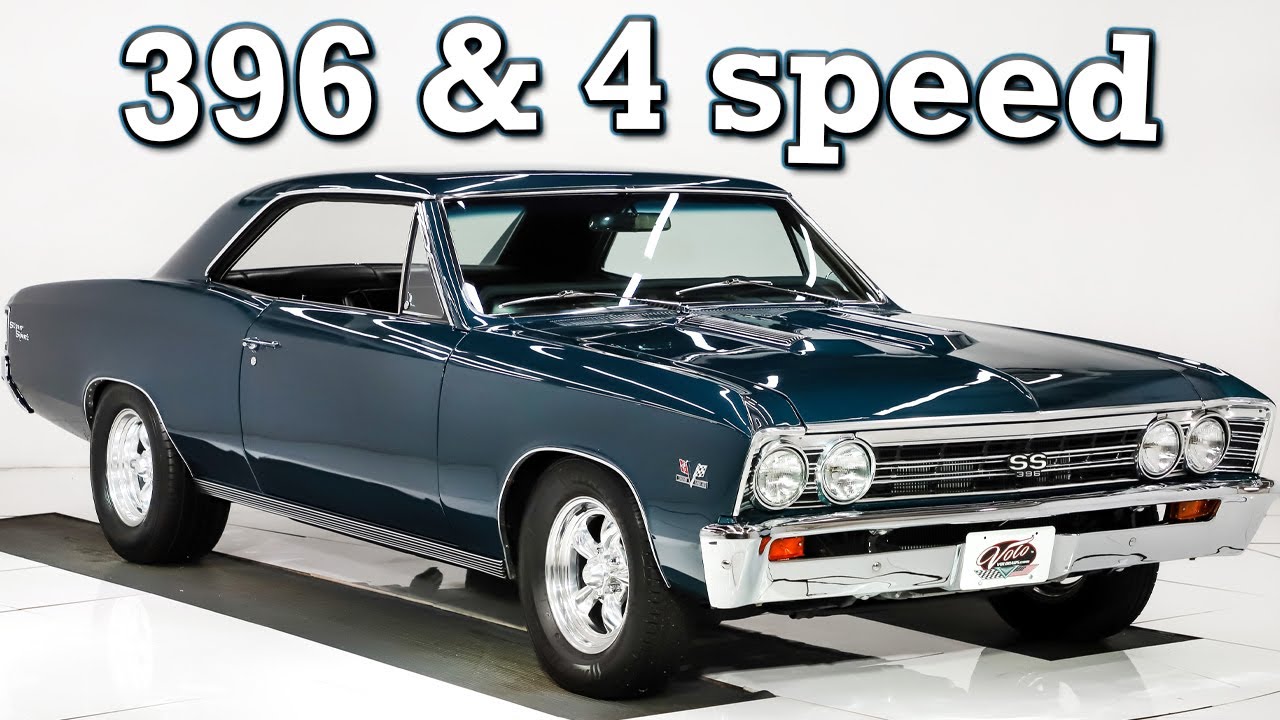
The 1970 Chevelle SS 396 stands as a testament to an era of unbridled automotive power, a true icon of American muscle. This model year saw the Super Sport (SS) offered as a distinct option package for both hardtop coupes and convertibles, solidifying its place in the automotive hall of fame. This comprehensive look delves into the specifics that made the 1970 SS 396 a desirable machine, exploring its engine options, performance features, and unique characteristics that continue to captivate collectors and enthusiasts alike.
The SS 396 Option Package
For the 1970 model year, Chevrolet produced 49,862 SS 396 Chevelles. The coupe models were priced at an impressive $3,439, while the convertible version commanded a slightly higher $3,639. The SS 396 option package was a performance-oriented ensemble, featuring a 350-bhp 402-cid V-8 engine. Complementing the powerplant were power front disc brakes, the robust F41 heavy-duty suspension package, and Polyglas F70x14 tires. A distinctive visual cue for the SS 396 was its hood, characterized by a prominent bulge in the rear center. While hood stripes were an optional extra with this hood, a more dramatic “Cowl Induction” option was also available. This system featured “Cowl Induction” emblems flanking the bulge and a functional door on the hood’s top that would automatically open to provide extra air to the engine under high demand. While not standard on any SS, the “Cowl Induction” option was an extra-cost item and typically came with hood stripes, though these could be deleted at no charge. Interestingly, hood stripes could also be ordered without the “Cowl Induction” option, albeit at an additional cost. A detail that sometimes causes confusion is that all ’70-’72 SS cars were equipped with hood pins, with the exception of some early 1970 models (produced around April 1970 or earlier) that were not ordered with Cowl Induction. The wheels used on the 1970 SS were the same as those found on the 1969 models. Contrary to common belief, the tachometer/gauge package was not a standard component of the SS package; it was an optional extra.
Engine Choices and Drivetrain
In 1970, the Chevelle offered two distinct SS packages: the “Z25” SS 396 and the more potent “Z15” SS 454. For the SS 396, buyers had two engine choices: the L34 version producing 350 horsepower, and the L78 version, a 375 HP “Cowl Induction” engine. It’s worth noting that for 1970, the 396 engines actually had a displacement of 402 cubic inches due to a 0.030-inch larger bore introduced in late 1969. Despite this increase in displacement, they were still marketed as “396” engines when installed in an SS model. Emblems and stickers on these vehicles continued to display “396.” A very limited production run of 1970 SS Chevelles featured the 375 HP 396 engine combined with the “L89” aluminum heads.
The big-block 396 engines offered from 1968 to 1970 could be paired with either the TH-400 automatic transmission or a Muncie 3 or 4-speed manual gearbox. Early 1968 SS 396 models even offered the option of a 2-speed “PowerGlide” automatic transmission. Big-block equipped cars came standard with a 12-bolt rear axle. Positraction, a limited-slip differential, was not standard equipment on the SS but was an available option. However, if a rear axle ratio of 4.10 or higher was ordered, Positraction became a mandatory inclusion. For those seeking a classic experience, exploring options like a 1970 Chevelle SS needing restoration can be a rewarding endeavor.
Documentation and Value
Authenticating a 1970 Chevelle as an official SS 396 or SS 454 requires specific documentation. This typically includes paperwork that explicitly shows the SS option or the engine suffix code, along with the car’s Vehicle Identification Number (VIN). Examples of such documentation include the original build sheet or a warranty card protect-o-plate that lists a 396 or 454 engine suffix.
The performance of the 1970 SS Chevelle 396 was undeniably impressive on the highway, epitomizing an era of rapidly increasing horsepower where performance seemed limitless. For enthusiasts considering the market, current trends indicate a positive outlook for these legendary machines:
- SS 396/350 Coupes: values up 2%
- SS 396/375 Coupes: values up 3%
- SS 396/350 Convertibles: values up 3%
- SS 396/375 Convertibles: values up 4%
- SS 454 Coupes: values up 3%
- SS 454 Convertibles: values up 3%
These figures highlight the enduring desirability and value retention of the 1970 Chevelle SS across its various configurations.
The 1970 Chevelle SS 396 was more than just a car; it was a statement. It represented the pinnacle of American automotive engineering during a golden age of performance. Whether you’re a seasoned collector or an admirer of classic muscle, the ’70 Chevelle SS 396 continues to be a compelling icon.
What are your thoughts on the 1970 Chevelle SS 396? Share your opinions in the comments below!