
Few figures in English history are as vividly captured as Samuel Pepys, the 17th-century diarist whose intimate chronicles of London life, political upheaval, and personal ambition have fascinated readers for centuries. His diaries, written between 1660 and 1669, offer an unprecedented window into the Restoration era—a time of plague, fire, war, and cultural rebirth. For those seeking to understand the man behind the pages, few biographies match the depth and narrative brilliance of Claire Tomalin’s Samuel Pepys: The Unequalled Self.
This definitive work stands as one of the finest examples of biographical storytelling, weaving together meticulous historical research with a compelling portrait of a complex, flawed, and endlessly intriguing individual. Whether you are a student of British history, a lover of literary biography, or simply someone drawn to extraordinary lives, Tomalin’s book is an essential addition to any library.
The Art of Biographical Storytelling
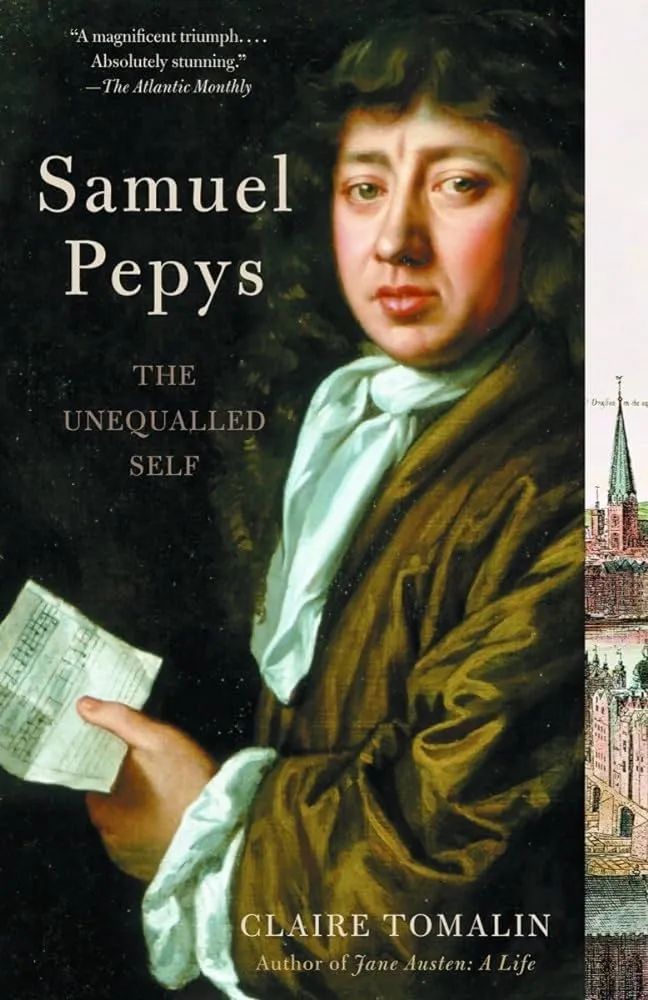
Claire Tomalin’s approach to biography is unique in its ability to transform historical figures into living, breathing characters. In Samuel Pepys: The Unequalled Self, she achieves what few biographers can: she makes the reader feel as though they are walking alongside Pepys through the streets of Restoration London. Her prose is elegant and accessible, balancing scholarly rigor with narrative momentum that keeps the pages turning.
What sets Tomalin apart is her deep empathy for her subject without ever descending into hagiography. She presents Pepys in all his contradictions—a devoted public servant who was also a notorious womanizer; a self-made man who rose from modest beginnings to become Chief Secretary to the Admiralty; a man of genuine intellectual curiosity who could be petty, jealous, and ambitious. This balanced portrayal is what makes the biography so compelling. It does not simply recount events; it reveals character.
Tomalin’s research is exhaustive. She delves into Pepys’ diaries—over a million words written in shorthand—and brings to life not only the diarist himself but also the world around him. The political machinations of Charles II’s court, the daily realities of 17th-century London, the intellectual currents of the Royal Society (of which Pepys was president), and the intimate details of domestic life are all rendered with astonishing clarity.
Pepys and His Times: A Window into Restoration England
The Restoration period was one of the most transformative in English history. After the Puritan rule of Oliver Cromwell, the return of Charles II in 1660 ushered in an era of artistic flourishing, scientific discovery, and social liberation. It was also a time of profound instability—marked by the Great Plague of 1665, the Great Fire of London in 1666, and ongoing conflicts with the Dutch.
Pepys witnessed all of it. His diaries provide a firsthand account of these cataclysmic events, and Tomalin masterfully situates his personal story within this broader historical context. She shows how Pepys, as a naval administrator, played a crucial role in rebuilding the English fleet after the humiliation of the Dutch raid on the Medway in 1667. His career was a testament to the meritocratic possibilities of the era, rising through competence and connections rather than aristocratic birth.
But it is the personal details that make Pepys so unforgettable. Tomalin does not shy away from his flaws. His infidelities, his sometimes ruthless ambition, and his complex relationship with his wife, Elizabeth, are explored with honesty and compassion. She reveals a man who was deeply affectionate and capable of genuine remorse, yet often unable to resist temptation. This nuanced portrayal transforms Pepys from a distant historical figure into someone whose struggles and triumphs feel remarkably modern.
The biography also illuminates Pepys’ intellectual world. A member of the Royal Society, he was fascinated by science, music, and literature. His library—which survives intact at Magdalene College, Cambridge—is a testament to his intellectual ambitions. Tomalin shows how these interests shaped his worldview and connected him to the leading thinkers of his age, including Robert Hooke, Christopher Wren, and Isaac Newton.
Why This Biography Endures
Since its publication in 2002, Samuel Pepys: The Unequalled Self has been widely recognized as a landmark work of historical biography. It won the Whitbread Book of the Year Award and was named one of the New York Times’ Notable Books of the Year. Its enduring popularity stems from Tomalin’s ability to bridge the gap between academic history and popular narrative.
For general readers, the book offers an absorbing story of a man who lived through extraordinary times. For historians, it provides rigorous scholarship grounded in primary sources. And for writers, it serves as a masterclass in how to structure a biography—how to balance chronology with thematic depth, how to integrate historical context without overwhelming the personal narrative, and how to maintain narrative momentum across a substantial work.
One of the book’s greatest strengths is its treatment of the diaries themselves. Tomalin does not simply use them as a source of anecdotes; she treats them as a literary artifact worthy of analysis. She explores why Pepys began writing, how his style evolved, and what the act of diary-keeping meant for a man who was, in many ways, creating his own identity through the written word. The diaries were written in shorthand—a code that Pepys used to ensure privacy—and Tomalin’s ability to decode and interpret them gives readers unprecedented access to his innermost thoughts.
The Legacy of Samuel Pepys
Pepys’ diaries were not intended for publication. He stopped writing in 1669, fearing that his failing eyesight would leave him blind. For over a century, the manuscripts remained in obscurity, only being deciphered and published in the 19th century. Since then, they have become one of the most celebrated works of English literature, valued for their historical detail, their literary quality, and their unflinching honesty.
Tomalin’s biography ensures that Pepys is remembered not merely as a diarist but as a fully realized human being. She traces his life beyond the diaries—his continued career at the Admiralty, his later years, and his complex legacy. The “unequalled self” of the title refers not only to the uniqueness of his character but also to the extraordinary document he left behind.
For modern readers, Pepys’ story resonates on many levels. His rise through merit and ambition speaks to timeless aspirations. His struggles with work-life balance, personal ethics, and the demands of a public career feel contemporary. And his ability to observe his own life with such clarity—to record both his virtues and his vices—offers a model of self-awareness that remains rare in any age.
Conclusion: A Must-Read for Lovers of Biography and History
Samuel Pepys: The Unequalled Self is more than a biography; it is an immersion into a life and an era. Claire Tomalin’s achievement lies in making a 17th-century civil servant feel like a contemporary—someone whose joys, sorrows, ambitions, and contradictions are instantly recognizable. The book is a testament to the power of biography to connect us across centuries, reminding us that human nature remains constant even as the world transforms.
For readers who appreciate meticulously researched, beautifully written narrative nonfiction, this book is indispensable. It stands alongside the finest works of literary biography, including the works of Richard Holmes and Robert Caro, as an example of how to bring history to life. Whether you are encountering Samuel Pepys for the first time or returning to him as a familiar companion, Tomalin’s portrait will deepen your understanding and appreciation of one of history’s most fascinating figures.
If you have any interest in English history, the Restoration period, or simply the art of biography itself, this is a book that deserves a place on your shelf. It is a work that informs, entertains, and moves—a rare combination that only the finest biographers can achieve.