
Few chapters in rock and roll history are as bittersweet as the final years of Elvis Presley’s life and career. From 1974 to 1977, Elvis toured relentlessly, broke attendance records, earned his third Grammy award, and recorded some of his most enduring material — all while his health quietly deteriorated behind the scenes. This period stands as a testament to the raw dedication of one of the greatest figures in oldies music and American pop culture history.
A Triumphant Return: 1974 Tours and Recording Milestones
The year 1974 opened with Elvis playing the Vegas Hilton from January 26 through February 9, continuing the Las Vegas residency that had become a signature part of his later career. As spring arrived, he launched into an extensive concert run that brought him back to familiar stages and broke new ground alike.
In March 1974, Elvis returned to the Houston Astrodome, where he set a single-day attendance record with two sold-out shows. Perhaps more emotionally significant, he returned to perform in Memphis, Tennessee — his hometown — for the first time since 1961. The demand was so overwhelming that he staged four shows on March 16 and 17 to accommodate the enormous crowds.
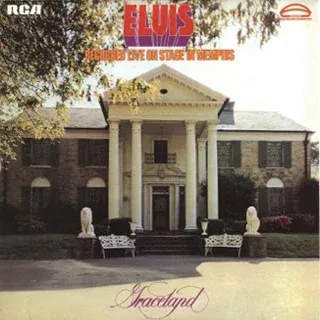
That Memphis run produced one of Elvis’ most celebrated recordings. On March 20, 1974, Elvis Recorded Live on Stage in Memphis was recorded at one of those concerts. Among the tracks was a live rendition of “How Great Thou Art” — a gospel performance of such emotional power that it would later earn Elvis his third and final Grammy Award for Best Inspirational Performance.
After the Memphis triumph, Elvis resumed touring in May, including an engagement at the Sahara in Lake Tahoe from May 16 to 26. Mid-June brought another concert run before a brief rest in early July. Behind the scenes at Graceland, the den was being redecorated in a Polynesian style, and Elvis was exploring a potential new film project titled The New Gladiators.
He closed out the summer with another Las Vegas Hilton engagement from August 19 through September 2, followed by yet another tour from late September through mid-October 1974, including dates at the Sahara-Tahoe.
Grammy Glory and New Beginnings: 1975
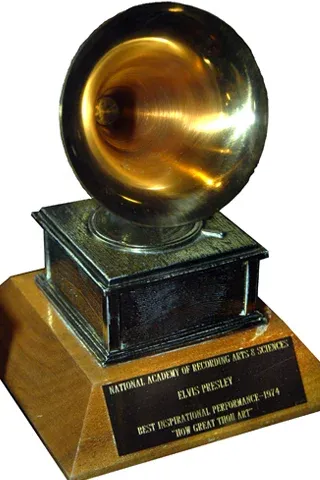
On March 1, 1975, the Recording Academy formally recognized Elvis’ gospel artistry. His live recording of “How Great Thou Art” won the Grammy for Best Inspirational Performance — his third win from fourteen career nominations. Remarkably, all three of Elvis’ Grammy victories came from his gospel recordings, a reflection of the deep spiritual conviction that ran through his music from the very beginning.
March also brought recording sessions for the Today album at RCA’s Sunset Boulevard studio, followed by another Hilton engagement. During this run, on March 28, 1975, Barbra Streisand personally approached Elvis about starring in her upcoming film A Star Is Born. A formal offer came on April 4, and Colonel Tom Parker countered on April 14 — a counteroffer that was ultimately rejected, leaving fans to wonder what might have been.
In April 1975, Elvis made a purchase that would become one of his most iconic personal acquisitions: a Convair 880 jet, which he renamed the Lisa Marie after his daughter. The jet was extensively renovated, and Elvis took his first flight aboard the completed Lisa Marie on November 11, 1975.
The summer and autumn of 1975 were marked by continued touring, though a health scare interrupted his August Las Vegas engagement. Elvis opened at the Hilton on August 18 but ended his run on the 20th and was hospitalized in Memphis until September 5.
He returned to Las Vegas in December 1975 to make up for the canceled shows, and the year ended on an extraordinary high note: on December 31, 1975, Elvis performed a special New Year’s Eve concert in Pontiac, Michigan, setting a single-performance attendance record of 62,500 fans — a staggering figure that underscored his enduring power as a live performer.
Recording at Home and the Road Ahead: 1976
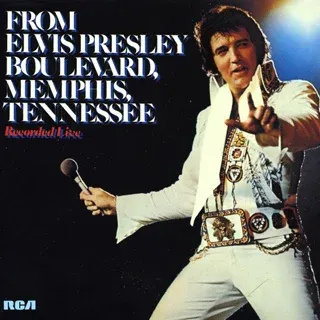
February 1976 marked a creative shift for Elvis. Rather than working in a conventional studio, he invited RCA to bring mobile recording equipment directly to Graceland’s den. The sessions produced material that would form the backbone of two albums: From Elvis Presley Boulevard, Memphis, Tennessee and more than half of the forthcoming Moody Blue album.
Recording sessions continued at Graceland in October 1976, including his last-ever single, “Way Down.” The song, with its rumbling bass line and gospel urgency, would take on a haunting significance after Elvis’ death.
Off stage, 1976 brought personal changes as well. Elvis and Linda Thompson, his steady girlfriend since 1972, parted ways in early November. Later that month, on November 19, Elvis met Ginger Alden, who would remain his companion until his death.
His concert schedule remained relentless through the year. In December, he played the Hilton in Las Vegas for the final time, closing out that chapter of his career. On December 12, evangelist Rex Humbard and his wife visited Elvis backstage — a meeting no one present could have known would lead to Humbard delivering the eulogy at Elvis’ funeral the following year.
The year ended with a New Year’s Eve concert in Pittsburgh, Pennsylvania. Standing on that stage on December 31, 1976, Elvis had no way of knowing it would be his last full year of touring.
The Final Curtain: 1977
The final year of Elvis Presley’s life was filled with concerts, brief respites, a Hawaiian vacation with friends in March, and the mounting pressures of an ambitious touring schedule. He was hospitalized again in early April, causing cancellations of several shows, but he returned to the road in late April.
In June 1977, “Way Down” was released as a single and peaked at #18 on the charts. The same month brought an engagement that would carry historic weight without anyone realizing it at the time. From June 17 to 26, Elvis toured in concert, and the shows on June 19, 20, and 21 were recorded by RCA for a live album and videotaped for a CBS television special to be called “Elvis in Concert.”
The footage captured an Elvis whose physical health had visibly declined — yet his voice, by nearly every account, remained powerful and commanding. It was a striking contradiction that the cameras preserved for history.
June 26, 1977, brought Elvis’ final concert, performed at Indianapolis’ Market Square Arena. He then returned to Memphis to rest and prepare for the next leg of his tour.
In July 1977, the Moody Blue album was released. After Elvis’ death, it would climb to #3 and sell more than two million copies.
August 16, 1977: The World Stands Still
Shortly after midnight on August 16, 1977, Elvis returned to Graceland from a late-night visit to the dentist. Through the early morning hours, he attended to last-minute tour details and spent time with family and staff. He was scheduled to fly to Portland, Maine, that evening for a show on August 17 before continuing a full concert schedule.
Around 7:00 a.m., Elvis retired to his master suite at Graceland to rest before his evening flight.
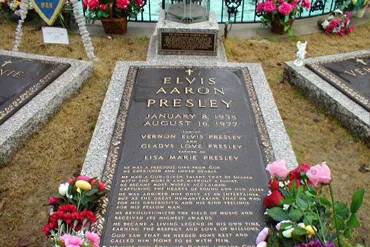 The serene grounds and meditation garden at Graceland, the final resting place of Elvis Presley in Memphis, Tennessee
By late morning, Elvis Presley had passed away due to heart failure. The announcement came by mid-afternoon, and within hours, the shock reverberated around the world. Streets outside Graceland filled with weeping fans. Radio stations interrupted their programming. Newspapers scrambled to revise front pages. An era had ended.
His funeral was held on August 18, 1977. On October 2, the remains of Elvis and his mother Gladys were moved to the Graceland estate, where they rest to this day. On October 3, 1977, the CBS special Elvis in Concert aired, followed by the release of the accompanying album, which quickly peaked at #5 and sold 1.5 million copies.
A Legacy That Never Fades
The final years of Elvis Presley’s life tell a story of extraordinary dedication — of an artist who gave everything to his audience even as his body was failing him. From the triumphant Memphis concerts of 1974 to the last notes played in Indianapolis in June 1977, Elvis remained one of the most electrifying performers in the history of American music.
His three Grammy Awards for gospel music, his record-breaking concert attendances, and the catalog of recordings he left behind all speak to an artistry that transcended trend and era. More than four decades after his passing, Elvis continues to be celebrated as a cornerstone of oldies music — a symbol of a golden era when rock and roll, gospel, and country intertwined to create something entirely new.
For those who wish to explore this remarkable chapter of music history more deeply, visiting Graceland in Memphis, Tennessee remains one of the most moving experiences an American music lover can have. Discover the full scope of Elvis’ posthumous legacy, awards, and the story of how Graceland opened its doors to the world — and keep the music alive.
References
- Graceland Official Website. (n.d.). Elvis Presley Timeline: 1974–1977. Retrieved from https://www.graceland.com
- Recording Academy / GRAMMYs. (n.d.). Elvis Presley Grammy history. Grammy.com
- Guralnick, P. (1999). Careless Love: The Unmaking of Elvis Presley. Little, Brown and Company.
- Jorgensen, E. (1998). Elvis Presley: A Life in Music — The Complete Recording Sessions. St. Martin’s Press.