
Few symbols in rock and roll history carry as much weight as Elvis Presley’s iconic TCB lightning bolt logo. Instantly recognizable to fans around the world, this emblem adorned everything from Elvis’s stage suits to his private aircraft — and it continues to appear on merchandise, pop art, and even the tattoos of fellow rock legends decades after The King’s passing. But what exactly does TCB mean, and why did Elvis choose a lightning bolt to represent his personal motto?
Elvis Presley’s TCB stands for “Taking Care of Business,” his personal motto and the name of his 1970s backing band. The lightning bolt beside it symbolizes “In a Flash” — together conveying the energy, urgency, and relentless work ethic that defined his rise to global stardom.
This article explores the origins and deeper meaning of the TCB symbol, the personality traits that inspired it, its surprising connections to comic book heroes and British rock royalty, and even an unexpected link to David Bowie’s most famous look.
What Does Elvis Presley’s TCB Logo Stand For?
The TCB lightning bolt logo is one of rock and roll’s most enduring visual symbols. TCB stands for “Taking Care of Business,” a phrase Elvis adopted as his personal motto throughout his career. The lightning bolt alongside it represents “in a flash” — and together, the full meaning of the emblem becomes: “Taking Care of Business in a Flash.”
This combination of words and imagery was not merely decorative. It encapsulated something fundamental about how Elvis approached his work: with speed, intensity, and a drive for excellence that few in the music industry could match.
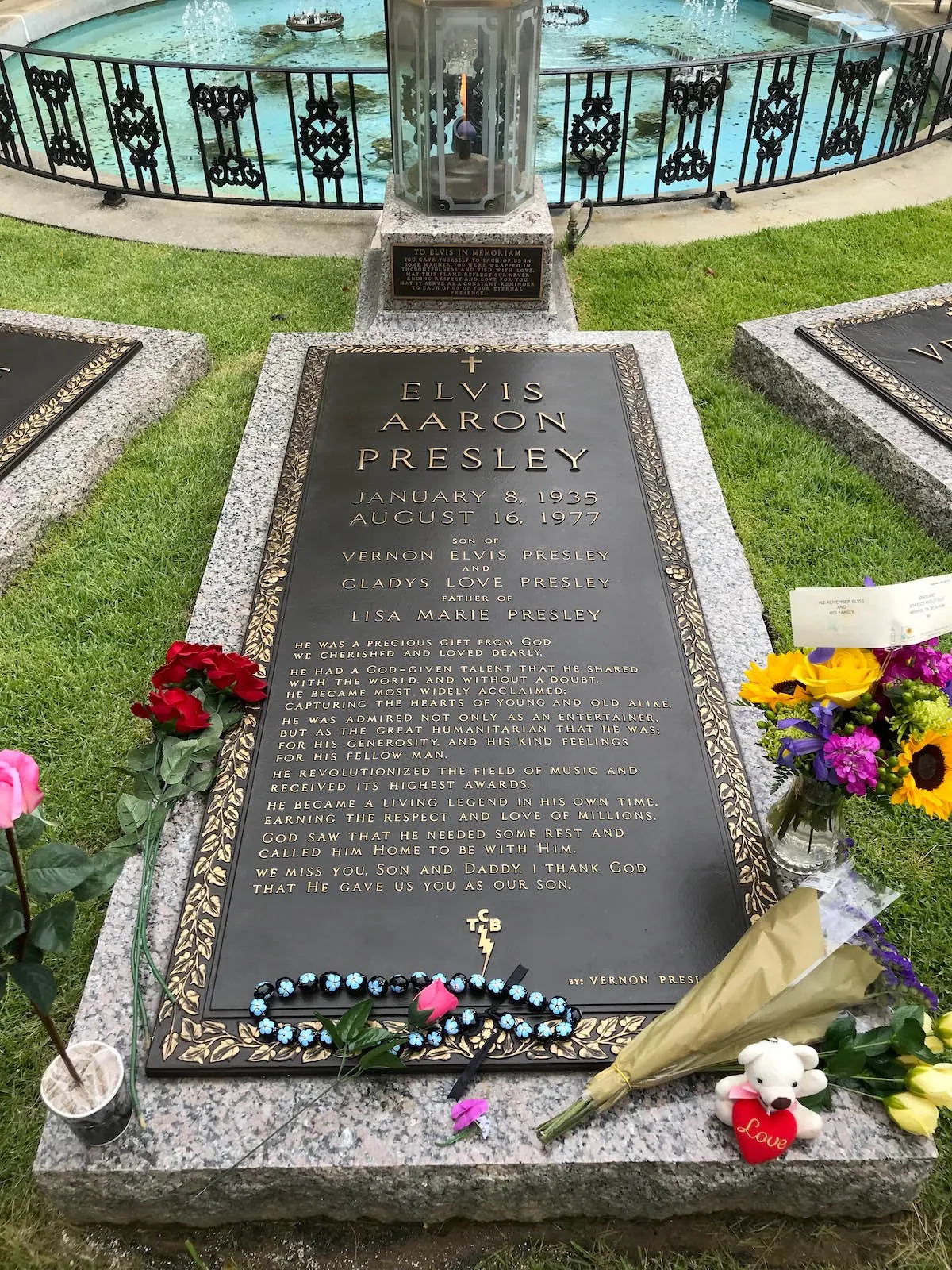
The TCB logo appeared everywhere in Elvis’s world. It was stitched onto his legendary jumpsuits and stage costumes, printed on records and merchandise, and emblazoned across his fleet of private vehicles and aircraft. For Elvis, the logo was not just branding — it was a statement of identity.

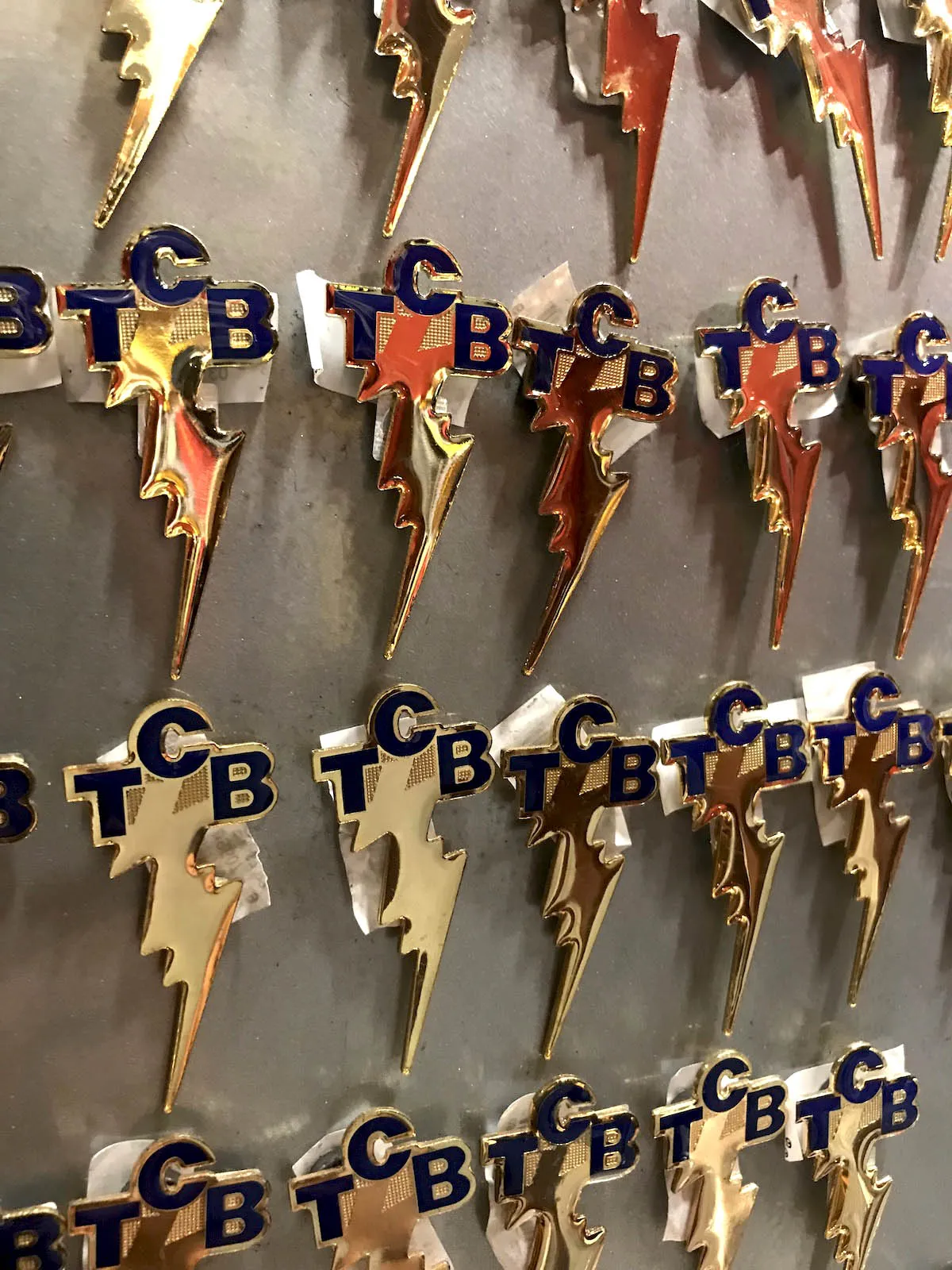 TCB lightning bolt pin badges on display in the Graceland gift shop, Memphis
The Meaning Behind “Taking Care of Business” — Elvis’s Personal Work Ethic
To truly understand why Elvis Presley chose the TCB motto, it helps to look closely at the man behind the icon — and specifically, at the work ethic that powered his extraordinary career.
Elvis grew up in humble circumstances in Tupelo, Mississippi, before his family relocated to Memphis, Tennessee. As a school student, he was by many accounts polite and well-intentioned but unremarkable academically. What set him apart, however, was an extraordinary capacity for focus and dedication when it came to music.
From his teenage years onward, Elvis immersed himself deeply in the sounds around him. He studied records and radio broadcasts with a level of discipline and intent that belied his young age — carefully analyzing musical genres, melodic structures, and vocal styles. The extraordinary musical diversity of Memphis in the 1940s and 1950s, where gospel, blues, country, and rhythm and blues coexisted and overlapped, gave him an unparalleled musical education.
This diligence never left him. His ascent from a truck driver recording demos at Sun Studio to the world’s first and greatest rock and roll star was not the product of chance or overnight success. It was the outcome of sustained, focused effort — taking care of business, in every sense of the phrase.
By the 1970s, Elvis had formally adopted TCB as both his motto and the name of his long-serving backing band, the TCB Band. The phrase captured the no-nonsense professionalism and high standards he expected from himself and everyone around him, including the loyal inner circle known as the Memphis Mafia.
Why Did Elvis Choose a Lightning Bolt?
The lightning bolt is arguably the most visually striking element of the TCB logo. Its meaning, “in a flash,” adds a crucial dimension to the motto — not just getting things done, but doing them with immediacy and explosive energy.
The bolt perfectly reflected the qualities Elvis embodied as a performer and as a professional. His stage presence was electric. His rehearsals were rigorous. He demanded the same high standards from his crew and collaborators. The lightning bolt was not a decorative flourish; it was a visual expression of the power and velocity with which Elvis lived and worked.
The 2022 biographical film Elvis, directed by Baz Luhrmann, offered another compelling theory about the lightning bolt’s origins. According to the film, Elvis was deeply inspired by his childhood love of Marvel comic books — and particularly by his favourite superhero, Captain Marvel Jr., whose costume featured a prominent lightning bolt emblem.
An early scene in the movie depicts a young Elvis wearing a yellow lightning bolt necklace, suggesting the symbol had personal significance long before it became his professional trademark. Whilst the precise degree of artistic license taken by the filmmakers is open to debate, it is historically documented that Elvis had a genuine passion for comic books and drew on his vivid imagination to craft his larger-than-life stage persona.
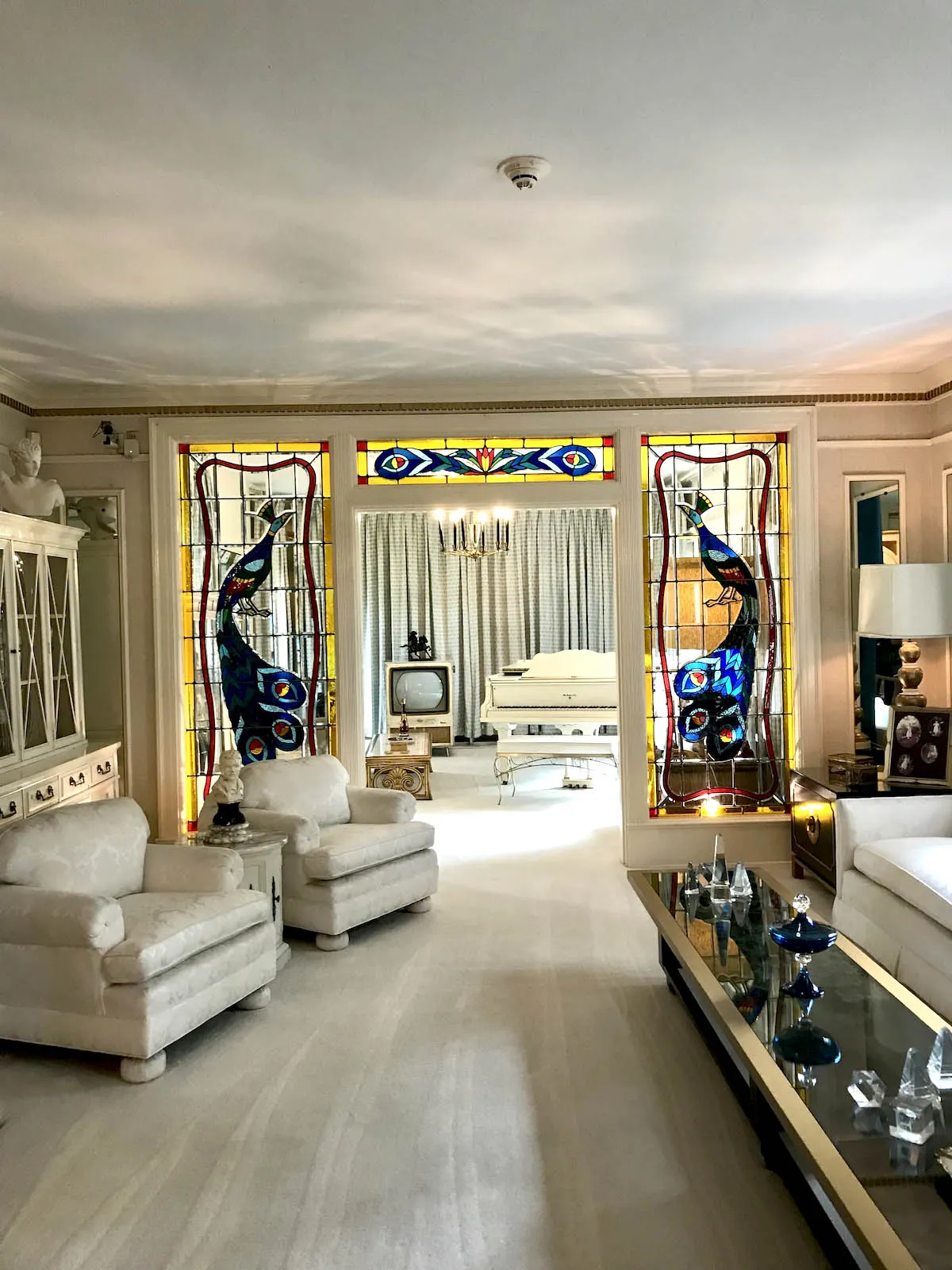 Elvis Presley's Graceland living room interior, photographed during a 2018 visit to the Memphis estate
The TCB Logo and Elvis Pop Art
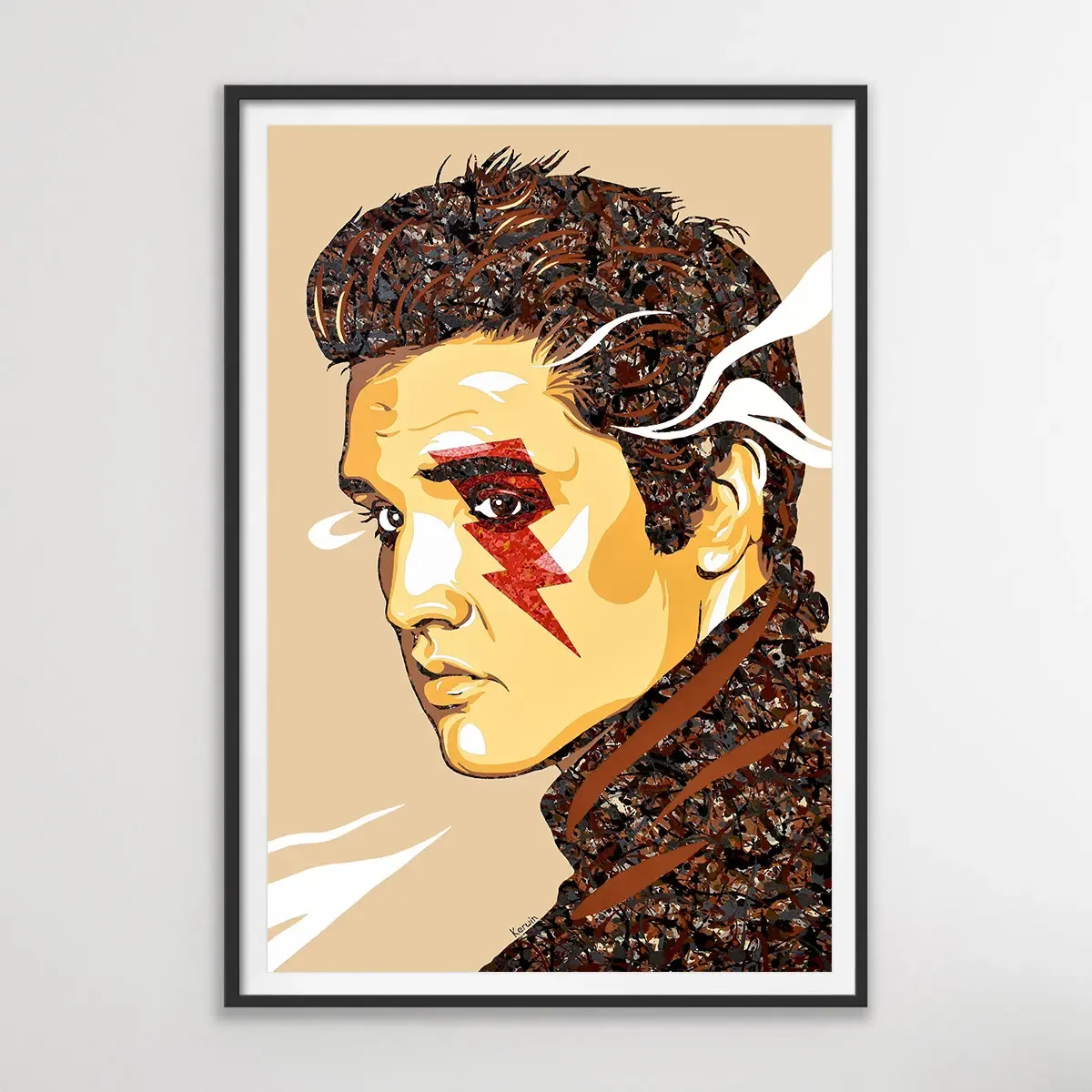
The TCB lightning bolt has proven a powerful source of inspiration for artists working in the pop art tradition. UK artist Kerwin Blackburn’s 2023 Elvis Presley portrait — painted in his signature Jackson Pollock-influenced splatter style — features a bold red lightning bolt across Elvis’s face, a direct visual reference to the TCB symbol.
It is worth noting that many viewers initially assume the lightning bolt in this painting is a reference to David Bowie’s famous Aladdin Sane makeup. In fact, the lightning bolt was synonymous with Elvis before Bowie ever adopted it — a point that underscores how deeply the symbol has become embedded in rock and roll iconography.
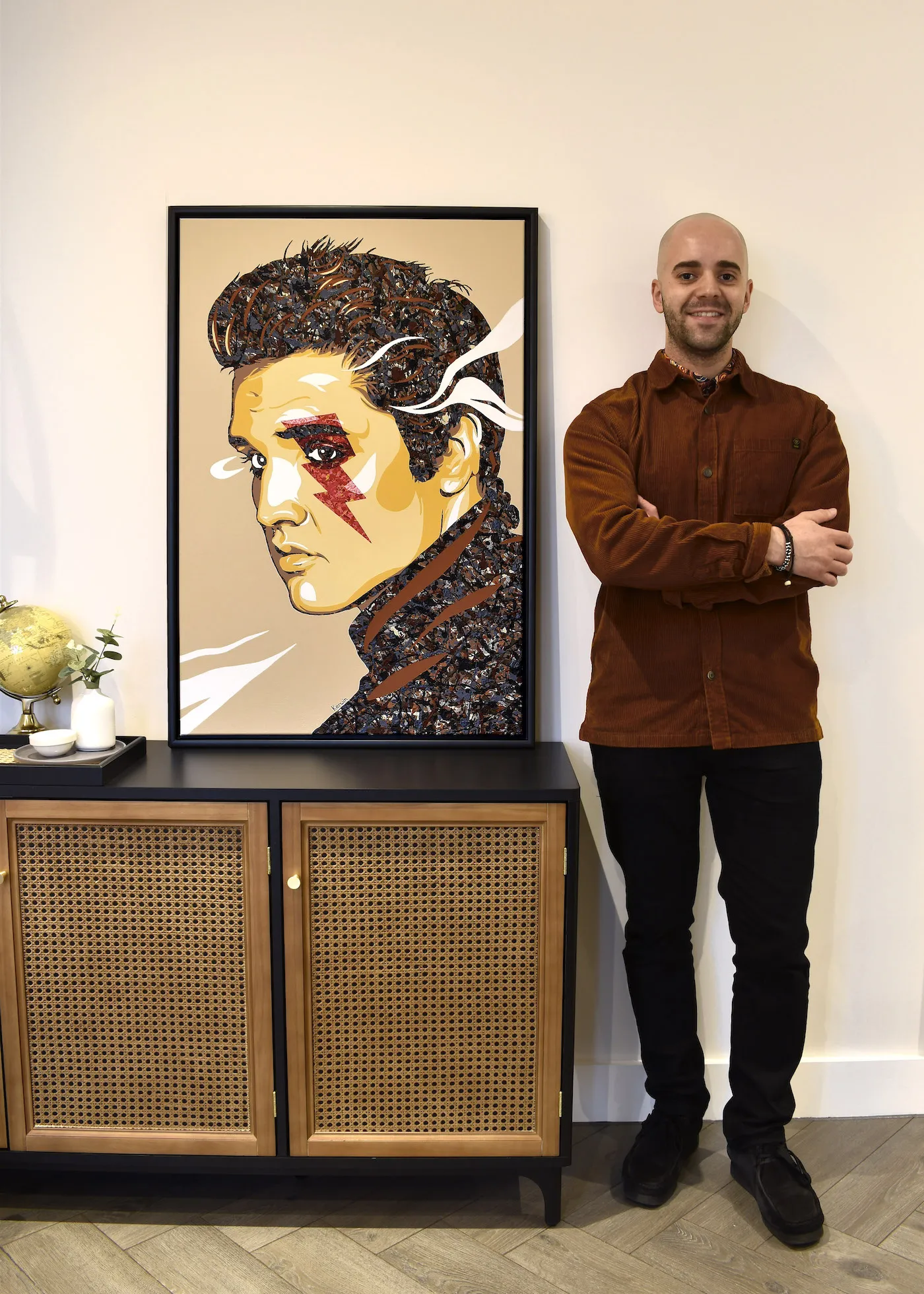
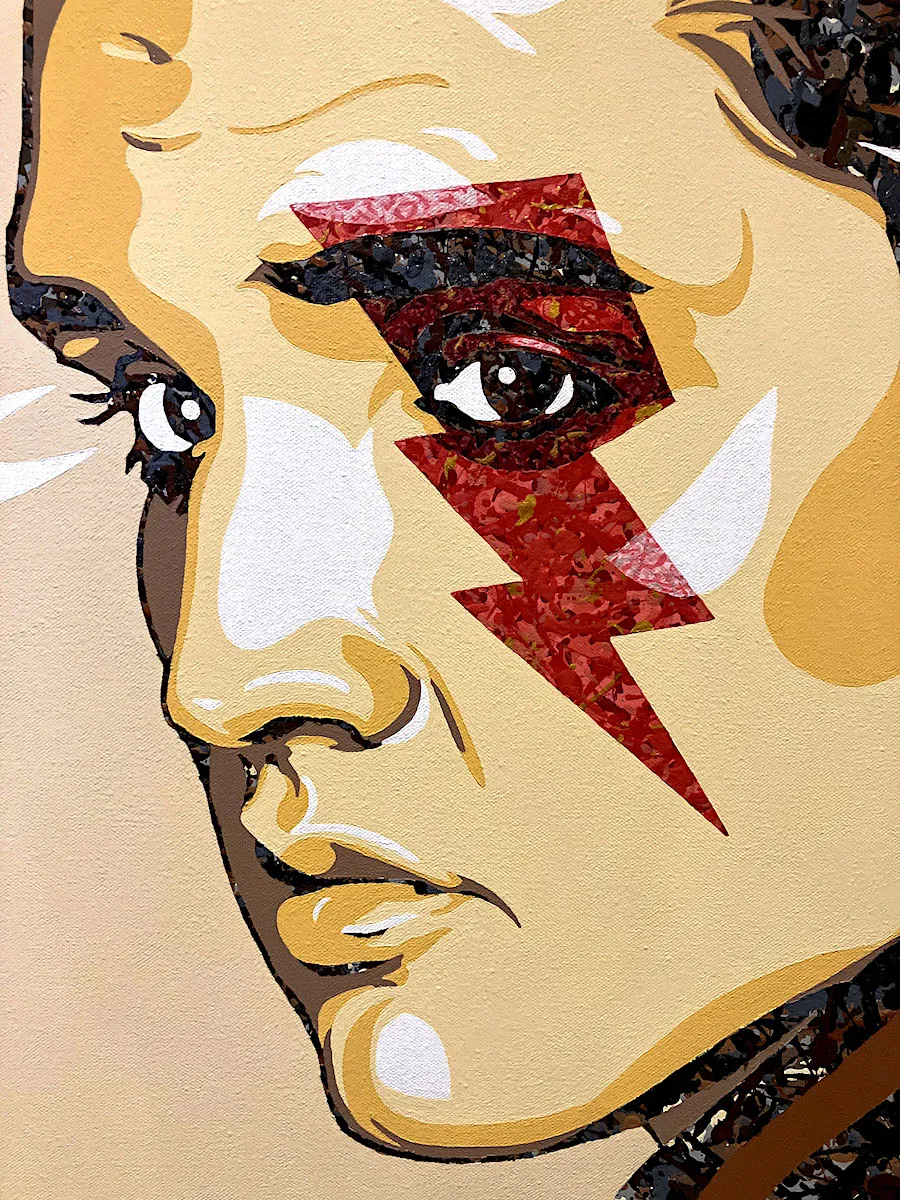 Close-up detail of the TCB lightning bolt on Kerwin Blackburn's Elvis Presley pop art painting
Did Elvis Inspire David Bowie’s Lightning Bolt?
The relationship between Elvis’s TCB lightning bolt and David Bowie’s iconic Aladdin Sane makeup has long been a subject of fan speculation. The direct answer, based on available evidence, is that Elvis does not appear to have directly inspired Bowie’s 1973 Aladdin Sane lightning bolt face paint — though an indirect influence cannot be entirely ruled out.
Bowie was a self-confessed Elvis fan and famously declared Elvis to be his hero. He was also steeped in pop culture, avant-garde art, and a vast range of musical and literary influences — all of which fed into the Aladdin Sane character. The lightning bolt, in Bowie’s case, is believed to have emerged from his own creative vision rather than direct borrowing from Elvis.
There is also a subtle but telling visual difference between the two: Elvis’s TCB lightning bolt features an additional jagged point compared to Bowie’s, meaning the two symbols are not identical even at a purely graphic level.
One remarkable coincidence connects the two artists, however: Elvis Presley and David Bowie shared the same birthday, 8th January — Elvis born in 1935, Bowie in 1947. They later also shared the same record label, RCA, during the 1970s. Two lightning bolt icons, born on the same date.
Liam Gallagher’s Surprising Elvis TCB Tattoo
Perhaps one of the most unexpected connections to the Elvis TCB symbol involves Liam Gallagher, the frontman of iconic British rock band Oasis and one of the defining rock personalities of the 1990s.
Liam Gallagher has Elvis’s circular TCB lightning bolt emblem tattooed on his arm — a fact that surprises many fans, given that Oasis is far more commonly associated with The Beatles and the influence of John Lennon. References to Elvis were notably absent from Oasis’s public persona throughout their heyday.
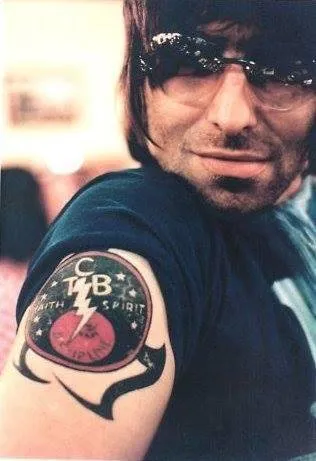 Liam Gallagher photographed showing his arm with the Elvis TCB lightning bolt tattoo
It is believed Liam had the TCB tattoo applied around the late 1990s, reportedly to cover up a previous tattoo of his former wife, actress Patsy Kensit, following the breakdown of their marriage in 2000. The choice of Elvis’s personal motto as a cover-up is telling — suggesting that Gallagher personally resonated with the symbol’s underlying message of power, urgency, and self-determination.
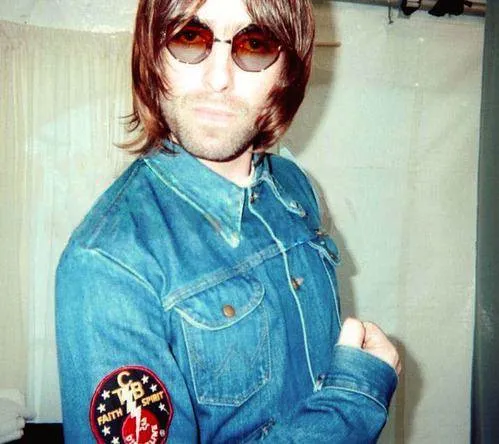
Liam’s admiration for Elvis did not stop at the tattoo. He has also performed on stage wearing a denim jacket emblazoned with Elvis’s TCB logo. His clothing brand, Pretty Green, released an official Elvis Presley clothing collaboration in 2021 — a capsule collection that included a striking paisley silk shirt decorated in red, black, and gold, featuring the TCB lightning bolt logo throughout its design.
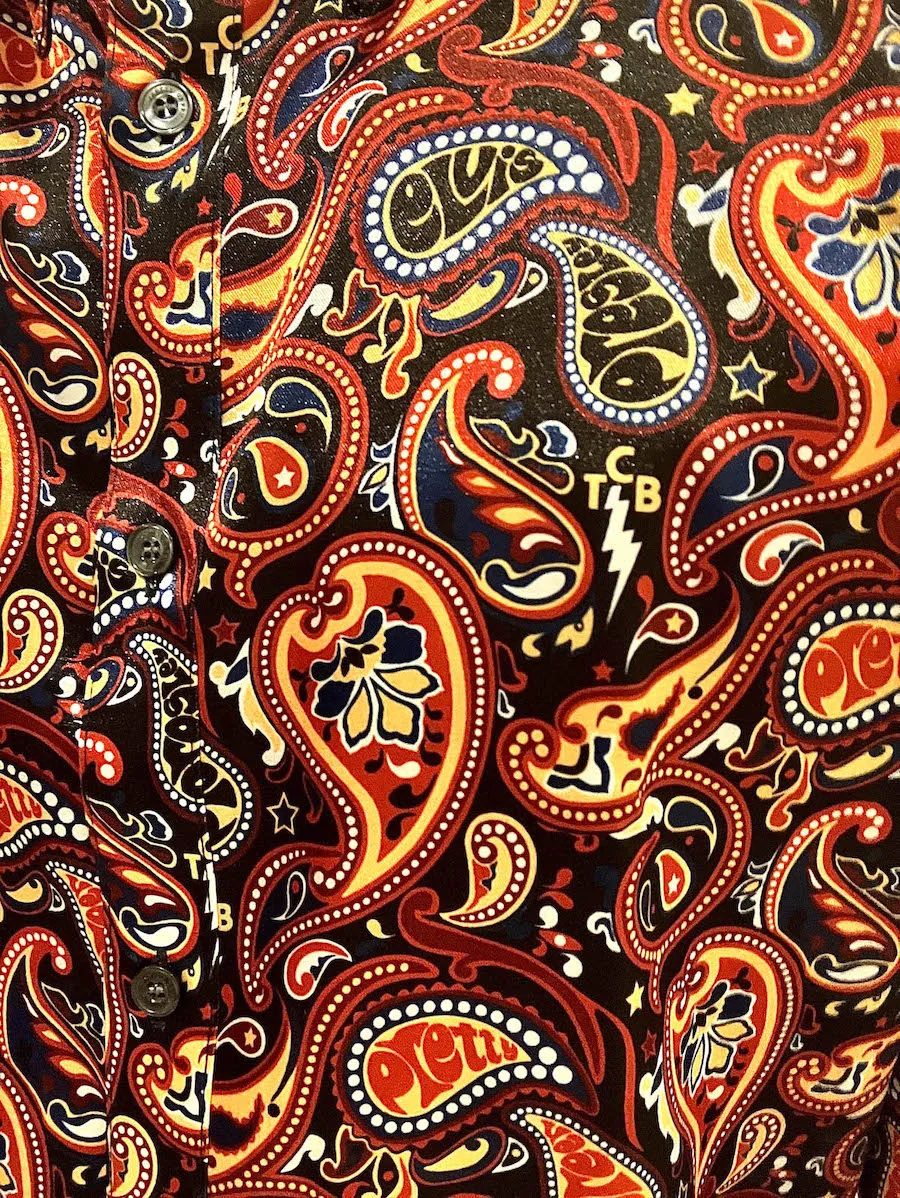 Pretty Green x Elvis Presley collaboration paisley shirt featuring TCB lightning bolt design in red black and gold
Taking Care of Business — Even in Chocolate
In a delightful example of how Elvis’s TCB legacy continues to inspire creative expression, artist Kerwin Blackburn recreated the TCB lightning bolt logo in Easter 2023 using hundreds of M&M’s chocolates — sourced from the legendary M&M’s World store in Times Square, New York, which stocks an extraordinary range of colours unavailable in regular shops.
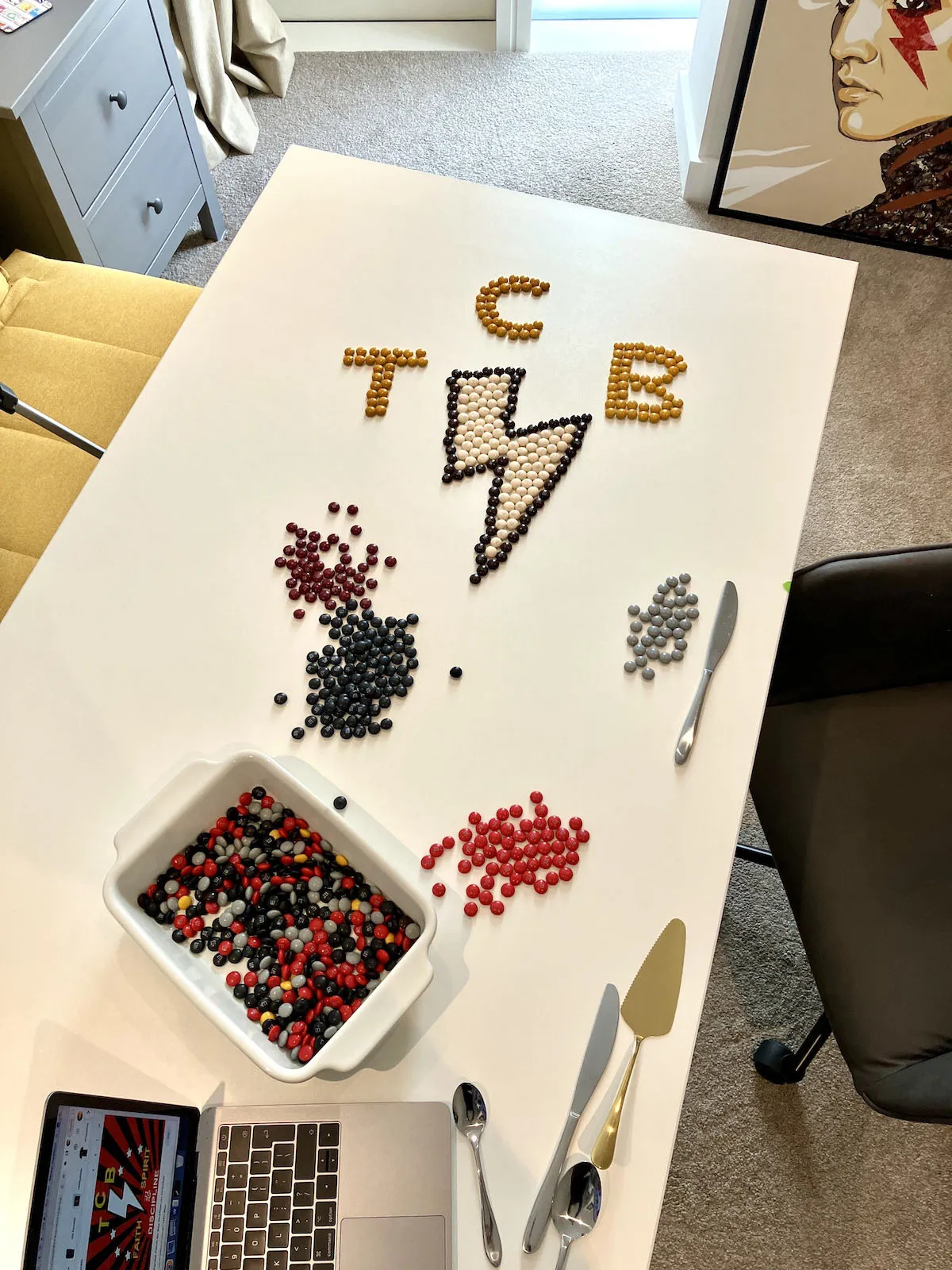 Elvis Presley TCB lightning bolt logo recreated using hundreds of colourful M&Ms chocolates arranged on a flat surface
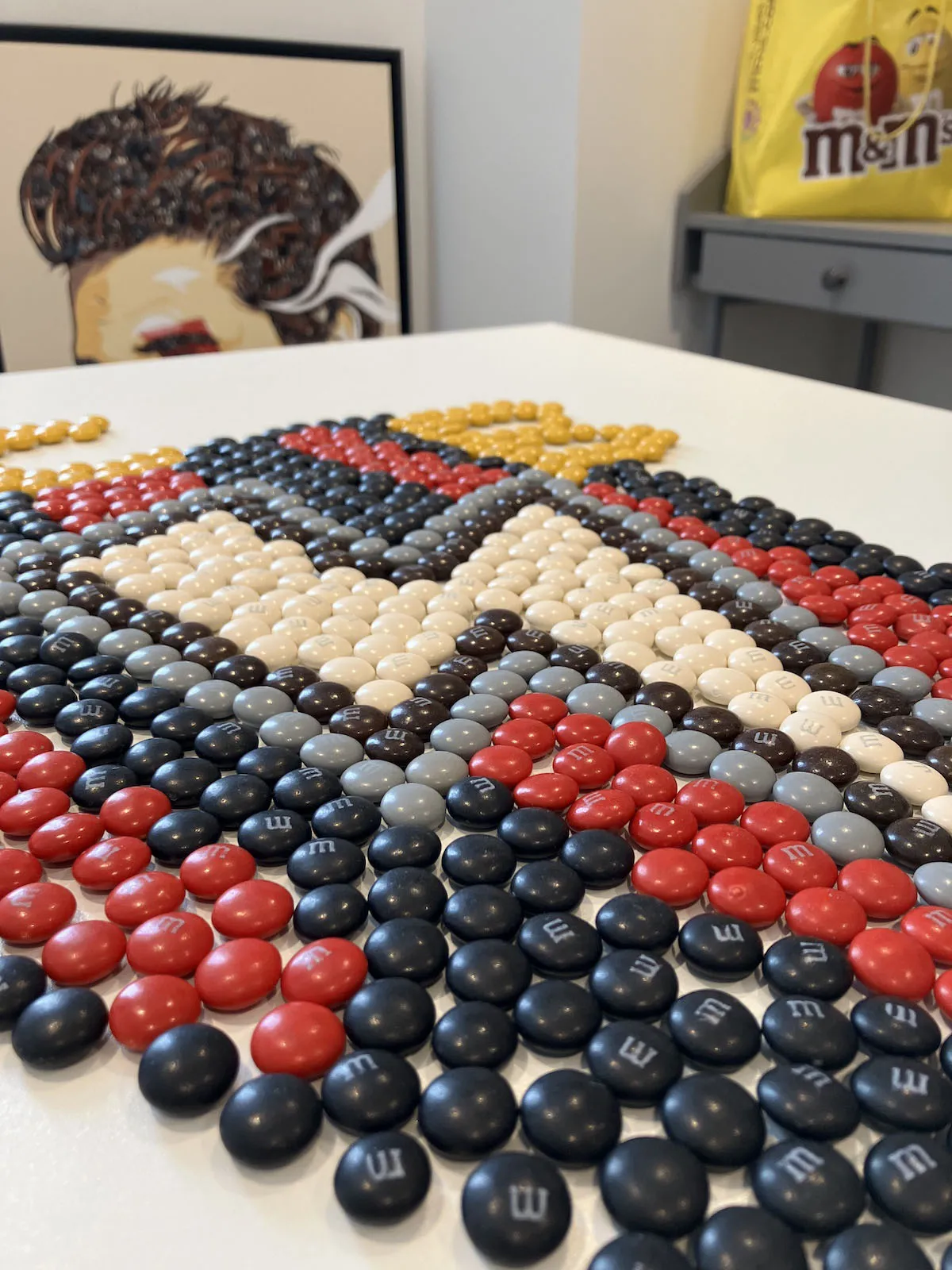 Close-up view of the M&M chocolate TCB artwork showing the individual sweets arranged to form the lightning bolt symbol
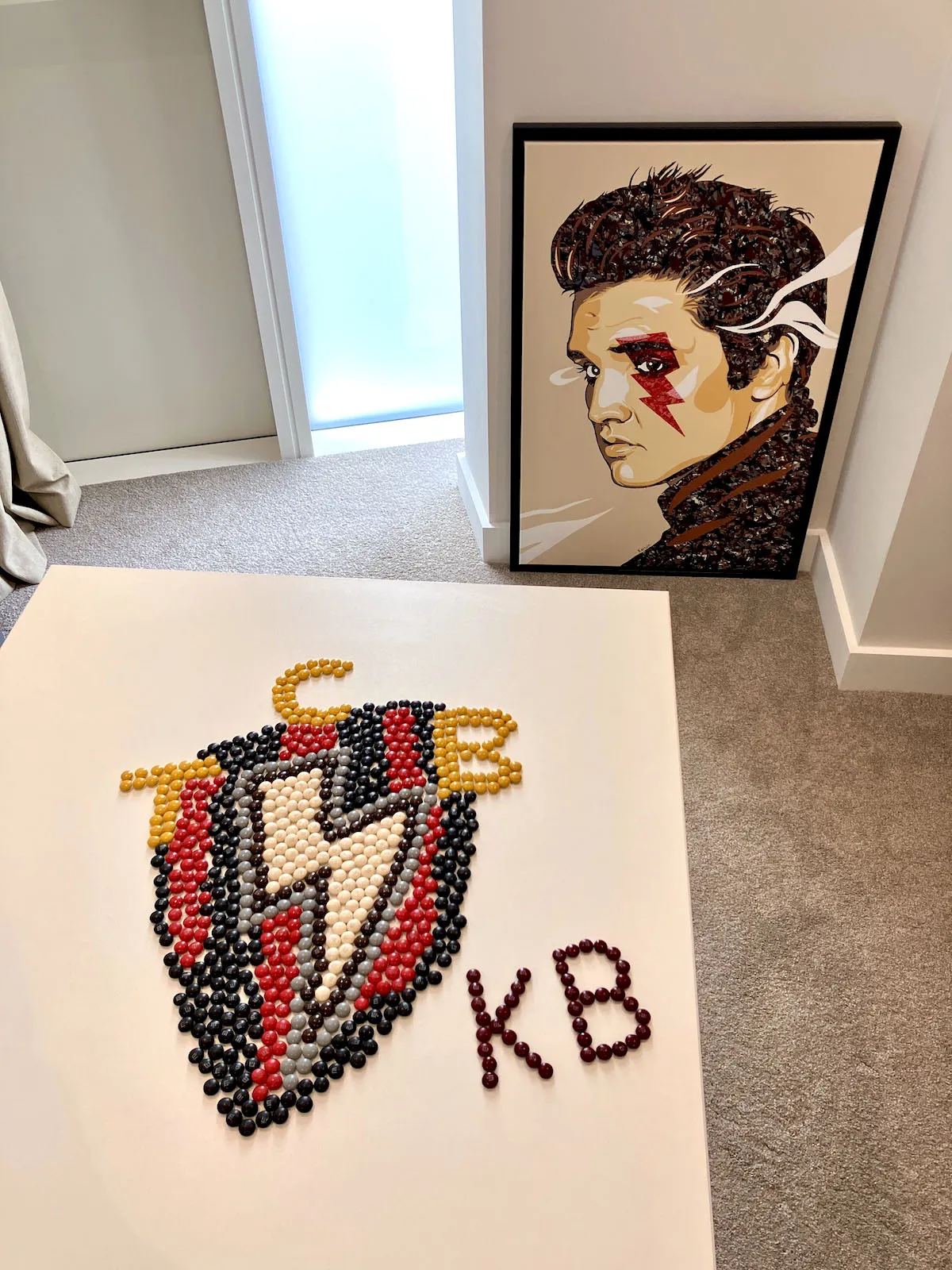 Full overhead view of the completed Elvis TCB M&M chocolate mosaic by artist Kerwin Blackburn
It is a playful tribute that captures something essential about Elvis’s enduring legacy: his symbols and his spirit continue to inspire creativity, admiration, and homage across every conceivable medium.
Did you know? In China, Elvis Presley is not known by his actual name. He is referred to as Mao Wang — literally translating as “Cat King.” The nickname is thought to derive from one of Elvis’s early monikers in the American South: “the Hillbilly Cat.”
The Graceland Den and the Lightning Bolt That Lives On
A visit to Graceland, Elvis’s legendary Memphis home and final resting place, makes the TCB symbol feel truly alive. The lightning bolt motif appears not only on his grave and across his fleet of vehicles, but also within the rooms of the house itself — including a striking bolt visible on the wall of Elvis’s private den.
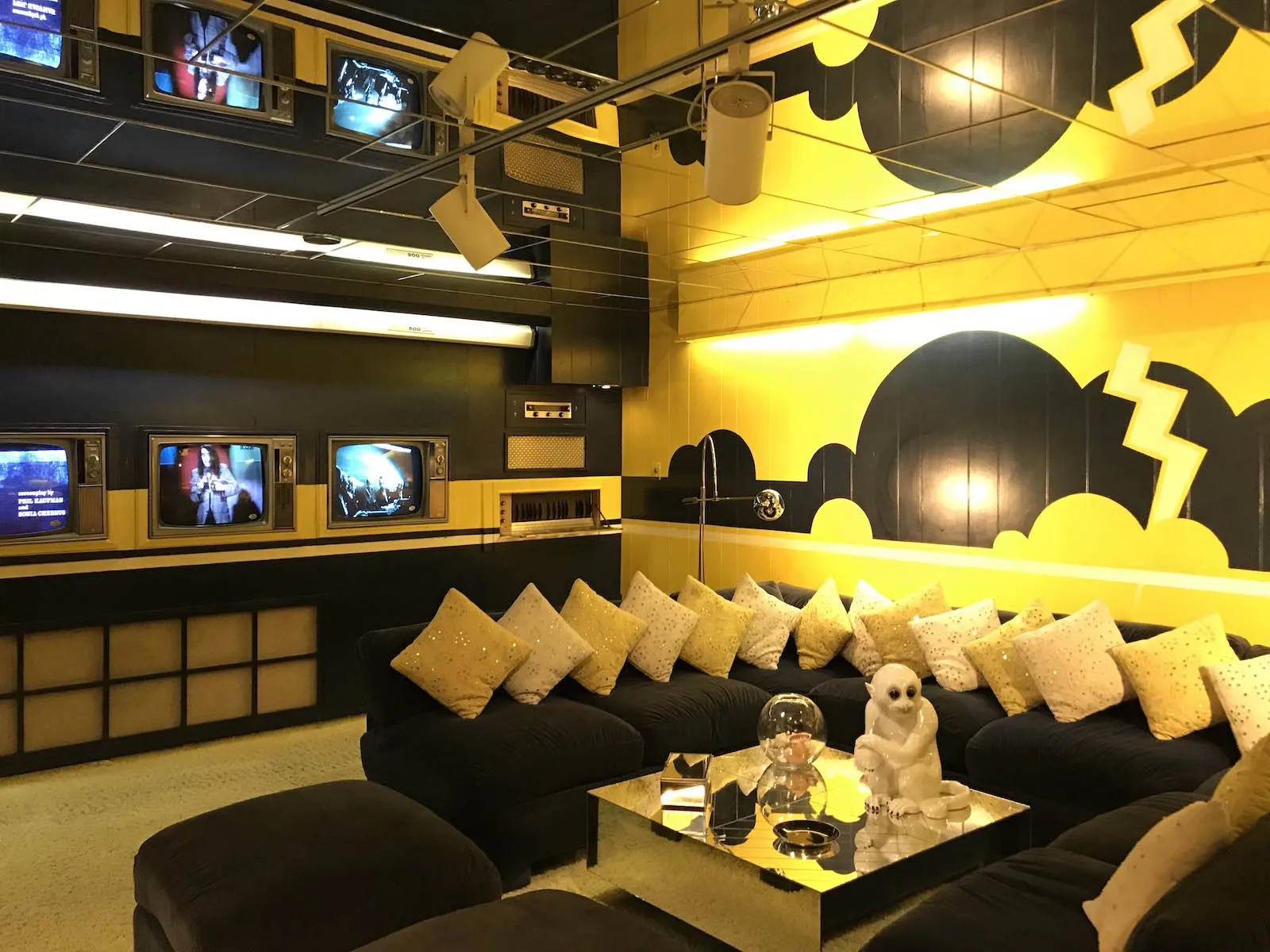 Elvis Presley's private den room at Graceland featuring a lightning bolt motif on the wall
For anyone who visits Graceland, the pervasiveness of the TCB logo throughout the estate makes it impossible to miss just how deeply personal this symbol was to Elvis. It was not a marketing device — it was a way of life.
Conclusion: A Legacy That Continues to Crackle
The story of Elvis Presley’s TCB lightning bolt is ultimately the story of the man himself: a self-made icon who transformed raw talent, relentless focus, and a fierce personal code into a career that changed music forever. “Taking Care of Business in a Flash” was not just a motto — it was a philosophy.
From his boyhood fascination with comic book superheroes to the gleaming gold jumpsuits of his Las Vegas years; from Liam Gallagher’s arm to David Bowie’s birthday; from Graceland’s living room walls to the work of contemporary pop artists — the TCB lightning bolt continues to crackle with the energy of its creator.
Whether you are discovering Elvis for the first time or returning to his music with fresh ears, the TCB emblem is the perfect entry point into understanding what made him truly extraordinary. Explore the music, visit Graceland if you can, and take care of your own business — in a flash.