
Building Information Modeling (BIM) is far more than just advanced 3D modeling; it represents a fundamental shift in how the architecture, engineering, and construction (AEC) industry operates. It is a sophisticated, collaborative process that leverages intelligent, data-rich 3D models to manage the entire lifecycle of a building or infrastructure project—from initial concept and design through construction, operation, and eventual decommissioning. Unlike traditional 2D drawings, these models are dynamic, interconnected, and serve as a single source of truth for all stakeholders involved.
This comprehensive guide explores the profound impact of BIM on design efficiency, its evolution as a technological necessity, a balanced look at its advantages and challenges, and the advanced dimensions that are shaping the future of construction.
How BIM is Revolutionizing Design Efficiency
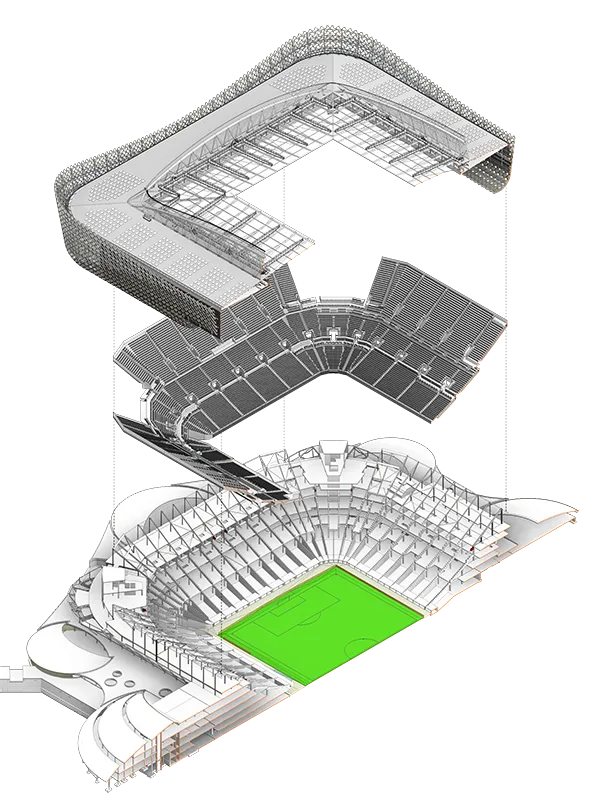
Technology is fundamentally altering the way buildings and infrastructure are conceived, built, and managed. BIM sits at the heart of this transformation, streamlining workflows and drastically improving performance throughout a project’s lifecycle. At its core, a BIM model is a virtual, 3D representation of a building, complete with every component meticulously defined—from structural elements like bricks and mortar to systems for lighting, HVAC, and even interior finishes.
This digital model acts as a central hub for information. Every individual and organization involved in the design and construction process can access and contribute to this shared dataset. This allows for powerful analyses, including cost estimation, energy performance simulations, construction scheduling, and long-term maintenance planning. The entire workflow is built on this shared information, which is continuously updated and refined from the initial sketch to the final handover. This collaborative aspect has led many to also define BIM as “Building Information Management.”
The limitations of traditional 2D design processes become starkly apparent when compared to BIM. In the old workflow, information transfer between design and construction teams was a major bottleneck. A seemingly minor change in one drawing would necessitate manual updates across a host of other related drawings, a process prone to human error and significant delays. Data existed in silos, with no automatic consistency check. This lack of integration made it incredibly difficult to identify clashes between different building systems (e.g., a duct running through a structural beam) until they were discovered on-site, leading to costly rework and project delays.
The Inevitable Rise of BIM: A Technological Evolution
The emergence of BIM wasn’t an accident but a natural progression driven by technological advancement. The journey began with hand-drawn architectural blueprints, which were then revolutionized by Computer-Aided Design (CAD). CAD introduced digital drafting, offering unprecedented precision and ease of modification compared to manual methods.
The next leap was fueled by exponential growth in computing power and graphics capabilities. This paved the way for 3D CAD modeling. Software evolved to simulate every minute detail of a project with high geometric accuracy. BIM took this a step further, transforming these 3D models into intelligent databases. When combined with a robust BIM process, these models provide a complete information set, supporting every phase of a construction project with unparalleled depth.
With a well-executed BIM process, construction becomes faster, more precise, and more cost-effective. Decisions are based on accurate, coordinated data, reducing uncertainty and waste. This clear value proposition is why BIM is rapidly evolving from an innovative trend to a mandated standard in the construction industry globally.
In Vietnam, the government has also outlined a roadmap for BIM adoption, positioning it as a crucial solution to embrace the upcoming Industry 4.0 revolution within the country’s construction sector.
Evaluating the Pros and Cons of BIM Implementation
BIM represents one of the most significant leaps forward in the AEC industry, fundamentally changing project design, construction, and management. Its adoption is becoming a key differentiator for contractors worldwide. The ability to create a detailed 3D model where every component carries rich, up-to-date information offers immense benefits, but the transition also presents considerable challenges.
Key Advantages of Adopting BIM
- Centralized Data Management: Forget manually updating dozens of disparate 2D CAD drawings. With BIM, any change is reflected automatically across the entire model. This ensures consistency and accuracy, allowing teams to focus on design quality rather than administrative tasks.
- Intuitive and Visual Design: The entire project exists as a detailed, digital twin. Stakeholders, from owners to architects and engineers, can visualize every component and system in context. This clarity allows for early detection of design conflicts (clash detection) and optimization of spatial arrangements, long before construction begins.
- Significant Cost and Time Savings: BIM provides a highly accurate foundation for cost estimation and scheduling. The unified data model minimizes unexpected change orders and rework, which are major drivers of cost overruns and delays. It streamlines document management, preventing version control issues and information loss.
- Enhanced Collaboration: BIM breaks down silos between disciplines. Architects, structural engineers, MEP (mechanical, electrical, plumbing) specialists, and quantity surveyors all work on a single, coordinated model. Information flows seamlessly, fostering a truly integrated project delivery approach.
- Reduced Risk: The 3D model allows for thorough virtual constructability analysis. By identifying clashes and logistical issues in the virtual environment, teams can resolve them proactively, mitigating risks and ensuring a smoother construction process.
Challenges and Hurdles in BIM Adoption
- The Investment Challenge: Transitioning from traditional 2D workflows to BIM requires a significant upfront investment. This includes costs for powerful software licenses (often a recurring subscription), hardware upgrades to handle complex models, hiring expert consultants for implementation, and comprehensive staff training.
- The Critical Importance of Early Planning: BIM is not a tool that can be effectively implemented halfway through a project. Success hinges on meticulous planning from the outset. This involves defining clear protocols for model creation, information exchange, and collaboration among all parties. Without this foundational groundwork, the full potential of BIM will not be realized, and the project may face coordination issues rather than solving them.
Understanding BIM Dimensions: From 3D to 7D and Beyond
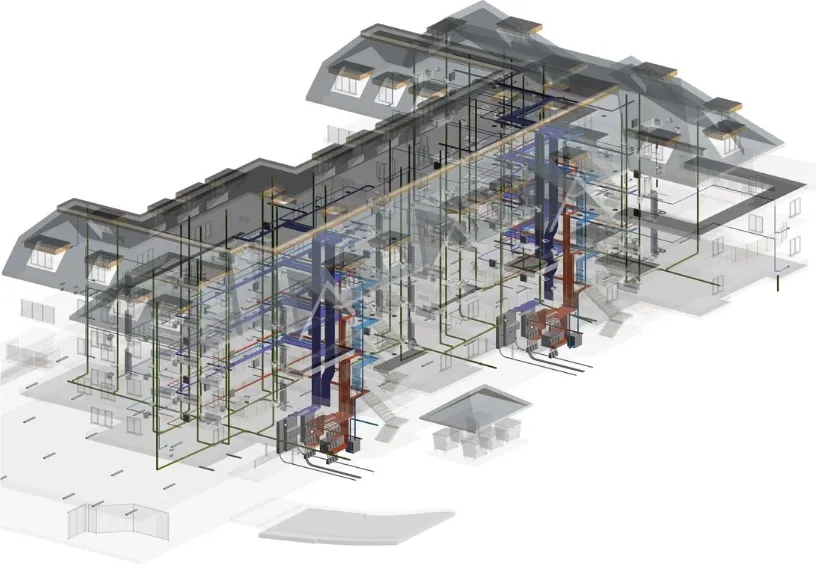
While the core of BIM is an intelligent 3D model (representing length, width, and height), the concept has expanded to incorporate additional layers of information, often referred to as “dimensions.” Each dimension adds a new data layer to the model, enhancing its utility across the project lifecycle.
- 4D BIM (Time): This integrates the 3D model with scheduling data. It allows project managers to create virtual construction sequences, visualize the project timeline, and optimize the flow of materials, equipment, and labor on site.
- 5D BIM (Cost): Building on 4D, 5D BIM links the model to cost data. This enables dynamic cost estimation, budget tracking, and real-time financial analysis. Any design change automatically updates the cost estimate, providing unparalleled financial control.
- 6D BIM (Lifecycle & Energy): This dimension focuses on the operational phase. It incorporates data on energy consumption, thermal performance, and lighting analysis. Facilities managers can use this information to optimize the building’s energy efficiency and operational costs throughout its life.
- 7D BIM (Facility Management): 7D BIM takes lifecycle management further by embedding detailed information about all installed assets and equipment. This includes manufacturer details, installation dates, warranty information, and maintenance schedules. This rich dataset streamlines ongoing maintenance, repairs, and future renovations.
As technology continues to advance, even more dimensions may emerge. While some pioneering firms globally are successfully implementing 6D and 7D workflows, it’s crucial to recognize that these are built upon a solid foundation of 3D and 4D BIM. The path to advanced dimensions requires mastering the fundamentals first.
For companies, especially in markets like Vietnam, getting overwhelmed by complex concepts like 6D or 7D before establishing a robust 3D process can be counterproductive. The most effective strategy is a step-by-step approach: build a strong foundation with 3D modeling, then progressively integrate time, cost, and operational data as expertise and project requirements mature. As industry experts often emphasize, “If you want to progress to 4D models and beyond, you must first master the 3D model.”
BIM and Revit: The Industry-Standard Connection
The BIM process relies on specialized software tools (BIM Tools) to create, manage, and share these intelligent models. An effective BIM authoring tool must enable high-quality 3D modeling, allow for embedding rich data into model components, and facilitate real-time, collaborative updates.
Autodesk has been a pioneer and remains a leader in this field. Among its suite of solutions, Autodesk Revit has become the industry-standard software, particularly for 3D BIM. Revit is more than just a modeling tool; it is a platform designed specifically for BIM workflows.
Its key advantages include:
- Seamless Ecosystem Integration: Revit offers tight, native integration with other Autodesk tools like AutoCAD, Navisworks (for project review and clash detection), and 3ds Max (for high-end visualization). This creates a seamless workflow from design to coordination and presentation.
- Unified Discipline-Specific Modeling: Unlike older methods requiring different software for different disciplines, Revit allows architects, structural engineers, and MEP engineers to work within the same software environment. They can collaborate on a single, central model, minimizing data loss and errors associated with importing and exporting files from different platforms.
- Real-Time Collaboration: Revit’s worksharing capabilities allow multiple team members to work on the same model simultaneously, viewing each other’s changes in real-time. This fosters the integrated collaboration that is central to the BIM philosophy.
While Revit has some limitations, Autodesk’s continuous development and its strength within a comprehensive ecosystem keep it at the forefront of BIM software.
The Role of a Common Data Environment (CDE)
Implementing a BIM process generates an enormous volume of data—both geometric (the shape and location of objects) and non-geometric (specifications, costs, schedules). Managing this vast, complex dataset requires a structured approach, which is where the Common Data Environment (CDE) comes in.
A CDE is a secure, centralized digital repository where all project information is stored, managed, and shared. It serves as the single source of truth for the entire project team. Using a CDE ensures that everyone is working from the latest, approved versions of models and documents. It streamlines information flow, reduces the risk of errors caused by outdated information, prevents duplication of effort, and significantly improves coordination across all project stakeholders. A well-implemented CDE is the backbone of any successful BIM project.
Expert Consulting, Software Solutions, and Training
Successfully navigating the BIM journey often requires expert guidance and robust training. For organizations looking to adopt or optimize their use of Autodesk software within a BIM framework, specialized consulting services can be invaluable. These services help bridge the gap between software capability and practical, efficient project implementation, ensuring a balance between quality outcomes and cost-effectiveness.
Furthermore, formal, internationally-standardized training programs are essential for teams to fully leverage the power of tools like Revit. Authorized training centers offer curricula that combine official Autodesk courseware with practical, local industry needs, equipping professionals with the skills necessary to excel in a BIM-driven environment.
By embracing BIM, the AEC industry is not just adopting new software; it is committing to a more collaborative, efficient, and data-driven future, fundamentally changing the way the world is built.