
Ticks pose a year-round threat to dogs, especially in tropical regions like India, where warm and humid conditions allow these parasites to thrive. Beyond causing discomfort, ticks transmit serious diseases such as Lyme disease, Ehrlichiosis, Babesiosis, and Anaplasmosis—some of which can also affect humans. Protecting your dog requires a combination of preventative measures, regular treatments, and environmental control to ensure their health and safety.
Why Tick Prevention Is Critical for Dogs
Ticks are ectoparasites that attach to a dog’s skin, feeding on their blood for days. During this time, they can transmit harmful pathogens through their saliva. In India’s climate, ticks remain active all year, unlike in colder regions where their activity is seasonal. The Brown Dog Tick, for example, can complete its entire life cycle indoors, making it a persistent threat even in homes and kennels.
Dr. Jason Drake, a veterinary parasitologist at MSD Animal Health, emphasizes:
“The longer a tick feeds uninterrupted, the greater the risk of a dog being infected with a tick-borne pathogen. Effective and timely tick elimination is crucial.”
Common Tick-Borne Diseases in Dogs
Ticks can transmit a variety of diseases, many of which have severe health consequences. Symptoms often appear 7 to 21 days after a bite, but some may take longer. Key diseases include:
- Ehrlichiosis: Caused by Ehrlichia canis, this disease leads to fever, lethargy, and blood clotting issues. It is primarily spread by the Brown Dog Tick.
- Babesiosis: Transmitted by the same tick, it destroys red blood cells, causing anemia and jaundice.
- Anaplasmosis: Lowers platelet counts, potentially leading to severe bleeding.
- Lyme Disease: Spread by the Black-Legged Tick, it causes joint pain, swelling, and lameness.
Additionally, tick bites can lead to localized skin infections, abscesses, and significant blood loss, which may result in anemia or even paralysis. Some of these diseases are zoonotic, meaning they can spread from dogs to humans, making tick prevention a household priority.
Types of Ticks That Affect Dogs in India
Understanding the types of ticks prevalent in your region helps in selecting the most effective prevention methods. The most common ticks in India include:
1. Brown Dog Tick (Rhipicephalus sanguineus)
- Appearance: Reddish-brown with short mouthparts.
- Habitat: Thrives indoors and outdoors, completing its life cycle entirely within homes or kennels.
- Diseases: Spreads canine ehrlichiosis, babesiosis, bartonellosis, and hepatozoonosis.
- Risk: A single untreated dog can lead to a full household infestation, as female ticks lay 3,000 to 6,000 eggs after feeding.
2. Black-Legged Tick (Ixodes scapularis)
- Appearance: Dark scutum between the mouthparts and body.
- Habitat: Found in wooded or grassy areas.
- Diseases: Primary carrier of Lyme disease, as well as anaplasmosis and babesiosis.
- Risk: 33% to 50% of adult ticks carry Lyme disease bacteria, but transmission typically requires 24–48 hours of attachment.
3. Asian Longhorned Tick (Haemaphysalis longicornis)
- Appearance: Reddish-brown, capable of parthenogenesis (reproducing without mating).
- Habitat: Common in grasslands and areas with livestock.
- Diseases: Transmits Rocky Mountain Spotted Fever.
- Risk: Rapid reproduction makes it a growing concern in infested regions.
How Tick Medicines Work
Modern tick treatments primarily belong to the isoxazoline class, which includes afoxolaner (NexGard), fluralaner (Bravecto), and sarolaner (Simparica). These drugs work by disrupting the tick’s nervous system, specifically by blocking GABA receptors, leading to overstimulation, paralysis, and death.
Mechanism of Action
- Selective Toxicity: Isoxazolines target parasite-specific nerve receptors, which differ from those in mammals, ensuring safety for dogs.
- Speed of Action:
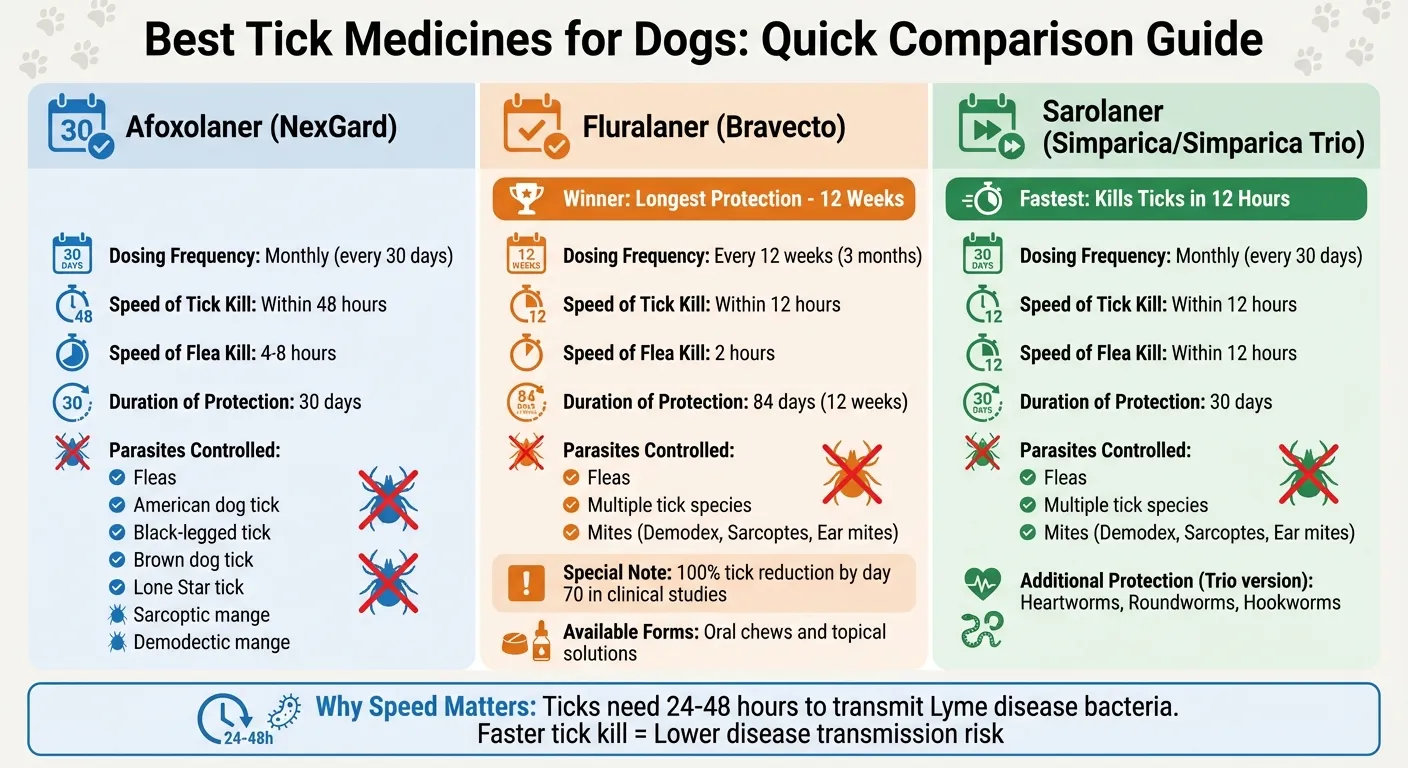
- NexGard (afoxolaner): Kills fleas within 8 hours and ticks within 48 hours.
- Bravecto (fluralaner): Eliminates fleas and ticks within 2–12 hours.
- Simparica (sarolaner): Starts killing fleas and ticks within 12 hours.
Stephanie Howe, DVM, explains:
“Most of these medications work by disrupting the nervous system of the tick and eventually killing it. This does not necessarily cause the tick to fall off the pet, but it will prevent the tick from completing its blood meal.”
Safety of Tick Medicines
- Wide Margin of Safety: The dose required to harm a dog is far higher than the therapeutic dose.
- Metabolism: Oral medications circulate in the bloodstream, requiring ticks to bite and feed to ingest the drug.
- Precautions: Dogs with a history of seizures or neurological conditions should be monitored closely, as isoxazolines may increase seizure risk in rare cases.
Best Tick Medicines for Dogs: A Comparison
When choosing a tick medicine, consider dosing frequency, speed of action, and additional benefits (e.g., flea or mite control). Below is a comparison of the top isoxazoline-based treatments:
| Drug Compound | Dosing Frequency | Key Parasites Controlled | Speed of Tick Kill | Additional Benefits |
|---|---|---|---|---|
| Afoxolaner | Monthly | Fleas, Ticks, Mites | Within 48 hours | Effective against mange |
| Fluralaner | Every 12 Weeks | Fleas, Ticks, Mites | Within 12 hours | Long-lasting protection |
| Sarolaner | Monthly | Fleas, Ticks, Mites, Heartworms* | Within 12 hours | Fast-acting, combination options |
*When used in Simparica Trio.
1. Afoxolaner (NexGard)
- Form: Oral chewable tablet.
- Effectiveness: Kills fleas within 4–8 hours and ticks within 48 hours.
- Coverage: Protects against American dog tick, black-legged tick, brown dog tick, and Lone Star tick.
- Additional Benefits: Treats sarcoptic and demodectic mange.
2. Fluralaner (Bravecto)
- Form: Oral chew or topical solution.
- Effectiveness: Eliminates fleas in 2 hours and ticks in 12 hours.
- Duration: 12-week protection with a single dose.
- Study Results: Achieved 100% reduction in brown dog tick populations by day 70 in infested kennels (MSD Animal Health, 2024).
3. Sarolaner (Simparica)
- Form: Oral chewable tablet.
- Effectiveness: Kills fleas and ticks within 12 hours.
- Additional Benefits: Simparica Trio also protects against heartworms, roundworms, and hookworms.
Tick Treatment Options: Pros and Cons
Choosing the right tick treatment depends on your dog’s lifestyle, environment, and health history. Below are the three primary methods:
1. Oral Chewable Tablets
✅ Pros:
- Water-resistant: Ideal for dogs that swim or bathe frequently.
- No residue: Safe for households with children or other pets.
- Systemic action: Works internally, ensuring consistent protection.
❌ Cons:
- Ticks must bite first: Does not repel ticks; they must feed to ingest the medication.
- Mild side effects: Some dogs may experience vomiting or diarrhea.
2. Topical Spot-On Treatments
✅ Pros:
- Repels ticks: Contains ingredients like permethrin, which prevent ticks from attaching.
- Good for fussy eaters: Suitable for dogs that refuse oral medications.
❌ Cons:
- Water sensitivity: Requires 48 hours to dry; swimming or bathing can reduce effectiveness.
- Toxicity risk: Never use dog-specific permethrin products on cats—it is highly toxic to them.
3. Long-Acting Tick Injections
✅ Pros:
- Long-lasting: Provides protection for several weeks or months with a single dose.
- Veterinarian-administered: Ensures correct dosage and application.
❌ Cons:
- Less flexibility: Requires a vet visit for administration.
- Not suitable for all dogs: May not be ideal for dogs with health conditions.
How to Choose the Right Tick Treatment for Your Dog
Selecting the best tick prevention method involves considering multiple factors:
Key Considerations
Age and Weight:
- Most treatments are suitable for puppies over 8 weeks old.
- Simparica Trio: Minimum weight 2.8 lbs.
- Bravecto: Minimum weight 4.4 lbs.
Lifestyle and Environment:
- Outdoor/active dogs: Opt for oral tablets (water-resistant).
- Indoor dogs: Spot-on treatments or collars (e.g., Seresto) may suffice.
- Tick-heavy areas: Choose fast-acting treatments (e.g., Simparica or Bravecto).
Health History:
- Seizure disorders: Avoid isoxazolines; consult a vet for alternatives.
- Breed sensitivities: Collies, Australian Shepherds, and Shetland Sheepdogs may carry the MDR-1 gene mutation, increasing sensitivity to certain drugs.
Household Factors:
- Multi-pet homes: Avoid permethrin-based products if cats are present.
- Pregnant/nursing dogs: Use fipronil-based topicals (e.g., Frontline) under vet guidance.
“Parasite protection is not ‘one-size-fits-all.’ Factors like age, species, breed, lifestyle, and health status influence the best product for your pet.” – American Veterinary Medical Association
Consulting Your Veterinarian
Always consult your vet before starting any tick prevention regimen. They can:
- Review your dog’s medical history and current medications.
- Recommend the safest and most effective treatment.
- Provide local insights on tick populations and disease risks.
How Often Should You Administer Tick Treatment?
The frequency of tick treatment depends on the product type:
| Treatment Type | Duration of Protection | Frequency | Notes |
|---|---|---|---|
| Oral Tablets | 30 days | Monthly | NexGard, Simparica, Credelio |
| Bravecto (Oral/Topical) | 12 weeks | Every 3 months | Longest-lasting oral option |
| Spot-On Treatments | 30 days | Monthly | Frontline, K9 Advantix II |
| Tick Collars | 8 months | Every 8 months | Seresto (reduced to ~5 months with frequent swimming) |
Key Reminders
- Year-round protection: Ticks remain active even at 4°C (40°F).
- Consistency is crucial: Missing a dose can break the protection cycle.
- Environmental control: Regularly clean your dog’s bedding and treat all pets in the household simultaneously.
Side Effects of Tick Medicines in Dogs
While tick medicines are generally safe, some dogs may experience side effects. Being aware of these can help you act quickly if needed.
Common Mild Side Effects
- Oral medications (isoxazolines):
- Vomiting
- Diarrhea
- Lethargy
- Reduced appetite
- Excessive drooling
- Topical treatments:
- Skin redness
- Itching
- Mild irritation at the application site
Barri J. Morrison, DVM, notes:
“Adverse reactions such as excessive drooling, paw flicking, or ear twitching are often mild and resolve on their own.”
Rare but Serious Side Effects
- Neurological reactions (extremely rare, <0.01% of cases):
- Muscle tremors
- Loss of coordination (ataxia)
- Seizures
The U.S. Food and Drug Administration (FDA) warns:
“Look for dizziness, wobbliness, incoordination, poor appetite, depression, vomiting, diarrhea, or excessive salivation. Some animals have had seizures and/or died.”
If your dog exhibits neurological symptoms, seek veterinary care immediately.
Dogs That Require Extra Caution
- Breeds with MDR-1 gene mutation: Collies, Australian Shepherds, Shetland Sheepdogs.
- Dogs with a history of seizures or neurological disorders.
- Pregnant/nursing dogs: Use fipronil-based topicals (e.g., Frontline) under vet supervision.
- Puppies and senior dogs: More vulnerable due to developing or declining organ function.
Natural Remedies for Tick Prevention
While veterinarian-approved tick medicines are the most effective, natural remedies can provide additional protection:
DIY Tick Repellent Spray
- Ingredients:
- Water
- Raw apple cider vinegar (small amount)
- Essential oils (lemongrass, citronella, rosemary, or cedar oil)
- Application: Lightly mist onto your dog’s coat before outdoor activities.
Precautions
- Test a small patch first to check for skin irritation.
- Avoid overuse: Some essential oils can be toxic if ingested or absorbed in large quantities.
- Not a replacement: Natural remedies do not replace conventional tick prevention methods.
Complete Tick Protection Plan for Dogs
To maximize protection, follow this comprehensive approach:
Year-Round Prevention:
- Use monthly or long-acting tick medicines (e.g., Bravecto for 12-week protection).
- Check for ticks daily, especially after outdoor activities.
Environmental Control:
- Reduce tick habitats in your yard (trim tall grass, remove leaf litter).
- Avoid wooded or grassy areas during walks.
- Wash your dog’s bedding regularly in hot water.
Regular Vet Checkups:
- Discuss tick-borne disease risks in your area.
- Consider vaccination (e.g., Lyme disease vaccine) if recommended.
Household Protection:
- Treat all pets in the household simultaneously.
- Use tick collars or sprays for additional protection.
Frequently Asked Questions (FAQs)
How do I choose the best tick medicine for my dog?
Consider your dog’s age, weight, breed, lifestyle, and health history. For outdoor dogs, fast-acting oral tablets (e.g., Simparica) are ideal. For indoor dogs, spot-on treatments or collars may suffice. Always consult your vet for personalized advice.
Can natural remedies alone prevent ticks?
Natural remedies (e.g., essential oil sprays) can repel ticks but are not a substitute for veterinarian-approved treatments. Combine them with conventional tick medicines for the best protection.
What should I do if my dog has side effects from tick medication?
- Mild symptoms (vomiting, lethargy): Monitor your dog and contact your vet if symptoms persist.
- Severe symptoms (seizures, tremors): Seek emergency veterinary care immediately.
- Stop the medication and inform your vet about any other drugs your dog is taking.
Final Thoughts
Tick prevention is a year-round commitment, especially in tropical climates like India. By choosing the right treatment, maintaining consistency, and consulting your veterinarian, you can effectively protect your dog from ticks and the diseases they carry. Stay vigilant, stay protected, and keep your furry friend safe!