
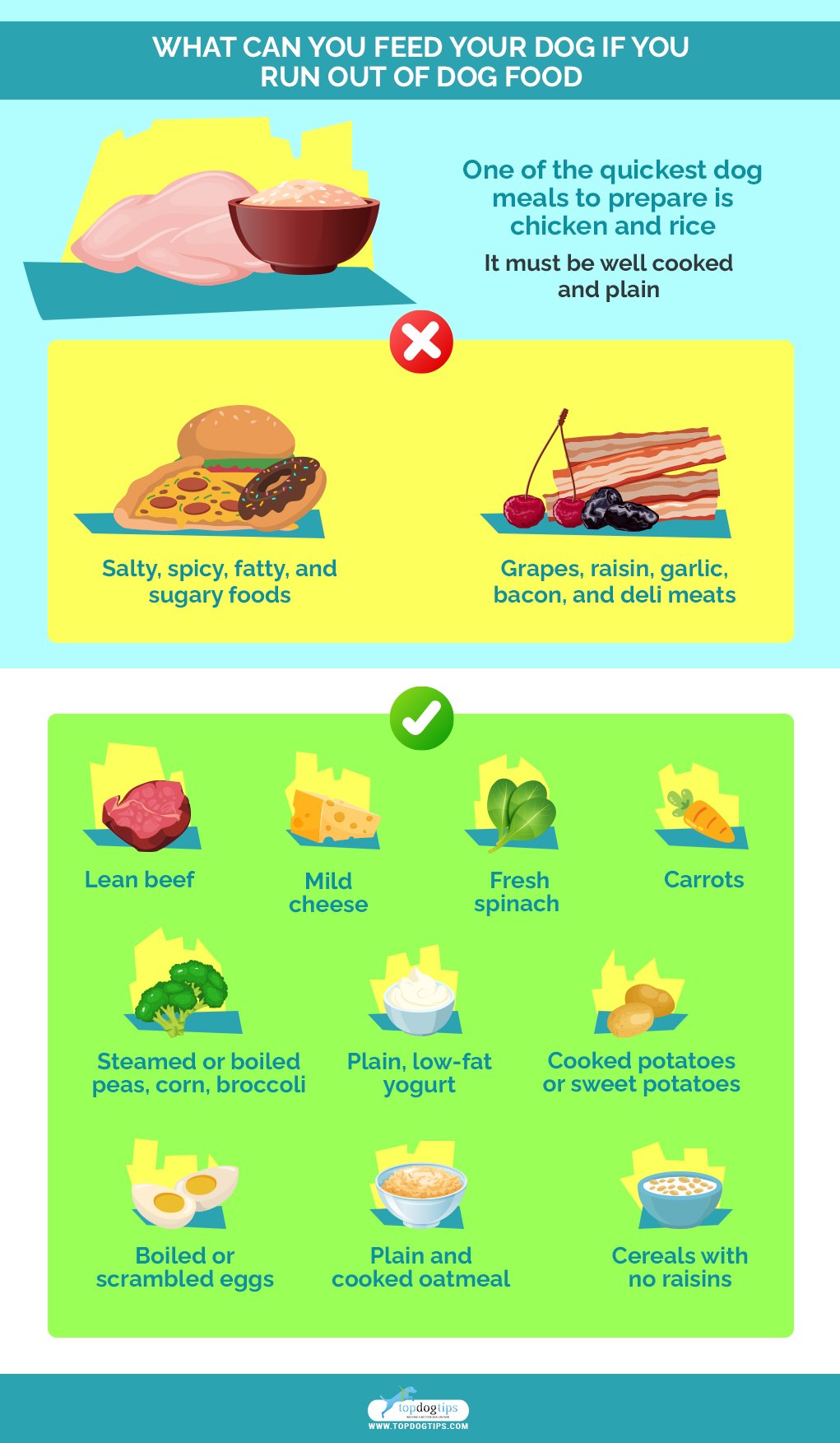
Running out of your dog’s regular food can be a stressful situation, leaving you wondering what safe and nutritious alternatives you can offer. Whether it’s a forgotten item on your shopping list or an unexpected stock shortage, ensuring your canine companion continues to receive adequate nutrition is paramount. This guide provides safe, temporary food options from your pantry or fridge to keep your dog happy and healthy until you can replenish their usual kibble.
It’s crucial to remember that these suggestions are not designed to be a long-term replacement for a balanced dog food diet. They serve as emergency meals to bridge the gap. Always prioritize ingredients that are low in salt and fat, as excessive amounts can lead to increased thirst and digestive upset. Furthermore, be acutely aware of your dog’s individual dietary needs, including any known allergies or intolerances, and strictly avoid any foods that are toxic to dogs.
Safe Alternatives for an Emergency Meal
Preparing a quick meal for your dog is simpler than you might think. The key is to select plain, unseasoned, and additive-free ingredients. Here are several safe options:
- Cooked Meats: Plain, unseasoned, lean meats like chicken, beef, or turkey, thoroughly cooked and deboned.
- Cooked Vegetables: Mashed or chopped cooked potato, peeled sweet potato, swede, carrots, peas, green beans, parsnips, cauliflower, sweetcorn, celery, spinach, and tomatoes. Ensure they are cooked and unseasoned.
- Fruits: Bananas, blueberries, strawberries, and apples (core and seeds removed) can be offered in moderation as a treat.
- Pumpkin: Additive-free cooked, tinned, or pureed pumpkin is a good source of fiber. Discover 10 pet-safe pumpkin treats.
- Porridge: Plain porridge, cooked in water, can be a suitable option.
- Peanut Butter: Peanut butter is acceptable, provided it does not contain xylitol.
Combining several of these ingredients can help satisfy your dog’s hunger. For a little extra encouragement, especially for picky eaters, small amounts of unsalted, onion-free gravy can be used to enhance flavor.
Can Dogs Eat Cat Food?
While it might seem like a convenient substitute, feeding your dog cat food is not recommended. Cat food is formulated with specific nutritional balances for obligate carnivores, which differ significantly from the needs of omnivorous dogs. Although a small accidental taste is unlikely to cause severe harm, a regular diet of cat food can lead to digestive issues such as diarrhea and vomiting, and in more serious cases, pancreatitis.
Can Dogs Eat Eggs?
Yes, eggs can be a safe and nutritious option for dogs when prepared correctly. Ensure eggs are fully cooked or boiled and free from the shell. Avoid adding any seasonings, butter, or oils. Plain scrambled eggs, boiled eggs cut into small pieces, dry-fried eggs, poached eggs, or baked eggs (without harmful additives) are all acceptable.
Is Rice Good for Dogs?
Plain, cooked white rice is generally safe for dogs in small quantities. Its bland nature makes it a suitable option, often recommended by veterinarians alongside plain chicken, for dogs experiencing an upset stomach. However, rice should not form the core of your dog’s diet long-term, as they require a varied and balanced nutritional intake to maintain optimal health.
Foods to Strictly Avoid
It is vital to be aware of foods that are toxic or harmful to dogs. When preparing an emergency meal, steer clear of the following:
- Grains & Baked Goods: Bread, cakes, pastries, crackers, pies, and sweets.
- Dairy Products: Milk, cheese, and other dairy items.
- Meats & Fats: Fatty meats, meat skin (like chicken skin), and cooked bones.
- Fruits & Vegetables (Specific): Avocado, grapes, dried fruit (raisins, sultanas), corn on the cob (risk of blockage), and alliums (onions, garlic, chives).
- Sweets & Sugars: Chocolate, sugar, and artificial sweeteners like xylitol.
- Processed Foods: Crisps, sauces, and gravies with high salt or fat content.
- Beverages: Alcohol and caffeine.
- Other: Nuts (especially macadamia nuts).
Remember to manage portion sizes carefully and transition back to your dog’s regular food as soon as possible. Learn more about foods dogs can’t have.
Always consult with your veterinarian if you have any concerns regarding your pet’s dietary needs or if you are unsure about specific food items.