
When comparing a gaming mouse vs a regular mouse, the core difference isn’t just about aesthetics or RGB lighting—it’s about how each device handles precision, speed, and control under pressure. While a standard office mouse can certainly move a cursor across the screen, it lacks the engineering required for the demanding environments of modern PC and mobile-adjacent gaming setups. For gamers who rely on split-second reactions and pixel-perfect accuracy, understanding this distinction is the first step toward a more responsive and enjoyable experience.
Design Philosophy: Built for Performance vs Built for Convenience
The fundamental divergence between a gaming mouse and a regular mouse begins with their intended use cases. A gaming mouse is architected from the ground up for performance. Every component—from the sensor to the switches to the ergonomic shape—is selected to support fast-paced gameplay where consistency and speed are non-negotiable.
In contrast, a regular mouse is designed for general productivity. Tasks like navigating spreadsheets, browsing the web, or editing documents do not require the same level of precision or rapid input. As a result, these devices prioritize simplicity and affordability over advanced tracking capabilities.
This distinction in design philosophy means that a gaming mouse often includes features that directly benefit gamers, such as higher polling rates and customizable weight systems, while a regular mouse focuses on delivering a straightforward, plug-and-play experience for everyday users.
Sensor Technology: Precision Where It Matters Most
The sensor is the heart of any mouse, and this is where the performance gap between a gaming mouse and a regular mouse becomes most apparent. Gaming mice are equipped with high-end optical or laser sensors capable of tracking minute movements with exceptional accuracy. These sensors maintain stability even during rapid flicks or complex maneuvers, ensuring that cursor movement remains predictable and true to physical input.
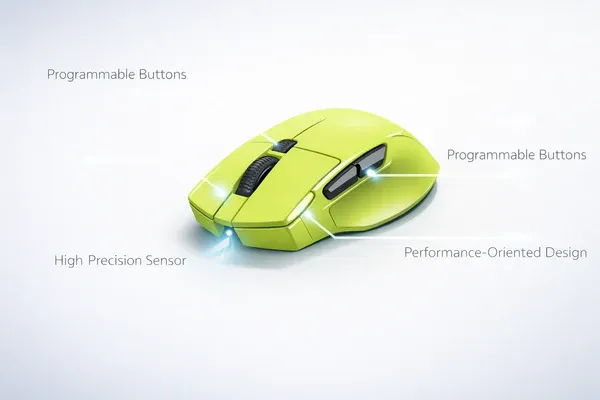
Regular mice, by comparison, utilize basic optical sensors that are calibrated for standard cursor movement. While these sensors are perfectly adequate for navigating a desktop interface, they may struggle with the high-speed swipes and micro-adjustments common in first-person shooters (FPS) or real-time strategy (RTS) games. For competitive gamers, this lack of precision can translate directly into missed shots or slower reaction times.
Responsiveness and Input Lag: The Invisible Advantage
Input lag is a critical factor that separates a gaming mouse from a regular mouse in real-world scenarios. Gaming mice are engineered to minimize the delay between a physical movement and the corresponding on-screen action. This is achieved through higher polling rates (the frequency at which the mouse reports its position to the computer) and optimized firmware that prioritizes speed over power efficiency.
A typical gaming mouse operates at a polling rate of 1000Hz, meaning it communicates with the PC every millisecond. In contrast, many regular mice operate at 125Hz, updating only every eight milliseconds. While this difference may seem negligible, in fast-paced games, those extra milliseconds can mean the difference between landing a critical shot or being eliminated.
Customization: Tailoring Control to Your Playstyle
One of the defining advantages of a gaming mouse is the level of customization it offers. Most gaming mice feature adjustable DPI (dots per inch) settings, allowing users to switch sensitivity on the fly. This is particularly useful in games that require both broad sweeping movements and fine-tuned precision within the same match.
Additionally, gaming mice often include programmable buttons that can be mapped to specific in-game actions, macros, or keybinds. This reduces the need to reach across the keyboard, keeping your hands in a more natural and efficient position during intense gameplay. Regular mice typically lack these features, offering only basic left and right click functionality with fixed sensitivity.
Comfort and Ergonomics: Supporting Long Gaming Sessions
For PC gamers who spend hours in front of their monitors, comfort is not a luxury—it is a necessity. Gaming mice are designed with extended use in mind. Manufacturers invest significant resources into ergonomic research, developing shapes that accommodate different grip styles (palm, claw, or fingertip) and reducing strain on the wrist and hand over long periods.
The weight distribution of a gaming mouse is also carefully considered. Some models offer adjustable weights, allowing users to find their preferred balance between control and agility. Regular mice, while often comfortable for short-term office work, rarely offer the same level of ergonomic support, which can lead to fatigue or discomfort during marathon gaming sessions.
Gaming Mouse vs Regular Mouse: A Practical Comparison
To clarify how these differences translate into real-world performance, the following comparison highlights the key aspects where gaming mice and regular mice diverge.
| Performance Aspect | Gaming Mouse | Regular Mouse |
|---|---|---|
| Sensor Accuracy | High-precision tracking with consistent performance under fast motion | Basic tracking suitable for everyday cursor movement |
| DPI Adjustability | Fully adjustable, often with on-the-fly switching | Fixed sensitivity with no user control |
| Polling Rate | Typically 1000Hz (1ms response) | Typically 125Hz (8ms response) |
| Button Customization | Programmable buttons with macro support | Standard left, right, and scroll wheel |
| Ergonomic Design | Optimized for extended gaming sessions with grip-style options | Basic ergonomics for short-term office use |
| Durability | Built with higher-grade switches rated for millions of clicks | Standard components for average daily use |
Which Type of User Benefits Most?
Choosing between a gaming mouse and a regular mouse depends largely on how you use your computer and what you prioritize in your daily activities.
Competitive Gamers will find a gaming mouse indispensable. The combination of precision tracking, minimal input lag, and customizable controls provides a tangible advantage in games where reaction time and accuracy are critical. In titles like Valorant, Counter-Strike 2, or Apex Legends, a gaming mouse is as essential as a high-refresh-rate monitor.
Casual Gamers may not strictly require a gaming mouse, but many appreciate the improved comfort and smoother tracking it offers. Even in single-player or slower-paced games, a gaming mouse enhances the overall experience by making controls feel more responsive and intuitive.
Office and Productivity Users typically find regular mice sufficient for their needs. Tasks such as document editing, email management, and web browsing do not demand high-performance tracking. However, users who spend extended hours at their desks may still benefit from the ergonomic advantages of a gaming mouse.
Mixed-Use PC Users—those who work on their computers during the day and game at night—often find that a gaming mouse serves as an ideal compromise. It delivers the precision required for gaming while maintaining the comfort and reliability needed for productivity tasks.
Is a Gaming Mouse Better Than a Regular Mouse?
The question of whether a gaming mouse is better than a regular mouse cannot be answered with a simple yes or no—it depends entirely on context.
A gaming mouse is the superior choice if your activities include competitive gaming, fast-paced shooters, or any scenario where precision and responsiveness are paramount. The advanced sensor technology, higher polling rates, and ergonomic designs provide measurable benefits that directly impact performance.
A gaming mouse may be unnecessary if your computer use is limited to casual browsing, office applications, or light gaming. In these cases, a regular mouse offers simplicity and reliability without the added cost or features you may never utilize.
For many PC users, especially those who both work and game on the same system, a gaming mouse represents a practical investment. It bridges the gap between productivity and play, offering the flexibility to handle both environments with equal competence.
| Feature | Gaming Mouse | Regular Mouse |
|---|---|---|
| Primary Use | Gaming, creative work, extended sessions | Office work, browsing, basic tasks |
| Tracking | High-precision optical or laser | Standard optical |
| Customization | Extensive (DPI, buttons, RGB, weights) | Minimal to none |
| Response Speed | Fast with high polling rates | Standard with lower polling rates |
| Ergonomics | Advanced, designed for grip variety | Basic, focused on general comfort |
| Longevity | Built with durable switches and materials | Designed for average lifespan |
Making the Right Choice for Your Setup
Selecting between a gaming mouse and a regular mouse ultimately comes down to an honest assessment of your computing habits. If gaming forms a significant part of your PC usage—especially if you engage in competitive or precision-based titles—investing in a gaming mouse is a decision that will pay dividends in both performance and comfort.
For users whose primary activities are productivity-focused, a regular mouse remains a perfectly capable and cost-effective solution. However, even within this group, those who spend long hours at their computers may find that the ergonomic benefits and reliable tracking of a gaming mouse improve their daily workflow.
The market offers a wide range of gaming mice across different price points, sensor technologies, and form factors. Whether you prefer the reliability of a wired connection or the freedom of a wireless design, there is a model tailored to your specific needs. Exploring options such as wireless gaming mice can help you find a device that balances performance with the convenience of a cable-free setup.
Frequently Asked Questions
Is a gaming mouse better than a regular mouse for all games?
A gaming mouse offers advantages in games that demand precision and fast reaction times, such as first-person shooters, real-time strategy, and battle royale titles. For turn-based or slower-paced games, the benefits may be less pronounced, though many users still appreciate the improved comfort and build quality.
Can I use a regular mouse for competitive gaming?
While it is possible to use a regular mouse for competitive gaming, you may encounter limitations in tracking accuracy and responsiveness. The lower polling rates and fixed sensitivity of regular mice can create inconsistencies that hinder performance in fast-paced environments.
Is a gaming mouse worth it for casual gamers?
For casual gamers, a gaming mouse is not a strict requirement, but it can enhance the overall experience. Features like adjustable DPI, customizable buttons, and better ergonomics contribute to a more comfortable and enjoyable gaming session, especially during longer play periods.
Does a gaming mouse work well for everyday productivity tasks?
Yes, a gaming mouse functions perfectly well for everyday tasks. In fact, many users find that the adjustable sensitivity and ergonomic design improve their productivity workflow by offering greater control and reducing fatigue during long work sessions.
What is the most important factor when choosing between a gaming mouse and a regular mouse?
The most important factor is your primary use case. If gaming is a priority, focus on sensor quality, polling rate, and ergonomic design. If your needs are predominantly office-based, simplicity and cost-effectiveness may take precedence.
References
- Rapoo Official Gaming Mouse Collection
- Industry Standards for Mouse Polling Rates and Sensor Technology
- Ergonomic Research in Peripheral Design for Extended Use