
The Volkswagen e-Transporter marks a significant shift in the electric van market, combining Volkswagen craftsmanship with Ford’s proven technology. The collaboration has been controversial, as some loyalists argue that this isn’t a “real” Transporter. However, sharing components allows Volkswagen to deliver a more refined and capable electric van, making it a compelling choice for businesses and fleet operators looking for efficiency and practicality.
Range, Battery, and Charging
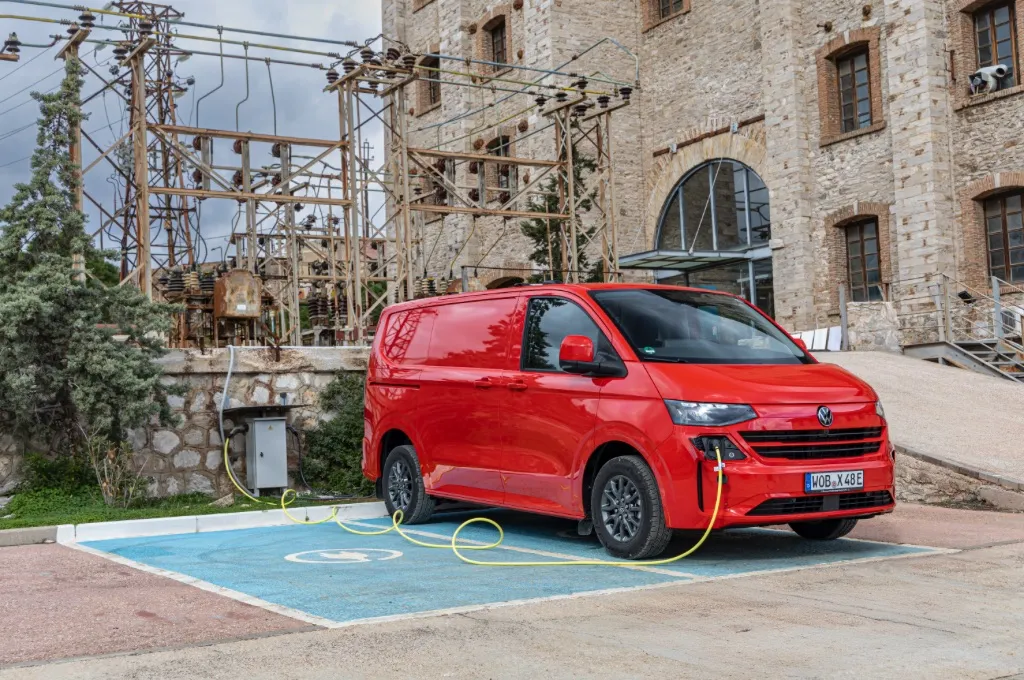
The e-Transporter comes standard with a 64kWh battery pack, providing a maximum range of 209 miles under the WLTP cycle. Two motor options are available: 136 horsepower for standard operations and 218 horsepower for those requiring more power. Both configurations deliver 415Nm of torque and include a regenerative braking mode accessible via the ‘B’ button on the gear selector.
Charging is practical for most businesses: 125kW DC rapid charging takes the battery from 10% to 80% in approximately 40 minutes, while 11kW AC charging caters to overnight or depot-based top-ups. Although some companies with three-phase power might desire faster AC charging, the current setup aligns well with typical fleet operations.
Practicality, Payload, and Dimensions
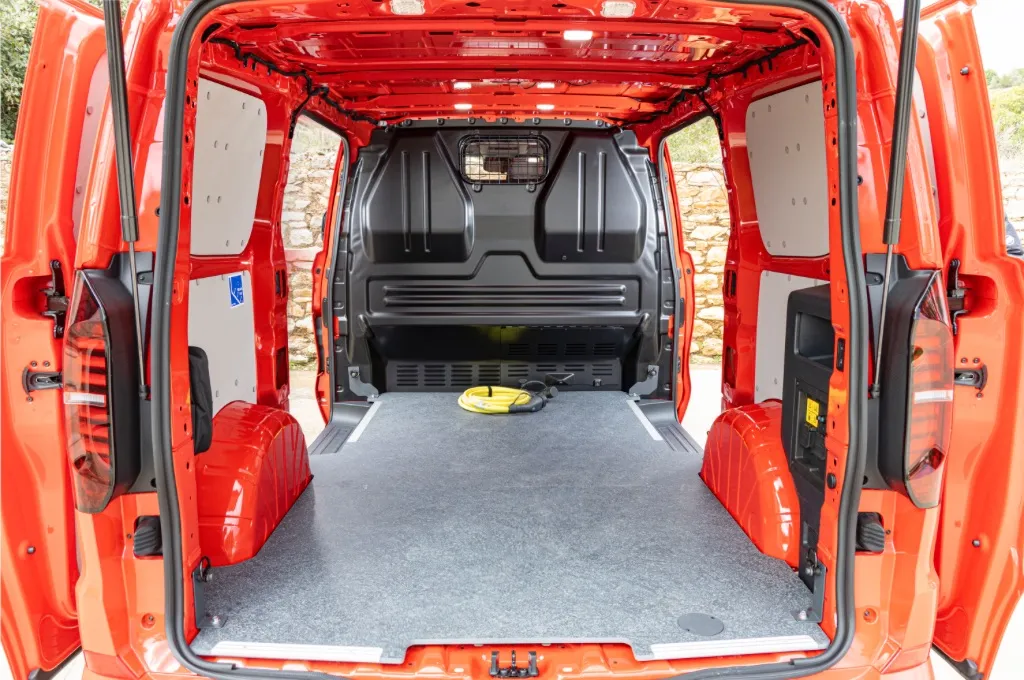
Payload capacity ranges from 1,013kg to 1,088kg depending on the configuration, slightly lower than diesel models but substantially higher than competitors like the VW Buzz. Towing capacity reaches 2,300kg, adequate for most commercial needs. Roof racks support up to 170kg, and a bulkhead hatch adds 448mm to accommodate longer loads.
Cargo space in the standard L1 version measures 5.8 cubic metres, while the extended L2 offers an additional cubic metre. Rear door apertures are 1,400mm wide, and the distance between wheel arches is 1,932mm, ensuring flexibility for various commercial cargo.
Additional features enhance usability, such as bright LED load-area lighting and dual 230V power sockets delivering up to 2,300W for power tools or charging equipment on the go.
Interior, Seating, and Technology
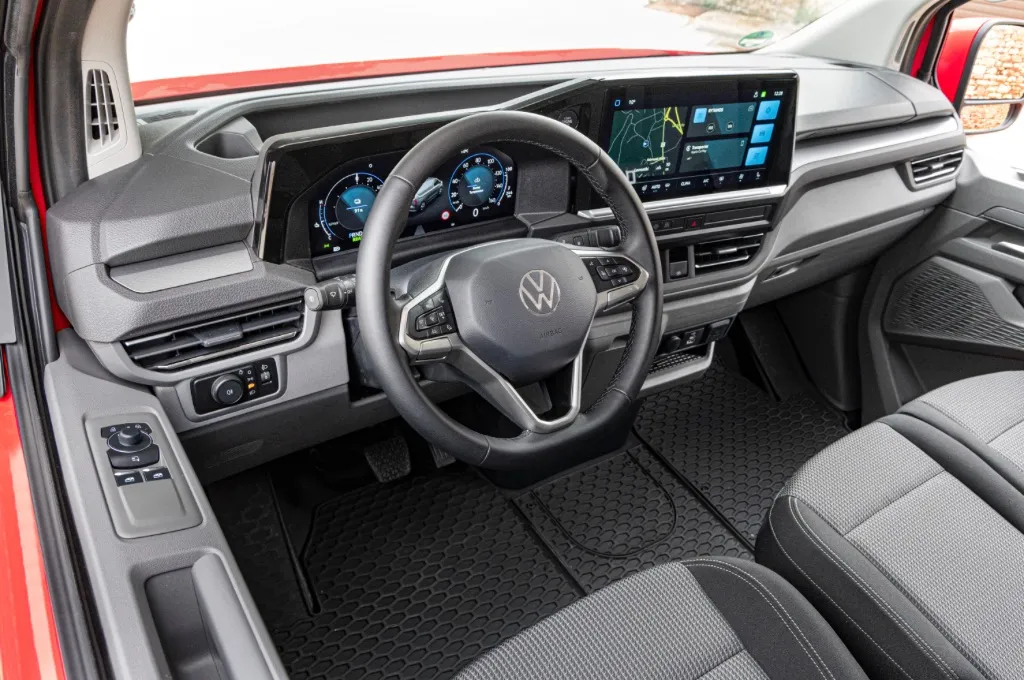
Inside, the e-Transporter maintains Volkswagen’s reputation for quality. The cabin features a VW steering wheel and a refined infotainment system, though some users may find the driver display slightly cluttered. Physical buttons are fewer than in the Ford counterpart, requiring a brief adjustment period.
Front seating accommodates three passengers, with the driver enjoying the most ergonomic support. All electric variants include standard heated seats and air conditioning, enhancing comfort for daily operations.
Motors, Performance, and Handling
The rear-wheel-drive e-Transporter offers engaging handling, particularly in Sport mode. Standard all-season tires, chosen based on fleet feedback, improve traction in slippery conditions and contribute to a more reliable Total Cost of Ownership (TCO).
Acceleration from 0-62 mph is 8.6 seconds regardless of motor choice, outperforming diesel equivalents significantly. Ride quality remains smooth except on poorly surfaced roads, maintaining Volkswagen’s reputation for comfort and stability.
Running Costs, Pricing, and Specifications
The e-Transporter is available in two trims: Commerce Plus and Commerce Pro. The Plus model features heated seats, mudflaps, all-season tires, and a heat pump, while the Pro adds 16-inch alloys, a heated windscreen, wireless phone charging, and extra USB ports.
Volkswagen offers competitive residual values and slightly lower purchase prices compared to the Ford Transit, resulting in a reduced TCO. The “5+ Promise” package includes five services, two MOTs, a five-year warranty, and five years of roadside assistance—surpassing Ford’s three-year warranty and no included services.
Although the e-Transporter costs approximately £5,300 more than a diesel model after grants, the EV includes additional comfort features, upgraded air conditioning, a tyre mobility kit, and all-season tires.
Verdict
The Volkswagen e-Transporter may be controversial among purists, but it delivers exceptional value in electric van performance, practicality, and comfort. By leveraging Ford’s technology, Volkswagen has created a vehicle that meets modern commercial needs while retaining brand integrity. Lower running costs, extended warranty, and thoughtful features make the e-Transporter a strong contender in the electric van market.
For businesses seeking a reliable, practical, and well-equipped electric van, the e-Transporter stands out as a top choice. Explore available deals and see how it fits your fleet requirements.
References
- Volkswagen UK. (2026). e-Transporter Official Specifications. Volkswagen UK.
- Electrifying.com. (2026). VW e-Transporter Review. https://www.electrifying.com/reviews/vw-e-transporter
- WLTP. (2026). Worldwide Harmonised Light Vehicles Test Procedure. International Council on Clean Transportation.