
When Carl Benz introduced the Benz Victoria in 1893, the first four-wheeled vehicle powered by an internal combustion engine, he established a clear vision: to offer an exclusive automobile that projected economic status to a high-income audience. More than a century later, the landscape of luxury automotive manufacturers has expanded dramatically, yet the founding philosophy remains unchanged. Today’s top luxury car brands continue Carl Benz’s legacy by delivering status, exclusivity, and uncompromising quality to the world’s most discerning drivers.
The evolution of luxury vehicles represents far more than technological advancement. These manufacturers have elevated the concepts of design, engineering, and performance to unprecedented heights, aiming to captivate customers with the most refined tastes. While some brands emphasize timeless elegance and sophisticated aesthetics, others showcase raw power and cutting-edge performance engineering. Despite their different philosophies, all premium luxury automobile brands share an unmistakable aura that captivates automotive enthusiasts worldwide, though ownership remains the privilege of a fortunate few.
Understanding Luxury Versus Premium Brands
It is essential to distinguish between companies specializing in true luxury automobiles and those positioning themselves as premium brands, as these designations carry significantly different connotations in the automotive industry.
Premium Brands occupy a unique market position one step below true luxury manufacturers. These brands possess an aspirational quality, meaning a substantial portion of the general public can realistically afford them. While they compete in the traditional automotive market alongside mainstream manufacturers, premium vehicles typically command higher price tags and advanced features. Representative examples include Audi, BMW, Mercedes-Benz, Lexus, Tesla, and Land Rover—brands that combine quality engineering with broader market accessibility.
Luxury Brands, by contrast, target an exclusive niche composed of individuals at the pinnacle of the economic pyramid. These manufacturers produce extremely exclusive automobiles with limited production runs, nearly unlimited customization possibilities, and exceptionally high price points. Acquiring a luxury vehicle represents not merely a transportation investment but a declaration of personal status, refined taste, and distinction within society.
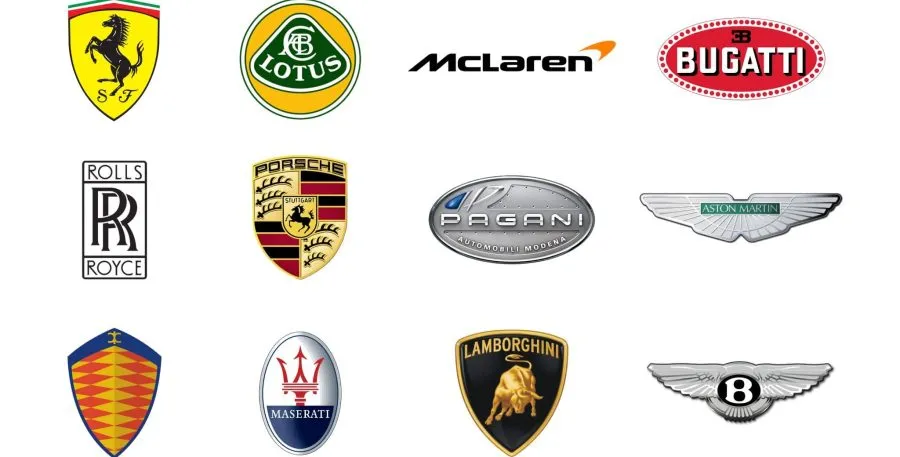
This article focuses exclusively on the second category—true luxury brands. Globally, over one hundred brands claim the luxury designation, though many produce only limited units of single models in highly artisanal production methods. The most significant luxury car manufacturers today include Ferrari, Porsche, Lamborghini, Maserati, Aston Martin, Rolls-Royce, Bentley, Lotus, McLaren, Bugatti, Pagani, and Koenigsegg.
Ferrari: The Pinnacle of Automotive Excellence
Ferrari stands unquestionably as the leading luxury car brand globally. The very mention of Ferrari evokes images of unparalleled character, extraordinary power, and timeless elegance. Founded in 1929 by the legendary Enzo Ferrari in Modena, later relocating to Maranello, the Italian marque has served as a benchmark in motorsports competition since its inception.
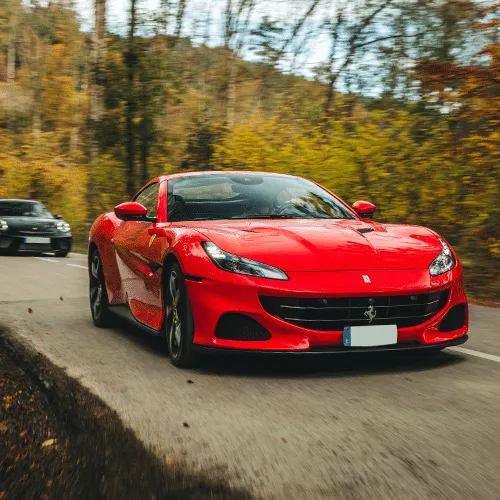
The marque’s racing legacy encompasses some of motorsport’s greatest drivers, from Alberto Ascari to Fernando Alonso, alongside legendary figures including Juan Manuel Fangio, Niki Lauda, Alain Prost, and Michael Schumacher. These drivers achieved their greatest triumphs piloting the iconic Prancing Horse on the world’s most prestigious circuits: Monaco’s serpentine streets, Silverstone’s high-speed corners, and Monza’s legendary Autodromo. In Formula 1 racing, Ferrari boasts an unmatched competitive record featuring 16 constructor championships, 15 driver championships, over 230 race victories, and more than 700 podium finishes, along with 9 outright victories in the grueling 24 Hours of Le Mans endurance race.
The sports cars bearing the Cavallino Rampante emblem have become universally recognized symbols of sophistication and speed—genuine works of art infused with state-of-the-art technology. Throughout Ferrari’s storied history, iconic models have included the legendary 250 GTO, the muscular Testarossa, the revolutionary F40, the pioneering Enzo, and the hybrid LaFerrari. Each represents a watershed moment in automotive performance, design philosophy, and technological achievement.
Porsche: German Engineering Excellence
The Stuttgart-based manufacturer exemplifies the very essence of German automotive engineering excellence, seamlessly merging refined aesthetics with genuine sporting character while avoiding ostentatious excess. Porsche has earned worldwide recognition for developing engines derived from competition-proven racing heritage. The brand consistently delivers vehicles offering exceptional performance capabilities, alongside legendary reliability and the most advanced technological implementations, ensuring comfortable and secure driving experiences.
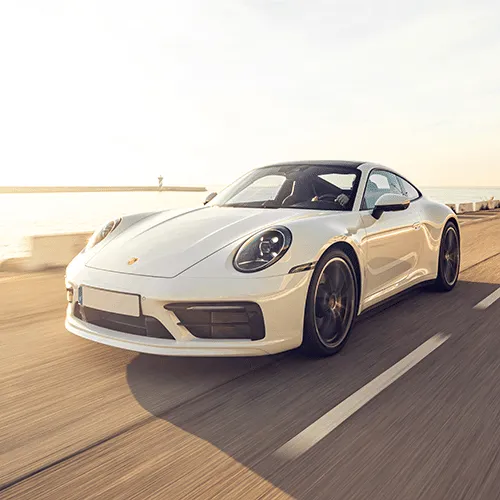
From the iconic two-seater sports car 911—arguably the most successful automotive design in history—to elegant four-door sedans like the Panamera or functional luxury SUVs including the Cayenne, Porsche’s comprehensive model range arguably solidifies its position as the most versatile luxury vehicle manufacturer currently operating. By providing customers with the flexibility to own a high-performance machine tailored to any lifestyle requirement, whether familial obligations or professional use, Porsche establishes itself as the quintessential lifelong luxury driving companion.
Porsche’s motorsport achievements deserve particular emphasis. The marque stands as the only automotive manufacturer to have conquered the planet’s most prestigious competitions simultaneously. These triumphs include multiple victories in the 24 Hours of Le Mans, Formula 1 engine development for championship-winning McLaren teams in 1984, 1985, and 1986, combined with success in World Rally Championships and the legendary Paris-Dakar Rally. This unparalleled competitive record underscores Porsche’s technical mastery.
Lamborghini: The Raging Bull
Just as the brand’s emblem—a wild, untamed bull—suggests, Lamborghini burst onto the luxury automotive scene with explosive force following a legendary confrontation between its founder, Ferruccio Lamborghini, and Ferrari’s founder Enzo Ferrari.
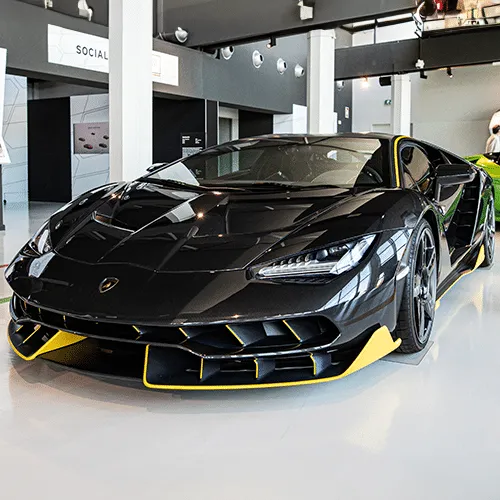 Lamborghini sports car featuring aggressive styling and high-performance engineering
Ferruccio Lamborghini was a highly successful Italian industrialist who built his fortune manufacturing agricultural tractors while simultaneously maintaining a passionate enthusiasm for sports cars. As a Ferrari owner, Ferruccio acquired a Ferrari 250 GTB but quickly grew frustrated with chronic transmission difficulties affecting his vehicle. After personally dismantling the problematic gear lever, he made a revealing discovery: Ferrari had sourced the identical component from his own tractor manufacturing facility but marked it up astronomically, charging premium pricing far exceeding its actual value. Outraged by this discovery, Ferruccio confronted Enzo Ferrari directly, demanding explanation for the price discrepancy. Ferrari’s dismissive, arrogant response—suggesting that a mere tractor manufacturer lacked the sophistication to understand sports car engineering—proved to be a critical miscalculation. This insulting rebuke inspired Ferruccio’s fateful decision to establish his own automotive enterprise and create sports cars surpassing Ferrari’s quality.
Since that pivotal moment, Lamborghini sports cars have embodied the fearless spirit of the fighting bull, characterized by aggressive styling and the imposing roar of potent engines. Many model names reference bullfighting traditions reflecting the founder’s cultural heritage. Examples include the “Diablo” (devil), “Islero,” “Murciélago” (bat), and “Huracán” (hurricane)—all named after renowned bulls pardoned for exceptional bravery in the bullfighting arena—or the “Miura,” inspired by a prestigious breeder of fighting cattle. This naming philosophy demonstrates Lamborghini’s deep connection to its Italian roots and founder’s personal passions.
Maserati: Italian Refinement and Subtlety
In striking contrast to the exuberant visual presence of its Italian neighbors Ferrari and Lamborghini, Maserati distinguishes itself through offering a more discreet and understated form of exclusivity. Every design detail, from the distinctive trident emblem to the exquisite mechanical symphony produced by its engines, embodies the passion and unmistakable style characteristic of Italian culture. Every curve and contour reflects meticulous precision, transforming Maserati vehicles into truly singular automobiles.
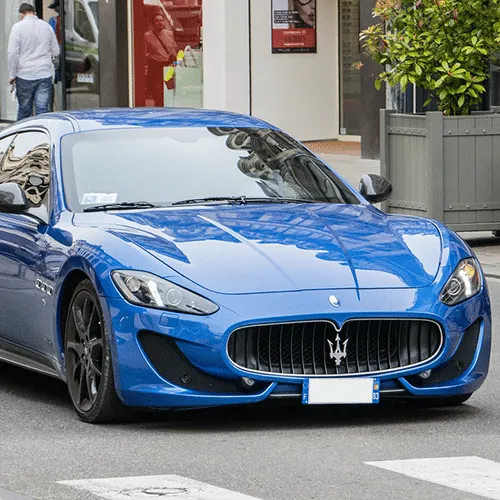
Founded in the historic Italian city of Bologna in 1914 by three brothers, the brand has navigated considerable turbulence throughout its century-long existence. Economic challenges and changing ownership structures repeatedly threatened the marque’s survival. Nevertheless, Maserati’s enduring legacy—forged through decades of unwavering commitment to crafting luxury and high-performance automobiles—has solidified its prominence within the international luxury car segment. The brand represents proof that understated elegance and refined performance can achieve equal recognition with more visually aggressive competitors.
Aston Martin: British Elegance Personified
With its unmistakable symbolism of British sophistication and undeniable performance excellence, Aston Martin follows a philosophical approach remarkably similar to Maserati: seamlessly combining elegantly understated design with genuinely sensational driving dynamics. Throughout more than a century of continuous operation, Aston Martin has maintained an unwavering struggle for institutional survival, weathering multiple ownership transitions and formidable financial obstacles that repeatedly brought the venerable marque to the brink of extinction.
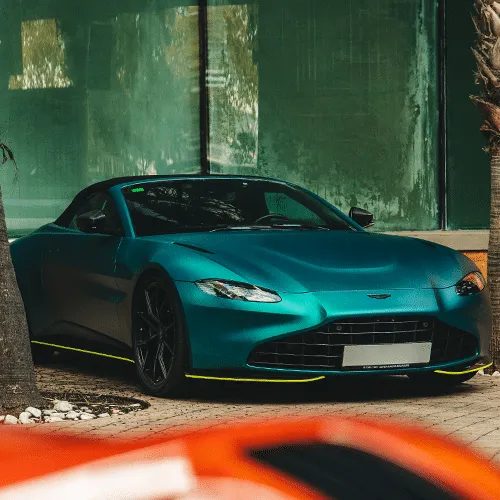 Aston Martin luxury sports car displaying classic British design and performance characteristics
Yet Aston Martin’s recurring ability to revive and reinvent itself stands as compelling testimony to the brand’s inherent greatness and resilience. Beyond the automotive industry itself, Aston Martin has transcended into popular culture, particularly through cinema. The iconic silver Aston Martin DB5—featured prominently throughout the James Bond film franchise—ranks among cinema’s most legendary vehicles. This association has elevated Aston Martin’s cultural significance far beyond typical automotive manufacturers, cementing its position within global popular consciousness and extending its influence throughout the entertainment industry.
Rolls-Royce: The Ultimate Expression of Elegance
Rolls-Royce personifies the zenith of automotive elegance on four wheels. The prestige conferred by automobile ownership from this distinguished British manufacturer remains utterly unparalleled, regardless of the passage of time. Since 1906, when Charles Rolls and Henry Royce founded the enterprise, this iconic brand has captivated devotees of refinement and exclusivity worldwide. Their vehicles represent genuine masterpieces in motion, distinguished by impeccable, meticulously executed craftsmanship at every level.
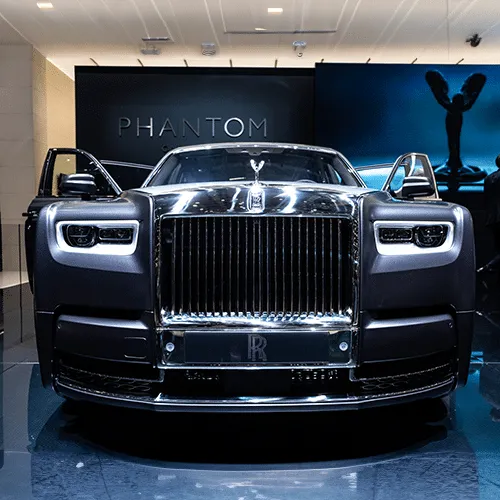
It should not surprise that Rolls-Royce vehicles represent the preferred choice for the British royal family and remain the favorites among international dignitaries, emirs, sheiks, and heads of state worldwide. While these automobiles undoubtedly prioritize elegant and sophisticated aesthetics, they simultaneously incorporate the most advanced technological implementations, offering sensational performance capabilities alongside their refined presentation. This combination of visual magnificence and mechanical excellence distinguishes Rolls-Royce within the international luxury automotive marketplace.
Bentley: From Rivalry to Renaissance
Following Rolls-Royce, Bentley unquestionably represents the next benchmark for distinction, beauty, and automotive class. The brand’s journey to contemporary prominence can be distilled into three defining characteristics: elegance, glory, and resurgence. From its 1919 founding by Walter Owen Bentley in Britain through its dramatic revival in the new millennium, Bentley has symbolized excellence in automotive engineering and craftsmanship.
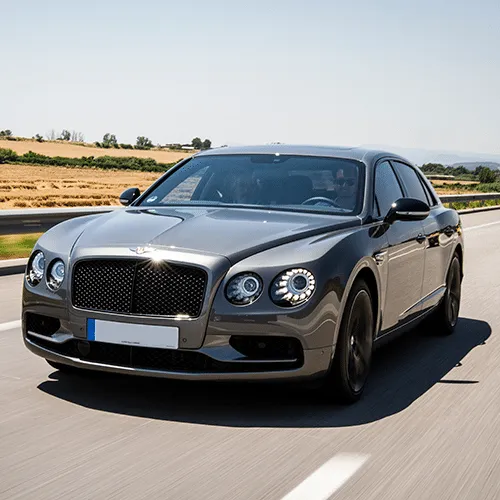 Bentley luxury automobile showcasing elegant proportions and sophisticated performance
Initially conceived as Rolls-Royce’s principal competitor, Bentley benefited from substantial financial backing provided by wealthy aristocrats and enthusiastic racing aficionados. These visionary investors committed considerable capital to support Bentley’s competition entries and continuous vehicle development, establishing Bentley vehicles as the finest racing machines of their era. Following the economic devastation of the 1929 stock market crash, Bentley confronted severe financial distress, teetering precariously toward complete collapse. At this critical juncture, Rolls-Royce acquired the struggling company, initiating a partnership that unified these former rivals for nearly seven decades, until BMW and Volkswagen respectively assumed ownership in 1998.
Over subsequent decades, Bentley’s design philosophy evolved toward increasingly dynamic proportions, offering progressively sportier driving experiences. While maintaining characteristic elegance, contemporary designs reflect a balanced synthesis of luxury, sporting capability, and practical functionality, appealing to discerning drivers seeking both refinement and performance.
Lotus: Lightweight Performance Innovation
Characterized by exceptional aerodynamic efficiency, extraordinarily lightweight construction methods, and consistently sensational performance delivery, Lotus sports cars occupy a uniquely privileged position within the international luxury automotive segment. The company’s founding in 1951 by brilliant engineer Colin Chapman established its core identity as a racing car manufacturer. During the 1960s and 1970s, Lotus achieved remarkable Formula 1 prominence, accumulating 6 driver’s world championships and 7 constructor’s titles during this era of racing dominance.
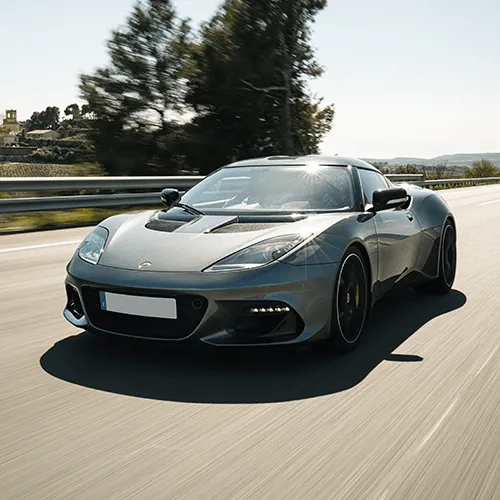
This legendary period witnessed the introduction of iconic production models including the Elan, the Seven, and the Esprit, each establishing new benchmarks for performance-oriented automobile design. Following Chapman’s death in 1982, the brand underwent multiple ownership transitions. General Motors acquired the company in 1986, followed by the ACBN Group in 1993 (whose CEO also controlled Bugatti). Finally, in 2017, Chinese conglomerate Geely—which also owns Volvo—assumed complete control of Lotus.
The introduction of the Lotus Elise in 1996 marked a transformative moment, establishing the model as arguably the brand’s most iconic creation. Alongside the Exige and Evora variants, these three models formed a remarkably successful trio, achieving over 50,000 global sales within two decades. Lotus continues honoring its foundational principles, producing vehicles incorporating advanced technology while maintaining exceptional focus on meticulous craftsmanship.
The current Lotus portfolio includes the Emira, a classically proportioned sports car succeeding the earlier Elise, Exige, and Evora models; the Eletre, a fully electric luxury SUV; and the extraordinary Evija hypercar, featuring an electric motor at each wheel generating an astounding 2,000 horsepower output.
McLaren: British Supercar Innovation
McLaren represents one of the world’s leading supercar manufacturers and maintains substantial relevance within international motorsports competition. The brand’s Formula 1 achievement record establishes McLaren as the third most successful team in the sport’s history, with 183 victories, 499 podium finishes, 8 constructor championships, and 12 driver championships accumulated across decades of competition.
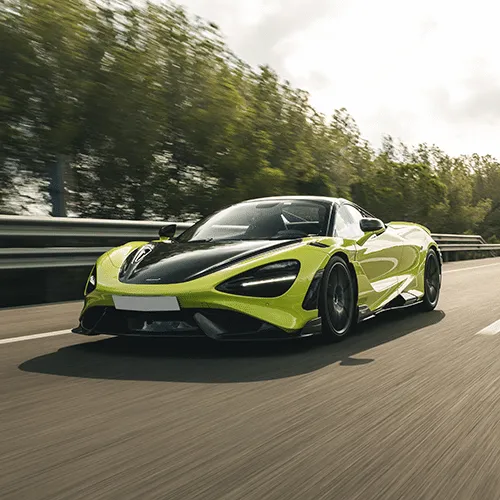 McLaren 765 LT Spider showcasing cutting-edge aerodynamic design and supercar engineering
The company’s entry into road car manufacturing occurred in 1969 with the introduction of the McLaren M6 GT, a street-legal derivative of the successful McLaren M6B GT racing machine, marking the official establishment of McLaren Automotive as a dedicated production division. However, following the tragic death of founder Bruce McLaren, the organization redirected its primary focus toward Formula 1 competition, temporarily suspending street car production efforts.
The 1990s witnessed a remarkable resurgence with the introduction of the revolutionary McLaren F1—a hypercar that fundamentally redefined performance automobile benchmarks and remains legendary within the industry. Entering the 21st century, McLaren Automotive solidified its position as a preeminent luxury and high-performance automobile manufacturer, unveiling exceptional models including the McLaren P1, McLaren 720S, and McLaren Senna. The company distinguishes itself through innovative application of materials including carbon fiber, while maintaining relentless focus on aerodynamic efficiency and technological advancement.
Bugatti: The Undisputed King of Speed
Within the realm of luxury automobiles, Bugatti claims the distinction of being the undisputed king of extreme speed and power. Its hypercars stand apart by delivering the most radical performance capabilities available in the contemporary automotive marketplace, complemented by meticulously executed and utterly exclusive design execution. Although the French marque achieved prominence in high-performance competition during the pre-World War II era, several decades elapsed before the brand successfully reclaimed its former eminence.
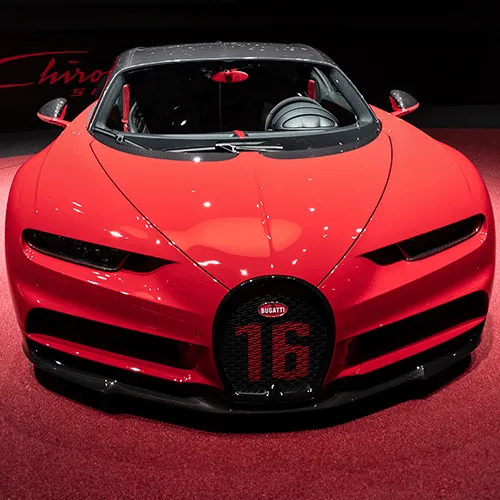 Bugatti Chiron hypercar demonstrating extreme aerodynamic design and performance engineering
Bugatti’s definitive resurgence materialized in 1998 following acquisition by the Volkswagen Group, which provided transformative technological resources enabling the evolution toward luxury hypercar manufacturing. This partnership subsequently reclaimed Bugatti’s prestige among the world’s most prominent luxury automobile manufacturers. The transformational turning point arrived in 2005 with the unveiling of the Bugatti Veyron, a hypercar that fundamentally eclipsed all previously known performance standards and established itself as the brand’s definitive flagship. The Veyron delivered extreme power output, achieving top speeds exceeding 400 km/h while introducing advanced technologies and revolutionary aerodynamic design concepts unprecedented within automotive engineering.
Subsequently, Bugatti released additional exclusive models including the Chiron, Divo, Centodieci, and La Voiture Noire—all featuring extremely limited production quantities and commanding extraordinary market valuations.
Pagani: Artisanal Hypercar Excellence
For individuals outside automotive enthusiast communities, the Pagani name may initially seem unfamiliar; however, supercar aficionados invariably recognize the marque’s unmistakable visual presence and extraordinary reputation. Founded in 1992 within the Italian province of Modena by Argentine-born designer Horacio Pagani, this manufacturer has established itself as a recognized benchmark within the exclusive hypercar segment. Despite its relatively recent founding compared with most competitors, Pagani has gained widespread recognition for producing some of the world’s most coveted and exclusive vehicles.
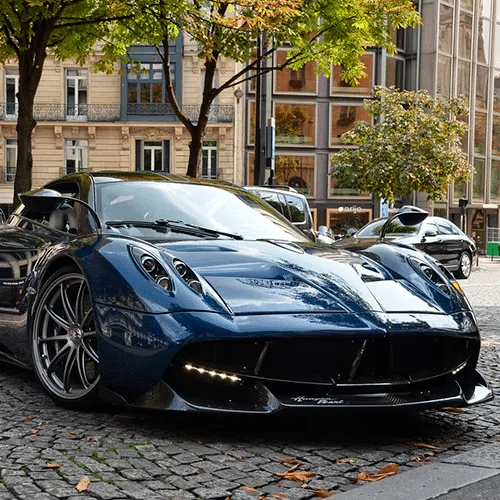 Pagani Huayra hypercar highlighting bespoke design and carbon fiber construction
All Pagani production models utilize powerful Mercedes-AMG V12 engines as their powerplant foundation. However, Pagani’s genuine distinction lies in its unwavering dedication to artisanal design philosophy. Each automobile represents a unique creation, crafted with meticulous attention through custom utilization of the highest-quality materials, with particular emphasis on extensive carbon fiber implementation. The company’s first model, the Pagani Zonda C12, debuted in 1999, inspired by the Sauber Mercedes C9 racing prototype. Subsequently, the Huayra arrived in 2011, followed more recently by the Utopia model introduction in 2022.
Koenigsegg: Swedish Technical Innovation
Alongside Pagani, Koenigsegg represents one of the relatively lesser-known luxury car brands within general consumer awareness, despite achieving legendary status among automotive enthusiasts. Founded in 1994 by Christian von Koenigsegg in Ängelholm, Sweden, this hypercar manufacturer’s fundamental essence rests upon unwavering dedication to technical innovation and engineering excellence. The strategic use of lightweight materials including carbon fiber and Kevlar enables achievement of exceptional power-to-weight ratios among the world’s most powerful automobiles.
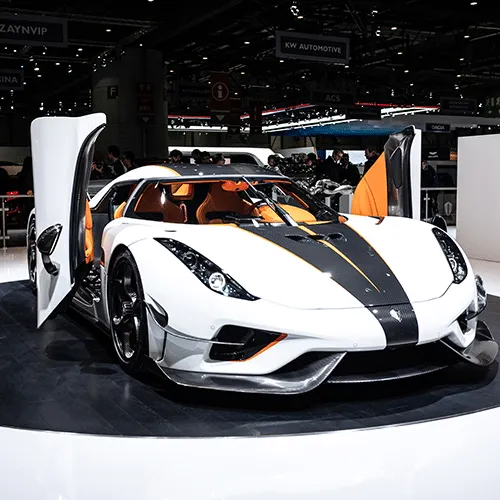 Koenigsegg hypercar featuring advanced engineering and lightweight material construction
Koenigsegg has independently developed proprietary technologies including the revolutionary Freevalve valve system, which substantially enhances engine efficiency while providing unprecedented precision and flexibility regarding intake and exhaust cycle management. Among the most significant models from this Swedish manufacturer is the Koenigsegg CC8S, representing the company’s inaugural market release; the Koenigsegg Jesko, among the brand’s most powerful creations, named respectfully in honor of the founder’s father; the Koenigsegg Regera, a sophisticated hybrid combining internal combustion engine power with three electric motors; and the groundbreaking Koenigsegg Gemera, a four-seater hypercar that fundamentally challenges conventional two-seater hypercar design paradigms.
Conclusion: The Enduring Appeal of Luxury Automobiles
The distinctive character and inherent excellence embodied within each of these prestigious brands transcends mere transportation function. These manufacturers represent the absolute pinnacle of technological innovation and sophisticated design within the automotive universe, while simultaneously demonstrating an unwavering institutional commitment to uncompromising excellence. Their unparalleled competitive heritage manifests through visible dedication to quality craftsmanship and continuous innovation implemented within every vehicle they produce.
This commitment to perfection establishes profound emotional connections with their customers, transforming them into lifelong loyal enthusiasts and passionate advocates. The ownership experience transcends conventional automobile appreciation, becoming instead a personal statement reflecting refined taste, discriminating judgment, and appreciation for mechanical artistry. Whether drawn to Ferrari’s racing legacy, Porsche’s engineering excellence, Lamborghini’s aggressive styling, or Rolls-Royce’s refined elegance, luxury automobile ownership represents one of life’s most meaningful indulgences for those fortunate enough to experience it.
These extraordinary vehicles continue inspiring automotive enthusiasts worldwide while setting benchmarks that lesser manufacturers perpetually strive to achieve. The legacy established by these brands will undoubtedly continue shaping the future direction of high-performance and luxury automobile development for generations to come.