
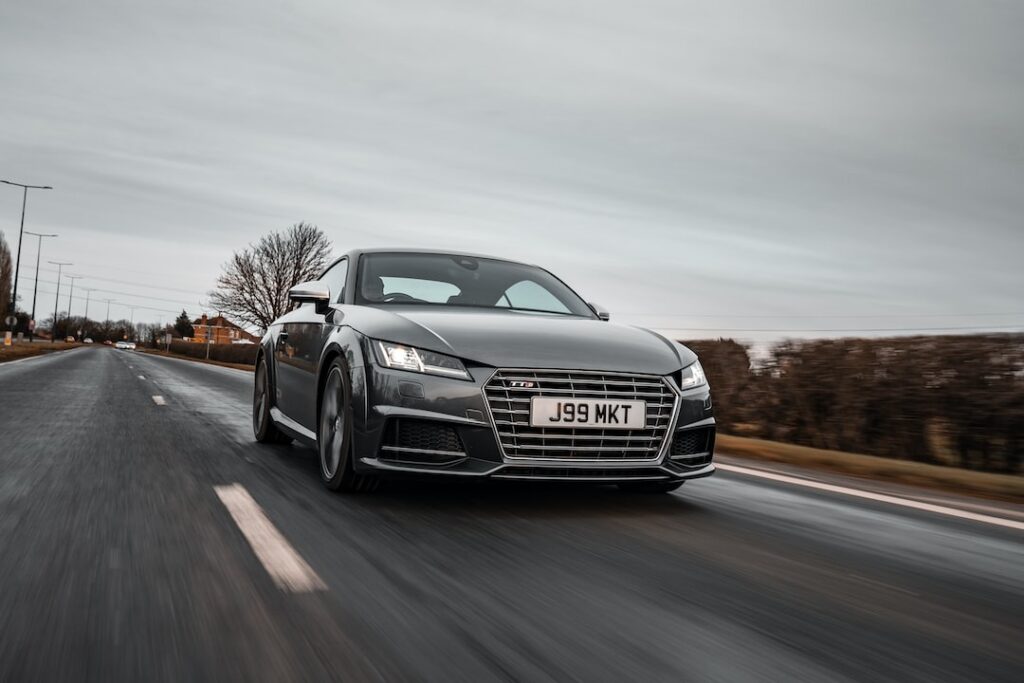
Artificial Intelligence is revolutionizing the automotive industry by enhancing both driving experiences and safety protocols. From personalized voice assistants to advanced driver assistance systems, AI technologies are reshaping the future of smart cars and the way we interact with transportation. As vehicles become increasingly connected, the integration of artificial intelligence algorithms allows for a level of personalization and responsiveness that was once the stuff of science fiction.
Enhancing the Driving Experience with AI
Beyond the critical focus on safety, AI technology is making the time spent behind the wheel significantly more enjoyable. This transformation is largely driven by smart voice assistant technology and the ability of vehicles to adapt to the specific needs of their operators.
Analyzing Driver Behavior for Better Habits
The understanding of human behavior while driving is increasingly being developed using machine learning algorithms. While the idea of monitoring can sometimes carry negative connotations, in the context of connected cars, analyzing driver behavior contributes to a significant increase in road safety. This is a vital development, considering that the World Health Organization has projected that road accidents could become the fifth leading cause of death globally by 2030.
Thanks to AI, it is now possible to track and analyze facial expressions to identify patterns of stress, fatigue, or drowsiness. Solutions such as inertial measurement units (IMUs) help provide real-time alerts that encourage safer and more eco-friendly driving practices. Furthermore, this analysis can be extended to pedestrians, assisting in the development of more sophisticated alarm systems like ADAS.
The Rise of Smart Voice Assistants
Modern vehicles are rapidly incorporating smart voice assistants as a core feature. These AI-powered tools offer hands-free control over phone calls, navigation, and entertainment settings. While challenges like cabin noise and various accents still exist, advancements in natural language processing are progressively making these interfaces more intuitive and reliable for global users.
Revolutionizing Vehicle Safety with AI
AI is the driving force behind a silent revolution in vehicle safety. By leveraging real-time data analysis, automobile manufacturers are demonstrating a renewed dedication to consumer protection through systems that can think and react faster than humans.
Advanced Driver Assistance Systems (ADAS)
ADAS represents a perfect marriage between sensor technology and AI. These systems rely on a diverse array of hardware, including:
- High-resolution cameras
- GPS/GNSS for precision positioning
- Radar and Sonar
- Light Detection and Ranging (LIDAR)
By utilizing machine learning, ADAS can perform object detection and scene understanding, allowing the car to distinguish between a pedestrian and a stationary object. Passive systems warn the driver, while active systems can take control to navigate safely through potential hazards.
Autonomous Emergency Braking (AEB)
Another critical safety feature is the Autonomous Emergency Braking (AEB) system. This technology combines data from multiple sensors to detect potential head-on collisions. By calculating the relative speed and distance of objects ahead, the AEB can automatically apply the brakes if the driver fails to react in time, significantly mitigating the impact of or entirely avoiding a crash.
Lane Departure Warning Systems (LDW)
LDW systems use computer vision and artificial intelligence to monitor road markings on freeways. By using advanced algorithms like CNN (Convolutional Neural Networks), these systems provide precise lane tracking. This ensures that even in poor weather or low-light conditions, the vehicle can alert the driver the moment they unintentionally drift across lane lines.
Impact of AI on Car Manufacturing and Supply Chains
The influence of AI extends far beyond the dashboard; it is also revolutionizing the production line and the logistical networks that keep the industry moving.
Smart Manufacturing and Quality Control
By leveraging predictive analytics, manufacturers can now optimize production processes and enhance quality control. AI-powered systems analyze vast amounts of data to enable proactive maintenance of factory machinery, which reduces downtime and waste while ensuring that every vehicle meets rigorous quality standards.
Optimizing the Global Supply Chain
AI is transforming supply chain operations by predicting market demand and streamlining logistics. Algorithms allow companies to analyze trends to achieve greater accuracy in inventory management, shortening lead times and reducing the risks of errors in the distribution of parts and finished vehicles.
The Future of AI in the Automotive Sector
While it is difficult to predict every innovation, it is certain that the future of the automotive industry belongs to data analysis and machine learning. We are moving toward a world dominated by autonomous driving technology and electric vehicles, where the driving experience is entirely personalized.
In summary, AI is reshaping every facet of the automotive world—from how cars are built to how they protect their occupants. As these technologies continue to evolve, they promise a future where our roads are safer, our journeys are more efficient, and our vehicles are smarter than ever before.
References
- World Health Organization (WHO) Road Safety Reports.
- MakoLab Automotive Insights on AI and UX Design.
- Standardized citation protocols for Artificial Intelligence in Automotive Engineering.