
If your beloved pet is limping or showing signs of pain, your first instinct might be to reach for a pain reliever from your medicine cabinet. However, stop—many human medications, including nonsteroidal anti-inflammatory drugs (NSAIDs), can be dangerous or even fatal to pets. Always consult your veterinarian before administering any medication to your dog or cat.
NSAIDs are widely used in both human and veterinary medicine for their pain-relieving and anti-inflammatory properties. Veterinarians often prescribe them for conditions like osteoarthritis in dogs, where the breakdown of cartilage causes pain, inflammation, and lameness. They are also used to manage post-surgical pain in dogs and cats. However, NSAIDs can have serious side effects, particularly if used incorrectly.
How NSAIDs Work
NSAIDs reduce pain and inflammation by interfering with substances released after cell damage. When a cell is damaged, the enzyme cyclooxygenase (COX) is activated. COX stimulates the production of prostaglandins, which contribute to pain, inflammation, and fever but also play essential roles, such as:
- Protecting the stomach and intestinal lining;
- Maintaining blood flow to the kidneys;
- Supporting platelet function for blood clotting.
Most NSAIDs work by blocking COX, reducing the production of prostaglandins and thereby alleviating pain and inflammation.
Some NSAIDs block the activity of certain prostaglandins directly, achieving a similar effect.
Side Effects of NSAIDs in Pets
While NSAIDs are effective, they can cause significant side effects by interfering with the positive functions of prostaglandins. Common side effects in dogs and cats include:
- Vomiting;
- Loss of appetite;
- Lethargy;
- Diarrhea.
More severe side effects may include:
- Stomach and intestinal ulcers or perforations;
- Kidney failure;
- Liver failure;
- Death in extreme cases.
Digestive Tract Side Effects
NSAIDs can damage the digestive tract both directly and indirectly. Many NSAIDs are acidic and can irritate the stomach lining directly. Indirectly, by reducing prostaglandin production, NSAIDs weaken the protective barrier of the stomach and intestines, increasing the risk of ulcers and perforations. Never give two NSAIDs simultaneously or combine an NSAID with a steroid like prednisone, as this significantly increases the risk of digestive tract damage.
Kidney Side Effects
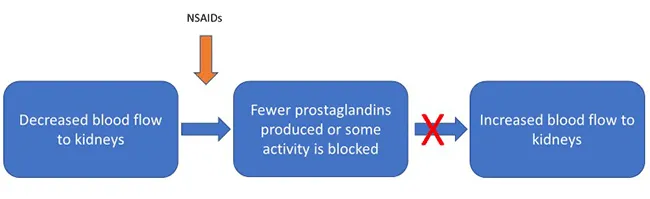
Prostaglandins help maintain blood flow to the kidneys, especially during periods of reduced circulation, such as dehydration, anesthesia, or kidney disease. By blocking prostaglandins, NSAIDs can reduce kidney blood flow, potentially leading to kidney damage or acute kidney failure.
NSAIDs should be used cautiously in pets with pre-existing kidney disease or conditions that reduce kidney blood flow. If NSAIDs are used around the time of surgery, intravenous (IV) fluids are recommended to maintain kidney function.
Liver Side Effects
Liver damage from NSAIDs can be dose-dependent or dose-independent. Dose-dependent damage occurs with overdoses, such as a dog ingesting an entire bottle of ibuprofen. Dose-independent damage is unpredictable and can occur even at correct doses, often within the first three weeks of starting the medication. Pets with pre-existing liver disease are at higher risk.
Always store medications securely to prevent accidental ingestion by pets or children.
FDA-Approved NSAIDs for Pets
The following table lists FDA-approved NSAIDs for dogs and cats, all of which require a veterinarian’s prescription. No over-the-counter NSAIDs for pets are FDA-approved. Any NSAID sold for pets without a prescription is unapproved and may not meet safety and efficacy standards.
FDA-Approved NSAIDs for Pets
| Active Ingredient | Brand and Generic Names | Species |
|---|---|---|
| Carprofen | Multiple brand and generic names | Dogs only |
| Deracoxib | DERAMAXX, DOXIDYL, DERACOXIB CHEWABLE TABLETS | Dogs only |
| Firocoxib | PREVICOX, FIROX | Dogs only |
| Grapiprant | GALLIPRANT | Dogs only |
| Meloxicam | Multiple brand and generic names | Dogs (injectable/oral), Cats (injectable only) |
| Robenacoxib | ONSIOR (max 3 days) | Dogs and cats |
NSAIDs for Dogs
Most FDA-approved NSAIDs for dogs are used to manage pain and inflammation from osteoarthritis and post-surgical recovery. Exceptions include:
- Robenacoxib (ONSIOR): Approved only for post-surgical pain and inflammation (max 3 days).
- Grapiprant (GALLIPRANT): Approved only for osteoarthritis.
For long-term use in dogs with osteoarthritis:
- Use the lowest effective dose.
- Conduct baseline blood tests before starting and regular rechecks to monitor liver and kidney function.
NSAIDs for Cats
Only meloxicam (one-time injection) and robenacoxib (ONSIOR) (max 3 days) are FDA-approved for cats, primarily for post-surgical pain. No NSAIDs are approved for long-term use in cats, as they are highly sensitive to side effects. Repeated doses of meloxicam can cause kidney failure or death in cats.
Over-the-Counter NSAIDs for People: Are They Safe for Pets?
Common human NSAIDs include aspirin, ibuprofen, and naproxen. These are not safe for pets because:
- They may last longer in a pet’s body;
- Be processed differently;
- Be absorbed faster;
- Reach higher blood levels.
Cats are especially vulnerable due to their reduced ability to metabolize NSAIDs.
Acetaminophen (Tylenol): A Special Case
Acetaminophen is not an NSAID but is a common over-the-counter pain reliever for humans. It has little anti-inflammatory activity and its mechanism is not fully understood. In pets, acetaminophen can cause:
- Dose-dependent liver damage (higher doses = worse damage);
- Red blood cell damage, reducing their ability to carry oxygen.
Acetaminophen is fatal to cats because they lack the enzymes needed to break it down safely. Never give acetaminophen to cats. Veterinarians may use it cautiously in dogs but never in cats.
What Should You Do?
Consult your veterinarian before giving any NSAID to your pet. Inform them if your pet:
- Has a history of digestive issues (e.g., ulcers) or stomach/intestine surgery;
- Is taking other medications (NSAIDs or steroids should never be combined).
Monitor your pet for side effects while on NSAIDs, including:
- Vomiting or diarrhea;
- Bloody or black stool;
- Loss of appetite or lethargy;
- Yellowing of the eyes or gums (jaundice).
If side effects occur, stop the medication and contact your veterinarian immediately.
Report side effects to the FDA’s Center for Veterinary Medicine.
For long-term NSAID use in dogs, ask your veterinarian about baseline blood tests and regular rechecks.
Store all medications securely to prevent accidental ingestion by pets or children.
Resources and References
For more information, contact the FDA’s Center for Veterinary Medicine at AskCVM@fda.hhs.gov or 240-402-7002.
References
- Khan SA, McLean MK. Toxicology of frequently encountered nonsteroidal anti-inflammatory drugs in dogs and cats. Vet Clin North Am Small Anim Pract 2012;42:289-306.
- KuKanich B, Bidgood T, Knesl O. Clinical pharmacology of nonsteroidal anti-inflammatory drugs in dogs. Vet Anaesth and Analg 2012;39:69-90.
- Lascelles BD, McFarland JM, Swann H. Guidelines for safe and effective use of NSAIDs in dogs. Vet Ther 2005;6:237-251.