
The world of canine health is increasingly focused on gut health, and probiotics are at the forefront of this movement. Probiotics, defined as beneficial bacteria and yeast for the digestive system, are not just for humans; they are gaining traction for their potential positive effects on dogs’ gut health. These beneficial microorganisms can help rebalance the intestinal tract and improve stool quality in dogs. This guide delves into natural probiotics for dogs, explores supplement options, and outlines key considerations before introducing probiotic-rich foods to your canine companion’s diet.
Understanding Beneficial Probiotics for Dogs
Research into the specific probiotic strains that benefit dogs is ongoing, but several have shown promise. These include various strains of Lactobacillus (such as Lactobacillus acidophilus, Lactobacillus rhamnosus, and Lactobacillus planatarum), Bifidobacterium, Enterococcus faecalis, Enterococcus faecium, Ligilactobacillus animalis, Bacillus subtilis, Bacillus licheniformis, Saccharomyces cerevisiae, and Limosilactobacillus fermentum . Common bacteria found in a healthy dog’s feces include Lactobacillus, Bifidobacterium, Enterococcus, Streptococcus, and Pediococcus. Among these, Lactobacillus, Bifidobacterium, and Enterococcus are the most frequently studied in canine probiotic research.
Probiotics vs. Prebiotics: What’s the Difference?
When exploring options for your dog’s gut health, you’ll likely encounter both probiotics and prebiotics. Probiotics are the live beneficial bacteria and yeast themselves, directly supporting a healthy gastrointestinal balance. Prebiotics, on the other hand, act as food sources for these beneficial bacteria, often found in high-fiber foods. Both play crucial roles in maintaining a healthy canine microbiome.
Exploring Natural Probiotic Sources for Dogs
While direct probiotic supplements are readily available, several natural foods can offer probiotic benefits. However, it’s crucial to consult with your veterinarian before introducing any new food to your dog’s diet. Research on natural probiotics for dogs is less extensive than for humans, and established feeding guidelines are often lacking for these foods.
Kefir
This fermented milk drink is a rich source of probiotics, containing over 50 species of bacteria and yeast. Studies suggest that feeding kefir to dogs can increase beneficial lactic acid bacteria and positively alter gut bacteria balance without significant side effects . Start with a small amount, approximately ¼ teaspoon, and gradually increase to about 1 teaspoon per 16 pounds of body weight daily. Dogs with dairy sensitivities or allergies should avoid kefir, as should those taking tetracycline antibiotics.
Fermented Blueberries
When prepared with Lactobacillus bacteria, fermented blueberries may serve as a natural probiotic. Begin by offering one blueberry twice daily, and if your dog tolerates it well, consult a holistic veterinarian for further guidance.
Cottage Cheese
Cottage cheese offers Lactobacillus acidophilus and Bifidobacterium bifidum. As with kefir, dogs with dairy sensitivities or allergies should avoid it. A tablespoon is a suitable starting amount. Avoid giving cottage cheese to dogs on tetracycline antibiotics.
Fermented Bananas
These specially prepared bananas might contain beneficial Lactobacillus and Streptococcus species.
Fermented Carrots or Broccoli
Fermented versions of these vegetables can provide Bifidobacteria and Lactobacillus species. Introduce a small amount, around half a teaspoon, to gauge your dog’s tolerance.
Pickles
Pickles contain Lactobacillus. Opt for pickles without vinegar or dangerous seasonings like garlic. Due to their high sodium content, offer only a very small amount, such as one teaspoon, and distribute it over a week.
Sauerkraut
Sauerkraut harbors several Lactobacillus species that may benefit a dog’s digestive system.
Green Tripe
Green tripe, the stomach lining of ruminant animals, is a natural source of Lactobacillus acidophilus. If your dog has beef allergies, this is not a suitable option. As it’s a raw animal product, ensure proper washing before feeding and maintain good hygiene afterward.
Yogurt
Plain, unsweetened Greek yogurt contains Streptococcus thermophilus and Lactobacillus bulgaricus. If your dog has dairy sensitivities or allergies, avoid yogurt. It’s also not recommended for dogs on tetracycline antibiotics.
Natural Prebiotic Foods for Dogs
Prebiotics enhance the effectiveness of probiotics. Incorporating these natural prebiotic-rich foods into your dog’s diet can help probiotic organisms flourish:
- Pumpkin
- Sweet Potato
- Oatmeal
- Carrots
- Broccoli
- Blueberries
- Bananas
Important Precautions for Feeding Probiotic Foods
Always obtain veterinary approval before introducing natural probiotics for dogs. If your dog experiences gastrointestinal issues, consult your veterinarian before relying on these natural sources. Be mindful of potential risks:
Gastrointestinal Upset: Introduce new foods gradually over 7 to 10 days to prevent digestive upset.
Obesity Risk: Treats, including probiotic sources, should not exceed 10% of your dog’s daily caloric intake. Adding these foods without adjusting the overall diet can lead to weight gain.
Food Allergies: Some probiotic-rich foods may not be suitable for dogs with existing food allergies. Always consult your veterinarian.
Limited Research: The lack of extensive research on natural probiotics for dogs means established benefits and adverse effects are not always clear. Recommendations are often based on human health studies.
Added Ingredients: Be vigilant about added ingredients in fermented foods, as some, like garlic or xylitol, are toxic to dogs.
Underlying Conditions: High sodium content in some probiotic foods may be unsuitable for dogs with certain health conditions. Always verify with your vet.
Homemade Probiotics for Dogs
Consulting a veterinarian is essential before creating homemade probiotics for dogs, as new foods can disrupt their diet and contribute to obesity. However, under veterinary guidance, you can create dog-safe probiotic treats in moderation. Homemade probiotic foods have a limited shelf life and should be stored properly and discarded after their expiration date.
Homemade Frozen Probiotic Dog Treat Recipe
A simple frozen treat combining probiotics and prebiotics can be made with:
- 2 cups plain Greek yogurt
- ¼ cup plain peanut butter
- ¼ cup pumpkin puree
Mix ingredients, portion into a muffin tin or ice cube tray, and freeze. Remember to consider the aforementioned precautions and veterinary advice when preparing homemade treats to avoid potential digestive upset or dietary imbalances.
Natural Probiotic Foods vs. Probiotic Supplements for Dogs
While natural foods offer some probiotic benefits, supplements present distinct advantages:
Research: Probiotic supplements designed for dogs are backed by more extensive research.
CFU Count: Supplements typically contain a higher concentration of Colony-Forming Units (CFUs) than natural foods, offering a more potent dose of probiotics.
Calorie Impact: Supplements have a minimal impact on a dog’s calorie intake, whereas natural sources can significantly increase it, risking obesity and dietary imbalance if large quantities are consumed.
Canine-Specific Formulation: Probiotic supplements are specifically formulated for dogs’ needs, often including prebiotics to maximize efficacy.
Additional Probiotic Options for Dogs
Beyond natural sources, several commercial options are available:
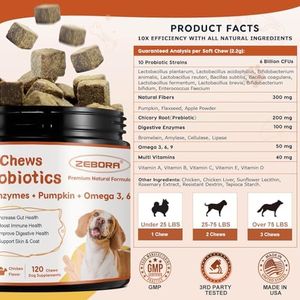
Probiotic Soft Chews
These palatable and easy-to-administer chews, like PetLab Co.’s Probiotic Chew +, are a popular choice. Some products, such as the Immune Probiotic Chew +, may also offer benefits for dogs with seasonal allergies.
Probiotic Powders and Capsules
These can be sprinkled over food or, in the case of capsules, opened and mixed in. Some dogs may find them palatable, while others might be resistant.
Probiotic Dog Food
Certain dog foods are formulated with added probiotics and prebiotics. Discuss with your veterinarian if such a food is appropriate for your dog.
A Concluding Thought on Natural Probiotics
While numerous natural probiotics exist for dogs, the current research is insufficient to broadly recommend them as a primary dietary addition. For those seeking to incorporate probiotics into their dog’s routine, probiotic supplements may offer a more reliable and researched solution. Always consult your veterinarian to discuss the best probiotic approach for your canine companion.
Sources:
- Kim DH, Jeong D, Kang IB, Lim HW, Cho Y, Seo KH. Modulation of the intestinal microbiota of dogs by kefir as a functional dairy product. J Dairy Sci. 2019;102(5):3903-3911. doi:10.3168/jds.2018-15639