
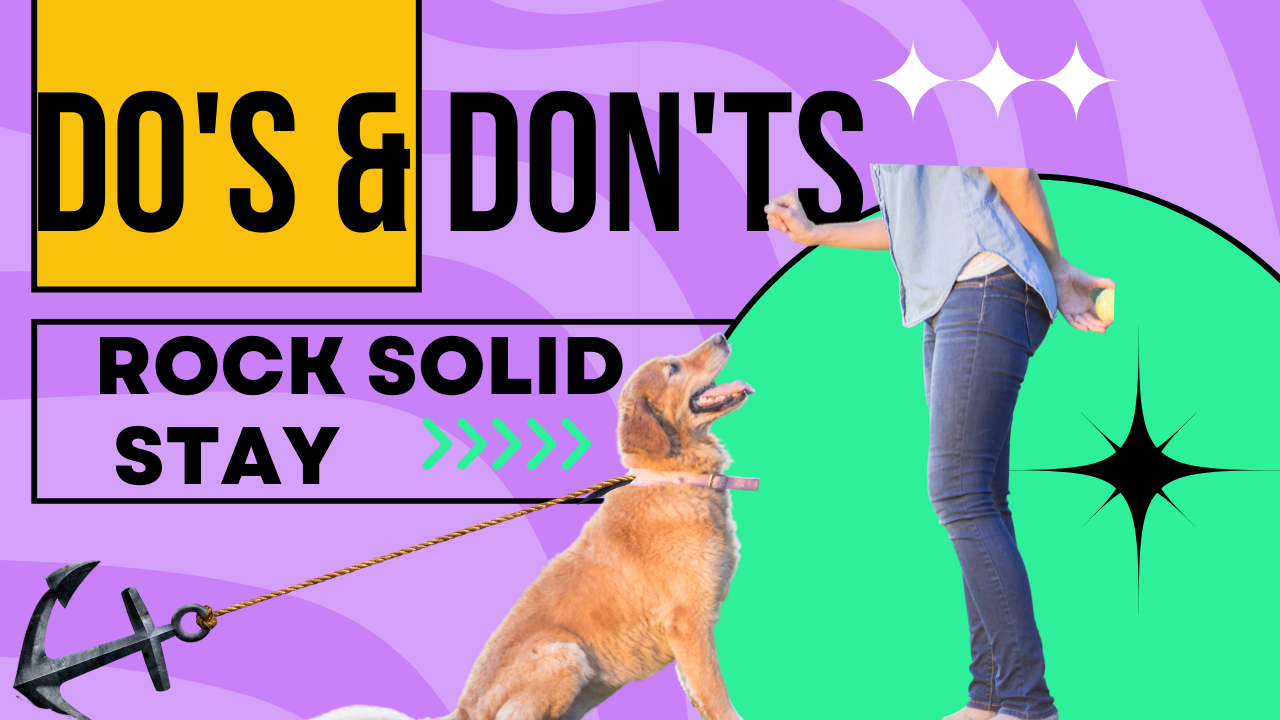
A solid “stay” command is a cornerstone of good canine manners and is essential for various dog sports and everyday obedience. Teaching your dog to hold a position until released makes countless aspects of dog ownership, from grooming to managing household activities, significantly easier. While many owners find this command challenging, a patient and systematic approach can lead to a dog that stays put reliably, even in distracting environments.
The “stay” command signifies that a dog should remain in a specific position until given a release cue. This is distinct from a “wait” command, which implies a temporary pause. A true “stay” means holding the position indefinitely until released. The release cue is a crucial element, signaling the end of the behavior. This same principle can be applied to other commands, effectively building an automatic stay into a desired position. Consistency in using the chosen release word is paramount to avoid confusion. Common release words include “okay,” “free,” or “release,” though it’s advisable to be mindful of words used frequently in daily conversation to prevent accidental releases.
Teaching the Release Cue
The foundation of a successful “stay” lies in teaching the dog the meaning of the release word. This initial training should start small and progress gradually. The process involves:
- Asking your dog to sit or lie down.
- After a brief pause of one second, calmly offer a treat and immediately say your chosen release word.
- Encourage your dog to move by walking away, patting your legs, or clapping your hands.
- Praise your dog enthusiastically once they begin to move.
- Repeat these steps until your dog consistently understands that the release word signifies freedom of movement.
Gradually Adding Duration to the “Stay”
Once your dog reliably understands the release cue, you can begin to incorporate the “stay” command and build duration. This is the first of the “three Ds” of dog training: duration, distance, and distraction. For this initial stage, focus solely on duration, ensuring a distraction-free environment. The steps are as follows:
- Ask your dog to sit or lie down.
- Immediately upon your dog assuming the position, present a hand signal (e.g., an open palm like a stop sign) and clearly say the word “stay.”
- Wait for one to two seconds, then calmly deliver a treat to your dog.
- Release your dog using your chosen cue and offer praise as they move.
- Gradually increase the time you expect your dog to stay before delivering the treat and releasing them. Aim to build duration in small increments.
- Once your dog can comfortably stay for 10 seconds or more, begin offering multiple treats during the stay. Continue to periodically offer treats and repeat the “stay” cue and hand signal to reinforce that the behavior is ongoing.
It’s crucial to avoid pushing your dog too quickly, as this can lead to frustration and break the training momentum. Setting your dog up for success by taking small steps is more effective. Remember that “stay” can be a less inherently exciting behavior for dogs, so consistent and positive reinforcement is key. It’s important to reward the act of staying, rather than the release itself, to ensure the “stay” remains the primary focus of the reward. If using a clicker, click during the stay just before delivering the reward, but refrain from clicking upon release. To prevent confusion, you can repeat the “stay” cue and hand signal after clicking and treating, before the dog is released.
©Canadeez – stock.adobe.com
Troubleshooting Common “Stay” Issues
Body language plays a significant role in a dog’s ability to hold a stay. Any movement on your part can inadvertently lure your dog, causing them to break their position. If your dog moves before being released, avoid punishment. Instead, calmly repeat the cues and restart the exercise, potentially taking a few steps back in your training to ensure success. This often indicates that the dog was either lured unintentionally or asked to hold the stay for too long.
Incorporating Distractions and Distance
After your dog has successfully maintained a stay for at least 30 seconds, you can begin introducing distractions and distance. Distance inherently includes an element of distraction, so it’s generally best to introduce distance last. When adding a new “D,” be prepared to reduce your expectations for the others. For instance, when introducing distractions, even if your dog can stay for extended periods, revert to shorter durations when the distraction is present. Start with minor distractions like a simple hand clap and gradually progress to more significant ones, such as throwing a ball. Once your dog can maintain a stay through various distractions, you can resume building duration.
When your dog demonstrates the ability to hold a 30-second stay amidst distractions, you can begin to build distance. Again, lower your duration expectations and minimize distractions during this phase. The process for building distance involves:
- Asking your dog to stay, then taking a single step backward.
- Immediately returning to your dog and rewarding them.
- Releasing your dog.
- Repeating the process, gradually increasing the number of steps you take away before returning to reward and release.
- Slowly extend the distance until you can comfortably walk to the edge of the room.
It is crucial to always return to your dog before releasing them. Releasing your dog from a distance prevents you from rewarding them during the stay and can lead to them associating distance with release. By progressing slowly and deliberately, your dog will develop a robust and reliable “stay” command.
Get personalized training, nutritional, veterinary, and everyday advice sent straight to your inbox. Subscribe to Pupdate, a weekly email newsletter with customized content based on your puppy’s breed and age.