
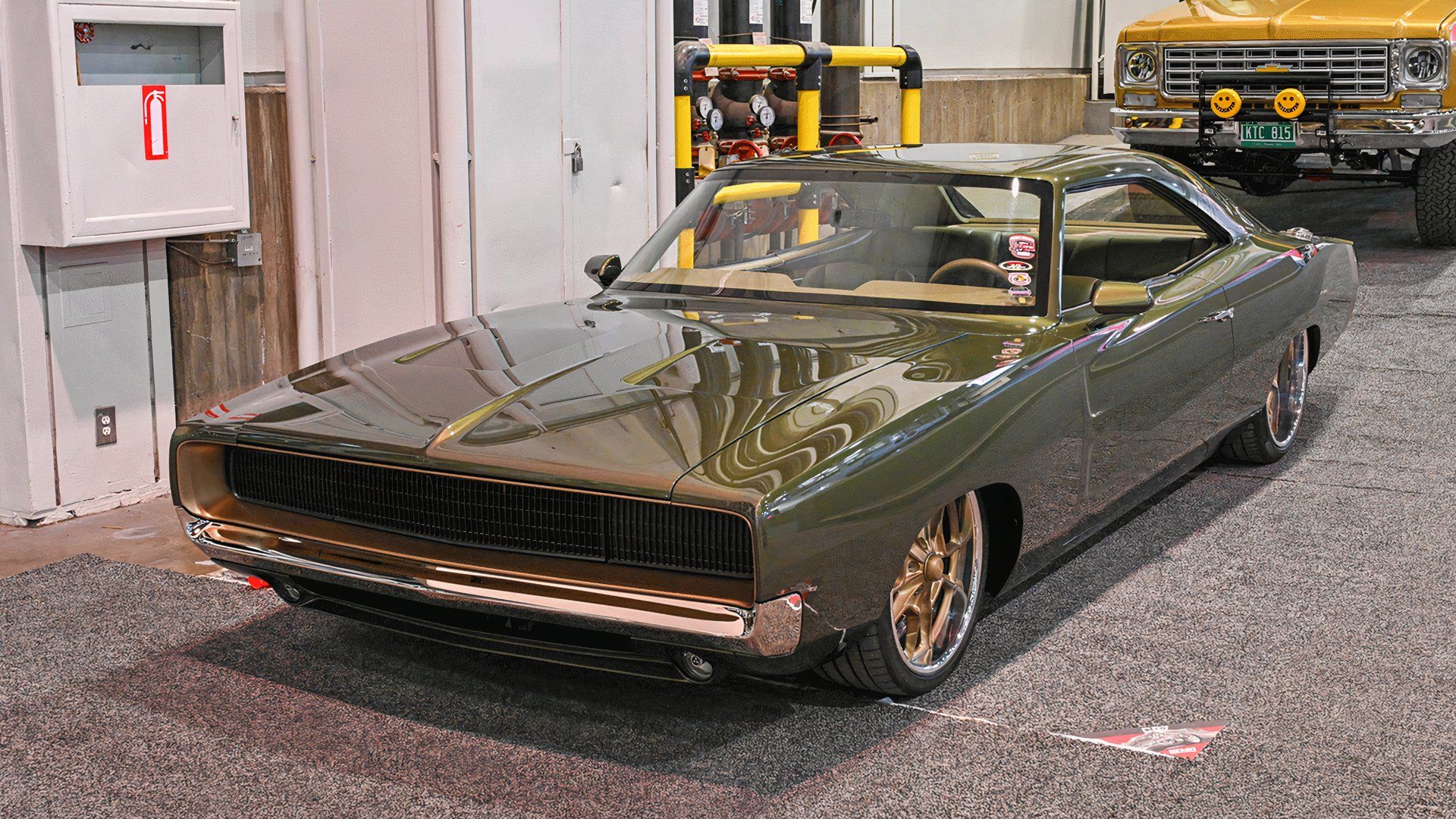
The 1968 Dodge Charger represents a pivotal moment in American automotive history, marking the transformation of a struggling model into a bona fide cultural icon. After lackluster sales of the original fastback design in 1967—with only 15,788 units sold—Dodge completely reimagined the Charger for 1968, creating a vehicle that would define the muscle car era and capture the imagination of generations through its starring roles in cinema and television, from the legendary “Bullitt” chase scene to its unforgettable appearance as the General Lee in “The Dukes of Hazzard.”
This comprehensive guide explores everything you need to know about the 1968 Dodge Charger, from its revolutionary design and engineering to the engine options, pricing, and collector market significance that make this model one of the most sought-after muscle cars in automotive history.
A Design That Defined an Era
The “Coke Bottle” Revolution
The 1968 Dodge Charger’s styling represented one of the most elegant interpretations of the popular “coke bottle” design language that dominated late-1960s automotive styling. This wasp-waisted silhouette featured dramatically sculpted sides that flared outward over the rear wheels, creating a muscular, aggressive stance that set the Charger apart from its competition. The design team at Dodge had learned from the 1967 model’s disappointing sales figures and understood that the new Charger needed to make a bold statement.
The front fascia featured a slim, full-width grille that stretched across the entire nose of the car, with hidden headlights that created a clean, uninterrupted appearance when not in use. This feature added to the vehicle’s menacing presence, particularly when combined with dark paint colors. At the rear, designers incorporated distinctive flying buttresses and a “tunnel” back window—a design element reminiscent of General Motors’ approach to fastback styling that contributed to the Charger’s unique visual identity.
Lighting and Visual Details
One of the most recognizable features of the 1968 Charger is its rear lighting arrangement. Two round taillights on each side were recessed into a black panel, creating a signature look that remains unmistakable decades later. The designers kept brightwork to a minimum, allowing the car’s muscular proportions to speak for themselves. Contrasting vinyl roofs were frequently ordered by buyers, adding a touch of luxury to the performance-focused package, while dummy scoops molded at the front of the doors enhanced the aggressive aesthetic.
The overall effect was intentionally menacing, especially in dark colors like black, and it perfectly captured the image that muscle car enthusiasts wanted to project. Unlike its corporate cousin, the Plymouth Road Runner, which offered multiple body styles, the 1968 Charger was available in only one configuration—a decision that helped maintain the model’s focused identity.
Engineering and Performance
Chassis and Platform
The 1968 Charger shared its chassis architecture with the Dodge Coronet, utilizing a proven suspension setup that balanced ride comfort with performance capabilities. Up front, torsion bars provided precise handling characteristics, while leaf springs in the rear ensured stability under hard acceleration. Despite its sleeker appearance, the redesigned Charger was actually heavier than the 1967 model—a surprising fact given the earlier car’s bulkier fastback proportions.
Engine Lineup
Dodge offered an impressive range of powertrain options for the 1968 Charger, catering to buyers with varying performance expectations and budgets:
Base Engine:
- 318 cubic-inch V-8 with two-barrel carburetor – 230 bhp
- The standard offering provided adequate performance for daily driving while maintaining reasonable fuel economy
Optional Small-Block:
- 383 cubic-inch V-8 with two-barrel carburetor – 290 bhp
- 383 cubic-inch V-8 with four-barrel carburetor – 300 bhp
- These engines represented the sweet spot for buyers seeking strong performance without the cost of the top-tier options
Big-Block Powerhouses:
- 440 cubic-inch Magnum V-8 – 375 bhp
- 426 cubic-inch Street Hemi – 425 bhp
- The legendary Hemi represented the ultimate performance option, attracting only 475 buyers, with 211 specifically ordering the 4-speed manual transmission
Pricing and Sales
The 1968 model year proved to be a commercial breakthrough for the Charger nameplate. Total sales reached 96,100 units across both standard Charger and Charger R/T models—a dramatic improvement from the previous year’s disappointing 15,788 units. The base Charger started at $3,014, while the upmarket R/T (Road/Track) version began at $3,480, positioning the vehicle competitively within the muscle car segment.
Options and Customization
Dodge provided extensive customization options for the 1968 Charger, allowing buyers to tailor their vehicles to specific preferences. Available options included:
- Air conditioning for climate-controlled comfort
- Power steering and power brakes for enhanced drivability
- Power disc brakes for improved stopping performance
- Power door locks for convenience
- Heavy-duty differential for improved traction under hard acceleration
- Cruise control for highway comfort
- Tilt/telescope steering wheel for personalized driving position
- Dual exhaust systems for enhanced performance and sound
- AM radio for entertainment
- Tachometer for performance monitoring
- Multiple wheel options including mag wheel covers and styled road wheels
- Vinyl roof treatments for added visual distinction
Color Options
The 1968 Dodge Charger was offered in an impressive array of 23 exterior colors, reflecting the era’s willingness to embrace vibrant automotive finishes:
- Silver
- Black
- Medium Blue
- Pale Blue
- Dark Blue
- Light Green
- Racing Green
- Light Gold
- Medium Gold
- Light Turquoise
- Medium Dark Turquoise Bronze
- Bright Red
- Bright Blue
- Burgundy
- Yellow
- Medium Green
- Light Blue
- White
- Beige
- Medium Tan
- Charger Red
- Dark Green
Cultural Significance and Legacy
The 1968 Dodge Charger’s cultural impact extends far beyond its sales figures and performance credentials. Its starring role in the 1968 film “Bullitt,” where Steve McQueen piloted a Highland Green Mustang GT Fastback in pursuit of a black Dodge Charger through the streets of San Francisco, created arguably the most famous car chase scene in cinema history. This single scene cemented the Charger’s place in automotive lore and continues to influence car enthusiasts and filmmakers today.
Perhaps even more recognizable to mainstream audiences is the Charger’s transformation into the General Lee for the television series “The Dukes of Hazzard,” which aired from 1979 to 1985. The bright orange 1969 Charger (nearly identical to the 1968 model) became one of the most famous television cars of all time, introducing the Charger to generations who may never have experienced the muscle car era firsthand.
Collector Market and Valuation
Today, the 1968 Dodge Charger commands significant attention in the collector car market. Values vary dramatically based on engine configuration, condition, originality, and documented history. Hemi-equipped models represent the pinnacle of the market, with well-documented examples frequently achieving seven-figure prices at auction. The 440 Magnum cars and well-preserved R/T models also command substantial premiums, while standard Chargers with the base 318 engine remain more accessible to entry-level collectors.
Several factors influence current market values:
- Engine originality: Numbers-matching examples, particularly Hemi and 440 cars, command the highest prices
- Documentation: Provenance and restoration records significantly impact value
- Color combinations: Rare or desirable color combinations can add substantial premiums
- Option content: Heavily optioned examples typically outperform base models
- Restoration quality: Professional, concours-quality restorations achieve top-tier values
Restoration Considerations
For enthusiasts considering a 1968 Charger restoration project, several factors merit careful consideration. Parts availability remains relatively strong compared to many muscle car contemporaries, with reproduction components available for many hard-to-find items. However, authentic Hemi components and certain trim pieces can prove challenging to source and expensive to acquire.
Potential restorers should evaluate:
- Body integrity: Rust in the rear window tunnel area, rear quarter panels, and frame rails can be particularly challenging to address
- Interior condition: Original interior components, particularly the distinctive dashboard and seat configurations, can be difficult to restore
- Engine and drivetrain authenticity: Maintaining numbers-matching status requires careful component preservation
- Documentation: Original window stickers, build sheets, and ownership history add significant value to restored examples
Conclusion
The 1968 Dodge Charger represents far more than a mere automobile—it embodies the spirit of the American muscle car era at its most confident and expressive. From its revolutionary “coke bottle” styling to its legendary engine options and enduring cultural legacy through cinema and television, the ’68 Charger has earned its place among the most significant vehicles in automotive history.
For collectors and enthusiasts today, the 1968 Charger offers an authentic connection to a transformative period in automotive design and culture. Whether pursuing a Hemi-equipped concours example or a driver-quality car built for enjoyment, the Charger delivers an experience that few other vehicles can match—a combination of dramatic styling, visceral performance, and cultural significance that continues to captivate new generations of automotive enthusiasts.
Whether you’re considering adding a 1968 Charger to your collection, researching the model for investment potential, or simply appreciating the design and engineering achievements of the muscle car era, the Dodge Charger stands as a testament to a time when American automakers pushed the boundaries of style, performance, and personality in the pursuit of creating something truly unforgettable.
Have you had the opportunity to experience a 1968 Dodge Charger firsthand? Share your thoughts and memories of this legendary muscle car in the comments below, and explore our other detailed guides to classic American automobiles.