
The gaming community has been buzzing with excitement over Intel’s latest Raptor Lake processors, with the high-performance i5 and i9 models stealing the spotlight. In all the noise, the humble Intel Core i3-13100 quietly launched, barely making a ripple. This raises a critical question for budget-conscious gamers: Is the Intel Core i3 series still a viable option for gaming in 2024, or has it been left behind by increasingly demanding titles?
For years, the Core i3 has been the entry-level king, but with modern games becoming more CPU-intensive than ever, many suspect that a quad-core processor simply can’t deliver a smooth, enjoyable experience. We’re here to cut through the speculation and give you a clear, honest assessment of whether Intel’s Core i3 is good for gaming today.
Understanding the Intel Core i3: Specs and Capabilities
First, it’s important to understand that “Core i3” isn’t a single processor but a series. The latest addition, the Intel Core i3-13100, represents the current standard for the lineup. Its predecessors, like the i3-12100 and i3-10100, share a similar foundational architecture.
The defining characteristic of modern i3 CPUs (10th generation and above) is that they are all hyperthreaded quad-core processors. This means they have four physical cores but can handle eight threads simultaneously. This hyperthreading technology is crucial for multitasking and handling the parallel workloads common in modern gaming.
Let’s take a closer look at the specs of the latest model:
- Model: Intel Core i3-13100
- Core Count: 4
- Threads: 8
- Base Clock Speed: 3.4 GHz
- Boost Clock Speed: 4.5 GHz
- Max Power Consumption (TDP): 89 Watts
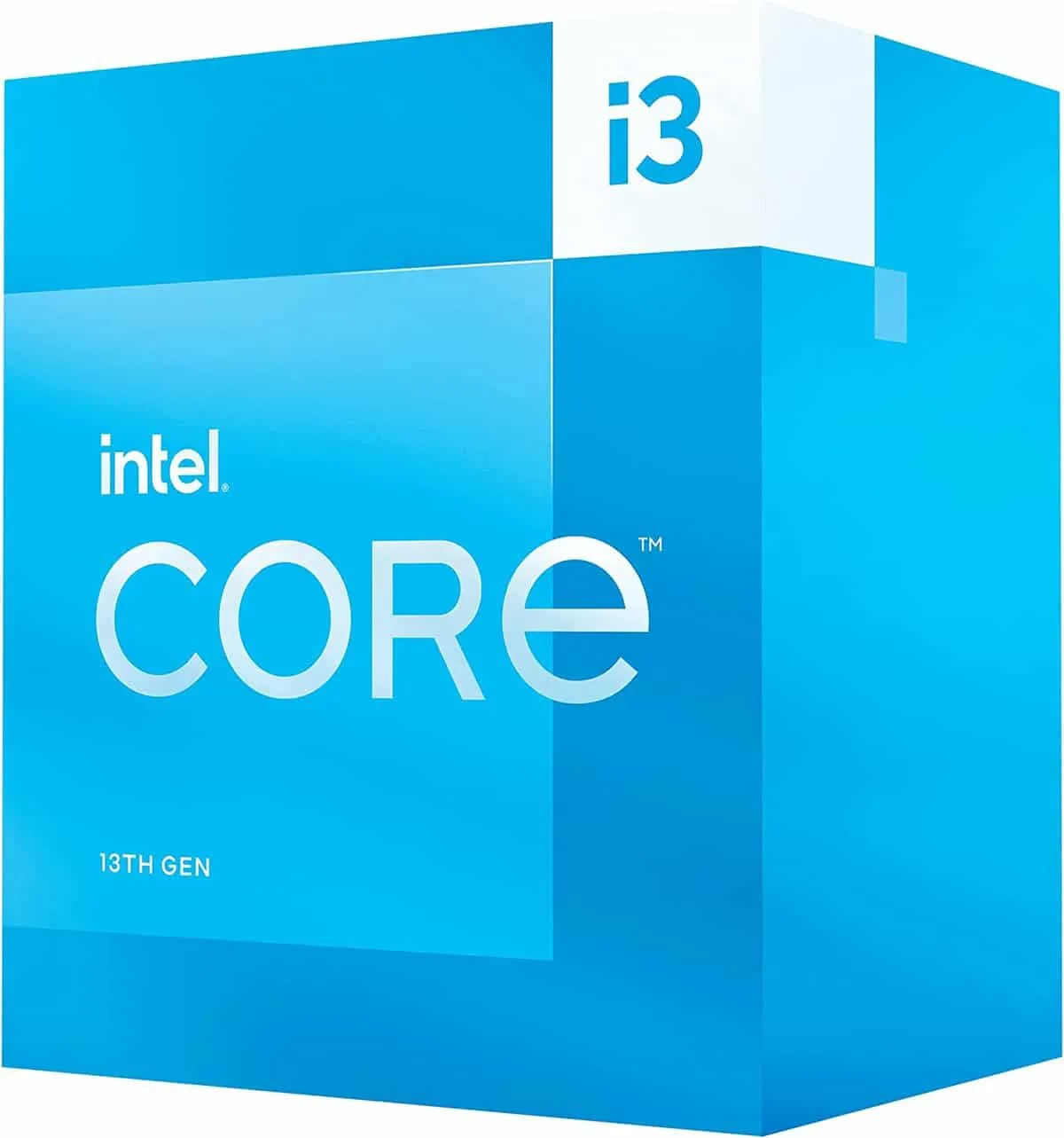
Previous generations in the series are not drastically different. Their primary variations lie in clock speeds, which are typically a few hundred MHz lower. While this difference does impact performance, the overall capability of 10th, 11th, and 12th-gen i3 processors remains in the same competitive ballpark for budget gaming.
Gaming Performance Analysis: Can the Core i3 Deliver?
The short answer is: Yes, the modern Intel Core i3 (10th gen and above) can deliver a surprisingly good gaming experience, especially when you consider its price point.
However, it’s crucial to set realistic expectations. Core i3 processors from the 8th generation and earlier lack the hyperthreading capabilities found in newer models, resulting in poor performance that we do not recommend for modern gaming. The value proposition truly begins with the hyperthreaded quad-core i3s.
Here’s why these budget-friendly CPUs manage to hold their own:
- Games Don’t Scale Infinitely with Cores: A common misconception is that a game will utilize every core and thread available. In reality, most games are designed to fully utilize only a handful of threads for their most critical tasks. Secondary processes like physics, audio, and AI are delegated to other available threads. An 8-thread processor like the i3 remains sufficient for the vast majority of today’s games.
- Strong Single-Thread Performance: For gaming, a CPU’s single-thread performance is often more important than its core count, as it directly influences frame rates (FPS). The i3-13100, with its 4.5GHz boost clock, offers excellent single-thread speed for its class. This allows it to keep up with demanding game engines, ensuring smooth gameplay.
In practical terms, when paired with a balanced mid-range graphics card, an Intel Core i3 is more than capable of delivering a solid 1080p gaming experience. You can expect to achieve a stable 60 FPS in most titles, including CPU-centric AAA blockbusters like Cyberpunk 2077, Red Dead Redemption 2, and Shadow of the Tomb Raider.
It’s important to note that more CPU-demanding games, particularly those with large open worlds or high-density crowds (like simulation or strategy games), will push the i3 to its limits. In these scenarios, you might see the processor running at or near 100% utilization. While this is not inherently a problem due to the i3’s low power consumption and thermal output, it can make multitasking—such as running a voice chat app or streaming in the background—more challenging.
To avoid creating a performance bottleneck, an i3 CPU is best paired with a complementary mid-range GPU. Ideal partners include cards like the Nvidia GeForce RTX 3050 or the AMD Radeon RX 6500 XT. Pairing it with a significantly more powerful high-end GPU would likely result in the processor holding back the graphics card’s full potential.
Final Verdict: The Budget Gamer’s Champion
The Intel Core i3 is unequivocally a budget-oriented processor, and it delivers on that promise exceptionally well. While it is not the right choice for enthusiasts aiming for high-refresh-rate 1440p or 4K gaming, it excels at its primary mission: providing an accessible entry point into PC gaming.
For just over $100, the modern Core i3 offers incredible value. It’s the perfect processor for entry-level gamers building their first PC on a tight budget. Its combination of sufficient thread count and strong single-core performance allows it to run a vast library of games smoothly at 1080p. The gaming experience may not be as high-fidelity as with a flagship i9, but for smooth, playable frame rates at a fraction of the cost, the Intel Core i3 remains the budget champion.
Is it good for gaming? Yes, provided you have the right expectations and pair it with a suitable graphics card. If you’re building a system on a budget, the Intel Core i3 should be at the top of your list.