
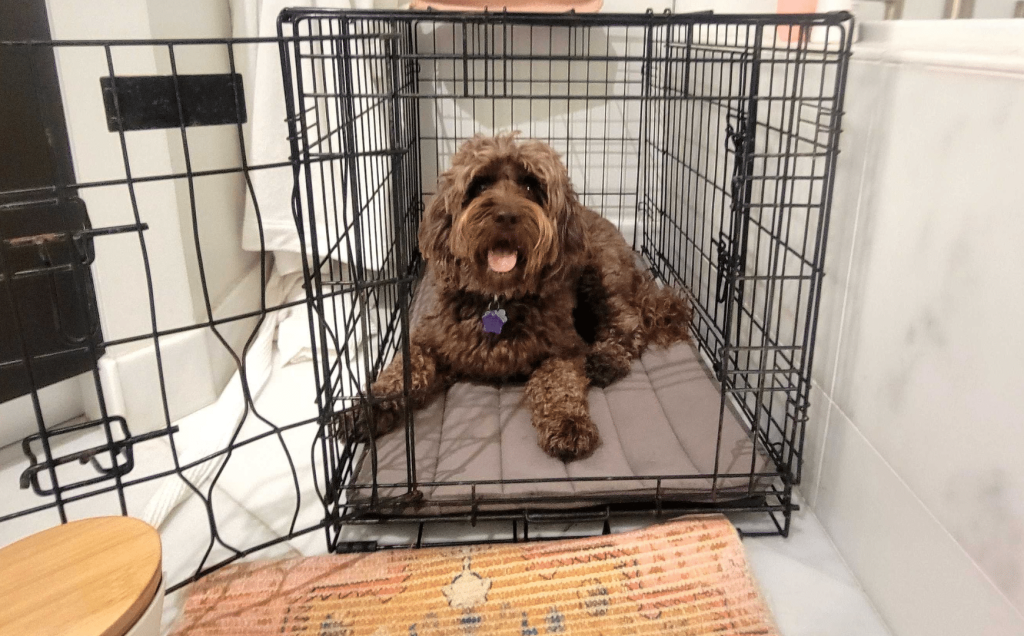
Separation anxiety is one of the most challenging behavioral issues a dog owner can face, but with a structured, science-backed approach, it is entirely manageable. The most effective method for treating this condition is a process called desensitization, where you gradually expose your dog to your absence in a controlled way, teaching them that being alone is not a stressful experience. This guide provides a realistic, step-by-step training plan you can implement at home, based on professional techniques used by certified separation anxiety trainers.
The core principle of this training is to keep your dog “below threshold.” This means you will practice leaving your dog for very short periods and return before they show any signs of stress, such as lip licking, pacing, panting, excessive yawning, or scratching. By doing this, you change your dog’s emotional response to your departure, transforming it from a trigger for panic into a non-event.
How to Start Your Separation Anxiety Training Sessions
Through a series of structured training sessions, your dog will learn that your departures are safe and predictable. The time this takes varies from dog to dog, but with consistency, the prognosis for dogs with separation anxiety (SA) is excellent. To begin, you’ll need to choose a specific location for your training—a room where your dog feels safe, where you can limit exposure to departure cues (like the front door), and where you can monitor them easily.
1. Determine Your Dog’s Baseline
Before you can start training, you need to know your starting point. Your dog’s “baseline” is the amount of time they can be left alone without showing any signs of stress.
To find this, set up a camera to observe your dog. If you have two people, you can leave one person’s phone on a FaceTime call with the other. Leave the house as you normally would. Watch your dog closely. As soon as you see the slightest sign of stress—even something as subtle as staring intently at the door—return immediately. Note the exact time you were gone.
Don’t be discouraged if this number is zero seconds or just a few seconds. Some dogs become stressed before you even leave the room. If this is the case, you will begin by desensitizing your dog to the door itself, which is covered later in this guide.
2. Eliminate or Desensitize to Departure Cues
Departure cues are the everyday actions you take before leaving the house—picking up keys, putting on shoes, changing clothes, or turning on the TV. These cues can act as triggers for a dog with SA. Your goal is to eliminate as many of these avoidable cues as possible to make your training sessions more manageable.
For example, you can leave your dog in a bedroom so they don’t see you gather your keys. If you need to change clothes, do it an hour before training or out of your dog’s sight. However, some cues are unavoidable. If your dog gets anxious at the sight of a camera, you will need to desensitize them to it. Do this by repeatedly setting up the camera without leaving the room. Once your dog is bored and uninterested in the camera, you can then incorporate leaving after it’s set up.
3. Prepare the Training Space and Gather Your Tools
Before each session, prepare the training room. For many dogs, this means making the environment calm and predictable. About ten minutes before you start, lead your dog to the training area. Close blinds, turn on a white noise machine to block out external sounds, and make sure the space is safe.
Gather everything you will need for the session:
- A camera or phone to monitor your dog.
- A stopwatch to track durations.
- A written training plan with your repetitions and durations.
- A notebook or laptop to take notes after each departure.
4. Create and Execute Your Training Plan
A training session is a series of repetitions (reps) where you leave and return before your dog gets stressed. A typical session has three phases: warm-up, goal duration, and cool-down. The number of reps you do will depend entirely on your dog.
- The Warm-Up (2-7 reps): These are very short, random durations. They serve two purposes: to add easy, positive experiences to your dog’s “bucket” of departures, and to signal to your dog that this is a training session where there is nothing to worry about.
- The Goal Duration (1 rep): This is the longest duration you will leave your dog for in that session. Your starting goal duration should be a few seconds shorter than your baseline number. For example, if your baseline was 45 seconds, your goal duration for the first session should be 35 seconds. The golden rule is to always end a rep before your dog shows stress.
- The Cool-Down (1-2 reps): After the goal duration, you can add one or two very short departures. This ensures the session doesn’t end on the hardest repetition.
Here is what a single repetition looks like in practice:
- Tell your dog “be right back” (or a similar cue) and close the door behind you.
- Walk away and stand outside for the predetermined duration, watching your dog on the camera.
- After the time is up, return to the room.
- Greet your dog calmly. A few gentle ear scratches or a quiet “hello” is enough. You don’t want to get them overly excited.
- Sit down for 30 to 45 seconds, allowing your dog to settle back down, and take notes on how the rep went.
- Repeat the process for all the reps in your plan.
A note on treats: For initial training, it is best not to use food puzzles or chews. While they can be a distraction, many dogs will finish the food and then resume panicking. The goal is to teach your dog to be calm without a food lure. You can reintroduce food toys later, after you have built up to longer durations.
5. How to Handle Setbacks and Interruptions
Your training plan is just a guide. If something goes wrong, your dog shows signs of stress, or an external event interrupts you, don’t panic. The most important skill is knowing when to adjust or end a session.
If you see small signs of stress like a grumble, pawing, or intense staring, return to the room immediately. If your dog is too excited when you return, give them a few minutes to calm down. If they are still stressed after a short break, end the session and try again tomorrow with easier durations. If an external event like a neighbor or a delivery person arrives, end the session immediately.
6. Tracking Progress and Increasing Duration
Consistency is key. Aim for one session per day, four to five days a week. Do not exceed two sessions in a single day, especially if your sessions are longer than 15 minutes.
When your dog is consistently relaxed during training—showing relaxed eyes, neutral ears, and lying down—you can increase the goal duration for your next session. The increments should be small:
- Under a few minutes: Increase by 10-30 seconds per session.
- Several minutes: Increase by one minute or so.
- Around 30 minutes: Increase by five minutes.
This gradual approach feels slow, but it is the fastest path to lasting success. Use a spreadsheet to track your progress. Record the date, the goal duration, and the number of reps. Visualizing your progress on a graph can be incredibly motivating.
7. Management: The Crucial Companion to Training
The most challenging part of separation anxiety training is the management it requires. While you are training, you cannot leave your dog alone for longer than they can handle. If you leave them to panic, you undo all the progress you’ve made and erode the trust you are building.
This means you must find alternatives for your dog when you cannot be with them. This might involve hiring a pet sitter, taking your dog to daycare, or asking a trusted friend or neighbor to watch them. While this requires significant scheduling and creativity, it is essential. Management gives your training the space it needs to work, ensuring that every official departure is a positive, safe experience for your dog.
8. When to Seek Professional Help
Separation anxiety training can be nuanced, and having a professional guide you can be invaluable. If you are able, seeking out a certified professional is highly recommended.
Look for a Certified Separation Anxiety Trainer (CSAT) or an SA Pro Trainer™. These professionals undergo specialized training in systematic desensitization protocols and are experts in reading canine body language. They can act as a second pair of eyes to ensure your dog stays below threshold and can help you navigate plateaus in your training plan. If you work with a general positive reinforcement trainer, ask them how they treat separation anxiety to ensure they use the methods described here and avoid aversive tools like bark collars.
For those who prefer a self-guided approach, there are excellent online programs like Mission Possible, Home Alone: Treating Separation Anxiety, and Subthreshold Training. Julie Naismith’s book, Be Right Back, is also a fantastic starting point that provides sample training plans and a comprehensive overview of the process.
Separation anxiety training requires patience, consistency, and a commitment to moving at your dog’s pace. It involves a lot of small, incremental steps and a significant amount of real-world management. However, by following this structured plan, you are not just teaching your dog to tolerate your absence; you are rebuilding their confidence and trust, ultimately creating a calmer, happier life for both of you.