
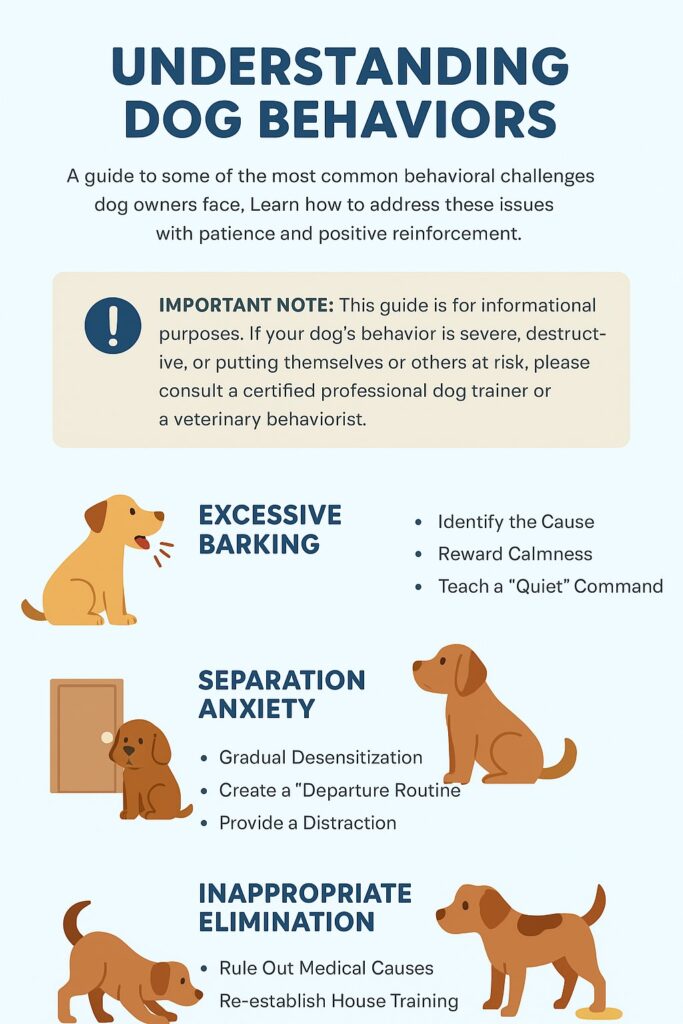
Raising a puppy is a rewarding experience, but it often comes with a unique set of challenges that can test even the most patient dog owner. From boisterous greetings to destructive chewing, these behaviors, while normal for young dogs, can be frustrating. This guide addresses common puppy issues such as jumping, nipping, excessive barking, digging, and licking, offering practical advice for owners seeking to cultivate a well-behaved canine companion. Learn how to train your dog to come off leash for greater freedom and control.
Understanding and Managing Jumping and Nipping at Visitors
Puppies often exhibit jumping and nipping behaviors when guests arrive, stemming from excitement and a lack of impulse control. The instinct to greet enthusiastically can manifest as unwanted physical contact. A common mistake is the “restrained recall,” where holding the puppy back until called intensifies their excitement.
Effective Solutions:
- Leash Management: Keep your puppy on a leash when guests arrive. Use leash pops, as taught in obedience classes, to manage excitement and prevent jumping. Only allow your puppy to approach guests once they are calm.
- Guest Cooperation: Instruct guests to initially ignore the puppy. Once the puppy has calmed down after greeting, guests can calmly pet them. Crucially, if the puppy jumps or nips during petting, they should immediately cease interaction. Reinforce this with a gentle leash pop to interrupt the unwanted behavior.
- Consistent Ignoring: When a puppy jumps or nips, avoid direct eye contact, talking, or touching. Turning your back can sometimes be interpreted as an invitation to play. True ignoring means acting as if the puppy isn’t there. If ignoring proves difficult, a gentle, non-engaging nudge with your knee or a push with your hand can be used, without verbal interaction or eye contact.
Tackling Excessive Barking and Demand Behaviors
Persistent barking, especially in the evenings, can be a significant source of stress for owners. This often stems from a demand for attention or boredom. Conflicting methods, such as ignoring the barking one moment and then trying to soothe the puppy the next, can confuse the dog and hinder progress.
Effective Solutions:
- Consistent Attention: Implement a “play hard to get” rule. Only give your puppy attention when you initiate it. This means even if they approach you calmly, ignore them until they move away, then call them to you for affection. This teaches them to seek attention in a controlled manner.
- Extinction Principle: Essentially, ignore the puppy’s demands for attention. This principle, also known as “extinction,” is highly effective when applied consistently. If the barking is a bid for attention, withholding that attention will eventually lead to the behavior ceasing.
Addressing Destructive Behaviors: Digging and Chewing
Destructive behaviors like digging in the yard and chewing on household items are common, especially when a puppy lacks sufficient physical and mental stimulation. Puppies explore their world through their mouths and often resort to digging out of boredom or to investigate interesting scents or textures.
Effective Solutions:
- Environmental Management: For digging, consider using deterrents like chili powder, reapplying it consistently when the puppy will be unsupervised. However, a more holistic approach involves ensuring adequate exercise and providing a variety of appropriate chew toys, such as bones and stuffed Kongs.
- “Leave It” Command: Teaching a solid “Leave It” command is crucial. This command, typically covered in basic obedience classes, teaches the puppy to disengage from something they are focused on, preventing them from digging or chewing on inappropriate items. Train your dog to alert to go outside to help manage potty needs.
- Deterrent Sprays: For chewing on household items, safe, non-toxic deterrent sprays can be applied to surfaces. Remember to test these sprays in an inconspicuous area first to avoid staining.
Managing Excessive Licking
Constant licking of household objects, furniture, and clothing can be a sign of boredom, anxiety, or simply a normal canine behavior. While not inherently harmful, it can be annoying and indicate an unmet need.
Effective Solutions:
- Address Underlying Causes: Similar to digging and chewing, ensure your puppy is getting enough exercise and mental stimulation. Provide plenty of appropriate chew items.
- “Leave It” Command: Again, the “Leave It” command is invaluable in redirecting this behavior.
- Deterrent Sprays: As with chewing, deterrent sprays can be used on surfaces to discourage licking.
The Importance of Fulfilling Canine Needs
It is crucial to remember that many of these “problem” behaviors are normal canine actions that simply conflict with human expectations. Young dogs possess abundant energy, a need to explore, a desire to play, and a requirement for stimulation. As dog owners, our role is to fulfill these needs in approved ways, rather than solely trying to suppress unwanted behaviors. This proactive approach, combined with consistent training and management, will foster a harmonious relationship with your canine companion. Consider enrolling in a puppy basic obedience video course to build a strong foundation. How to stop your dog running out the door is another essential skill for safety.
Chad Culp – Certified Dog Trainer, Canine Behavior Consultant, Owner of Thriving Canine.