
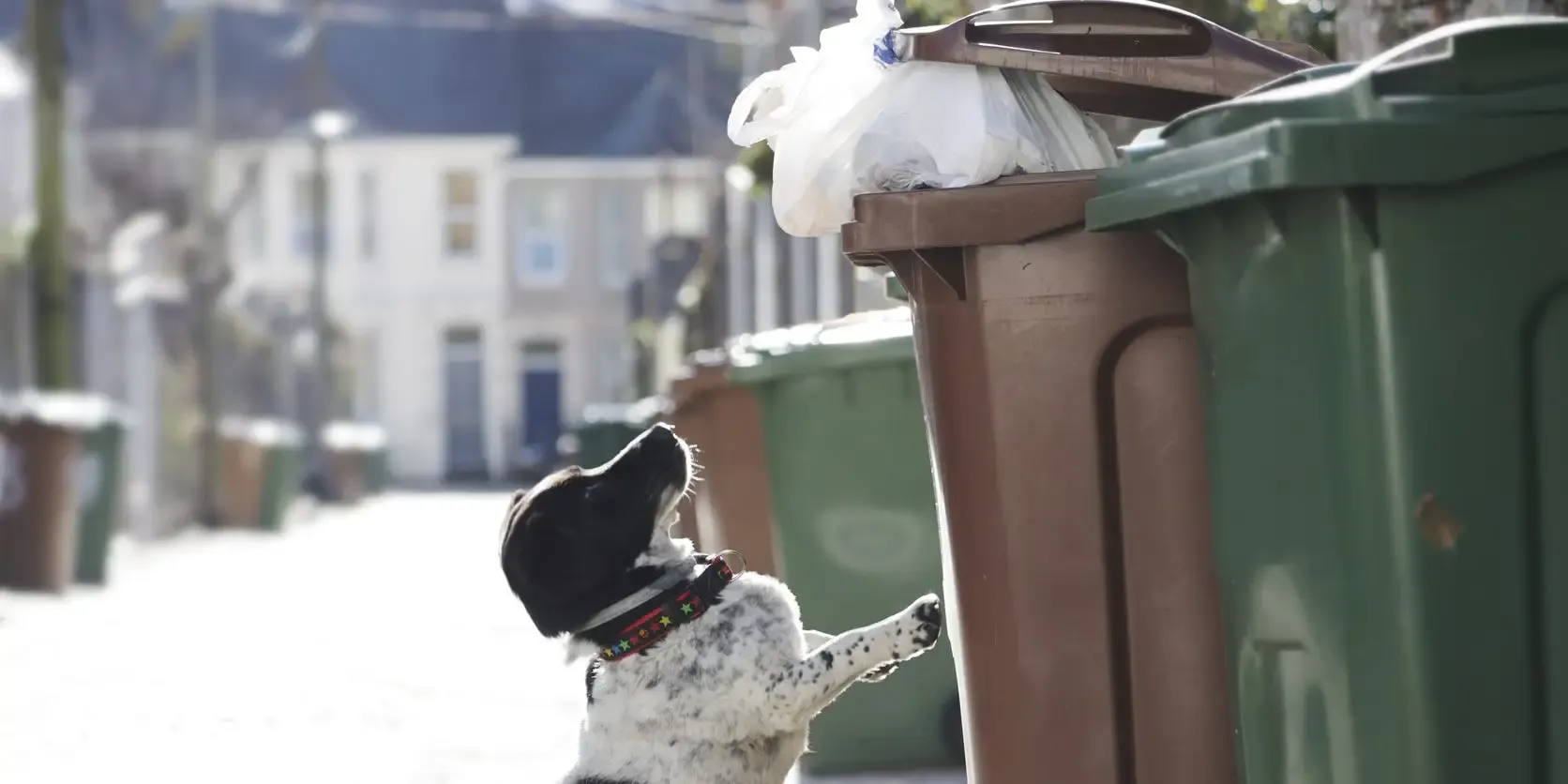
Keeping your dog safe and healthy on walks is a top priority for any pet owner. One common and potentially dangerous habit dogs can develop is eating trash they find outdoors. This behavior is not only unhygienic but can also lead to serious health issues if they ingest toxic substances. Fortunately, with consistent training and a bit of proactive planning, you can significantly reduce the chances of your canine companion indulging in discarded food or waste. This guide will explore effective methods to train your dog to resist the temptation of garbage during walks.
The “Leave It” Command: A Foundational Skill
The “leave it” command is one of the most valuable tools in a dog owner’s arsenal, particularly for walks. It explicitly tells your dog to stop their current action and disengage, which is crucial when they approach a tempting piece of garbage. According to Nicholas Dodman, BVMS, DACVB, president of the Center for Canine Behavior Studies, it is best to introduce and practice this command in a low-distraction environment, such as inside your home. Melissa Bain, DVM, a professor of clinical animal behavior at UC Davis, emphasizes the importance of using high-value rewards, such as small pieces of meat, when training this command. By consistently rewarding your dog for obeying “leave it,” you teach them that adhering to your command is more satisfying than scavenging for discarded items.
Strategic Walk Planning to Minimize Exposure
While training is essential, strategic planning can also play a significant role in preventing your dog from eating trash. Certain public areas, like parks or bus stops, often have a higher concentration of litter, increasing the temptation for your dog. If your dog has a solid grasp of the “leave it” command, these areas can serve as excellent practice grounds. However, for a more relaxed walk or if your dog is still developing their training, it is advisable to consciously avoid such high-trash zones to ensure their immediate safety.
“Claiming” the Trash: Establishing Possession
An effective technique to deter your dog from approaching garbage is to establish that the trash “belongs” to you. This method, often referred to as “claiming the trash,” builds upon the “leave it” command by incorporating body language to assert your dominance. When you spot garbage, physically position yourself between your dog and the item. This action, combined with a firm “leave it” command, signals to your dog that the item is off-limits and under your control. This technique can also be adapted for household garbage cans, provided you can catch your dog in the act of lunging for the trash, as this immediate correction is key to its success.
Directing Your Dog’s Focus: You, Not the Garbage
A fundamental aspect of responsible dog ownership is maintaining your dog’s attention during walks. By teaching your dog to focus on you, you redirect their attention away from potential distractions like garbage or other dogs. Cathy Madson, MA, CPDT-KA, a certified professional dog trainer and canine behavior consultant, suggests rewarding your dog whenever they offer you attention, even a brief glance, without being prompted. This consistent positive reinforcement encourages your dog to offer this behavior more frequently, making them less susceptible to external temptations. When you see a piece of garbage ahead, call your dog’s name or hold a treat near your face to keep their eyes on you as you pass it. Bain advises starting such focus training in less distracting environments, like your home or yard, before expecting your dog to concentrate on you amidst the exciting stimuli of an outdoor walk.
The Role of Muzzling for High-Risk Dogs
For dogs that exhibit a persistent struggle to resist garbage, a muzzle can be a necessary safety measure. Madson recommends muzzles for dogs who consume items too quickly for a “leave it” cue to be effective. A muzzle can prevent the ingestion of dangerous or toxic substances while you continue to work on solidifying the “leave it” command. It’s crucial, however, to introduce the muzzle gradually, allowing your dog to acclimate to wearing it for short periods, coupled with high-value rewards. Bain stresses that owners must condition their dogs to accept the muzzle positively, rather than simply placing it on them and expecting acceptance.
Recognizing Signs of Ingestion and Seeking Veterinary Care
If, despite your best efforts, your dog does ingest garbage, it is vital to monitor them closely for any signs of illness. Dodman notes that symptoms that do not resolve quickly warrant concern and may include vomiting, diarrhea, excessive drooling, lethargy, staggering, or constipation. Madson strongly advises contacting your veterinarian immediately if you suspect your dog has eaten something toxic. Prompt veterinary attention is always the safest course of action, as your vet can provide specific guidance and monitor your dog’s condition.
Conclusion: A Safer Walk for Your Canine Companion
Keeping your dog from scavenging garbage during walks is an achievable goal with the right approach. By combining the consistent application of commands like “leave it,” strategic walk planning, and redirecting your dog’s attention, you can create a safer and more enjoyable walking experience. For persistent issues, consider using a basket muzzle as a temporary safety measure while working with a qualified professional trainer to refine these crucial skills. Prioritizing these training methods and safety precautions will help ensure your dog remains healthy and happy on all your adventures together.