
Bringing home a new puppy is exciting, but the sleepless nights that follow can catch even the most prepared owners off guard. Puppy sleep training is one of the biggest challenges new dog owners face in the first few weeks, and if you’re currently running on empty, you’re far from alone. Puppies are a lot like human babies — it takes time before they settle into a comfortable, predictable sleep pattern. The good news is that with a consistent routine and a bit of patience, most puppies learn to sleep through the night within a matter of weeks. Here’s what you need to know to get there.
How Long Should Puppies Sleep?
Young puppies need an enormous amount of rest to support their rapid growth and development. Much like infants, they can spend more time asleep than awake, often needing 18 to 20 hours of sleep every day. As your puppy grows older, this requirement gradually decreases. Even so, don’t expect a tidy eight-hour block right away — it takes time for a young dog to settle into anything resembling a regular sleep schedule.
How Long Will a Puppy Sleep at Night?
Most puppies are capable of sleeping through the night by the time they reach three or four months old, though some take a little longer to get there. In the meantime, be prepared for several weeks of interrupted sleep and midnight toilet breaks. This adjustment period often comes as a genuine shock to first-time puppy owners who weren’t expecting quite so many 2 a.m. wake-up calls.
Where Should My Puppy Sleep at Night?
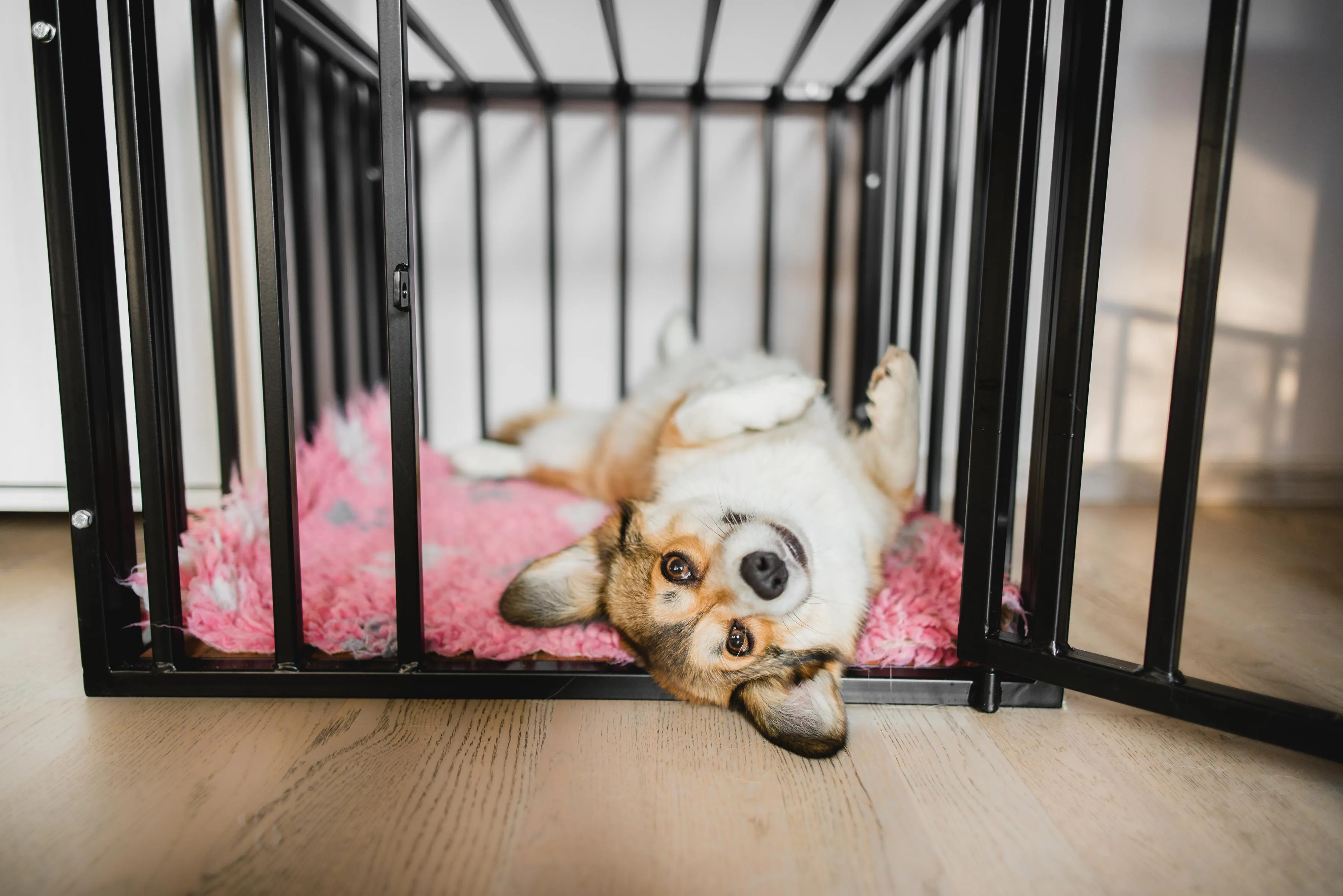
During the first couple of weeks, it can help enormously to keep your puppy in your bedroom, or to set up a temporary bed for yourself close to wherever they’re sleeping. This closeness helps prevent your puppy from waking up feeling anxious or alone. Many owners find that using a crate as part of their sleep training routine provides a secure, den-like space that puppies naturally gravitate toward once they’re used to it.
Building a Bedtime Routine
The key to successful puppy sleep training is consistency from night one. Aim to establish a calm, predictable bedtime routine as soon as your puppy arrives home. Make sure they’ve had their last meal at least an hour before bedtime, and spend some time playing with them beforehand so they’re pleasantly tired when it’s time to settle down. Avoid high-energy games right before bed, though — this tends to overstimulate puppies rather than wind them down.
Puppy sleep training also needs to work hand in hand with toilet training. Young puppies simply don’t have the bladder control to hold a wee or poo through an entire night, so you should expect to factor in at least one or two midnight toilet trips in the early weeks.

How to Stop a Puppy Crying at Night
Nearly every puppy cries at night, and it’s simply their way of communicating something to you. Often it stems from anxiety — after all, your puppy has spent their whole life sleeping beside their mother and littermates, and suddenly finds themselves alone for the first time. Comforting pheromone products, such as Adaptil, can help ease this transition and reduce nighttime distress.
Crying can also mean your puppy needs the toilet, or simply wants your attention. Over time, you’ll learn to distinguish between the different sounds and know which ones genuinely need a response. This takes patience, which can admittedly be hard to muster when you’re running on very little sleep yourself.
How Long Will a Puppy Cry Before Falling Asleep?
Research consistently shows that leaving a puppy to cry it out tends to increase their distress rather than resolve it — and you’re also more likely to find an unwanted mess in the morning if they’ve been left alone too long. By sticking to a solid bedtime routine and continuing consistent toilet training through the night, most owners find their puppy settles into sleeping through the night far sooner than expected, and those pre-puppy eight-hour sleeps gradually return.
Coping With Sleep Deprivation as a New Puppy Owner
Sleep deprivation is one of the most common struggles reported by first-time puppy owners. It’s not unusual to experience what’s often called the “puppy blues” during this exhausting stretch, complete with moments of doubt or even regret about the decision to get a puppy. Rest assured, these feelings and the disrupted nights are temporary. In the meantime, try to catch up on your own sleep whenever you can — napping while your puppy naps during the day can make a real difference to how you cope.

Final Thoughts
Puppy sleep training doesn’t happen overnight, but with a consistent bedtime routine, a comforting sleep environment, and a patient approach to nighttime toilet breaks, most puppies learn to settle by the three to four month mark. Remember that crying is communication, not defiance, and responding calmly and consistently will help your puppy feel secure far faster than leaving them to cry it out. If you’re finding the early weeks overwhelming, professional puppy training classes can offer hands-on, expert guidance to help both you and your puppy through this stage with confidence — and a little more sleep for everyone.