
For fans of Oldies Music, few names carry as much cultural weight as Frank Sinatra. Revered as one of the defining voices of America’s golden era of popular music, Sinatra’s life has long fascinated historians, music enthusiasts, and collectors alike. While his remarkable career is celebrated through timeless recordings and unforgettable performances, certain historical documents offer a more personal look at the man behind the legend.
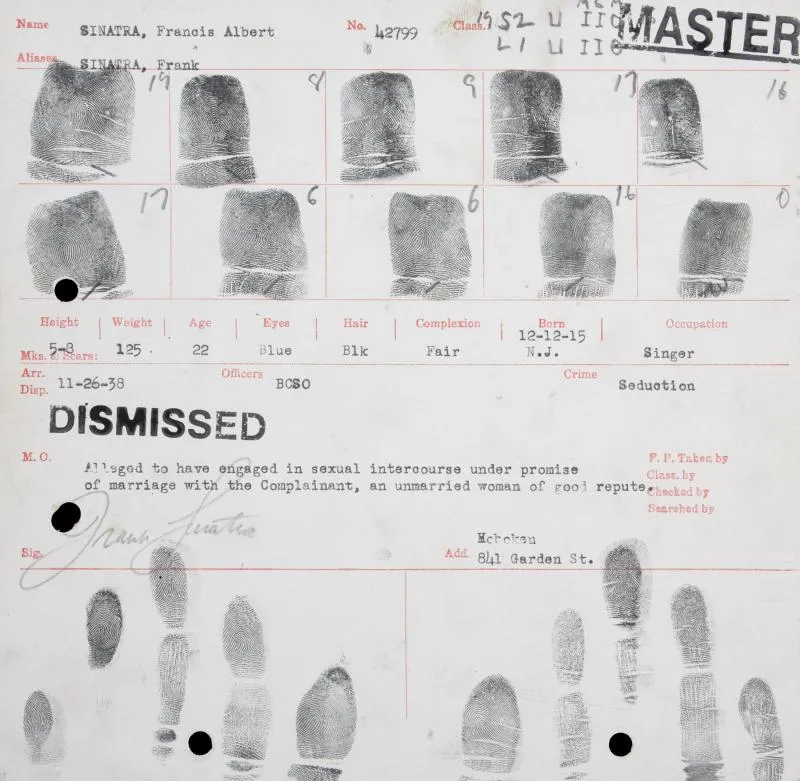
One such artifact is Frank Sinatra’s original 1938 arrest fingerprint record, a rare document that captures a little-known episode from his early life, years before he became one of the most influential figures in American music history.
The Historical Context Behind the Arrest
In the late 1930s, Frank Sinatra was still a young man pursuing his ambitions long before achieving international fame. On November 26, 1938, he was arrested in Bergen County, New Jersey, and charged with the crime of “seduction.”
At the time, certain American laws treated specific forms of sexual conduct as criminal offenses. According to the official records, Sinatra was accused of engaging in sexual intercourse with an unmarried woman under a promise of marriage. The complaint referenced incidents that allegedly occurred on November 2 and November 9, 1938, in the Borough of Lodi.
The charge was based on provisions contained within the revised statutes of 1937, reflecting the social and legal standards that existed in the United States during that era. For modern readers, such laws may seem unusual, but they provide valuable insight into the cultural expectations and moral framework of pre-World War II America.
Details Preserved in the Fingerprint Record
The fingerprint sheet offers a surprisingly detailed snapshot of Sinatra at the age of 22, just months before his twenty-third birthday.
The document records personal information including:
- Age
- Height
- Weight
- Hair color
- Eye color
- Date of birth
- Occupation
These details transform the document from a simple law-enforcement record into an important historical artifact. For collectors and historians of music before 1975, such records help paint a fuller picture of iconic performers during the formative years of their lives.
After investigators determined that the woman involved was already married, the charge could not be sustained under the law. As a result, the case was dismissed.
The fingerprint record itself bears the official stamp indicating that the charges were dismissed, confirming that Sinatra was not ultimately convicted in connection with the accusation.
Why This Document Matters to Music Historians
Artifacts connected to famous musicians often reveal dimensions of their lives that are absent from recordings, interviews, and stage performances.
For admirers of the golden era of American music, the fingerprint sheet is significant because it predates Sinatra’s rise to fame. It captures a moment when he was simply a young man navigating life in New Jersey, unaware that he would eventually become one of the most celebrated singers in the world.
Documents like these help scholars understand the broader historical environment that shaped artists of the period. They also remind us that many cultural icons experienced personal challenges and controversies long before achieving public success.
The Mugshot and Public Fascination
Alongside the fingerprint record, historical mugshots of Frank Sinatra have frequently circulated in articles and exhibitions discussing the incident. Although the mugshots were not included in the auction associated with the fingerprint sheet, they provide visual context for the story.
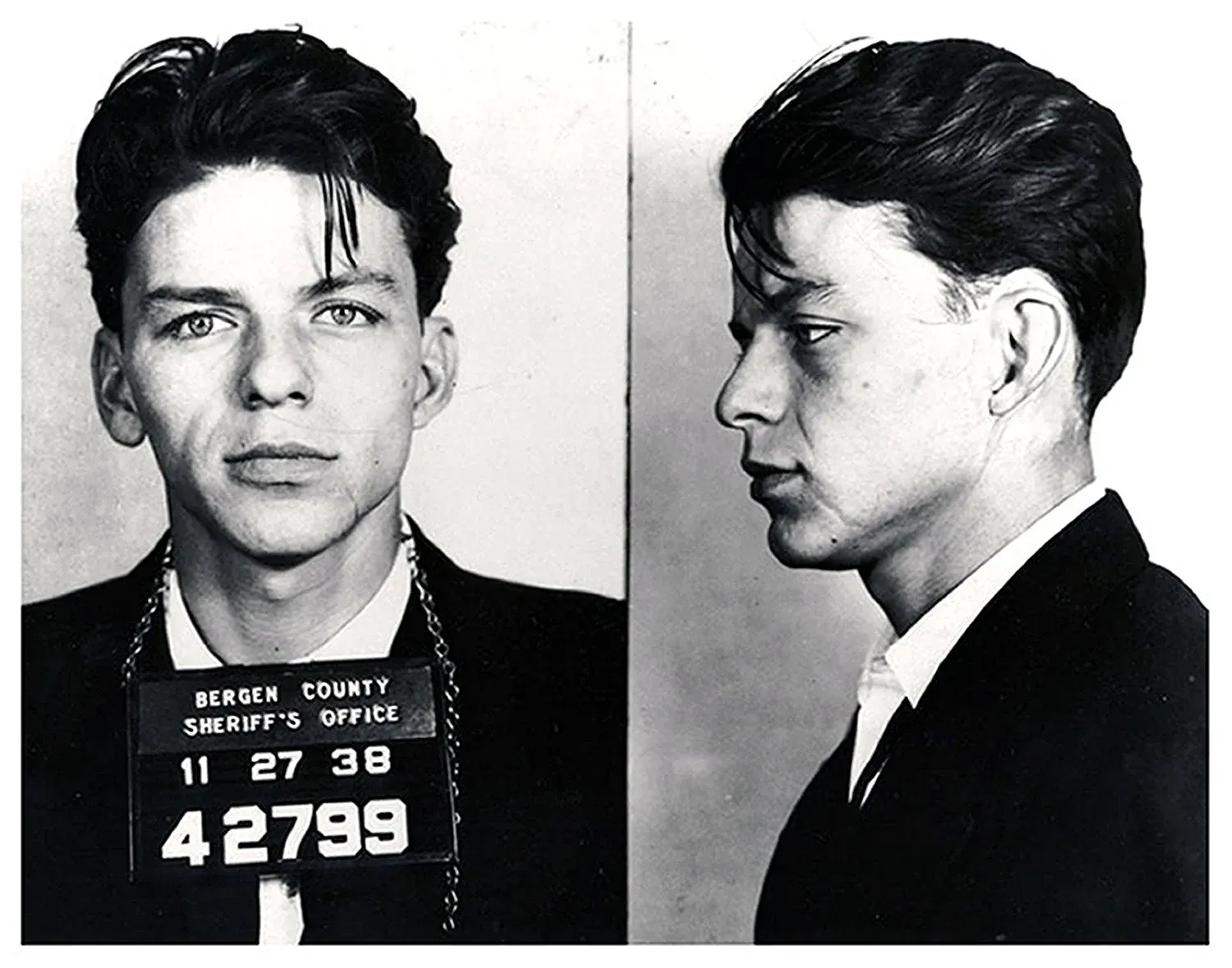
The images have become particularly intriguing because they contrast sharply with the sophisticated public image Sinatra later cultivated throughout his career. For many enthusiasts of classic American singers, these photographs humanize a figure who is often remembered only through glamorous performances and chart-topping records.
Auction and Collector Interest
The original fingerprint sheet measures approximately 7¾ by 8 inches and was reported to be in generally good condition. It was scheduled to be offered through Julien’s Music Icons auction, an event dedicated to historically significant memorabilia connected to legendary musicians.
Collectors place high value on authentic documents that provide direct links to influential cultural figures. In the case of Sinatra, whose impact on American popular music remains profound decades after his peak years, rare items such as arrest records, handwritten notes, photographs, and performance materials attract considerable attention.
These artifacts serve not only as collectibles but also as tangible pieces of music history.
Frank Sinatra’s Lasting Legacy in Oldies Music
Despite occasional controversies throughout his long life, Frank Sinatra’s reputation rests primarily on his extraordinary contributions to Oldies Music and the development of modern popular singing.
His influence extended across multiple generations, helping shape standards of vocal performance, stage presence, and recording artistry. Alongside other famous American singers of the twentieth century, Sinatra became a symbol of an era often regarded as one of the richest periods in music history.
For international audiences exploring America’s cultural heritage through music, stories like this provide valuable historical context. They reveal the complexities of legendary figures while deepening appreciation for the achievements that ultimately defined their careers.
Conclusion
Frank Sinatra’s 1938 arrest fingerprint record offers a fascinating glimpse into a little-known chapter of a future music icon’s life. More than a legal document, it serves as a historical artifact that captures the social realities, legal norms, and personal experiences of a young man who would later become one of the most celebrated voices in Oldies Music.
As interest in the golden era of American music continues to grow, rare documents such as this help preserve the human stories behind legendary careers. Explore more of these timeless musical histories and discover how the lives of iconic artists shaped the soundtrack of generations.