
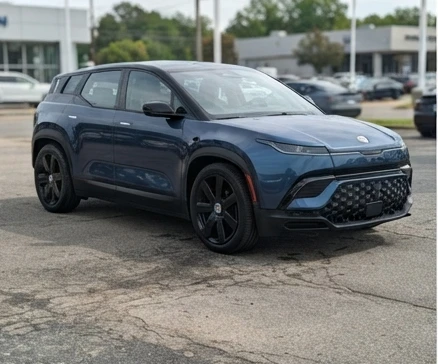
A used 2023 Fisker Ocean currently sells for $10,000 to $23,000, down from an original MSRP of $38,999 to $61,499. However, Fisker’s June 2024 Chapter 11 bankruptcy voids factory warranties and eliminates federal tax credit eligibility, making the low purchase price offset by significant ownership risks including uncertain recall coverage and limited parts availability.
If you are seeing used Fisker Ocean SUVs listed for $10,000 to $23,000 and wondering if this is the EV bargain of the decade or a financial trap, you are not alone. The gap between the original $38,999–$61,499 sticker price and today’s post-bankruptcy market is massive, but that discount comes with real, un-backed risks. This guide cuts through the listing pages to give you a concrete risk-versus-cost checklist, so you can decide if buying a Fisker Ocean makes sense for your situation or if you should walk away.
A used 2023 Fisker Ocean currently sells for roughly $10,000 to $23,000 depending on trim, mileage, and condition, a steep drop from its original MSRP of $38,999 to $61,499. However, because Fisker filed for Chapter 11 bankruptcy in June 2024, factory warranties are effectively void, and the $7,500 federal tax credit is not available for new purchases. This means the low purchase price is offset by significant ownership risks, including uncertain recall coverage, potential software support gaps, and limited parts availability.
Current Fisker Ocean Pricing Overview
Understanding the current price of a Fisker Ocean requires looking at two very different numbers: the original manufacturer’s suggested retail price (MSRP) and the actual price you will pay today on the used or leftover market. The Fisker Ocean was originally sold in three primary trims: Sport, Ultra, and Extreme. The entry-level Sport started at $38,999, featuring an 80-kWh battery, 282 horsepower in a rear-wheel-drive configuration, and an EPA-estimated range of 231 miles. The mid-range Ultra started at $52,999, upgrading to standard all-wheel drive, 540 horsepower, a larger 113-kWh battery, and a significantly improved EPA-estimated range of 350 miles. The top-tier Extreme started at $61,499, offering 564 horsepower, an EPA-estimated range of 360 miles, and upgraded exterior and interior styling.
Today, those numbers are historical artifacts. Following the company’s Chapter 11 filing, the market has been flooded with inventory from liquidated fleets and private owners looking to exit their vehicles. Current listings show used Fisker Oceans priced between $10,000 and $23,000, with the 2023 model year frequently appearing at the lower end of that scale. This represents a depreciation of 60-80% within roughly two years, which is exceptionally high even by electric vehicle standards.
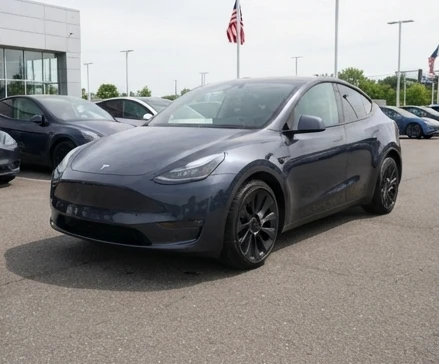
Original Sticker Prices vs Current Used Market Values
The value proposition of a Fisker Ocean today is entirely dependent on whether you view it as a $12,000 used car or a $60,000 vehicle that happens to be priced at $12,000. A 2023 Fisker Ocean with a starting price of $12,850 is a fraction of its original cost. However, this low entry point is a direct consequence of the company’s bankruptcy, and the price reflects the market’s assessment of risk, not just normal depreciation.
Trim Level Pricing
While original trims are less relevant in a used market where features and condition vary widely, they still matter for identifying value. A used Ocean Sport might be found at the very bottom of the price range, while a well-maintained Ocean Extreme with low mileage will command a premium at the top of the range. When evaluating listings, verify the trim level through the VIN or vehicle settings, as the range and performance differences are substantial. The Extreme’s 360-mile range is significantly more practical for daily use than the Sport’s 231-mile range, especially if this is your primary vehicle.
Regional Inventory Prices
Prices can vary significantly by region due to local demand, state incentives, and the concentration of liquidated inventory. States with strong EV adoption, like California, might have more used Oceans available, which could drive prices down due to competition, or, conversely, they might have higher demand that supports a premium. On the other hand, areas with fewer EV charging stations may see these vehicles sit on lots longer, leading to steeper discounts. It is essential to search nationally, as shipping a vehicle from a low-demand state can be a cost-effective strategy.
From an editorial review of the orphaned EV market, the recurring failure mode for buyers is focusing solely on the purchase price. A practical way to budget is to apply a risk reserve factor to the advertised price.
Out-the-Door Risk Reserve Rule
Estimated purchase reserve = used vehicle price × risk reserve factor
- used vehicle price: The advertised purchase price of the Fisker Ocean being evaluated.
- risk reserve factor: A buyer-set percentage representing expected additional funds for specialized labor, key fob pairing, software fixes, and unexpected ownership issues.
- estimated purchase reserve: Additional money held aside beyond the sale price for post-purchase corrections or repairs.
For a $12,000 used Fisker Ocean, setting aside an estimated $3,000–$5,000 as a risk reserve represents a practical allowance for potential specialized labor, key fob pairing, and software fixes. This reserve gives you a realistic out-the-door budget estimate, which is often the only way to make a truly informed decision when looking at these ultra-low prices.
Post-Bankruptcy Ownership Risks
The core of the Fisker Ocean dilemma is not the purchase price but the cost and feasibility of ownership after the company’s bankruptcy. These are the risks that make a $12,000 car potentially more expensive than a $30,000 one from a solvent manufacturer. The key areas of concern are safety recalls, software updates, and parts availability.
Recall Repair Policies
This is arguably the most critical risk factor for a used Fisker Ocean. The National Highway Traffic Safety Administration (NHTSA) issued a recall for 7,745 Ocean SUVs from model years 2023 and 2024 due to a rollaway risk, a serious safety defect. Under normal circumstances, a manufacturer would fix this for free. However, under Chapter 11 bankruptcy, the rules change drastically.
The critical question is: who pays for recall repairs? When a manufacturer is in bankruptcy, the obligation to cover recall costs is often discharged. In practice, this has meant that owners have been charged for labor costs to complete these safety recalls. While parts might be available through a liquidator or the remaining parts pipeline, the labor is an out-of-pocket expense for the owner. Before purchasing a Fisker Ocean, you must confirm the recall repair status. If the recall has not been completed, you should factor the cost of a specialized independent repair into your risk reserve, as you will likely be responsible for it.
Software Update Availability
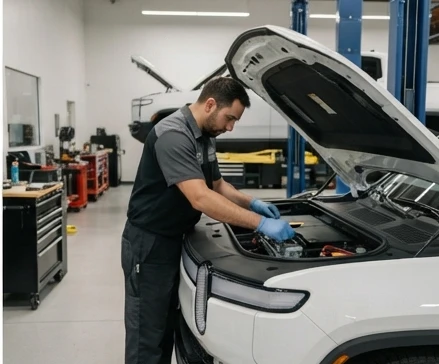
Fisker Ocean owners have faced significant software issues, including problems with key fob pairing, 12V battery drain, and general OS instability. Before the bankruptcy, Fisker was pushing over-the-air (OTA) updates to address these bugs. Post-bankruptcy, the future of these updates is bleak. The company’s servers and backend infrastructure are no longer being maintained with the same resources, and the long-term viability of the telematics and connectivity services is in doubt.
When inspecting a used Ocean, you should prioritize vehicles that have been updated beyond the early, problematic software releases. However, even updated vehicles may not receive future patches, leaving them with any bugs present at the time of the company’s collapse.
Software and Diagnostic Inspection Flags
- Confirm the installed Fisker OS version and prioritize vehicles updated beyond early software releases.
- Test key fob connection, vehicle wake behavior, and 12V battery condition during inspection. A failed wake sequence often indicates a software or 12V issue.
- Check whether recall-related repairs and software updates have documented completion status.
- Record unresolved electronic issues before purchase and estimate repair availability.
Parts Sourcing Challenges
For a car from a bankrupt manufacturer, parts are a major concern. Common mechanical components that are shared with other vehicles or produced by standard suppliers might be available. However, for body panels, unique electronics, and lighting components, the supply will be scarce. The primary source for these difficult parts will likely be donor or salvage vehicles from insurance auctions. This is a reality that puts a hard limit on the practicality of owning one as a daily driver. If you get into a minor fender bender, your vehicle could be effectively totaled due to the inability to source a replacement headlight or bumper.
Parts Sourcing Decision Framework
Mechanical-to-Body Parts Path
- Classify the needed component as mechanical, electronic, body, or lighting related.
- Source common mechanical components through available OEM supply pathways or aftermarket equivalents where possible.
- Use donor or salvage vehicles as a primary option for difficult body and lighting components.
Fisker Ocean Tax Credits and Incentives
One of the most common points of confusion is whether a Fisker Ocean qualifies for the $7,500 federal EV tax credit. The answer is largely no for a new purchase. The Fisker Ocean is built in Graz, Austria, by Magna Steyr, and does not meet the final assembly requirements of the Inflation Reduction Act (IRA) for a new vehicle purchase. Furthermore, Fisker’s bankruptcy status has made the company ineligible to claim the credit.
Federal Tax Credit Eligibility
For a new purchase, the Fisker Ocean is not eligible for the $7,500 federal tax credit. The only potential path to any federal incentive was through the commercial clean vehicle credit, which applied to leases. Some lessors could pass that savings through, but with the company’s bankruptcy, those programs are no longer operational.
State-Specific Incentives
State-level incentives are more varied. Some states offer rebates or tax credits for used EV purchases, which could apply to a Fisker Ocean. For example, California’s Clean Vehicle Rebate Project (CVRP) offered rebates for used EVs, but these programs are subject to funding availability and income caps. Other states may offer a similar rebate or an exemption from sales tax on used EVs. You must check with your state’s energy or environmental agency to see if a used EV qualifies, regardless of the brand.
Calculating Net Purchase Price
Given the lack of federal incentives and the uncertainty of state ones, the net purchase price is effectively the market price you pay plus taxes and registration fees. The only significant discount you might find is through aggressive negotiation on a vehicle that has been sitting on a dealer’s lot for months. The low advertised price is the incentive itself. Do not factor a $7,500 federal rebate into your budget unless you have confirmed your state offers a similar program.
Total Cost of Ownership Analysis
The total cost of ownership (TCO) for a Fisker Ocean is the real metric you need to evaluate. It accounts for the initial savings against the high-risk, potentially high-cost variables of maintenance, insurance, and warranty coverage.
Maintenance and Insurance Costs
Maintenance costs are unpredictable. Without a factory warranty, any mechanical or electrical failure is a 100% out-of-pocket expense. Specialized repair shops that have the diagnostic tools for the Ocean are few and far between, and their labor rates are likely to be high. This contrasts sharply with a mainstream EV like a Tesla or Hyundai, where parts and service centers are readily available.
Insurance is another major variable. Insurers assess risk based on repair costs and parts availability. For a Fisker Ocean, the risk is high. If you get into a collision, the cost to repair the vehicle could be astronomical due to the parts scarcity, and there is a high chance the insurer will total the vehicle rather than pay for repairs. This results in higher premiums for comprehensive and collision coverage. Some major insurance carriers may even decline to write a comprehensive policy for a Fisker Ocean.
Warranty Coverage
The factory bumper-to-bumper and powertrain warranties are effectively void due to the bankruptcy. While a court may have allowed the warranty obligations to be discharged, the practical reality is that there is no company to honor them. Do not buy a Fisker Ocean with the expectation that any factory warranty is still valid. Any third-party warranty you purchase must be carefully scrutinized to ensure it does not have exclusions for bankrupt manufacturers.
Subscription Model Options
Fisker offered a subscription model for some features, similar to other automakers. With the company’s collapse, the functionality of these features is in question. It is unlikely that you will be able to activate new subscription features, and existing ones may stop working if they rely on cloud-based servers that are no longer maintained. When evaluating a used Ocean, assume the features active at the time of purchase are the features you will have permanently, and do not pay a premium for a vehicle with an unverified subscription status.
Fisker Ocean Ownership Cost Scenarios
| Buyer Profile | Maintenance Cost (annual) | Insurance Cost (annual) | Total Ownership Cost (5-year) |
|---|---|---|---|
| DIY-capable owner with independent repair access | Lower variable cost but requires time and parts research | Varies by driver profile and coverage level | Lower potential cost with higher personal involvement |
| Mainstream EV owner using independent specialists | Moderate cost due to software, diagnostics, and specialized repairs | May require confirmed comprehensive coverage options | Moderate ownership cost with repair planning required |
| Owner relying mainly on traditional dealership support | Higher risk of limited service availability and longer repair paths | Depends on insurer acceptance of vehicle history | Potentially higher total cost due to support constraints |
Pre-Deposit Finance and Insurance Check
- Obtain a confirmed insurance quote including comprehensive coverage and GAP availability before committing funds.
- Verify financing approval or available cash funding before placing any non-refundable deposit.
- Ask lenders whether a Fisker VIN affected by bankruptcy-related concerns meets their vehicle eligibility requirements.
- Compare the confirmed monthly payment, insurance cost, and repair reserve against the purchase price.
Ideal Buyer Profiles for Fisker Oceans
Given the extreme risk-reward profile, a Fisker Ocean is not for everyone. The ideal buyer is a specific niche user who is prepared for the unique challenges of orphaned EV ownership. This section will help you determine if you fit that profile.
Tech-Savvy vs Traditional Buyers
This is the primary differentiator. A tech-savvy buyer who is comfortable with open-source software communities might be able to work around some software limitations and diagnostics. They are more likely to understand the software versioning and potential workarounds. In contrast, a traditional buyer expecting a turnkey vehicle with a reliable key fob and predictable software will be deeply frustrated by the Ocean’s quirks. The traditional buyer is also more likely to rely on dealerships for support, which largely do not exist, making them a poor fit for this vehicle.
Short-Term vs Long-Term Ownership
A Fisker Ocean is better suited to short-term ownership. The price is so low that the downside is limited. If you buy one for $12,000 and drive it for a year before it develops a major issue, you might have gotten your money’s worth. However, if you are looking for a reliable, low-cost vehicle to keep for five years, the risk is too high. A major failure or a minor fender bender could total the vehicle, leaving you with no transportation and a significant loss.
Budget Considerations
Your budget must go beyond the purchase price. You need a minimum of $3,000 to $5,000 set aside as a risk reserve for repairs and unexpected costs. You also need to have a plan for what you will do if the vehicle is out of commission for weeks waiting for a part. This is not a budget purchase. It is a speculative one. The total cost of ownership over a 3-year period might be much higher than a more expensive but supported used EV from a brand like Tesla or Hyundai.
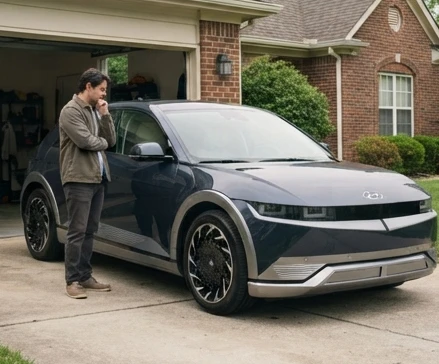
Before you finalize any purchase, take one specific action: call your insurance agent and get a firm, written quote for comprehensive coverage on a specific Fisker Ocean VIN. This single step will immediately reveal if the insurance cost is prohibitive or if coverage is even available. It forces you to confront the ownership reality before you hand over any money and prevents you from falling in love with a price tag that cannot be insured.
FAQ
How much does a used Fisker Ocean cost compared to its original MSRP?
A used 2023 Fisker Ocean currently sells for roughly $10,000 to $23,000 depending on trim, mileage, and condition. This represents a steep drop from its original MSRP range of $38,999 to $61,499, reflecting depreciation of 60-80% within roughly two years following the company’s bankruptcy filing.
Can I still buy a new Fisker Ocean, and where are they available?
New Fisker Ocean purchases are effectively unavailable following the company’s Chapter 11 bankruptcy filing in June 2024. The market has been flooded with inventory from liquidated fleets and private owners, meaning your only option is the used market where prices range from $10,000 to $23,000.
Are Fisker cars eligible for federal and state electric vehicle tax credits?
No, Fisker Oceans are not eligible for the $7,500 federal EV tax credit. The vehicle is built in Graz, Austria by Magna Steyr, failing the final assembly requirements of the Inflation Reduction Act. Some states may offer rebates for used EV purchases, but you must check with your state’s energy or environmental agency for specific programs.
What are the main risks of buying a used Fisker Ocean after the company’s bankruptcy?
The main risks include voided factory warranties, uncertain recall coverage where you may pay for labor costs, limited software update availability, and scarce parts especially for body panels and unique electronics. Insurance costs may be higher, and some carriers may decline comprehensive coverage due to the high risk of total loss from repair costs.