
Ruby Bridges’ courageous journey as the first Black child to integrate an all-white school in the American South has cemented her as a pivotal figure in the Civil Rights Movement. Despite facing intense racism and threats that endangered her family, Bridges demonstrated unwavering resolve, never missing a single day of school. Her impactful experience has since fueled a lifelong commitment to advocacy, with the Ruby Bridges Foundation and her personal engagements continuing to champion the fight against racism in America.
Early Life and the Landmark Brown v. Board of Education Decision
Born Ruby Nell Bridges on September 8, 1954, in Tylertown, Mississippi, her early life was shaped by her parents, Abon and Lucille Bridges, who were married the previous year. Abon worked as a mechanic and served in the Korean War, while Lucille was a domestic worker. Seeking improved opportunities, the family relocated to New Orleans, Louisiana. This move coincided with the historic 1954 U.S. Supreme Court decision in Brown v. Board of Education of Topeka, Kansas. This landmark ruling declared racial segregation in public schools unconstitutional, stating that “separate educational facilities are inherently unequal”. The decision mandated the desegregation of all schools, opening doors for Black students to attend previously all-white institutions.
Segregation, a deeply entrenched practice since the 19th century, had relegated African Americans to second-class citizenship despite constitutional amendments aimed at securing their rights. This societal division extended beyond laws, manifesting in transportation, public accommodations, recreational facilities, and educational institutions across the nation. The 1896 Supreme Court ruling in H.A. Plessy v. J.H. Ferguson, which upheld the doctrine of “separate but equal” facilities, was a significant legal precedent that Brown v. Board overturned in the context of education. However, Louisiana, like other Southern states, resisted integration. It wasn’t until November 14, 1960, following a federal court order by Judge Skelly Wright, that Louisiana schools began to desegregate, with the alternative being closure for those that refused.
The National Association for the Advancement of Colored People (NAACP) played a crucial role in facilitating Bridges’ integration into William Frantz Elementary School. They identified her as one of six African American students who had successfully passed the rigorous entrance exams designed to assess their ability to succeed in all-white environments. Although her father was initially hesitant, her mother, Lucille, was determined for Ruby to seize this educational opportunity, a chance her own parents had not had due to their limited educational backgrounds. At the young age of six, Ruby Bridges became a trailblazer, marking the first time an African American child in the South would attend an all-white elementary school.
The Ordeal of Integration and the Impact on Bridges’ Family
Ruby Bridges’ first day at William Frantz Elementary on November 14, 1960, was fraught with peril. Escorted by U.S. Marshals, she navigated through a mob of angry white parents and officials protesting the desegregation order. The volatile atmosphere led to the immediate removal of all 500 white students from the school, leaving Bridges to spend her entire first day in the principal’s office. She vividly recalls the intense hostility, noting, “…The crowd that was outside, they immediately rushed in behind me. They started to run into every class, and they took every child out of school. So, by the end of that day, 500 kids… were taken out”.
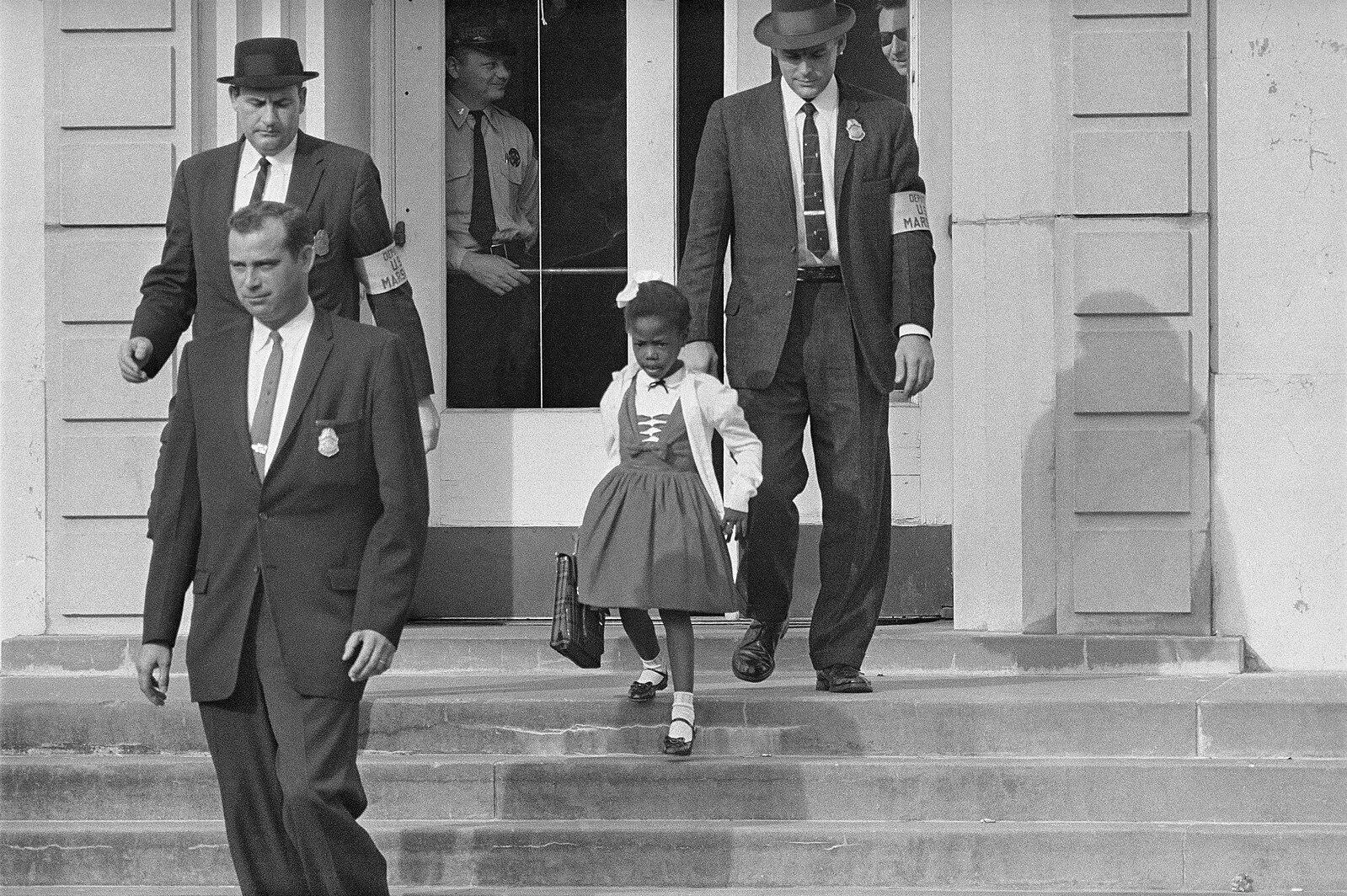
The discriminatory environment extended to her classroom, where Bridges was the only student. Her teacher, Barbara Henry, a white woman from Boston, provided her sole instruction throughout the first grade. Bridges later spoke highly of Henry, remarking, “Even though she looked exactly like people outside the school, she showed me her heart”. Despite these isolating and intimidating circumstances, Bridges maintained perfect attendance. Her mother and U.S. Marshals accompanied her daily.
The pervasive racism manifested in various ways: Bridges was subjected to thrown objects, and a particularly disturbing incident involved a woman displaying a black doll in a wooden coffin as a form of greeting [cite:5, cite:6]. She was also denied access to communal spaces like the cafeteria, where she ate a packed lunch fearing poisoning, and the playground, where she played indoors with her teacher. Even using the restroom required the escort of a U.S. Marshal [cite:5, cite:6]. The ordeal significantly impacted Bridges’ family. Her mother, Lucille, lost her job due to the backlash, and Abon was advised by the NAACP to refrain from seeking employment to avoid further danger. This financial strain and the constant stress led to marital tension and, eventually, their separation. The negative consequences even extended to Bridges’ grandparents in Mississippi.
Child psychiatrist Robert Coles, recognizing the immense pressure on young Bridges, volunteered his services. His weekly visits provided support to Bridges and her family, and his work studying the effects of desegregation on children flourished. While Bridges faced profound challenges, a shift began to occur among some white parents. Although the principal initially kept white students segregated from Bridges, Barbara Henry actively advocated for their inclusion. Henry’s persistent efforts led to the principal eventually allowing the students to interact towards the end of the school year. However, Bridges’ hopes for normalcy were quickly dashed when a young boy refused to play with her, using a racial slur. This painful encounter was a “very rude awakening” for Bridges, serving as her stark introduction to the realities of racism and solidifying her understanding of the deep-seated prejudice she was confronting. This experience laid the groundwork for her future activism.
Art, Adulthood, and a Lifelong Commitment to Advocacy
During Bridges’ second year at William Frantz Elementary, conditions improved. She was integrated into a classroom with other students, and the daily protests ceased. While Barbara Henry eventually moved on, she and Bridges maintained their connection. Bridges’ subsequent educational experiences in high school, though not entirely free of racial tension, were vastly different from her first-grade year, as the school had been desegregated for nearly a decade.
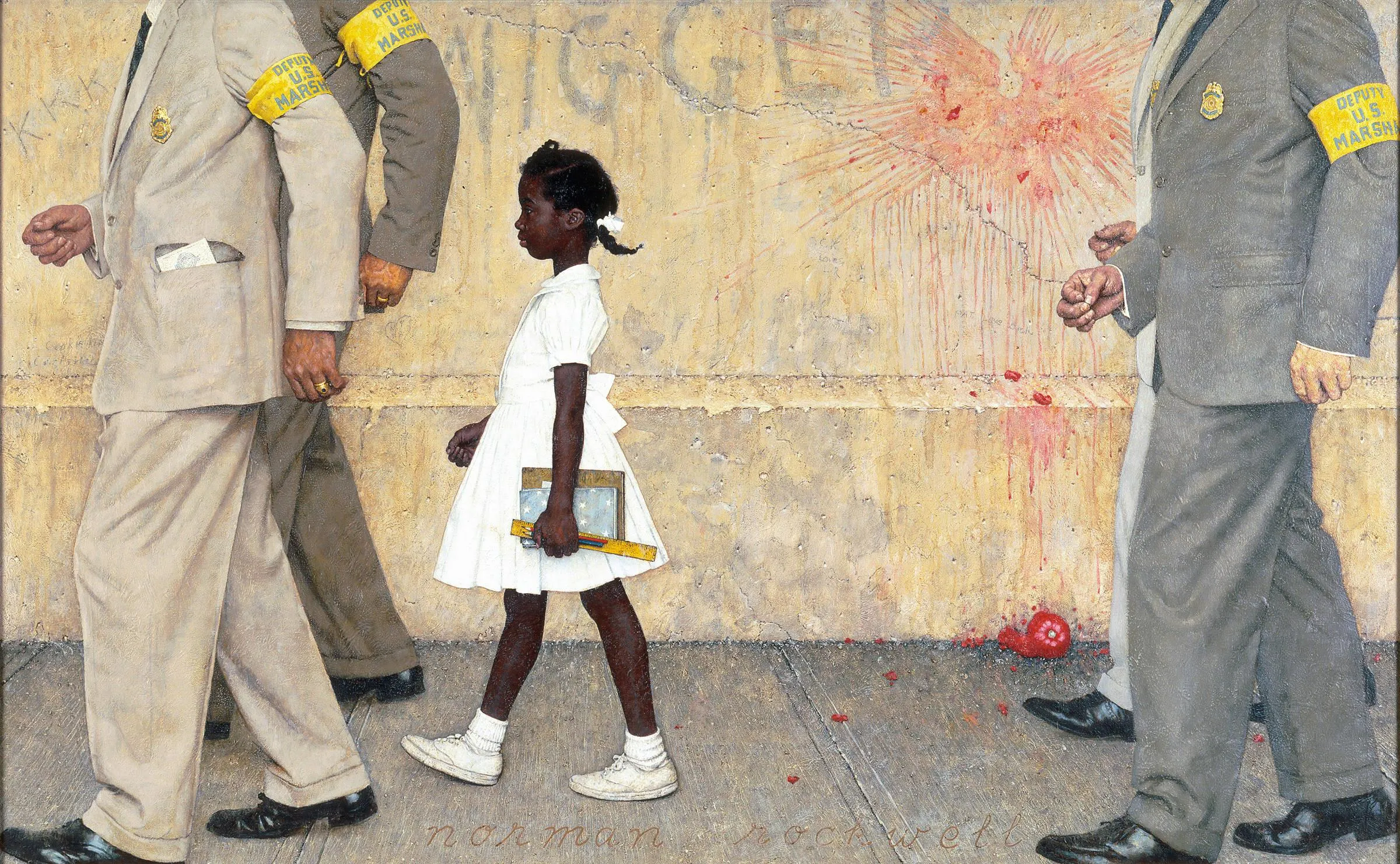
The iconic image of Bridges’ historic walk to William Frantz Elementary was immortalized in Norman Rockwell’s 1963 painting, The Problem We All Live With. Rockwell chose to frame the scene from Bridges’ perspective, highlighting the slurs and threats she faced. The painting, featured in “LOOK” magazine, garnered both admiration and criticism, marking a new era of social commentary for the artist, much as desegregation signaled a new chapter for America. Bridges expressed gratitude for Rockwell’s courage in using his art to bring attention to her story, recognizing it as a powerful statement.
After graduating from high school, Bridges left Louisiana to become a travel agent for American Express, a role that allowed her to travel extensively for fifteen years. In her mid-30s, she sought more meaningful pursuits. She married Malcolm Hall in 1984, and they had four sons. When her brother was murdered in 1993, Bridges and her husband took in his four daughters. In 1995, Robert Coles’ children’s book, “The Story of Ruby Bridges,” brought her story back into public awareness. Bridges supported Coles in promoting the book, which, along with the 1998 Disney biopic Ruby Bridges (for which she served as a consultant), provided her with the means to establish the Ruby Bridges Foundation in 1999. The foundation is dedicated to promoting “values, tolerance, respect, and appreciation of all differences”. Bridges also authored several books, including This Is Your Time, Through My Eyes, and Dear Ruby, Hear Our Hearts.
With her nieces attending William Frantz Elementary, Bridges remained connected to the school. Noticing the lack of after-school arts programs, she spearheaded efforts to create them. In 2005, when Hurricane Katrina severely damaged William Frantz, threatening its demolition, Bridges intervened. She successfully advocated for the school to be placed on the National Register of Historic Places, ensuring its preservation. The restored school now stands as a testament to her efforts, featuring a statue of Bridges in its courtyard.
Enduring Legacy and Continued Advocacy
Ruby Bridges’ courage and resilience have had a profound and lasting impact, extending far beyond her integration of William Frantz Elementary. She remains a powerful advocate against racism, inspiring children to build meaningful relationships across racial lines. Her work honors the legacy of her parents, her first-grade teacher Barbara Henry, and Dr. Robert Coles, all of whom provided her with the foundational support to become an agent of change. Bridges continues to pave the way for future generations through her ongoing advocacy.
Her contributions have been widely recognized, including honorary degrees from Connecticut College (1995) and Tulane University (2012). In 2000, she was made an honorary Deputy U.S. Marshal, and in 2010, she was honored at the White House. In 2024, Bridges was inducted into the National Women’s Hall of Fame.
Ruby Bridges’ life story is a powerful reminder of the ongoing struggle for racial equality and the transformative power of courage and perseverance in the face of adversity. Her message, “Racism Is a Grown-up Disease. Let’s Stop Using Our Kids to Spread It,” encapsulates her lifelong dedication to creating a more just and equitable society.
References
- Bridges, R. (2015, November 13). Ruby Bridges on her first day of school in 1960. PBS NewsHour.
- Bridges, R. (2021, November 17). Ruby Bridges: A civil rights icon on her historic walk and the fight for racial justice. TODAY.
- Bridges, R. (2024, January 23). Ruby Bridges: Racism Is a Grown-up Disease. Let’s Stop Using Our Kids to Spread It. [YouTube Video].
- Devlin, H. (2020, June 2). Ruby Bridges: the six-year-old girl who defied racism. National Trust for Historic Preservation.
- Hilbert College. (n.d.). Ruby Bridges.
- Kelly, K., et al. (2022, February 11). Ruby Bridges’ teacher speaks out. The Storytelling Project.
- Library of Congress. (2004). Brown v. Board of Education.
- Norman Rockwell Museum. (n.d.). The Problem We All Live With.
- Pastan, L. (2022, February 21). Ruby Bridges: A Symbol of Courage. Ms. Magazine.
- Pilgrim, R. B. (2000). White Supremacy: A Comparative Study of American Indianapolis and Canadian Toronto. University of California Press.
- Rose, L. (2021, November 11). Ruby Bridges: The Civil Rights Icon Who Walked Through A School That Didn’t Want Her. Harper’s Bazaar.
- Smith, K. (2021, October 13). Ruby Bridges: The Story of a Civil Rights Pioneer. History.com.