
Elvis Presley, the undisputed King of Rock ‘n’ Roll, remains a monumental figure in 20th-century American culture. While his legendary career is celebrated worldwide, a lesser-known aspect of his life is his surprising connection to Judaism. This exploration delves into Elvis’s familial ties to the Jewish faith and how this heritage, though not outwardly practiced, subtly influenced his life and legacy.
Tracing the Maternal Lineage
The cornerstone of Elvis’s Jewish heritage lies through his maternal great-great grandmother, Nancy Burdine. It is widely believed that Nancy Burdine was Jewish. According to Jewish law, lineage is traced through the mother. Nancy’s daughter, Doll Mansell, gave birth to Elvis’s mother, Gladys Smith. Consequently, this maternal lineage technically designates Elvis as Jewish. While Elvis was reportedly aware of and even proud of this aspect of his ancestry, there is no substantial evidence to suggest he actively practiced the Jewish faith.
Tupelo: The Cradle of Elvis and His Roots
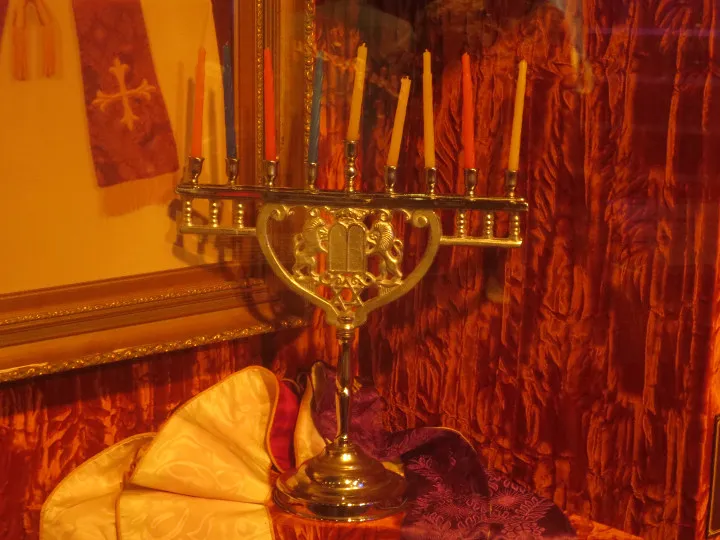
A journey to Tupelo, Mississippi, the birthplace of Elvis Presley, offers a glimpse into his formative years and the subtle presence of his Jewish connections. Visitors to the Elvis Presley Birthplace Museum, located next to the modest two-room house where he was born, can expect to see typical memorabilia such as guitars, photographs, record albums, and costumes. However, among these artifacts, a gold menorah, a traditional Hanukkah candelabrum, stands out as an unexpected discovery.
This menorah was originally owned by the Copen family, who relocated to Tupelo in 1953. George Copen, whose family owned the menorah, recounts how his childhood friend’s mother, Janelle McComb, a close friend of the Presley family, borrowed it. It is speculated that Janelle, who had a close relationship with Elvis from his childhood, eventually gifted the menorah to him. Copen believes Elvis might have kept it as a “good luck charm,” a concept echoed in one of his hit songs. The menorah was never returned to the Copen family and was later discovered to be on display at the Elvis Presley Birthplace Museum.

Memphis: A Developing Connection
At the age of 13, Elvis and his parents moved to Memphis, Tennessee. In Memphis, the Presleys lived near Rabbi Alfred Fruchter. Harold Fruchter, the rabbi’s son, shared that his family and the Presleys developed a close friendship, with Harold’s mother often socializing with Elvis’s mother, Gladys. Elvis even occasionally worked as a “Shabbos Goy” for Rabbi Fruchter’s family, performing tasks that observant Jews are prohibited from doing on the Sabbath. Harold Fruchter noted that his parents were unaware of Elvis’s Jewish background at the time, otherwise, they might not have asked him to perform such tasks.
Symbols of Heritage
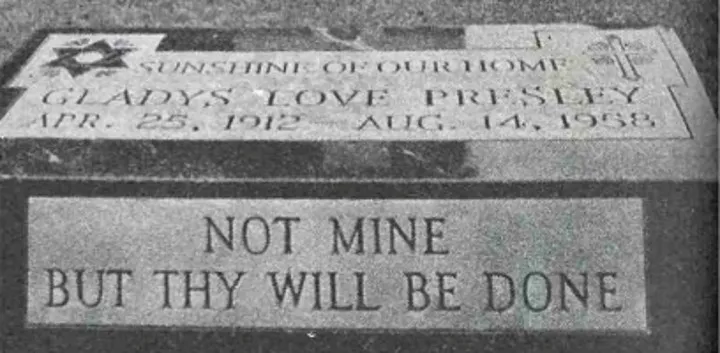
Following his mother Gladys’s death in 1958, Elvis ensured her headstone in Memphis bore a Star of David, a poignant tribute to his Jewish heritage. Although Gladys was later reinterred at Graceland, her new gravestone, unfortunately, did not feature the Jewish star. Towards the latter part of his career, Elvis was often photographed wearing a chai pendant, a Hebrew symbol for “life,” during performances. Reports even suggest he was wearing both a chai and a cross on the night of his death. His engagement with the Jewish community extended to financial contributions, including a significant donation to the Memphis Hebrew Academy.
A Manager’s Concern and a Personal Reflection
“Colonel” Tom Parker, Elvis’s Dutch-born manager, reportedly advised against publicizing Elvis’s Jewish roots, fearing it might alienate fans, particularly in the Bible Belt region where many of Elvis’s most ardent supporters resided during the 1950s and 60s. Despite this, individuals who encountered Elvis, like Marc Perler, a music industry associate, expressed surprise and positive sentiment upon learning about Presley’s Jewish background, welcoming it as a sign of inclusivity.
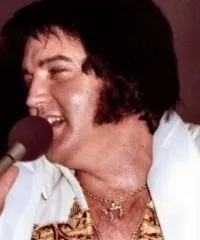 Elvis Presley wearing a Chai pendant
Conclusion: An Enduring Legacy of Inclusivity
While Elvis Presley may not have been an observant Jew, his undeniable connection to the faith, rooted in his maternal lineage and expressed through symbols and actions, adds a fascinating layer to his public persona. The presence of the menorah in his birthplace museum and the Star of David on his mother’s gravestone serve as enduring reminders of this aspect of his identity. George Copen’s hope that the menorah’s display promotes tolerance and understanding – “Maybe this will help everybody appreciate each other and say, ‘We are all one people'” – resonates deeply. Elvis’s life story, interwoven with his Jewish roots, highlights a broader message of cultural appreciation and the interconnectedness of diverse heritages in the fabric of American music and society. Explore more of these timeless melodies and the rich cultural tapestry they represent.