
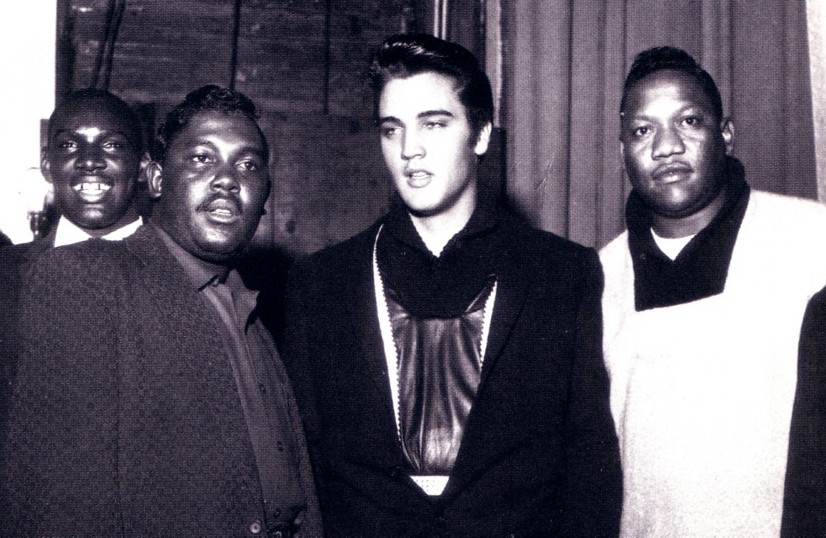
Elvis Presley, the undisputed “King of Rock and Roll,” remains a towering figure in American music and culture. His career, however, is not without its controversies, most notably a persistent rumor accusing him of making a deeply racist remark about Black women. This rumor, which circulated widely during his life and continues to echo today, claims Presley stated, “The only thing a Black woman can do for me is buy my records and shine my shoes.” Given Presley’s profound debt to Black music, if true, such a statement would be a significant shame. This article delves into the origins and veracity of this rumor, exploring Presley’s complex relationship with Black artists and music, and his documented contributions to civil rights.
Unraveling the Rumor: “The Only Thing a Black Woman Can Do for Me…”
Sociologists define rumors as widely circulating stories with questionable accuracy, and the alleged Presley quote fits this definition perfectly. This particular rumor appears to have originated in the late 1950s, gaining traction throughout the 1960s and 1970s, particularly within African American communities across the United States. Variations of the story exist, with some suggesting the remark was made in response to questions about dating Black women, others about friendships with Black men, and the most damning version claiming he crudely belittled all Black people. Despite its widespread belief and continued endorsement by some Presley detractors, there is no factual basis to support this rumor.
In 1957, Jet, a prominent Black magazine, dispatched reporter Louie Robinson to interview Presley on the set of Jailhouse Rock and speak with Black entertainers who had collaborated with him. Robinson’s investigation aimed to uncover the truth behind the circulating slur. He noted, “Tracing that rumored racial slur to its source was like running a gopher to earth.” Some claimed Presley had uttered the remark in Boston, a city he had never visited, while others attributed it to an appearance on Edward R. Murrow’s show, an engagement that never occurred. Presley himself directly refuted the accusation to Robinson, stating, “I never said anything like that, and people who know me know I wouldn’t have said it.”
Following his investigation, Robinson concluded that Presley viewed people as individuals, irrespective of their race, color, or creed. Black performers who knew Presley during that era have largely rejected the rumor. Rhythm and Blues singer Darlene Love, who provided background vocals for Presley as part of the Blossoms, asserted, “I would never think that Elvis Presley was a racist.” Pianist Dudley Brooks echoed this sentiment, stating that Presley “faces everybody as a man.” Dr. W.A. Zuber, an African American physician from Tupelo, Mississippi, where Presley was raised, even recalled Presley attending “sanctified meetings” at Negro churches.
Presley’s Deep Roots in Black Music and Culture
Presley’s attendance at African American churches was more than just a curiosity; it was a significant source of his musical inspiration. He was deeply influenced by Gospel music and Slave Spirituals, genres that formed the bedrock of much American popular music. Beyond sacred music, Presley was profoundly shaped by Black “secular” music, particularly the Blues. He frequently acknowledged his “Black roots” and expressed admiration for artists like Fats Domino and Bill Kenny of The Ink Spots, humbly stating he “could never hope to equal their musical achievements.”
However, this deep admiration and influence did not satisfy everyone. Some believed that Presley’s immense success as a musical and cultural icon was, in no small part, attributable to his white skin. Resentment simmered over his popularizing, or “covering,” songs by Black singers, often receiving acclaim and financial rewards that were denied to the original African American performers.
Navigating a Segregated America: Success, Resentment, and Respect
In the 1950s and early 1960s, many Black singers possessed a captivating stage presence and delivered sensual lyrics. However, their dynamic sexuality was often perceived as threatening by a significant portion of White American society. Elvis Presley skillfully incorporated the energetic rhythm and playful, sometimes mischievous, sexuality of rhythm and blues into mainstream American households. While talented Black entertainers often performed in smaller venues, sometimes in relative obscurity, Presley achieved international stardom and amassed considerable wealth.
This disparity fueled resentment among some Black individuals who felt Presley’s success, and indeed Presley himself, was unfairly benefited by racial privilege. Consequently, a story alleging a racist remark from him became easily believable. It is important to remember that many White individuals in the 1950s, including celebrities, did not shy away from anti-Black rhetoric. Therefore, it was plausible for some to believe that Presley, a former truck driver from Mississippi, might have ungratefully denigrated Black people.
Evidence of Support and Respect
Despite the persistence of the rumor, there is a compelling body of evidence that contradicts it. There is no proof that Presley ever made the alleged racist statement. On the contrary, accounts suggest Presley actively supported civil rights causes. He is reported to have donated money to the National Association for the Advancement of Colored People (NAACP) and other civil rights organizations. Furthermore, he publicly praised Black musicians and, according to those who encountered him, treated Black individuals with respect.
Elvis Presley’s legacy is a complex tapestry woven with musical innovation, cultural impact, and, unfortunately, enduring controversy. While the rumor of his racist remark continues to circulate, the available evidence and the testimonies of those who knew him suggest a far more nuanced reality. His deep connection to and respect for Black music and musicians, coupled with his documented support for civil rights, paint a picture of an artist who, despite the pressures and prejudices of his time, strived to bridge racial divides through his art. Let us continue to explore the rich sounds and stories that defined this iconic era of music.