
Hybrid electric vehicles (HEVs) represent a sophisticated blend of traditional internal combustion engine technology and advanced electric propulsion. These vehicles are powered by a combination of a gasoline engine and one or more electric motors, drawing energy from a battery pack. Unlike plug-in hybrids, the battery in a standard HEV is not recharged via an external power source. Instead, its energy is replenished through regenerative braking and the operation of the internal combustion engine itself. This innovative setup allows for a potentially smaller engine by supplementing its power with the electric motor, leading to enhanced fuel efficiency without compromising on driving performance. Furthermore, the electric motor can reduce engine idling when the vehicle is stationary and power auxiliary systems, contributing to a more optimized and environmentally conscious driving experience. Learn more about hybrid electric vehicles.
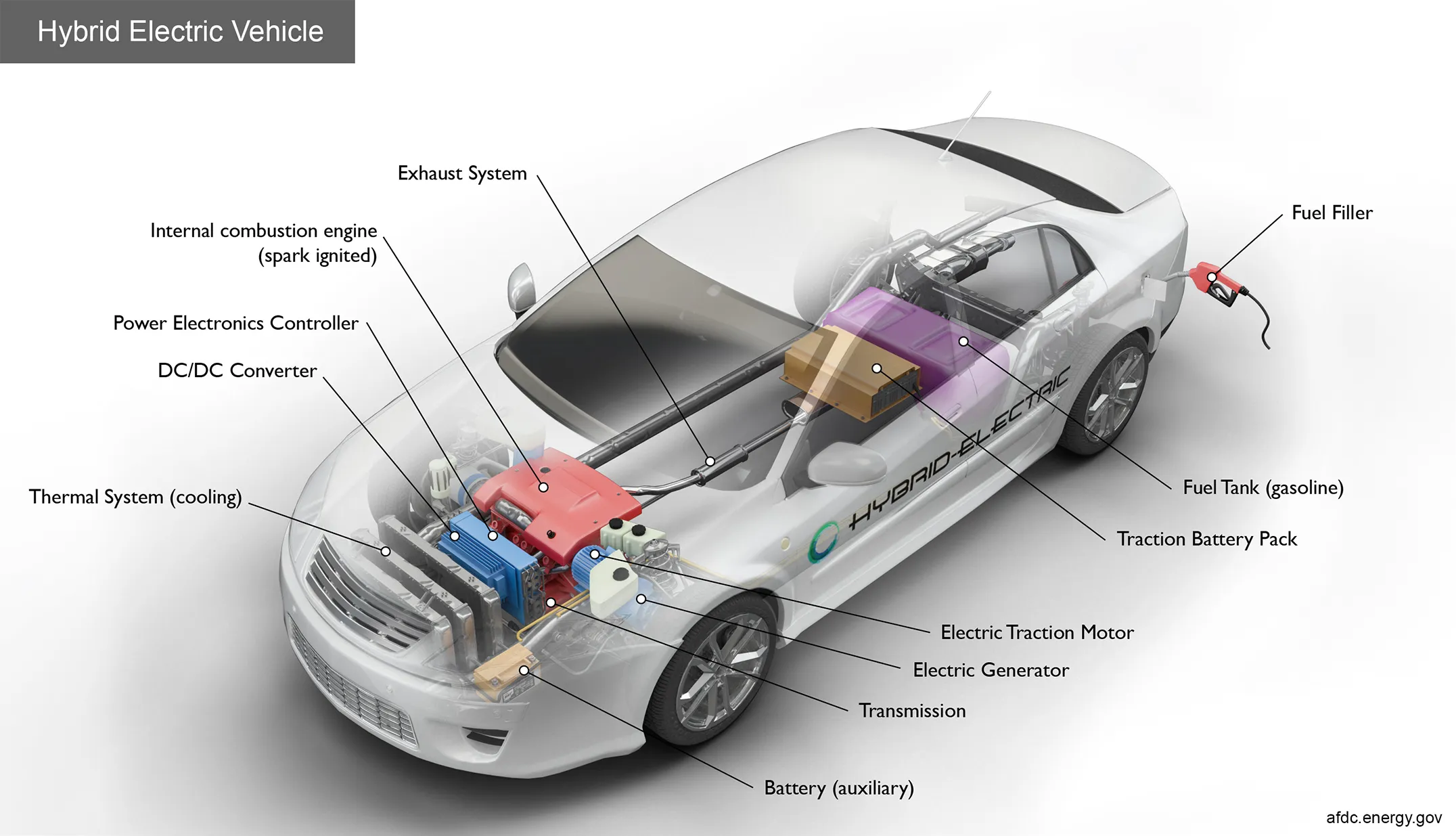
Key Components of a Hybrid Electric Car
The remarkable efficiency and performance of hybrid electric cars are a result of the seamless integration of several key components:
Battery (Auxiliary)
In an electric drive vehicle, the low-voltage auxiliary battery plays a crucial role. It provides the initial electrical power to start the car before the main traction battery is engaged and also supplies energy for various vehicle accessories.
DC/DC Converter
This essential device is responsible for converting the high-voltage direct current (DC) power supplied by the traction battery pack into the lower-voltage DC power required to operate the vehicle’s accessories and to recharge the auxiliary battery.
Electric Generator
The electric generator is a vital part of the hybrid system, capturing kinetic energy that would otherwise be lost during braking. It generates electricity from the rotation of the wheels while the vehicle is decelerating, efficiently transferring this energy back to the traction battery pack for later use. Some advanced systems utilize motor generators that can perform both the driving and regeneration functions.
Electric Traction Motor
This motor uses the electrical energy stored in the traction battery pack to directly drive the vehicle’s wheels. As mentioned, in systems with motor generators, this component also doubles as a generator during braking.
Exhaust System
The exhaust system’s primary function is to channel the combustion byproducts from the engine safely out of the vehicle through the tailpipe. Modern hybrid vehicles often feature a three-way catalyst within this system, specifically engineered to significantly reduce engine-out emissions before they are released into the atmosphere.
Fuel Tank (Gasoline)
This conventional tank securely stores the gasoline needed to power the internal combustion engine, supplying it as required for the vehicle’s operation.
Internal Combustion Engine (Spark-Ignited)
In this common configuration, fuel is precisely injected into either the intake manifold or directly into the combustion chamber. Here, it mixes with air, and the resulting air/fuel mixture is ignited by a spark from a spark plug, generating the power that propels the vehicle.
Power Electronics Controller
This sophisticated control unit acts as the brain of the electrical system, meticulously managing the flow of electrical energy from the traction battery. It precisely controls the speed and torque produced by the electric traction motor, ensuring optimal performance and efficiency.
Thermal System (Cooling)
Maintaining the correct operating temperature is critical for the longevity and efficiency of various components. The thermal system ensures that the engine, electric motor, power electronics, and other key parts operate within their optimal temperature ranges.
Traction Battery Pack
This is the core energy storage unit for the electric propulsion system, storing the electricity that powers the electric traction motor.
Transmission
The transmission serves as the critical link between the power sources (engine and/or electric motor) and the wheels. It efficiently transfers the mechanical power generated to drive the vehicle.
Understanding Related Vehicle Technologies
For those interested in the evolution of automotive powertrains, exploring related technologies can provide valuable context. Understanding how different systems work together, such as in the case of an electric motor assisted engine, can offer insights into the future of sustainable transportation. Similarly, knowledge gained from resources like a beginner auto mechanic class can demystify the complexities of vehicle maintenance and repair, empowering car owners. The development of the hybrid gas electric engine has paved the way for more advanced and efficient powertrains, with specific innovations like the Toyota V6 hybrid engine showcasing the continuous progress in the field. For those considering specific models, understanding market positioning and pricing, such as the 2019 Acura NSX price, is also an important aspect of vehicle research.
Conclusion
Hybrid electric cars offer a compelling solution for drivers seeking a balance between performance, fuel efficiency, and reduced environmental impact. By intelligently integrating gasoline engines with electric motor assistance and advanced regenerative braking systems, HEVs provide a practical and increasingly popular alternative in today’s automotive landscape. Their sophisticated engineering minimizes fuel consumption and emissions without the range anxiety associated with fully electric vehicles.
What are your thoughts on hybrid technology? Share your opinions and experiences in the comments below!