
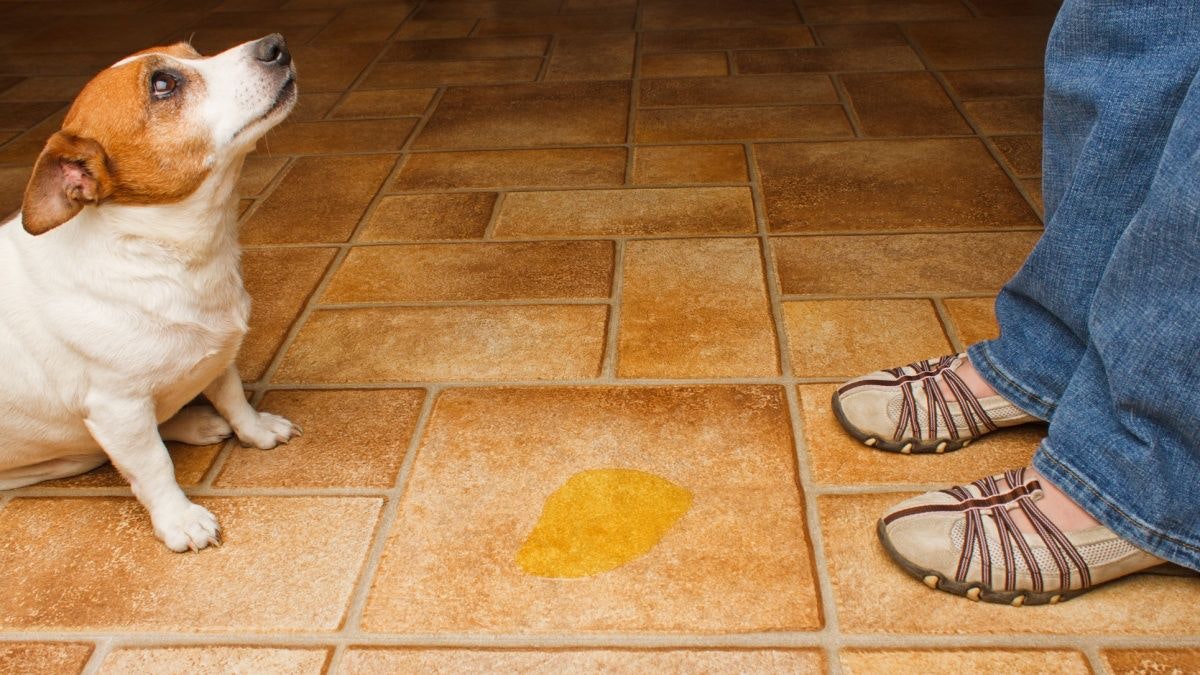
Discovering urine around your home or suspecting urinary incontinence in your dog can be concerning. The first and most crucial step is to consult your veterinarian. They will conduct a thorough physical examination, noting any physical changes in your pet, and perform diagnostic tests. These typically begin with a urinalysis and urine culture, along with blood work, to identify potential medical causes for the urination changes. Depending on these initial results, further testing may be necessary to gain a clearer understanding of the underlying issue.
Once your veterinarian has a clearer picture of the medical condition, they can recommend specific treatments:
- Urinary Tract Infections (UTIs): Antibiotics are prescribed to clear these infections.
- Bladder Stones: Diet and medication can manage some bladder stones, often alongside pain management. However, many bladder stones necessitate surgical intervention.
- Diabetes and Cushing’s Disease: Urinary issues stemming from these conditions can improve once the primary disease is effectively managed.
- Ectopic Ureters: Surgery is frequently the recommended treatment for this congenital abnormality.
- Weak Bladder: Dogs may be started on medication, or in some cases, surgery might be required.
Understanding Urinary Incontinence Caused by a Weak Bladder
Urethral sphincter mechanism incompetence (USMI), commonly referred to as a weak bladder sphincter, is the most frequent cause of urinary incontinence in spayed female dogs. This condition often manifests in mature or middle-aged dogs. Research published in the Journal of the American Veterinary Medical Association indicated that dogs weighing 15 kilograms (33 pounds) or more are seven times more likely to develop urinary incontinence. Certain breeds are also predisposed to this condition, including the Bearded Collie, Boxer, Collie, Dalmatian, Doberman Pinscher, English Springer Spaniel, German Shepherd Dog, Irish Setter, Old English Sheepdog, Rottweiler, and Weimaraner.
Multiple factors are believed to contribute to USMI, such as abnormal bladder positioning, declining estrogen levels, obesity, genetic predisposition, or changes in vaginal support structures. The timing of spaying has also been explored, with studies showing mixed results regarding its influence on the development of this condition.
Treatment Strategies for Weak Bladders in Dogs
For dogs experiencing USMI, medication is typically the initial treatment approach. Phenylpropanolamine (PPA) is a commonly used and generally well-tolerated medication in veterinary medicine. However, close monitoring is essential as potential side effects include high blood pressure or an elevated heart rate.
Hormone therapy can also be effective. Estrogens can enhance the number or sensitivity of urethral receptors, while testosterone may be used in male dogs. These medications may not require as frequent administration as PPA but carry a risk of bone marrow side effects, necessitating regular blood work monitoring.
If medical therapy proves insufficient, surgical options are considered. These can include colposuspension, injecting bulking agents like collagen into the urethra, or stem cell therapy.
Many dogs respond positively to treatment and can enjoy a good quality of life with their families. Typically, dogs will require lifelong medication, though dosage adjustments or the addition of a second medication may occasionally be necessary.
In conjunction with medical management, dog diapers can be a useful tool for maintaining cleanliness. However, it’s crucial to monitor closely for urine scalding or skin infections, which can arise if the skin is in prolonged contact with urine. This moist environment can cause discomfort and create an opportunity for infection.
References:
- Forsee KM, Davis GJ, Mouat EE, et. Al. Evaluation of the prevalence of urinary incontinence in spayed female dogs: 566 cases (2003-2008). J Am Vet Med Assoc. 242(7):959-62. 2013.
- Rothrock K (revised), Shell L (original author). Veterinary Information Network, VINcyclopedia of Diseases: Canine: Incontinence, Urinary.
- These medications can also have side effects on the bone marrow, so we monitor blood work once starting one of these medications.
- Dog diapers can be effective tools to help to manage cleanliness, but you will need to carefully monitor for urine scalding or skin infection. This can happen if urine is sitting against your dog’s skin for too long. This moist environment can be uncomfortable for your pet or allow for an infection to develop.