
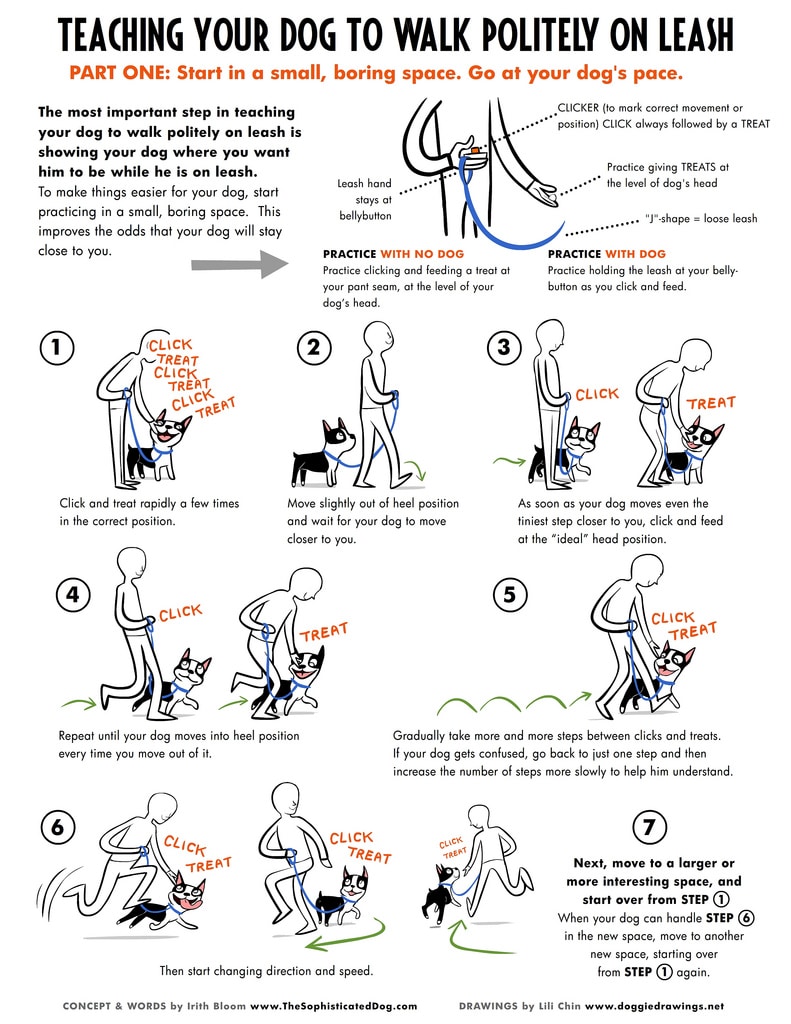
Many dog owners struggle with the common and frustrating problem of their dog pulling on the leash during walks. This can turn a pleasant stroll into a strenuous workout. Fortunately, with the right techniques, you can teach your dog to walk calmly by your side, making walks enjoyable for both of you. The key principle is to ensure that loose leashes are rewarding for your dog, while a tight leash offers no benefit.
The Game of Loose-Leash Walking
This method begins by turning loose-leash walking into a rewarding game. Before you even step outside, focus on reinforcing the desired behavior in a controlled environment.
- Setting the Foundation: Start by simply putting your dog’s leash on and standing still. The moment your dog releases any tension on the leash, mark this with a clicker and present a treat. Then, show your dog the treat and place it on the ground near your left foot. After your dog eats the treat, create tension on the leash by moving to the end of its length and stand still again. When your dog releases the tension, click and repeat the process of showing the treat and placing it by your left foot. The goal here is to teach your dog that releasing leash tension is a positive experience.
- Encouraging Eye Contact: While standing with a loose leash, begin clicking for your dog’s eye contact. Reward this with a treat placed by your left foot. Remember to re-establish leash tension after each treat. Repeat this step, aiming for three successful instances of eye contact on a loose leash.
- Introducing Movement with Treats: With your dog on a loose leash and looking at you, toss a treat a few feet away, just past their nose. When your dog eats the treat and returns to you, looking for more, click and reward them by placing the treat by your left foot. Then, move to the end of the leash again.
- Turning and Walking: Toss another treat past your dog’s nose. As your dog finishes eating and turns back towards you, turn your back and take a few steps. When your dog catches up to you, before they move past your leg, click and treat. Repeat this process.
It’s crucial that the tossed treats go directly past your dog’s nose. This initial phase is a warm-up. Once your dog is following you for a few steps, you can transition to walking and reinforcing their position beside or behind you.
Loose-Leash Walking on the Move
Now, begin actual walking. Turn away from your dog and start walking. As your dog catches up and comes alongside you, mark the moment with a click and drop a treat next to your left foot. For the first few repetitions, ensure your dog sees you have a treat. After they finish eating, repeat the process: show the treat, turn, take a few steps, and when your dog catches up, drop the treat near you or slightly behind.
Dropping the food behind you or next to your pant leg encourages your dog to stay close and prevents them from forging ahead. You can even let your dog take the treat from your hand behind your back. Ensure the treat isn’t dropped so far that your dog has to pull to reach it.
Continue walking, aiming for your dog to be at an angle beside you or behind you. As they catch up, drop the food behind you. Once your dog eats and starts returning towards you, walk away from them again, gradually increasing the number of steps before rewarding. Timing is critical; never let your dog get in front of you. If they do, pivot away and wait until they are beside you or slightly behind you before dropping the treat.
Your goal is to increase the distance you walk before dropping the treat behind you. Consistently reward your dog for staying in the desired position. You can also vary the rewards by reinforcing them when they are beside you or by tossing a treat further behind you, rewarding them for successfully returning to your side.
Maintaining Momentum
As your dog improves and can walk significant distances without pulling, continue to offer intermittent rewards. For your dog to consistently walk without pulling, they must understand that good things happen when they are near you. If necessary, use a long line for added control during practice sessions.
Remember, by consistently preventing the leash from becoming tight, your dog will not learn that pulling is an effective way to move forward.
This article was originally published on 05/24/2018 and has been reviewed to ensure its principles remain valuable. For inquiries or suggestions, please contact us at [email protected]