
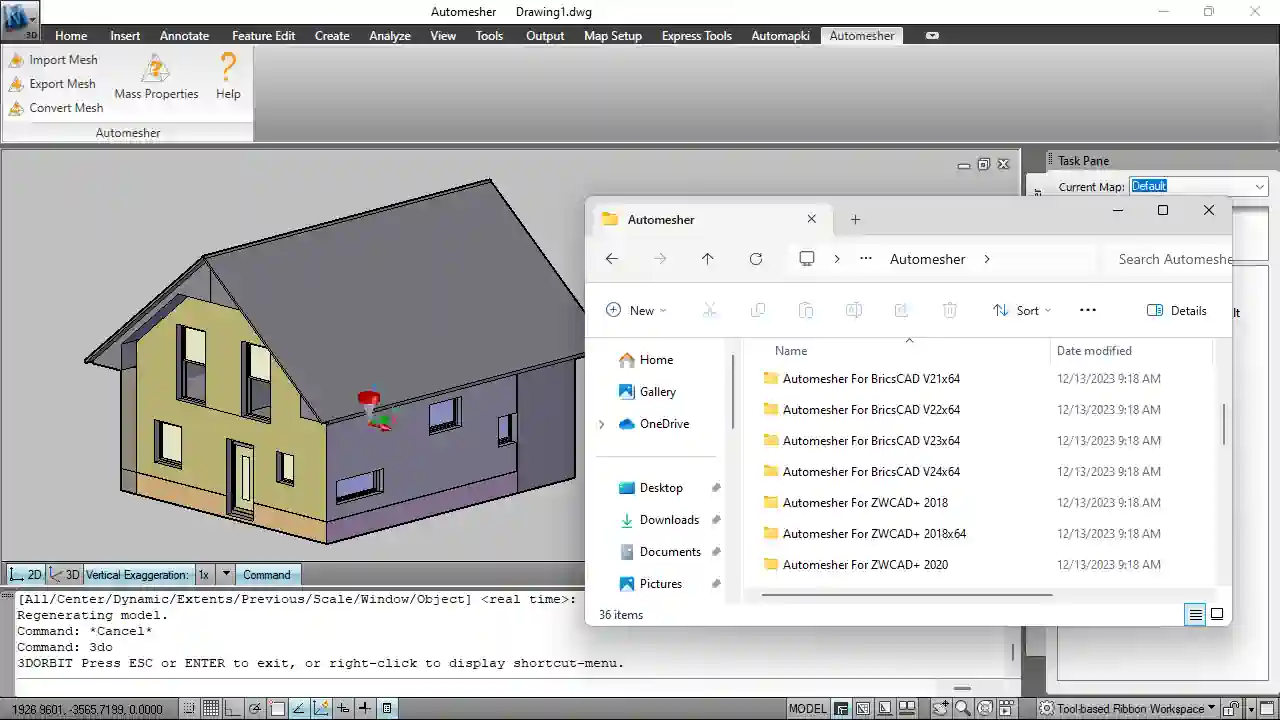
For engineers, designers, and CAD professionals working with 3D models, the ability to import stereolithography (.STL) files directly into AutoCAD drawings is a critical workflow requirement. While AutoCAD doesn’t natively support STL import, there are several effective solutions available, ranging from free LISP utilities to professional Autodesk applications. This comprehensive guide explores the most reliable methods for converting mesh models from STL format to DWG, with a focus on the freeware STLin utility that has become a go-to solution for many CAD users.
Understanding STL Files and AutoCAD Compatibility
STL (stereolithography) files have become the industry standard for 3D printing, rapid prototyping, and mesh-based modeling. These files describe surface geometry using triangular facets, making them ideal for representing complex organic shapes. However, AutoCAD—being primarily a solid and surface modeling environment—does not include built-in STL import functionality in its default installation.
The challenge lies in bridging the gap between mesh-based STL data and AutoCAD’s native entity types. Fortunately, the CAD community has developed several tools that facilitate this conversion, with the STLin LISP utility standing out as one of the most accessible and straightforward solutions.
The STLin Utility: Your Free Solution for STL Import
The STLin utility is a free LISP routine specifically designed to import text-based (ASCII) STL files directly into AutoCAD drawings. Developed for users who need a quick, no-cost solution for bringing 3D mesh models into their DWG projects, this tool converts STL geometry into 3DFACE entities—AutoCAD’s native mesh representation format.
Key Features of STLin
- Direct Import: The utility reads STL files and creates corresponding 3DFACE entities in your active drawing
- Simple Workflow: After loading the LISP file, a single command initiates the import process
- No External Software Required: Works entirely within AutoCAD using standard LISP functionality
- ASCII STL Support: Processes text-based STL files (binary STL files are not compatible)
System Requirements
STLin is compatible with most versions of AutoCAD that support LISP routines, including AutoCAD 2000 through the latest releases. The utility requires that your STL files be saved in ASCII (text) format rather than binary format.
Step-by-Step Guide to Using STLin
Step 1: Download the STLin Utility
First, download the STLin LISP file from a trusted source. The utility is available through CAD-focused websites and forums, often accompanied by documentation and user feedback. Save the file to a location on your computer where you can easily access it.
Step 2: Load the LISP Routine
In AutoCAD, use the APPLOAD command to load the STLin utility:
- Type
APPLOADin the command line - Navigate to the location where you saved the STLin file
- Select the file and click “Load”
- Close the Load/Unload Applications dialog box
Alternatively, you can add the file to the Startup Suite to have it load automatically each time you start AutoCAD.
Step 3: Run the STLIN Command
With the utility loaded, simply type STLIN at the command prompt. AutoCAD will prompt you to select an STL file from your system. Navigate to your ASCII STL file and select it.
Step 4: Review the Imported Mesh
The utility will process the file and create 3DFACE entities representing each triangular facet from your STL model. Depending on the complexity of your model and the number of facets, this process may take a few moments. Once complete, you can manipulate the mesh using standard AutoCAD editing tools.
Important Considerations
- ASCII Format Only: STLin only supports ASCII (text-based) STL files. If you have a binary STL file, you’ll need to convert it to ASCII format first using a 3D modeling application or dedicated converter tool.
- Performance: For large, high-resolution STL files with thousands of facets, the import process and subsequent editing may be resource-intensive. Consider reducing facet count if performance becomes an issue.
Converting Imported Mesh to Solid Models
One of the most valuable features of the STLin workflow is the ability to convert imported mesh models into solid objects. While this process can be computationally intensive on large models, it opens up the full range of AutoCAD’s solid modeling capabilities.
After importing your STL model as 3DFACE entities, you can use AutoCAD’s mesh-to-solid conversion tools:
- Select the imported mesh objects
- Use the CONVTOSOLID command to convert the mesh to a 3D solid
- For more complex meshes, you may need to use the MESHSMOOTH or MESHREFINE commands to prepare the geometry before conversion
Note that the conversion process may be slow on models with high facet counts, and results can vary based on the quality of the original STL mesh.
Alternative Methods for STL Import into AutoCAD
While STLin provides an excellent free solution, there are several other approaches worth considering depending on your specific needs, budget, and workflow requirements.
STL2DWG Online Service
For users who prefer a browser-based solution without installing additional software, the STL2DWG online service (available through CADforum’s Converters section) offers a convenient alternative. This service converts your STL files to DWG format, which can then be opened directly in AutoCAD. The online approach eliminates the need for LISP loading and can be ideal for occasional use or when working on systems where you cannot install custom utilities.
Autodesk ReMake / ReCap Pro
For professionals requiring more advanced mesh processing capabilities, Autodesk ReMake (now integrated into ReCap Pro) provides a robust solution. This workflow involves:
- Opening your STL file in ReCap Pro
- Performing any necessary mesh cleanup or optimization
- Exporting the model as FBX format
- Importing the FBX file into AutoCAD
This method offers greater control over the imported geometry, including tools for repairing mesh errors, reducing facet count, and converting to more efficient formats. While ReCap Pro requires a subscription, it provides enterprise-grade functionality for demanding projects.
Third-Party Conversion Tools
Several commercial applications specialize in CAD format conversion, offering robust STL-to-DWG translation capabilities. These tools often include advanced features such as:
- Batch processing of multiple files
- Support for both ASCII and binary STL formats
- Automatic mesh simplification and optimization
- Direct solid conversion without intermediate steps
Comparing Import Methods
| Method | Cost | Complexity | Format Support | Best For |
|---|---|---|---|---|
| STLin Utility | Free | Low | ASCII STL only | Quick, occasional imports |
| STL2DWG Online | Free/Varies | Low | Both ASCII and binary | Browser-based convenience |
| ReCap Pro | Subscription | Medium | Full mesh support | Professional workflows |
| Commercial Converters | Paid | Low-Medium | Full format support | High-volume conversion needs |
Best Practices for STL Import Success
Prepare Your STL Files
To ensure successful import with STLin, always verify that your STL files are saved in ASCII format. Most 3D modeling applications allow you to select the output format when exporting STL. If you receive binary STL files, use a converter tool or your modeling software to save them in ASCII format before attempting import.
Optimize Mesh Resolution
High-resolution STL files with millions of facets can overwhelm both the import process and subsequent editing operations. Consider reducing facet count or simplifying the mesh in your source application before export. A balance between geometric accuracy and manageable file size will result in better performance.
Consider Your Final Use Case
The method you choose should align with your ultimate goals. If you need to perform detailed solid modeling operations on the imported geometry, prioritize methods that support solid conversion. For visualization or reference purposes, mesh-based import may be sufficient.
Maintain Data Integrity
When converting between formats, always verify that critical dimensions and features are preserved. Test your workflow with a small sample file before committing to large-scale conversions.
Troubleshooting Common Issues
“File Not Recognized” Error
If STLin fails to recognize your STL file, first verify that it is in ASCII format. Open the file in a text editor—ASCII STL files begin with “solid” and contain readable text, while binary files appear as unintelligible characters.
Slow Performance During Import
For large models, the import process may take several minutes. Consider breaking complex assemblies into smaller components or reducing the facet count in your source application. Closing other applications and ensuring adequate system memory can also improve performance.
Mesh Quality Issues After Import
Imported meshes may contain gaps, inverted normals, or other artifacts from the original STL file. Use AutoCAD’s mesh editing tools to clean up geometry before attempting solid conversion. The MESHCLEAN command can help identify and repair common mesh problems.
Conclusion
Importing STL files into AutoCAD no longer needs to be a complex process that interrupts your design workflow. The free STLin LISP utility provides an accessible entry point for users who need basic mesh import capabilities without additional software costs. By following the straightforward loading and execution steps outlined in this guide, you can quickly bring 3D mesh models into your DWG drawings and optionally convert them to solids for further editing.
For more demanding requirements, the STL2DWG online service offers browser-based convenience, while Autodesk ReCap Pro delivers professional-grade mesh processing tools. Each method has its strengths, and the best choice depends on your specific needs, budget, and the complexity of your projects.
Whether you’re preparing models for 3D printing, incorporating customer-provided STL files into your designs, or working with organic shapes that require mesh representation, these tools ensure that AutoCAD remains a versatile platform for all your 3D modeling needs. Start with the STLin utility for a free, quick solution, and explore other options as your workflow demands evolve.
References
- CADforum. STLin Utility Download and Documentation. Available at: https://www.cadforum.cz/en/download.asp?file=STLin
- Autodesk. ReCap Pro Documentation and Mesh Processing Workflows
- Autodesk Knowledge Network. AutoCAD LISP Developer’s Guide
- Industry Standard STL File Format Specifications, 3D Systems Inc.