
If you’re searching for the definitive plug-in hybrid saloon, your search ends here. The BMW 330e represents the pinnacle of PHEV engineering in the executive car segment — a car that manages to balance genuine driving pleasure with meaningful real-world efficiency in a way none of its rivals have quite managed to replicate. Updated in mid-2024 with a larger battery pack and extended electric range, this iteration of the 330e is the most capable version yet.
The headline figures tell a compelling story: up to 289bhp with the XtraBoost function engaged, 0–62mph in 5.9 seconds, and a claimed electric range of up to 61 miles from the new 19.5kWh battery. But numbers only go so far. What makes the 330e genuinely special is the way BMW has engineered the whole package — the powertrain integration, the chassis balance, the interior quality — into something that never feels like a compromise.
Verdict: Is the BMW 330e Worth Buying?
The word that comes to mind most readily is impressive. The BMW 330e isn’t just a box-ticking exercise designed to satisfy fleet managers and benefit-in-kind tax calculations. It’s a genuinely well-rounded car with plentiful performance, extended electric range, and some clever engineering tricks that set it apart from the competition.
If you’re stepping into a 330e from a 330d or 330i, you’ll notice it feels marginally less agile — the hybrid battery adds weight and that does affect the car’s athleticism. And while the 330e executes the PHEV formula brilliantly, it doesn’t quite have the emotional charge of the very best BMWs. It’s an excellent tool rather than a genuinely thrilling machine.
That said, it’s still considerably better than any of its plug-in hybrid rivals, which makes the buying decision straightforward: if you’re in the market for an executive PHEV saloon, start — and quite possibly end — your search here.
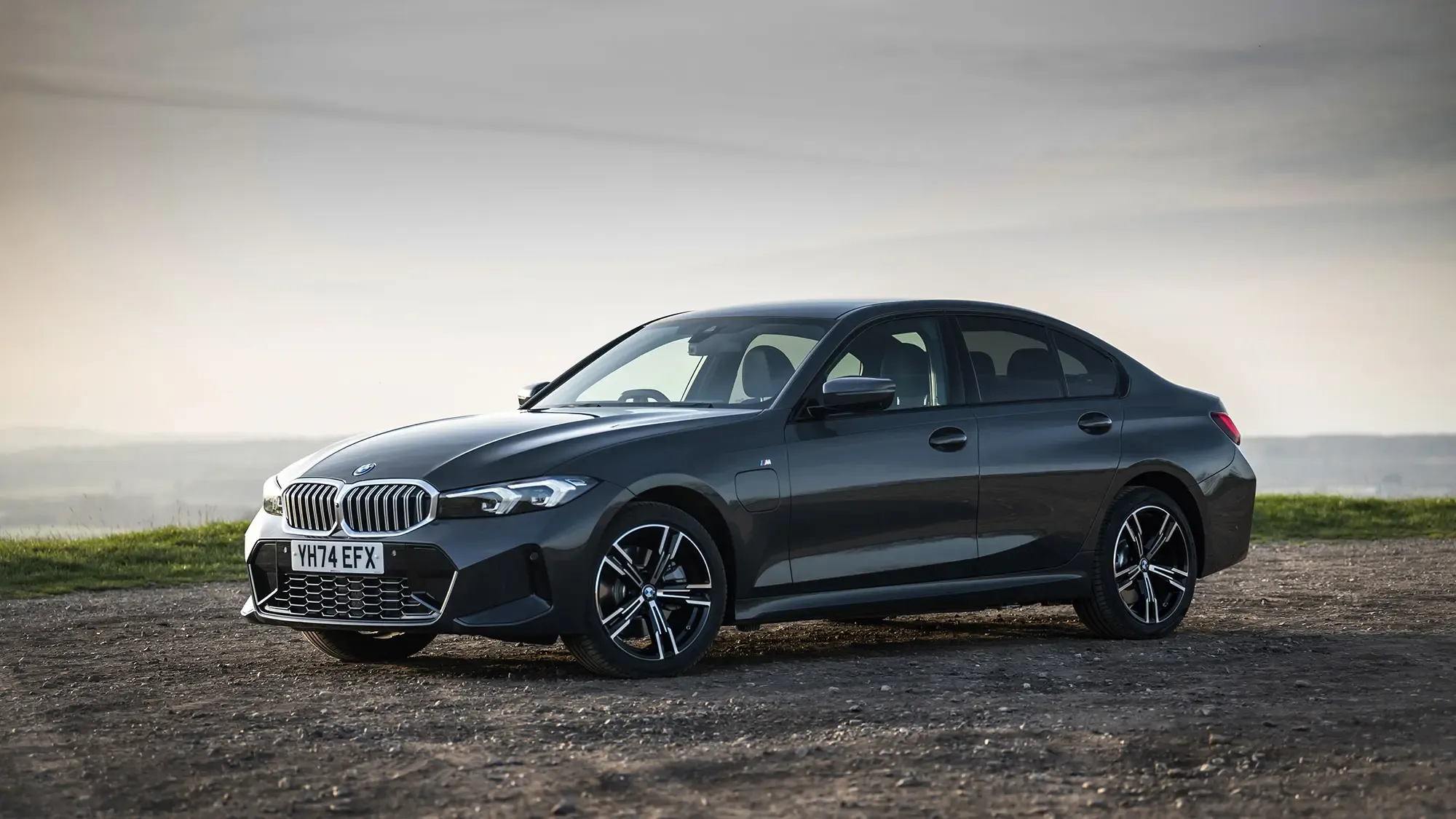
What’s New for 2024?
The mid-2024 update brought a series of incremental but meaningful improvements. Most significantly, BMW fitted a new, more energy-dense 19.5kWh battery pack that extends the maximum electric range from 37 miles to a claimed 63 miles — a substantial leap that transforms the car’s usability for daily commuters.
Alongside the larger battery, BMW added an 11kW on-board charger to reduce recharge times, keeping the 330e competitive against fresher rivals. The official fuel economy figures now sit between 256.8 and 353.1mpg in hybrid mode — figures that won’t be replicated in the real world, but which do reflect genuine gains in efficiency over the outgoing model.
Beyond the powertrain updates, the changes are largely cosmetic: a tweaked steering wheel design, revised seat upholstery options, and updated centre console materials. The underlying car, last revised in 2022, remains unchanged — which is no great hardship, since it was already excellent.
Powertrain and Performance Specs
The 330e pairs BMW’s familiar 2.0-litre four-cylinder turbocharged petrol engine with an integrated electric motor, the latter neatly packaged within the car’s eight-speed automatic gearbox. The engineering here is exemplary — the hybrid casing is just 15mm longer than the standard automatic fitted elsewhere in the 3 Series range.
The petrol unit contributes 181bhp and 221lb ft of torque. The electric motor adds up to 111bhp and an instant 195lb ft. Combined system output in standard operation is 249bhp, with a maximum of 310lb ft of torque. Engage the XtraBoost function and the electric motor delivers an additional 40bhp, pushing total output to 289bhp.
The result: 0–62mph in 5.9 seconds in saloon form, 6.0 seconds flat in the Touring estate. Those are quick figures for a family saloon, and they don’t tell the whole story of how rapidly the car builds speed in everyday driving.
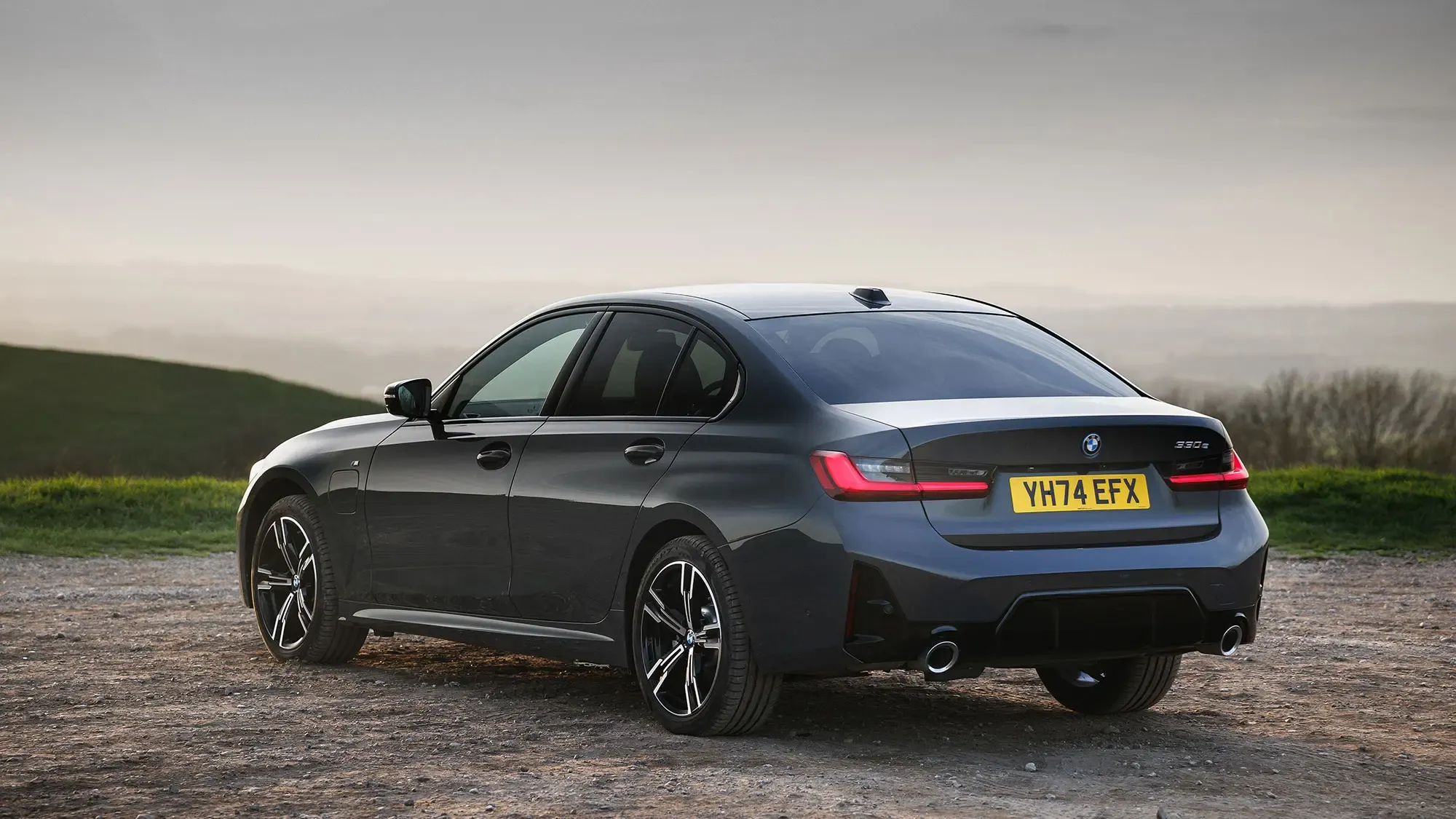
Real-World Efficiency and Charging
Don’t take BMW’s headline fuel economy figures at face value. In the real world, once the battery is depleted, you can expect somewhere around 40mpg from the petrol engine alone — good given the performance on offer, but a long way from the official claims.
Use the car as BMW intended, however, and the efficiency story improves considerably. On an 800-mile motorway journey with a couple of charging stops along the way, a real-world average of around 50mpg is achievable — genuinely diesel-rivalling economy when the driving style suits the hybrid system.
The new 11kW on-board charger meaningfully reduces time plugged in. Charge frequently and keep trips within the electric range, and you could realistically run the 330e for daily commuting without burning fuel at all. The moral is simple: use the car as intended, and it rewards you handsomely.
For context, the Mercedes-Benz C 300 e claims 71 miles of EV range, while the updated Volkswagen Golf eHybrid stretches to an impressive 88 miles on battery power. The Golf is also around £10,000 cheaper than the 330e. Neither, however, drives as well or feels as well constructed.
How Does the BMW 330e Drive?
Out on the road, the 330e is undeniably fast. BMW’s XtraBoost function — activated by flooring the accelerator in Sport mode or via kickdown in Sport or Manual transmission settings — delivers its additional power with genuine urgency. BMW claims it provides twice the acceleration vigour of an equivalent conventional car within the first second from 12mph, leaving you a full car length clear after three seconds. In practice, the car does squirt forward with real purpose.
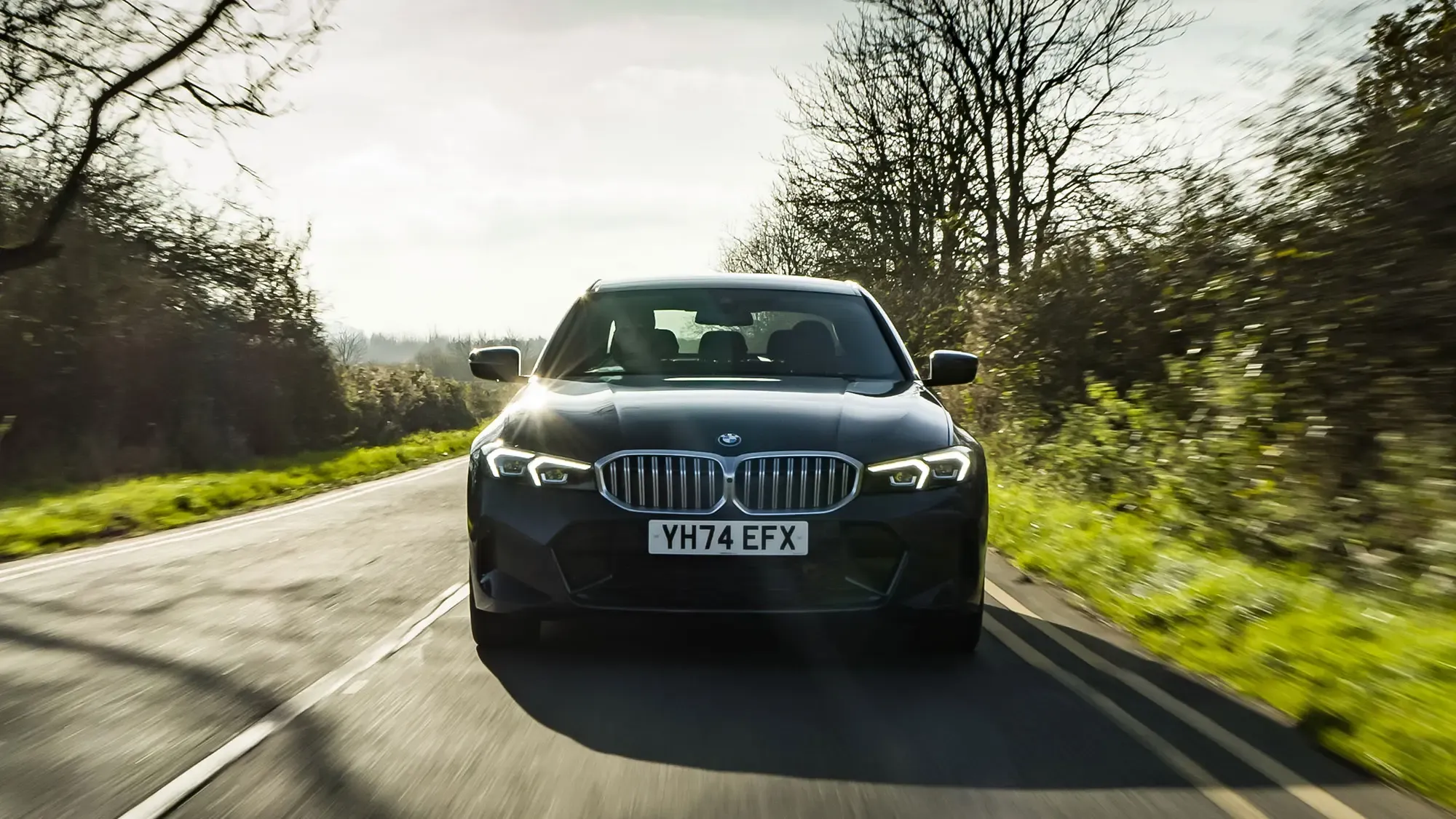
The XtraBoost effect lasts just 10 seconds at a time, but it’s available even when the hybrid battery has been fully depleted — which addresses a concern that dogs many PHEV performance claims. In motorway conditions, the 330e builds speed more aggressively than the 330d.
There are caveats, though. The four-cylinder petrol engine sounds rather dull at the top of its rev range, regardless of whether the artificial Sport acoustics are engaged. More significantly, the additional weight of the hybrid battery pack takes a discernible edge off the chassis. Drive the 330e back-to-back with a standard 320i and the difference in agility is apparent.
The steering feels slightly light and artificial, even in the heaviest Sport setting, and mid-corner bumps can unsettle the car in a way that a non-hybrid 3 Series wouldn’t suffer. BMW has revised the adaptive dampers for this updated model to improve comfort in Sport mode, but the fundamental physics of carrying extra weight can’t be engineered away entirely. The 330e is fast, but not especially satisfying in the way the best BMWs are.
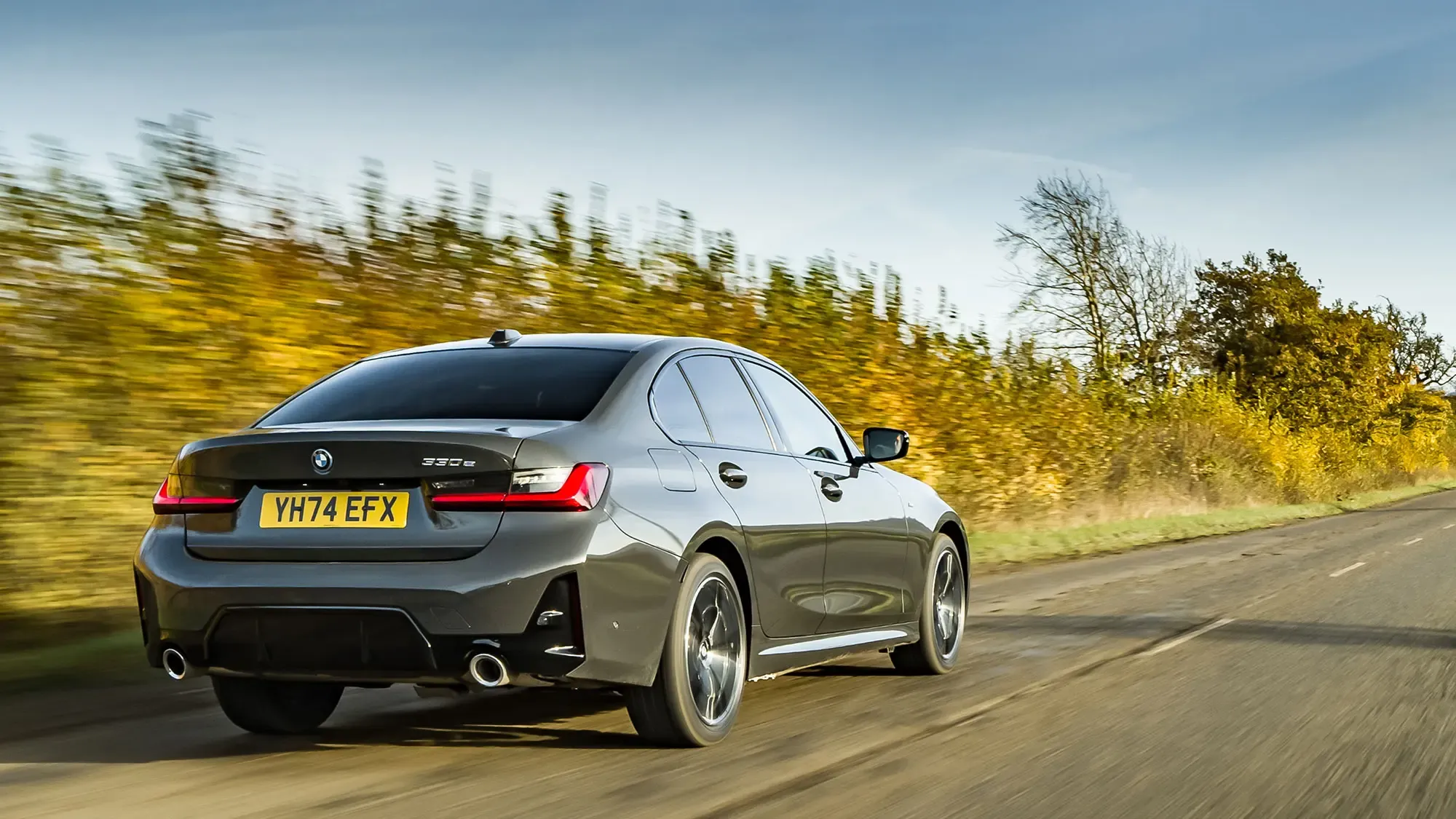 BMW 330e (2024) rear three quarter dynamic shot in grey during driving
Interior, Technology, and Safety
Inside, the 330e is essentially identical to the facelifted standard 3 Series, which is high praise. The larger infotainment display and digital instrument cluster introduced on the refreshed saloon are excellent — clear, intuitive, and easy to navigate. BMW’s iDrive rotary controller remains one of the best human-machine interfaces in the business, allowing you to operate the car’s functions without taking your eyes off the road.
The hybrid system does exact a packaging penalty, however. Boot capacity in the saloon drops from 480 litres to 375 litres due to a raised floor housing the relocated fuel tank. The Touring estate fares somewhat better, but still offers just 410 litres with seats up and 1,420 litres with them folded — compared to 500 and 1,500 litres respectively in a non-hybrid 3 Series estate.
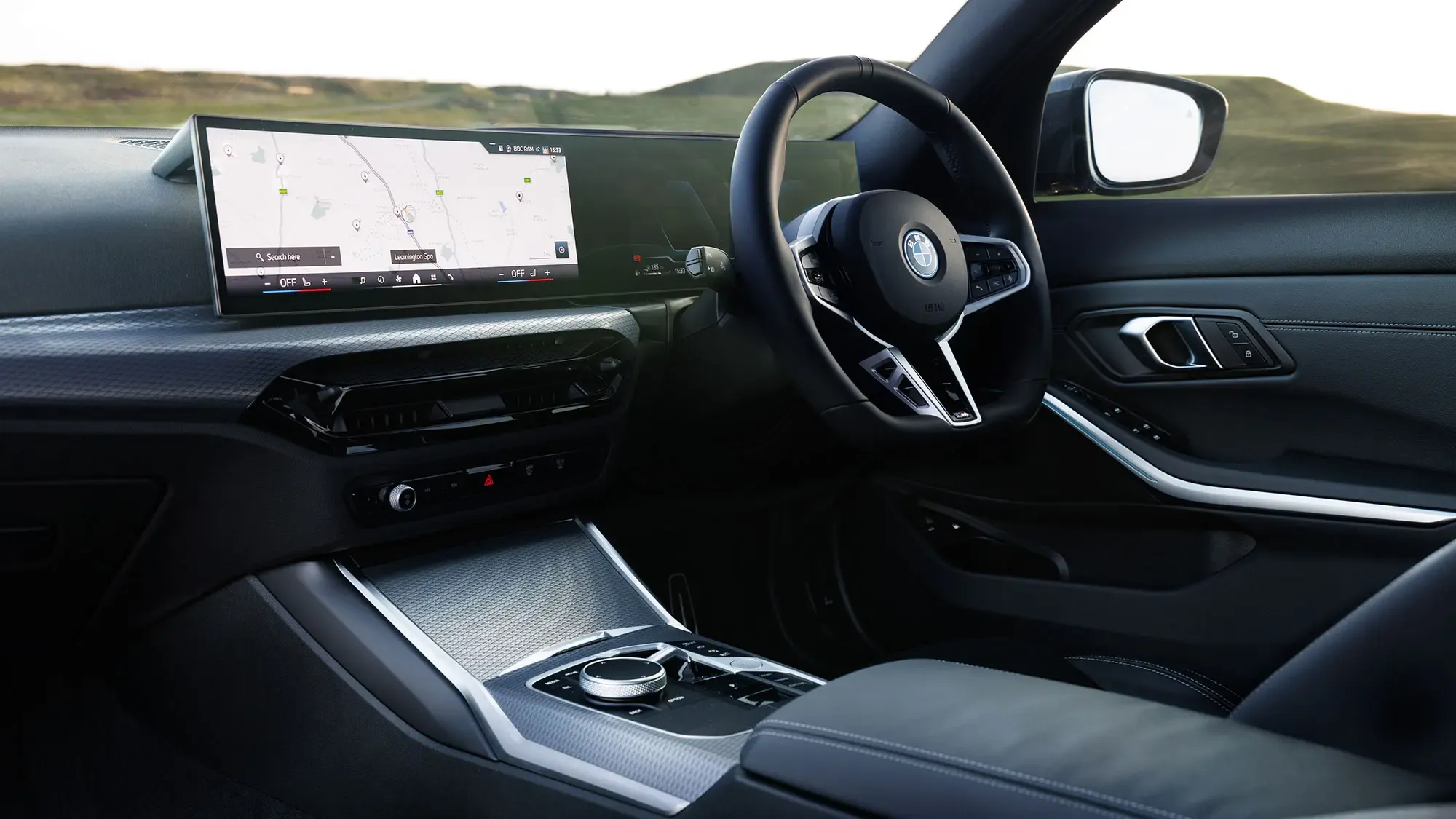
BMW’s engineers have been thoughtful about where components are placed. The battery sits closer to the car’s centre of gravity, improving weight distribution. The fuel tank moves rearward to make room, rather than simply being deleted, which preserves the 330e’s extended touring capability.
On safety, the 330e scored a full five stars in Euro NCAP testing, with a 97% rating for adult occupant protection and 87% for child occupants. Standard equipment includes autonomous emergency braking, lane departure warning, and a suite of parking assistance systems.
Available Specifications and Pricing
The 330e range opens with the Sport trim, priced from £41,945. Standard equipment includes LED headlights, three-zone automatic climate control, cruise control, and front and rear parking sensors.
The M Sport model starts from £43,195 and adds 18-inch alloy wheels, an M Sport body kit, and model-specific seat upholstery with the M Sport tricolour piping. The latest addition to the lineup, the M Sport Pro, is priced from £47,545 and brings further visual and equipment enhancements.
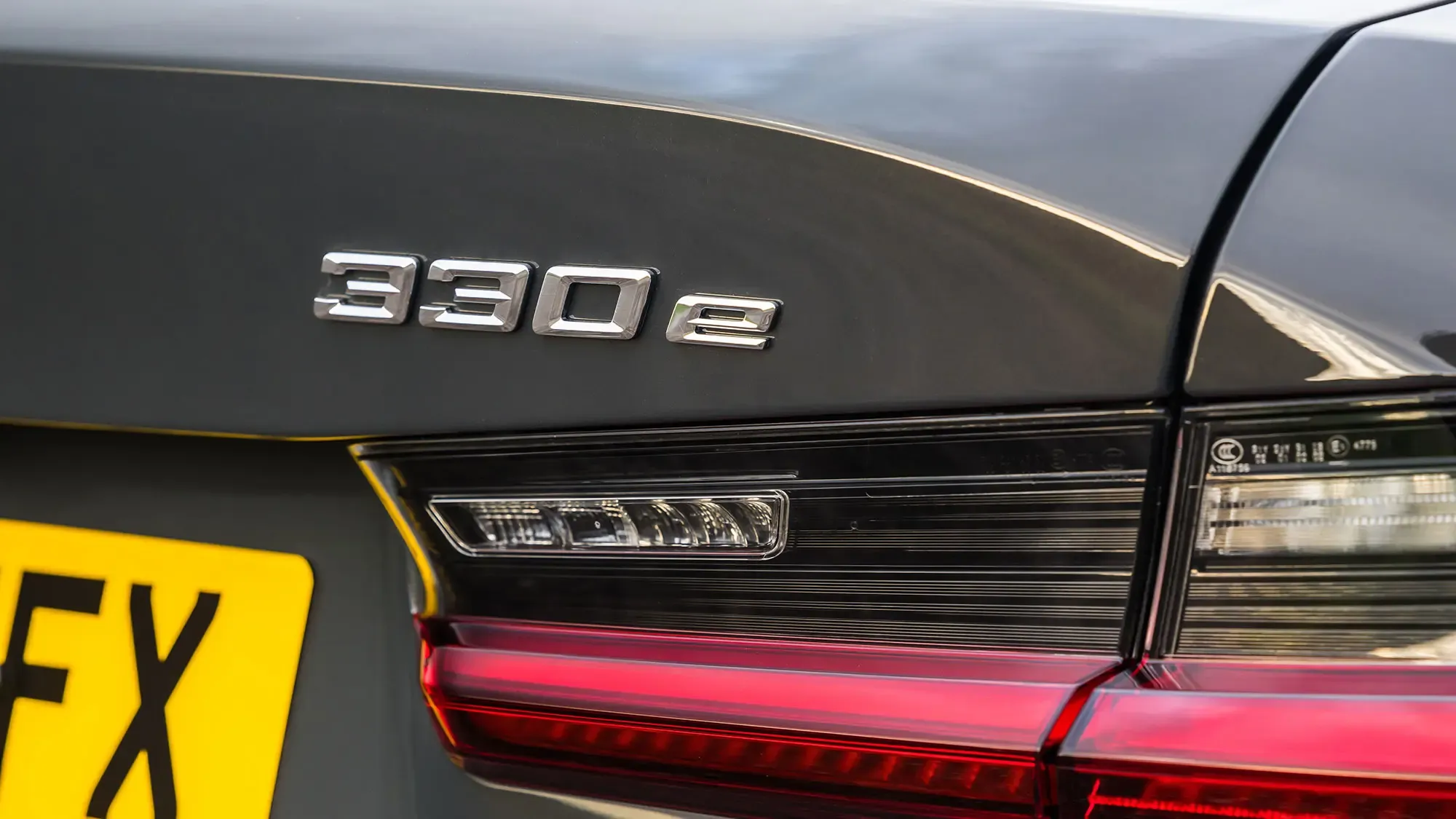 BMW 330e (2024) rear badge detail in grey paint showing the 330e designation
For those considering leasing, expect monthly payments to start at around £500, varying with specification and initial deposit. The 330e also benefits from favourable benefit-in-kind tax rates, making it particularly attractive as a company car.
Full Specifications
| Specification | Detail |
|---|---|
| Price from | £41,945 (Sport) |
| Engine | 1,998cc 16v 4-cyl turbo petrol + electric motor |
| Combined output | 249bhp (289bhp with XtraBoost) / 310lb ft |
| Transmission | 8-speed automatic, rear-wheel drive |
| Battery capacity | 19.5kWh |
| 0–62mph | 5.9 seconds (saloon) |
| Top speed | 143mph |
| EV range (claimed) | Up to 63 miles |
| CO₂ emissions | 39g/km |
| Boot capacity | 375 litres (saloon) |
| Weight | 1,740kg (DIN) |
| Dimensions (L/W/H) | 4,709 / 1,827 / 1,440mm |
Should You Buy a BMW 330e?
Buy one if: You need strong performance alongside meaningful real-world efficiency, you value a premium interior and intuitive technology, or you want the best PHEV executive saloon on the market.
Think twice if: Budget is a primary concern (the Golf eHybrid is far cheaper), you need maximum boot space, or you’re after the kind of sharp, emotional driving experience that defines BMW’s very best models.
The BMW 330e remains the benchmark plug-in hybrid saloon. It’s the car other manufacturers should be studying closely — a genuinely impressive piece of engineering that happens to do the PHEV thing better than anyone else right now.
Have you driven the BMW 330e, or are you considering one as your next company car? Share your thoughts in the comments, or explore our wider range of executive car reviews for more expert guidance.
References
- Wilkinson, L. (2024). BMW 330e (2024) review. Parkers / CAR Magazine. Bauer Media Group.
- Euro NCAP. (2024). BMW 3 Series safety rating. Euro NCAP.
- BMW Group. (2024). BMW 330e product specifications and press materials. BMW AG.