
When it comes to preparing your hunting companion for the field, the most critical piece of gear isn’t the shotgun—it’s the collar. A quality electronic collar provides instant, long-distance communication that allows you to correct behaviors in the moment, track your dog’s location, and ensure their safety across miles of varied terrain. Whether you’re training a new puppy or fine-tuning a seasoned gun dog, the right training collar transforms how you work with your canine partner.
Today’s dog training collars range from simple bark deterrents to sophisticated GPS systems that combine mapping, navigation, and training functions. Understanding your specific needs—whether you’re a waterfowl hunter requiring a compact, waterproof collar or an upland hunter needing long-range tracking—will help you select the perfect system for you and your dog.
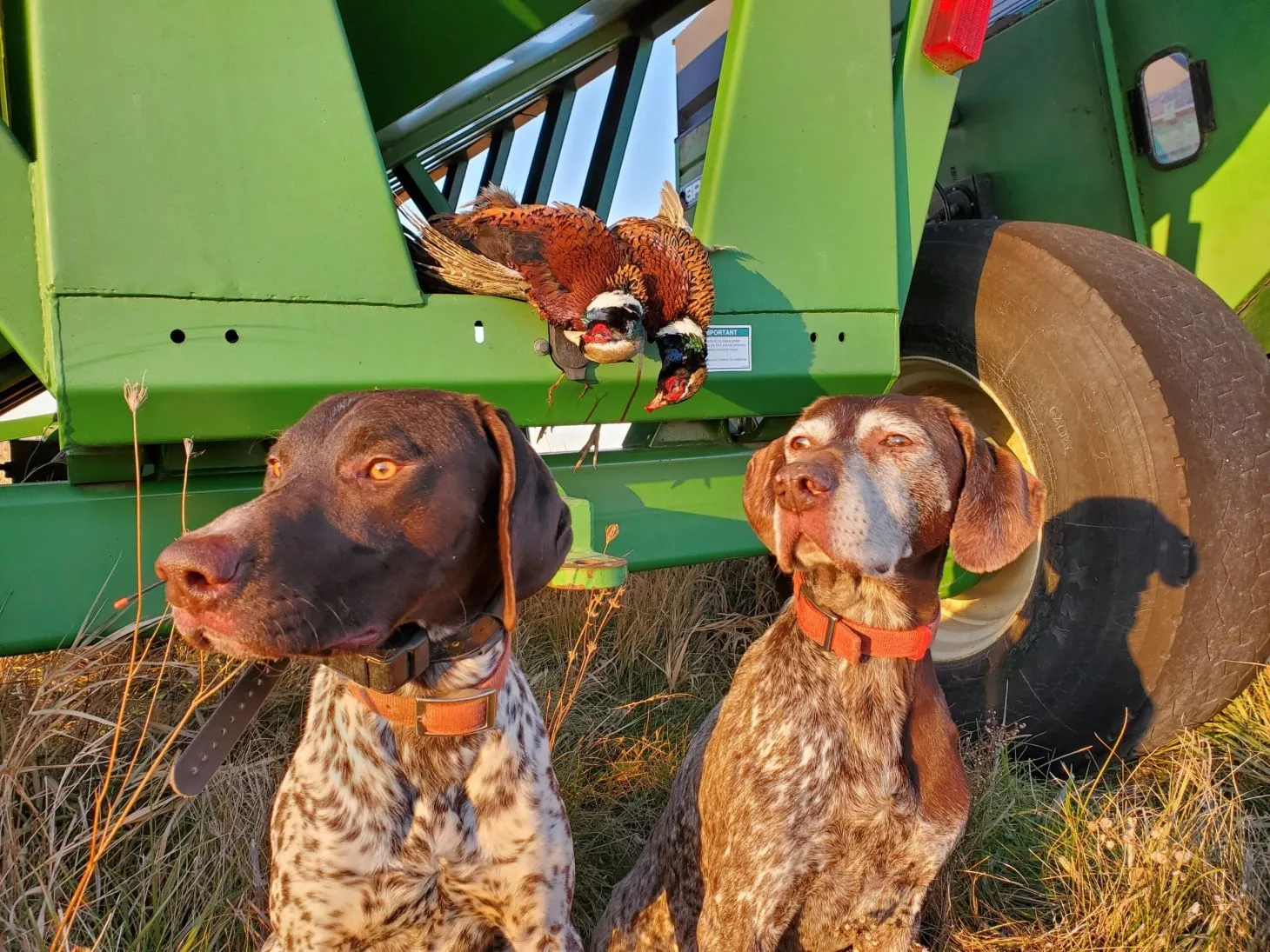
Best Overall: Garmin Alpha 300i w/ TT 25 Collar
The Garmin Alpha 300i paired with the TT25 collar represents the pinnacle of GPS tracking and training technology. This comprehensive system combines training, tracking, navigation, and emergency messaging into a single handheld unit that tracks up to 20 dogs simultaneously with a 9-mile range.
The Alpha 300i handheld comes preloaded with topographic maps, an altimeter, multi-GNSS support, and a simple compass display option. The device tracks both your movement and your dogs’ movements across the landscape, records your vehicle’s location at the start of each outing, and features a bright touchscreen with 55 hours of battery life. Three buttons on top of the device allow for instant application of stimulation, tone, or vibration in the field. When paired with the Garmin InReach program (subscription required), you gain satellite communication capabilities for weather updates and emergency SOS functions.
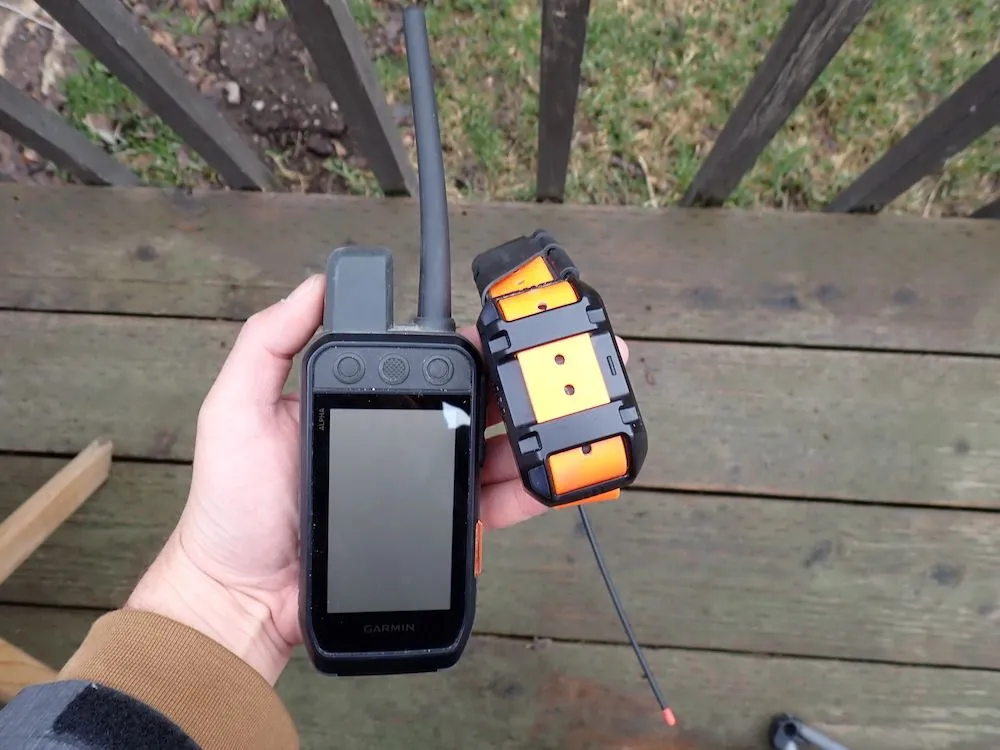
The TT25 collar delivers 18 stimulation modes and tracks your dog up to 9 miles from the handheld. LED beacon lights enhance visibility in low-light conditions, making this system ideal for early morning or late evening hunts. The combination is perfect for tech-inclined hunters who want maximum functionality, though the extensive features may be more than some users need. The handheld’s size can feel bulky for basic training applications, but the safety benefits—particularly the SOS capability—make this a worthwhile investment for serious hunters who venture into remote areas.
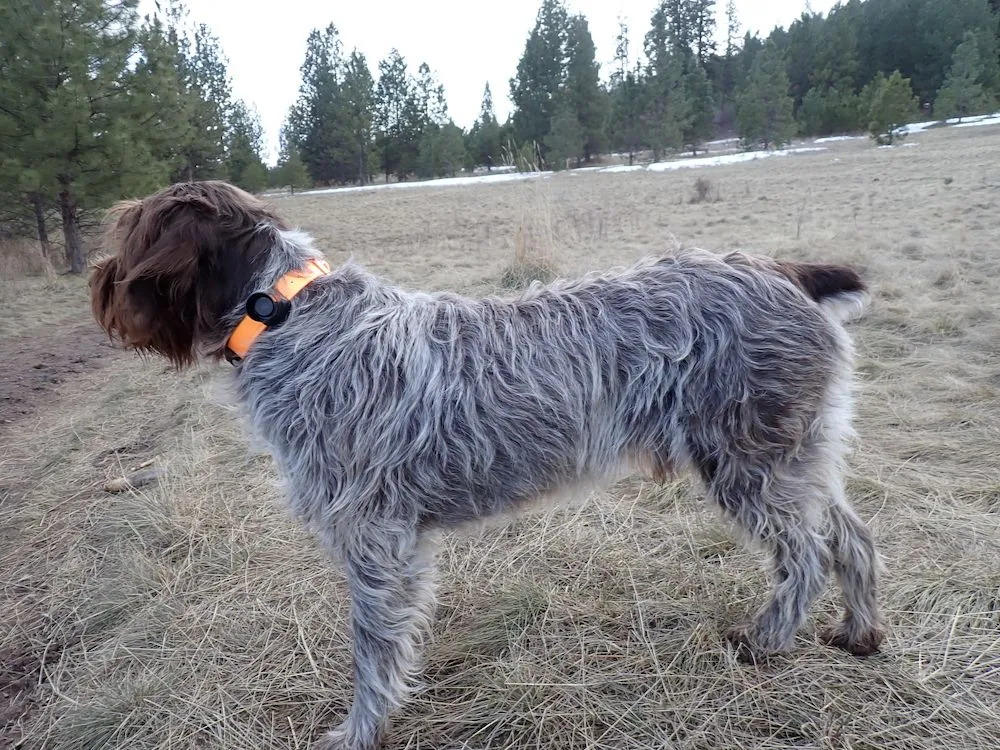
Best for Beginners: Garmin Pro 550 Plus w/ TT25 GPS Tracking Collar
For hunters who want reliable GPS tracking without complex features, the Garmin Pro 550 Plus with TT25 collar offers the perfect balance of functionality and simplicity. The system’s standout feature is its straightforward 2-inch display showing an arrow pointing to your dog, distance, and point indication with a buzzing alert—everything most upland hunters need and nothing they don’t.
The transmitter features oversized buttons for easy operation in the field, with two buttons delivering stimulation and a dial for additional levels. While the transmitter’s long shape can make pocket storage awkward, the intuitive controls compensate for this minor drawback. The system handles up to three dogs and provides 18 stimulation levels ranging from gentle correction to firm reinforcement.
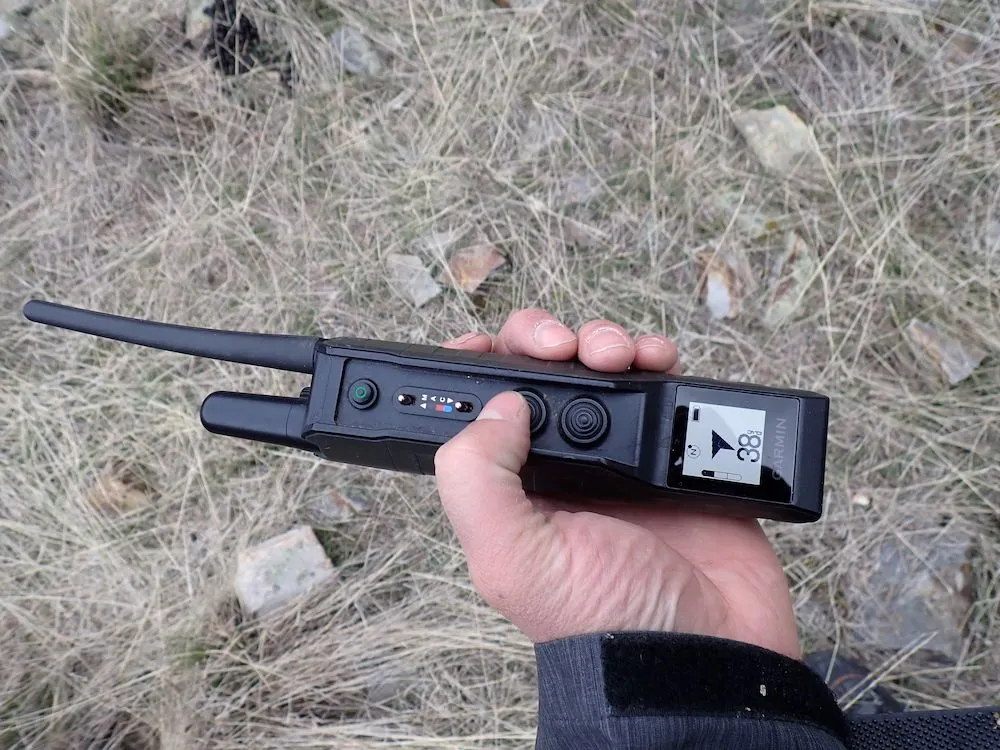 Garmin Pro 550 Plus during training collar testing
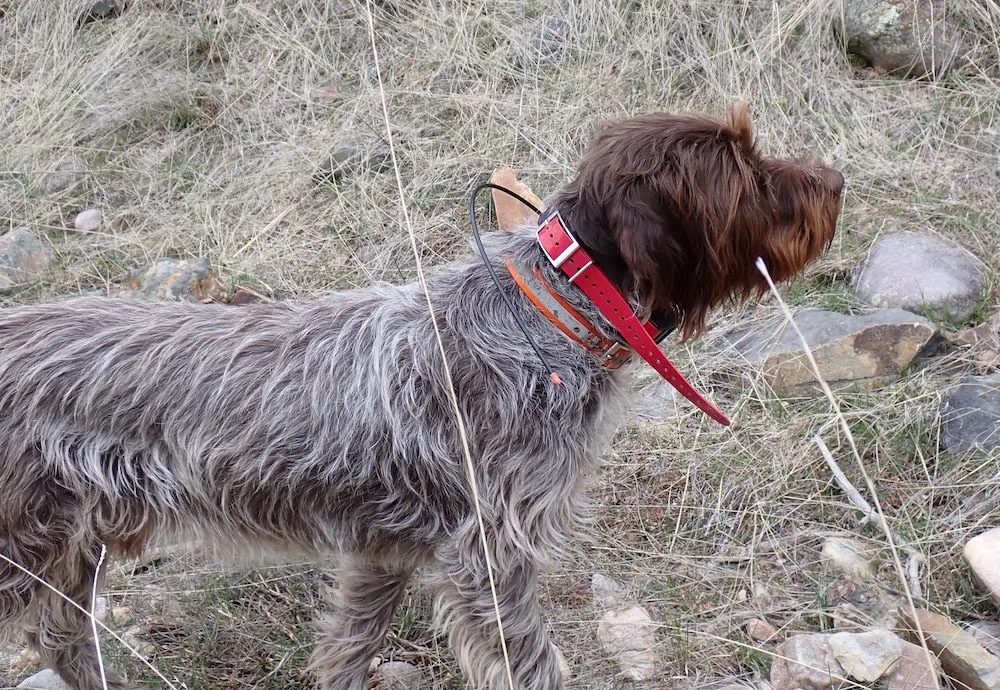
Typically paired with the TT15X collar—a slightly bulkier but more affordable option than the TT25—this system works well for dogs of various sizes. A 50-pound griffon handles the TT15X without issue, though lighter breeds like Brittanys might benefit from the smaller TT25 collar. The collar is waterproof with a red 1-inch strap, and the 18 stimulation levels allow for precise correction based on your dog’s sensitivity and training needs.
Best Invisible Fence: PetSafe Stay and Play Wireless Fence
The PetSafe Stay and Play Wireless Fence creates a secure boundary without the need for buried wires. The system consists of a stationary transmitter that plugs into an indoor outlet and broadcasts over a maximum 3/4-acre circular area, adjustable for smaller yards. The included collar sounds a warning tone as your dog approaches the boundary, with crossing triggering one of five stimulation levels.
A key feature is the correction-free re-entry—if your dog crosses the boundary, the collar won’t correct when returning inside. This encourages the dog to return to the safe area rather than remaining outside. The system comes with boundary flags for perimeter training and allows unlimited collar additions for multiple dogs. A second transmitter can create an overlapping figure-8 area for larger properties.
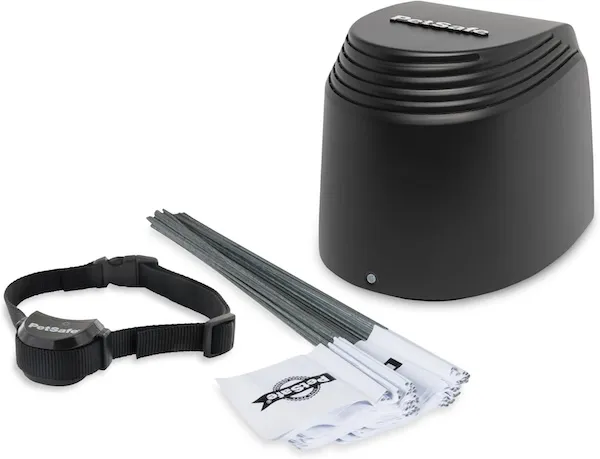 PetSafe Stay and Play Wireless Fence system components including transmitter and collar
The portability of this system makes it ideal for travel—simply plug it in at a cabin or campsite to establish an immediate secure area for your dog. The only limitation is the circular boundary shape, which may not accommodate irregular property lines or specific yard layouts.
Best for Retrievers: SportDog WetlandHunter 425X
Built specifically for waterfowl hunting applications, the SportDog WetlandHunter 425X combines durability with compact design. The Realtree Max-5 camo finish blends into wetland environments, while Drytek Waterproof technologies make the collar submersible to 25 feet—far beyond what any retriever will encounter in normal waterfowling conditions.
Weighing just 1.76 pounds and measuring 2.6 inches long by 1.6 inches wide, this is one of the lightest and most compact training collars available. The simple remote transmitter stores easily in a small pocket and features three buttons for different stimulation types plus a thumb dial for adjusting levels across 21 settings. Vibration and tone options provide alternatives to stimulation.
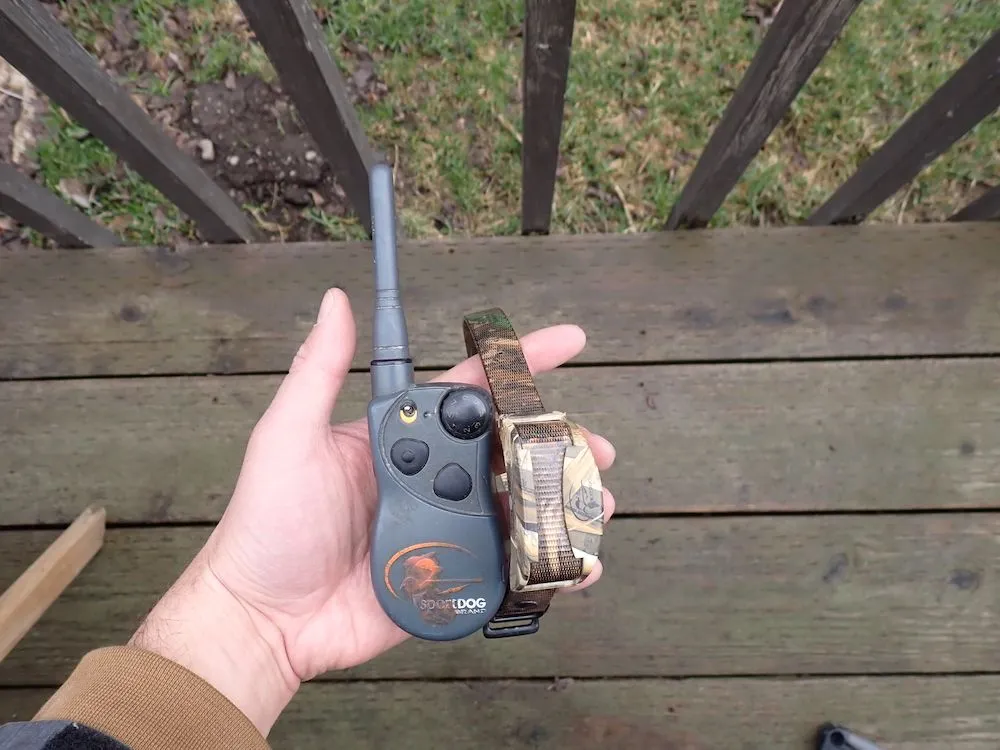
The 500-yard range is sufficient for waterfowl hunting and training scenarios but may limit use for wide-ranging upland dogs. The rechargeable lithium battery holds 50 to 70 hours of charge, though checking battery status requires pressing the stimulation button while the collar is off the dog—a feature that can lead to unexpected dead batteries if forgotten. Changing the transmitter mode requires a pen to release the mode button, adding complexity to setup.
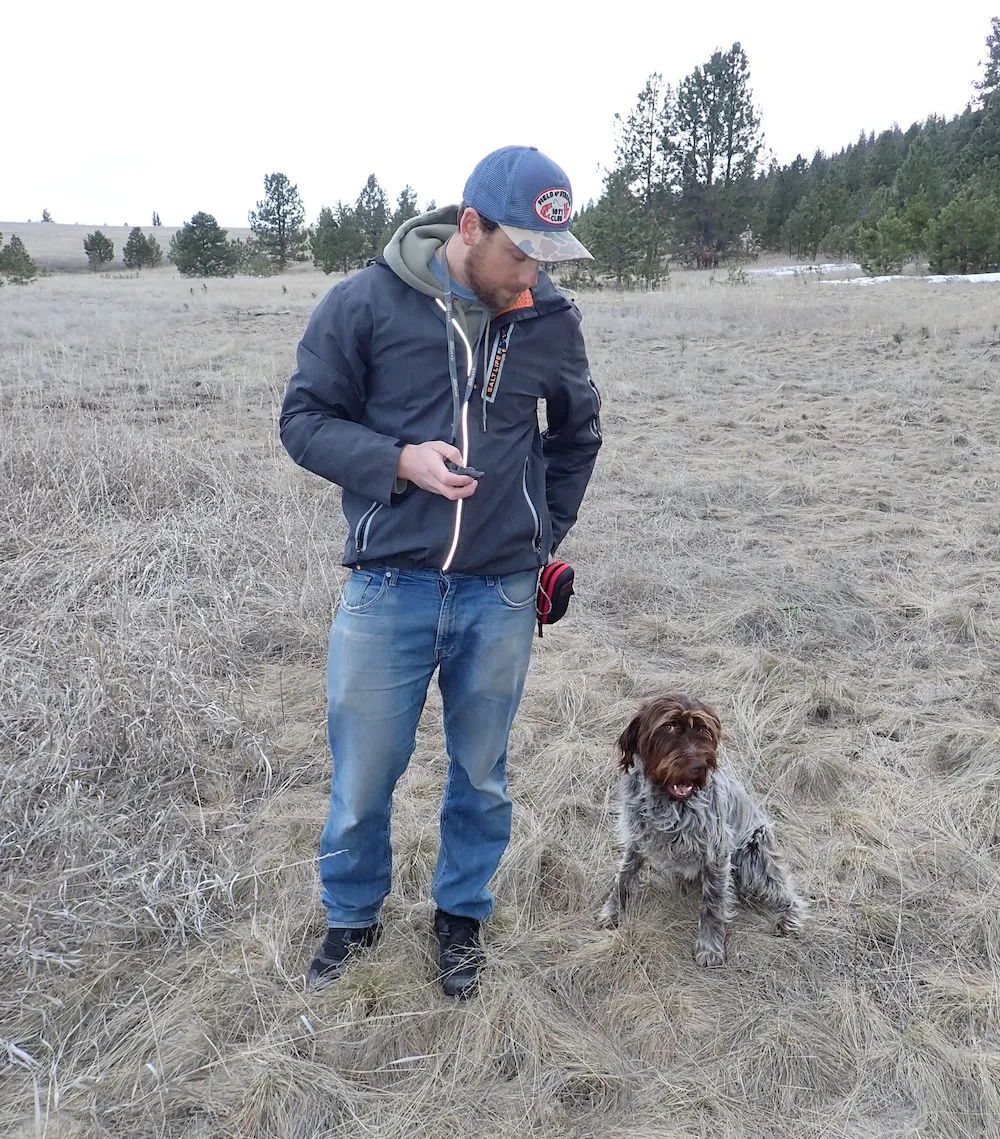 Hunter using SportDog WetlandHunter 425X Collar training dog
Best Beeper/Trainer: DT Systems SPR5300 Upland
The DT Systems SPR5300 Upland bridges the gap between simple bells and full GPS systems, offering beeper functionality combined with comprehensive training features. Unlike GPS systems that can lose signal in challenging terrain, this collar uses FM radio signals that maintain connection even when your dog is on the opposite side of a hill.
The collar’s powerful baritone beeper emits a clear, loud signal audible up to 400 yards according to DT Systems—a claim that testing supports, with the tone cutting through air and vegetation effectively. Multiple operating modes include run-point, point-only, and on-demand locate functions. A small LCD display helps toggle between modes.
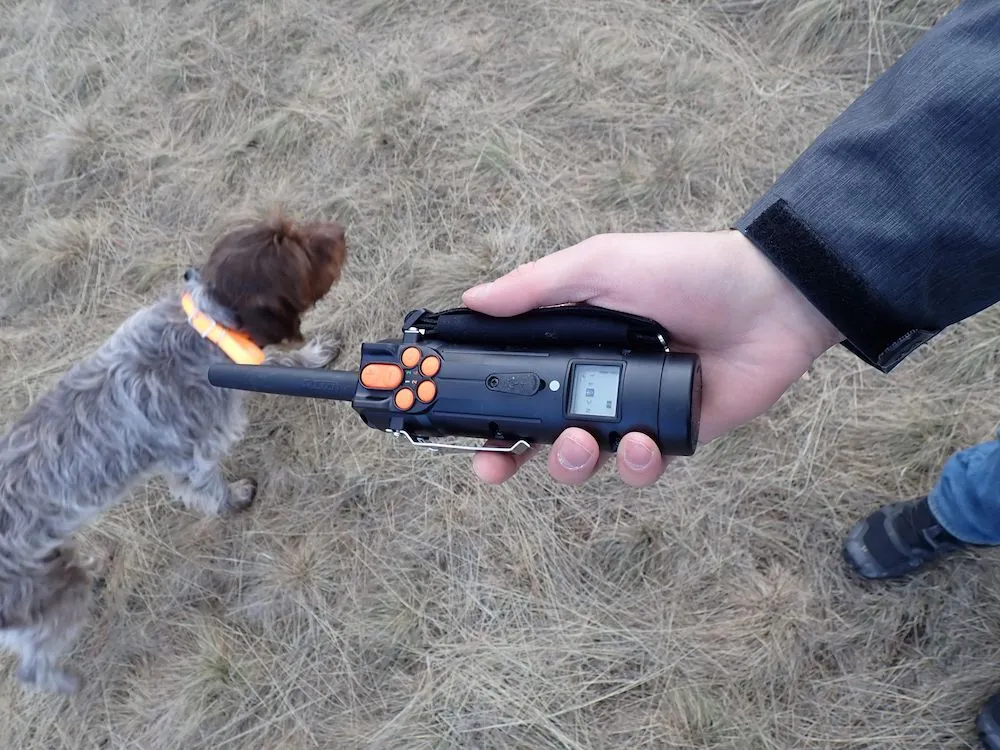
For training applications, the collar offers 24 stimulation levels plus vibration options. A combination button press allows quick “jump” to higher stimulation levels when immediate attention is needed. The transmitter’s awkwardly long shape mirrors the Garmin Pro 550 Plus design, making pocket storage challenging, though the built-in handle and clip provide alternative carrying options. The collar activation system requires tapping the transmitter to the collar—a method that can accidentally activate collars during transport if multiple units are stored together.
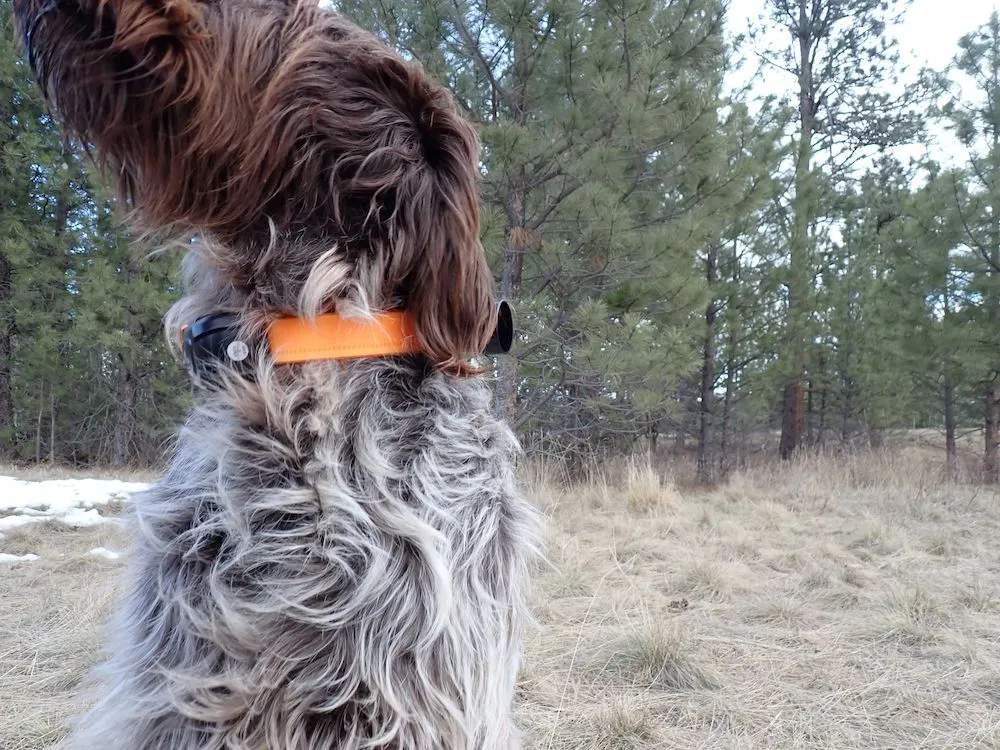 DT Systems SPR5300 Upland E-Collar on hunting dog during testing
Best Budget: DT Systems DD700
The DT Systems D.O.G. Director 700 delivers reliable training functionality at an accessible price point. The compact transmitter fits comfortably in hand and stores easily in pockets, while the system uses FM signal technology for consistent connection up to 700 yards—adequate for training scenarios, waterfowl hunting, and upland hunting with close-working dogs.
The handheld features three simple buttons: nick, continuous stimulation, and vibration/tone, with a dial on top for stimulation level selection. Ten levels of nick stimulation range from gentle for soft dogs to firm for more stubborn animals. Like its higher-priced sibling, the collar allows quick level jumping by pressing multiple buttons simultaneously.
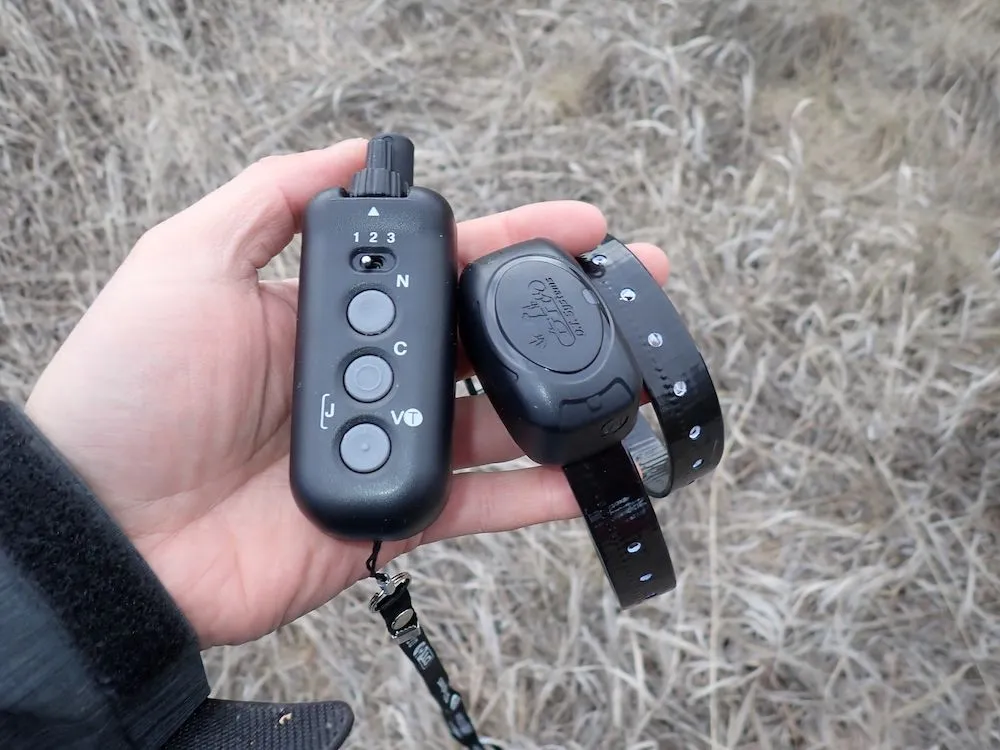 DT Systems DD700 E-Collar during testing
The fully waterproof collar accommodates up to three dogs, making this system suitable for multi-dog households or training operations. The primary drawback is the transmitter requiring a separate 9-volt battery purchase, while the collar itself is rechargeable. The same tap-to-activate system used on other DT Systems products presents the same potential for accidental activation during transport.
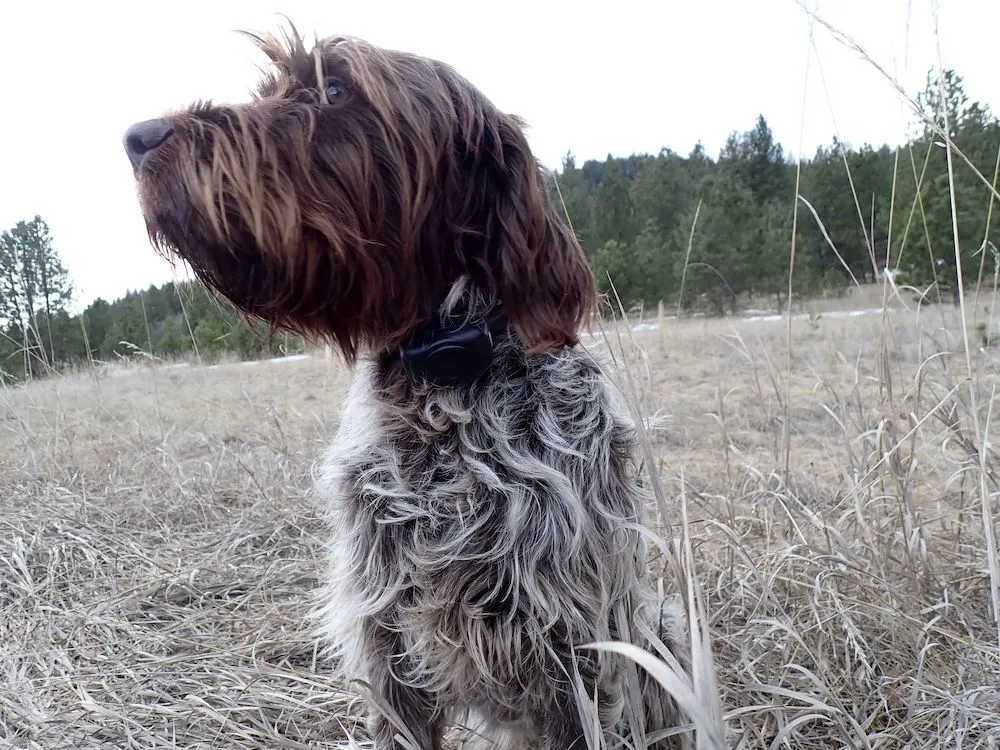 DT Systems DD700 E-Collar on hunting dog
Best Cellular: Garmin Alpha LTE
Cellular collars represent a newer category in the training collar market, using cell service rather than GPS for tracking. The Garmin Alpha LTE eliminates traditional range limitations, working wherever cellular coverage exists. No separate transmitter is needed—the system operates through your smartphone via the Garmin Alpha app, which displays maps, location markers, and your dog’s track in a simplified, user-friendly interface.
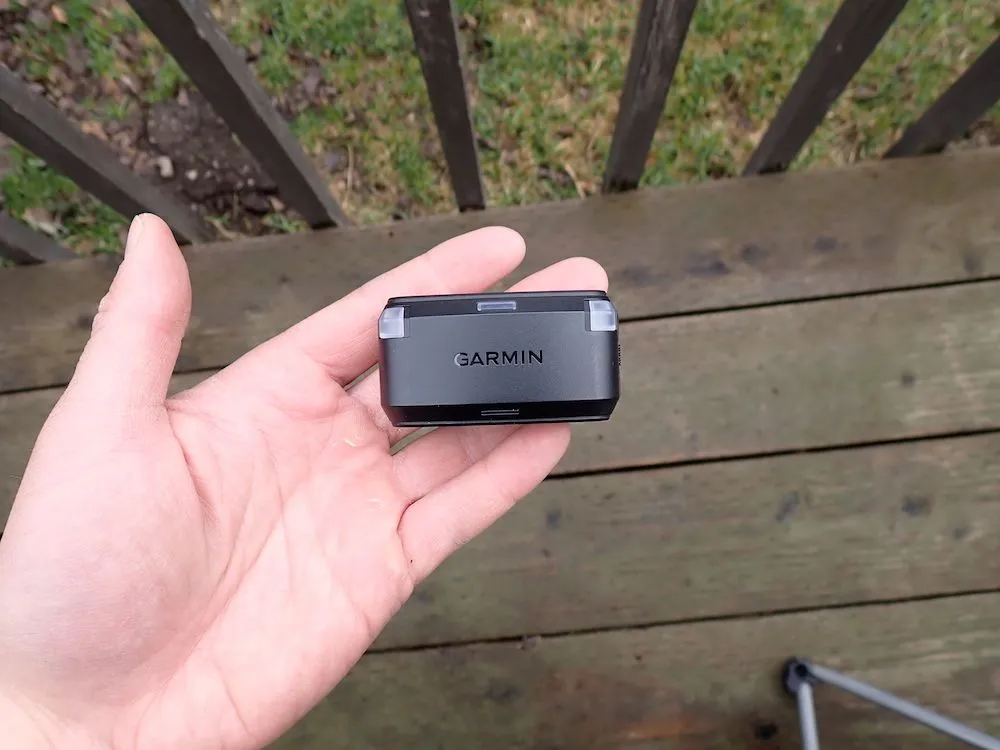 Garmin Alpha LTE Training Collar during testing
The lightweight design slides onto Garmin collar straps or other thin options, though it won’t fit standard Dayglo collars—a limitation for hunters wanting to keep it on a dog’s everyday collar as a safety precaution. The system has no stimulation settings, focusing solely on location tracking. This makes it ideal as a supplementary safety device paired with a traditional GPS or training collar, or as a standalone option for hunters who primarily stay within cellular coverage.
The major limitation is obvious: without cell service, the collar won’t work. For hunters spending significant time in remote areas, this isn’t a standalone solution. However, for those hunting near civilization or wanting additional peace of mind for their dog’s safety, the Alpha LTE provides an extra layer of security.
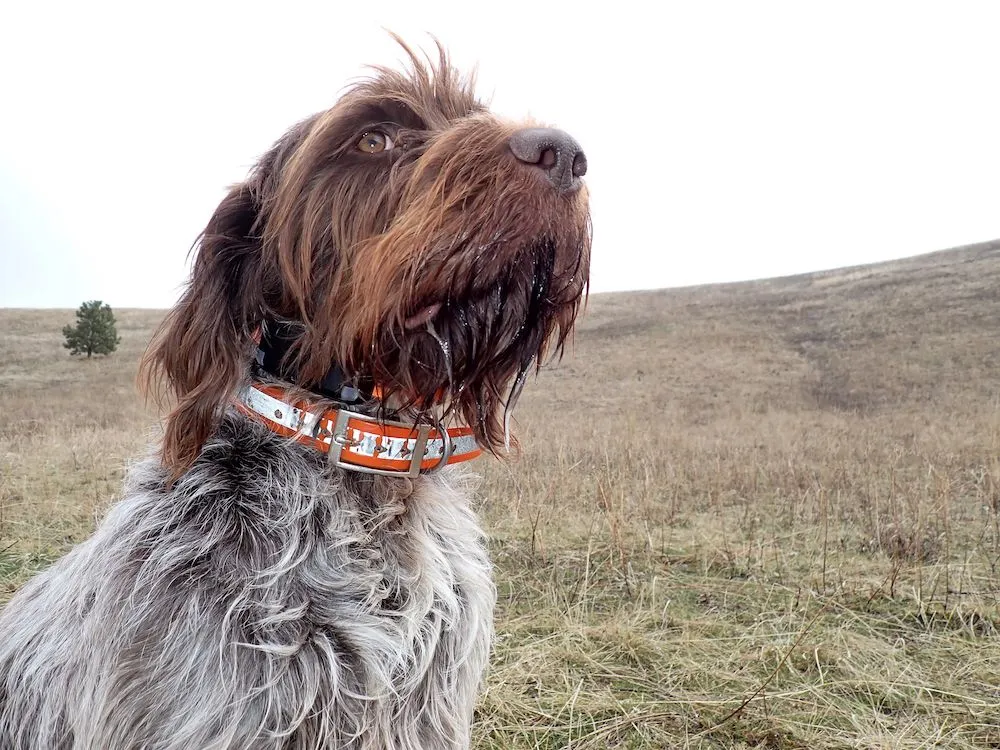 Hunting dog wearing Garmin Alpha LTE Training Collar
Best Bark Collar: SportDog NoBark SBC-10
Excessive barking can strain relationships with neighbors and create stress for both dog and owner. The SportDog NoBark SBC-10 addresses this issue with a reliable, waterproof collar that provides immediate correction without requiring your constant presence.
The collar offers two operating modes. The default “progressive correction” mode begins with low stimulation and increases only if barking continues—a humane approach that typically resolves barking issues effectively. For dogs needing stronger immediate correction, manual mode allows setting higher stimulation levels directly.
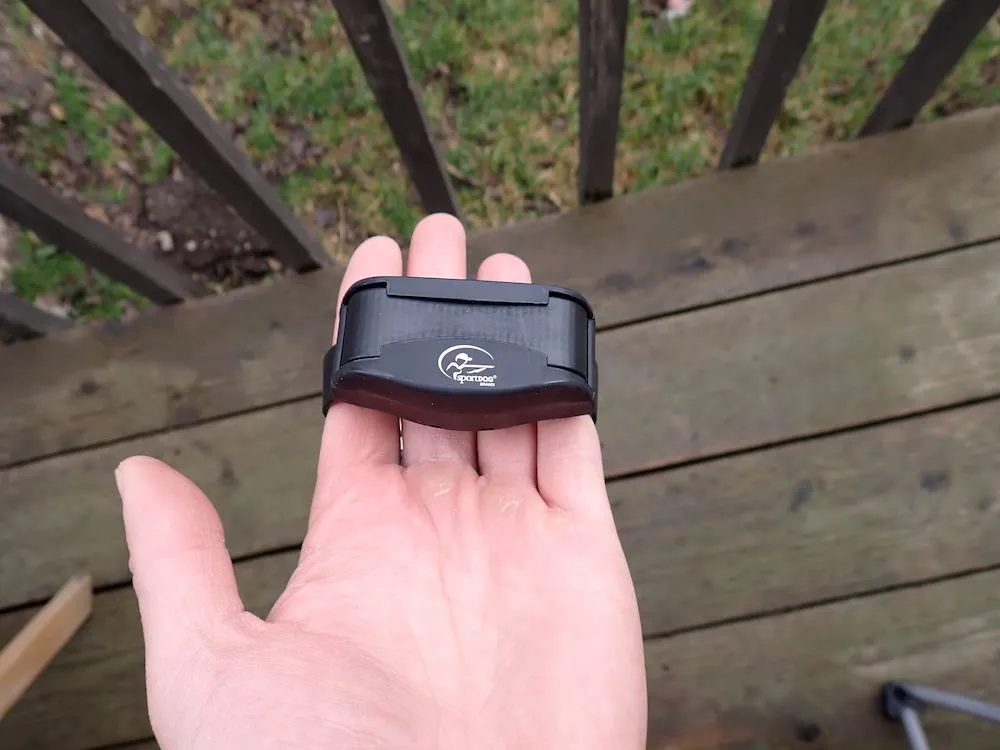 SportDog NoBark SBC-10 training collar during testing
The one limitation compared to some competitors is the absence of a vibration setting or vibration warning before static stimulation. While some owners prefer vibration as a less intense option, the progressive correction mode achieves similar results by starting at the lowest effective level.
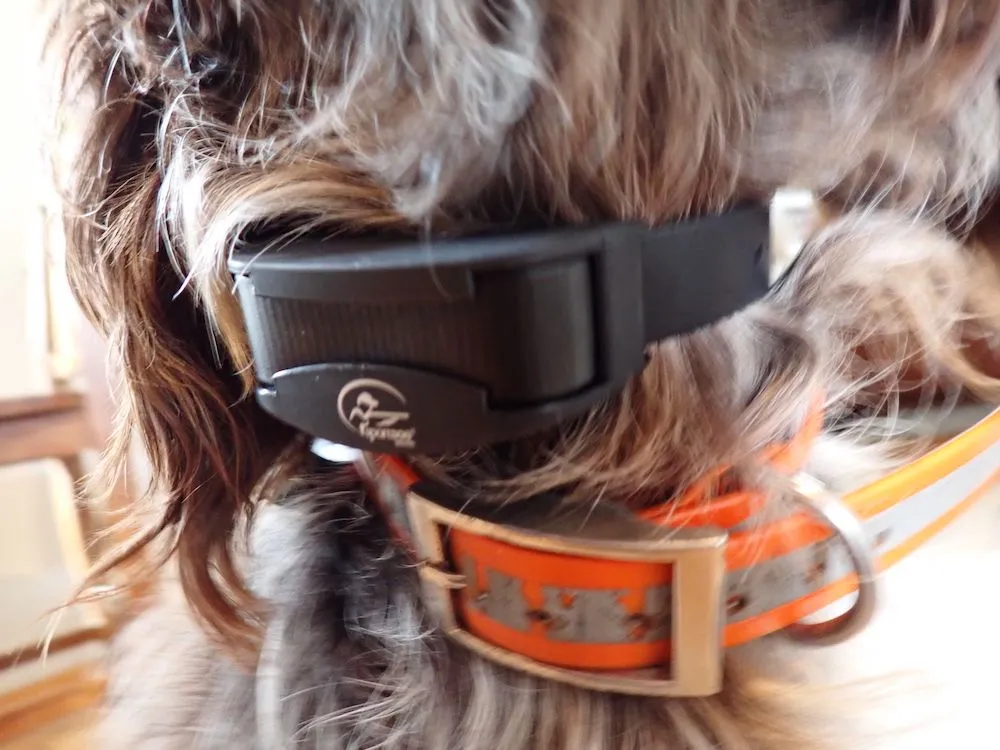 Hunting dog wearing SportDog NoBark SBC-10 Collar
How to Choose the Right Dog Training Collar
Selecting the appropriate training collar requires honest assessment of your specific needs. Consider how many dogs you need to train simultaneously, the range you require for your typical hunting or training scenarios, and what additional capabilities beyond basic training would benefit you.
Upland hunters following dogs through thick cover benefit tremendously from GPS tracking that shows both location and point status. Waterfowl hunters typically don’t need tracking capabilities, making simpler training collars more appropriate. A collar with excessive features can be as frustrating as one with insufficient capabilities.
All quality training collars offer a range of stimulation levels, allowing you to use the mildest effective correction. Many also provide tone and vibration functions as alternatives to stimulation. The key to humane use is consistency and timing—correcting behaviors in the moment so dogs understand the connection between action and consequence.
Frequently Asked Questions About Dog Training Collars
Are e-collars cruel?
Electronic collars deliver stimulation that can be inhumane when misused but are invaluable training tools when used correctly. They enable long-distance communication that allows immediate correction, with most training accomplished using very low stimulation levels or tone/vibration functions. High-level stimulation is reserved for dangerous behaviors like chasing deer or approaching snakes, where a few corrections can prevent serious harm.
Do dogs become collar-shy?
Dogs learn cause and effect quickly. Some owners use dummy collars to accustom dogs to wearing the device before introducing stimulation, preventing the association between collar and correction. Consistency in training helps dogs understand what behaviors trigger correction, making them responsive rather than fearful.
Can I use an e-collar in the house?
Yes, electronic collars are effective for eliminating household behaviors like counter-surfing or garbage raiding. You can train dogs to respond to commands like “get down,” or simply deliver stimulation so they associate the undesirable behavior with the unpleasant feeling. This works best when the collar is used consistently and the correction is timed to the exact moment of the unwanted behavior.
Why Trust Our Recommendations
With over 125 years of outdoor coverage, Field & Stream has established credibility through honest, authentic gear reviews. Our writers and editors live the outdoor lifestyle, bringing real-world experience to product evaluations. We test equipment in actual hunting and training conditions, covering both strengths and limitations to help readers make informed decisions. Whether you’re training your first bird dog or adding to a seasoned pack, these recommendations come from extensive field experience with the equipment we recommend.