
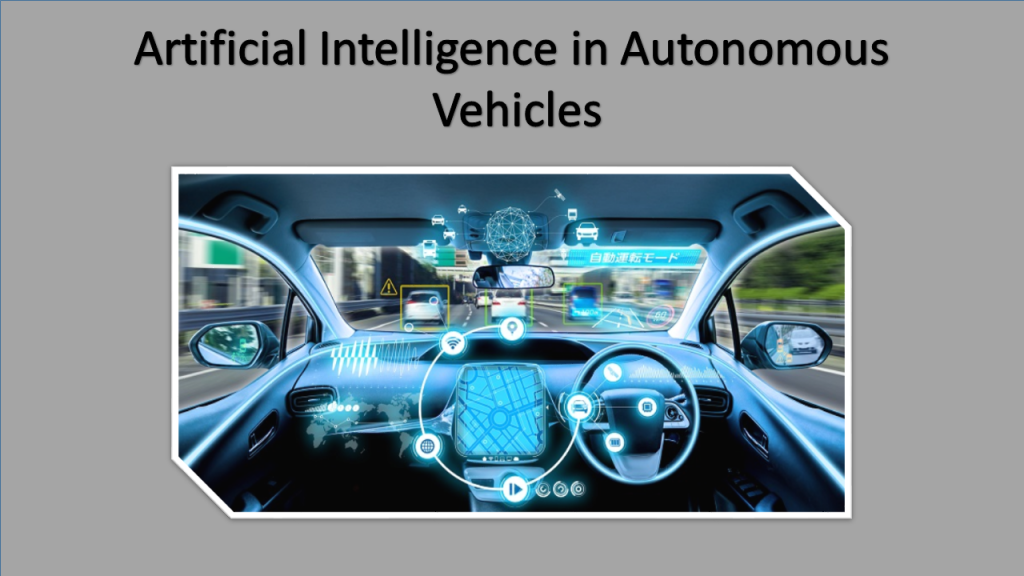
Artificial intelligence (AI) is no longer a futuristic concept; it is the fundamental engine driving the automotive industry toward a new era of autonomy. As self-driving cars transition from experimental prototypes to road-ready realities, AI serves as the digital “brain” required to navigate the complexities of the modern world. Human drivers possess a remarkable ability to process visual and aural cues at high speeds—detecting pedestrians, interpreting traffic lights, and reacting to unpredictable weather like fog or snow—all while maintaining safety. For a computer to replicate this, it requires an unprecedented level of sensory processing and predictive modeling.
The primary role of AI in an autonomous vehicle is to sense the environment, anticipate potential hazards, and recommend an immediate course of action. Whether the vehicle needs to apply the brakes for a sudden obstacle or navigate a complex construction zone, the AI must make split-second decisions with higher precision than a human. This technological leap is the result of a symbiotic relationship between advanced hardware, specialized software, and the rapid growth of trained neural networks.
The Transformation of the Car into a Mobile Data Center
In our daily lives, AI is already ubiquitous, powering everything from web searches to smartphone photography. However, applying this “smart” technology to the automotive sector is a far more complex challenge. Car manufacturers and innovative start-ups are leveraging AI to master computer vision, allowing vehicles to perceive the world with human-like understanding but with the added benefit of superhuman reaction speeds.
At the heart of this revolution are neural networks, a key feature of machine learning designed to mimic the patterns of the human brain. While the concept of neural networks has existed for decades, it is only recently that we have developed the computational power necessary to make them effective in real-time environments.
Initially, these complex tasks were handled by Central Processing Units (CPUs) and later accelerated by Graphics Processing Units (GPUs), which utilized parallel computing to boost speed. Today, the industry is moving toward dedicated neural network accelerators. these specialized components are significantly more power-efficient and effective at running “inferencing on the edge,” which is crucial for the high-stakes environment of a moving vehicle.
Achieving Real-Time Autonomy Through Edge Computing
One of the most significant breakthroughs in automotive AI is the ability to run sophisticated models locally on edge devices within the car. In the past, the heavy lifting of data processing was often relegated to the cloud. However, the “round-trip” time required to send data to a remote data center and back is too slow for a vehicle traveling at highway speeds.
By transforming the car into a “data center on wheels,” manufacturers can achieve:
- Reduced Latency: Real-time processing allows for immediate braking and steering adjustments.
- Enhanced Functional Safety: Local processing ensures the car remains operational even in areas with poor connectivity.
- Power Efficiency: Optimized hardware allows for high-performance AI without draining the vehicle’s energy reserves.
- Multi-core Flexibility: Systems can manage multiple sensory inputs (LiDAR, Radar, Cameras) simultaneously.
This shift toward local neural network execution ensures that the benefits of autonomous driving—safety, efficiency, and comfort—are delivered reliably and predictably.
Conclusion
The integration of artificial intelligence is the defining factor in the race toward fully autonomous vehicles. By replicating and eventually surpassing human cognitive abilities, AI enables cars to perceive, predict, and act in ways that were once thought impossible. As hardware continues to evolve and neural networks become even more sophisticated, the dream of a self-driving future is rapidly becoming our daily reality. The vehicle of tomorrow is not just a mode of transport; it is an intelligent, high-performance computing platform dedicated to safety and efficiency.
What are your thoughts on the integration of AI in modern vehicles? Share your views on the future of autonomous driving in the comments below or explore our other deep dives into automotive technology.
References
- Imagination Technologies. (2023). How do autonomous cars work? What software is used for autonomous vehicles.
- National Highway Traffic Safety Administration (NHTSA). Automated Vehicles for Safety.
- Society of Automotive Engineers (SAE). Taxonomy and Definitions for Terms Related to Driving Automation Systems for On-Road Motor Vehicles.