
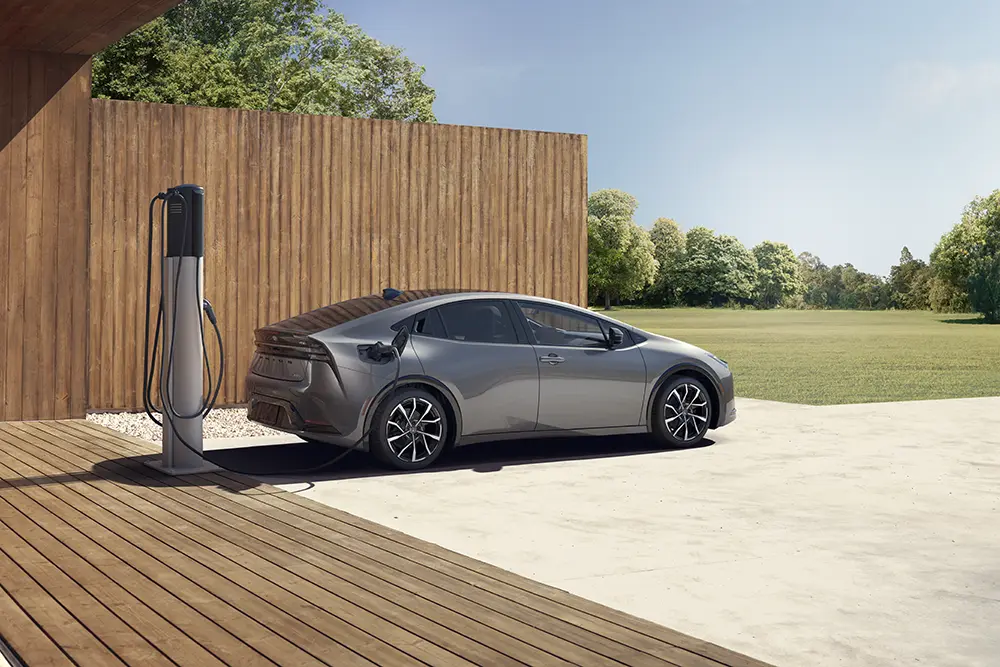
The 2014 Toyota Prius Plug-In represents a significant step in the evolution of hybrid technology, offering drivers the ability to complete short commutes on electric power alone while retaining the long-range flexibility of a traditional gasoline engine. For those considering an entry into the world of plug-in hybrids (PHEVs), this model presents a compelling, if somewhat specialized, option. It bridges the gap between the standard Prius and full electric vehicles, but it does so with its own unique set of performance characteristics, efficiency trade-offs, and driving dynamics that potential buyers need to understand.
Performance and Powertrain Overview
Under the hood, the 2014 Toyota Prius Plug-In utilizes a familiar hybrid powertrain, combining a 1.8-liter four-cylinder gasoline engine with a powerful electric motor. Together, this system generates a total system output of 134 horsepower. Power is delivered to the front wheels through a continuously variable transmission (CVT), a common feature in hybrids designed to optimize fuel efficiency by keeping the engine in its most effective rev range.
For drivers accustomed to traditional internal combustion engines, the CVT and hybrid system create a unique driving experience. While the 134 horsepower figure might seem modest, automotive critics note that it provides adequate, if not exhilarating, acceleration for most daily driving scenarios. The primary focus of this powertrain is clearly on maximizing fuel economy rather than delivering sporty performance.
Acceleration and Real-World Driving Experience
When it comes to acceleration, reviewers consistently describe the 2014 Prius Plug-In as lacking urgency. It is not a quick vehicle by conventional standards, and merging onto highways or climbing steep inclines often requires the gasoline engine to engage to provide sufficient power. This transition between electric and gasoline power is a critical aspect of the driving experience. While some test drivers report that the transition can occasionally feel a bit rough or abrupt, others find the system to be quite seamless and refined. The key takeaway is that the car has enough power for city commuting and steady highway cruising, but it is not designed for spirited driving.
The driving experience is further defined by the vehicle’s handling characteristics. Most automotive critics agree that the Prius Plug-In is not particularly engaging to drive. The handling is often described as “clumsy” or “sloppy,” with light steering that lacks the feedback enthusiasts might desire. However, for the average commuter, the trade-off is a ride that is generally smooth and compliant. The suspension is tuned to absorb road imperfections effectively, making it a comfortable vehicle for daily use, even if it doesn’t inspire confidence during aggressive cornering.
Efficiency: Electric Range vs. Gasoline Fuel Economy
One of the most critical aspects of any plug-in hybrid is its efficiency in both electric and gasoline modes. The 2014 Toyota Prius Plug-In presents a unique dichotomy in this regard.
When operating in electric-only mode, the EPA estimates the vehicle achieves 95 MPGe (miles per gallon equivalent) in combined city and highway driving. While impressive, this figure is actually lower than what many of its plug-in hybrid rivals achieve. More significantly, the electric-only driving range is a modest six miles, according to the EPA. Toyota states that the vehicle can reach speeds of up to 62 mph on electric power alone, but the limited range means that the electric motor is best suited for short, low-speed trips around town. Competitors in the plug-in hybrid segment often offer significantly higher electric-only ranges and top speeds, making them more capable of completing longer commutes without using gasoline.
However, the narrative shifts dramatically when the vehicle runs on its gasoline engine. Once the electric charge is depleted, the Prius Plug-In functions much like a standard Prius hybrid. In this mode, it achieves an excellent 51 mpg in the city and 49 mpg on the highway. This fuel economy figure is a standout advantage, surpassing many competing plug-in hybrids that tend to be less efficient when operating solely as a gasoline-electric hybrid. For drivers with longer commutes or those who frequently take road trips, this high gasoline efficiency can be a significant long-term cost-saver.
Charging and Battery Technology
A key differentiator from the standard Toyota Prius is the inclusion of a lithium-ion battery pack and a charging port. The 2014 Prius Plug-In can be charged by connecting it to a standard 120-volt household outlet using the provided charging cable. This accessibility is a major convenience for owners who may not have access to dedicated charging infrastructure.
Charging times are another area where this model shows its practicality. A fully depleted battery can be fully recharged in approximately three hours using a standard 120-volt outlet. For those with access to a 240-volt outlet, the charging time is reduced to about one and a half hours. While automotive critics often express disappointment with the vehicle’s limited electric-only range, they consistently praise the fast charging times, which make it easier to top up the battery between short trips.
Braking and Regenerative Systems
Like most hybrids, the 2014 Toyota Prius Plug-In employs a regenerative braking system. This technology captures kinetic energy during braking and deceleration, converting it into electricity to recharge the battery. While effective for improving efficiency, the feel of regenerative brakes can take some getting used to.
Test drivers note that the brake pedal feel is different from conventional braking systems. The transition between regenerative braking and mechanical friction braking can feel unnatural or “spongy” to those who are new to hybrid vehicles. It requires a slight adjustment in driving style to achieve smooth, consistent stops. However, for drivers already familiar with hybrid systems, this characteristic becomes a normal part of the driving experience.
Conclusion: Is the 2014 Toyota Prius Plug-In Right for You?
The 2014 Toyota Prius Plug-In is a vehicle of trade-offs. It offers a compelling combination of short-range electric capability for errands and class-leading gasoline fuel economy for longer journeys. Its fast charging times and smooth ride quality make it a practical choice for daily commuting. However, its limited electric-only range, lackluster acceleration, and unengaging handling are significant considerations.
For drivers whose daily commutes are very short—typically under six miles—and who can charge at home, this model can significantly reduce gasoline consumption. For those who frequently drive longer distances, the exceptional gasoline fuel economy ensures that overall running costs remain low. Conversely, buyers seeking a plug-in hybrid with a substantial electric-only range or a more dynamic driving experience may find rivals more appealing.
Ultimately, the 2014 Toyota Prius Plug-In excels as a practical and efficient vehicle that prioritizes fuel savings over performance. It is a logical choice for the eco-conscious commuter who values the security of a gasoline engine for longer trips but wants to dip their toes into the world of electric driving.
References
- U.S. Environmental Protection Agency (EPA). (2014). Fuel Economy of 2014 Toyota Prius Plug-In. fueleconomy.gov.
- Toyota Motor Sales, U.S.A., Inc. (2014). 2014 Prius Plug-In Hybrid Product Information.
- Automotive Review Aggregate Data. (2014). 2014 Toyota Prius Plug-In Performance Analysis.