
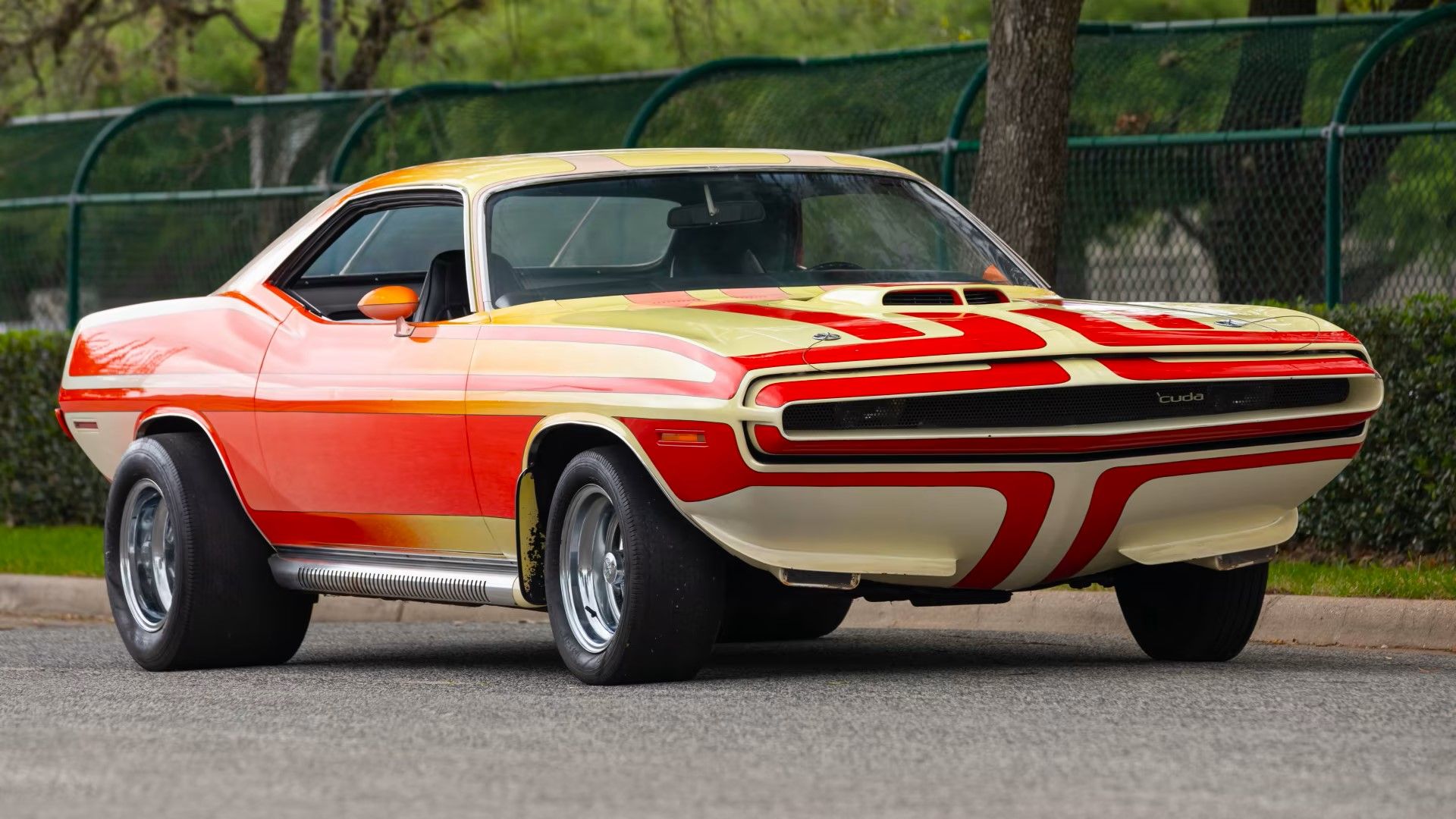
In 1971, the Plymouth Division of Chrysler introduced its performance lineup under a bold banner: “The Rapid Transit System” (RTS). It was marketed as more than just a collection of big motors and fat tires; it was a comprehensive engineering approach to high-performance machinery. Among the elite members of this system, the 1971 HEMI® ‘Cuda stands as the ultimate “stocker” to ever roll off an assembly line.
This specific Tor-Red example is a remarkable “survivor,” a rolling time warp that captures the raw essence of 1971 American muscle. Stripped of unnecessary fluff and ordered with a focus on straight-line speed, this vehicle represents a rare breed, being one of only 48 TorqueFlite®-equipped ‘Cudas produced with the legendary HEMI engine that year.
The Heart of the Beast: The 426 HEMI Engine
The 426 HEMI engine is the crown jewel of Mopar performance. Featuring hemispherical combustion chambers, massive valves, and dual 4-barrel Carter AFB carburetors, this powerplant was a terror on both the street and the drag strip. With a 10.2:1 compression ratio and a high-lift, long-duration camshaft, it produced a gross rating of 425 horsepower and 490 lbs-ft of torque.
Interestingly, 1971 was the final year of production for this iconic Gen II powerplant. While the gross horsepower remained listed at 425—consistent with Street HEMIs since 1966—this was also the year the industry began transitioning to “SAE net horsepower” ratings, which placed the HEMI at a still-formidable 350 net hp.
Distinctive 1971 Styling and the Shaker Hood
The 1971 model year brought significant styling changes to the Barracuda line. The front end was revised to include a new vertical-sectioned recessed grille with six distinct “gill” openings and a quad-headlight configuration, replacing the single headlights of 1970.
For HEMI-powered cars, the “Shaker” hood and scoop were standard equipment. This intake actually vibrated—or “shook”—with the engine’s torque, sticking up through a hole in the hood to draw in cool, high-pressure air. Beyond the Shaker, the ‘Cuda was identified by four decorative gills on the front fenders, a nod to its predatory fish namesake.
Interior Sophistication and the Slap-Stick Shifter
Inside, the third-generation Barracudas featured what the motoring press described as “space ship cabin” styling. The sculptured door panels were made of polypropylene plastic, giving the car a futuristic feel for the era.
This particular car maintains a “bare-bones” racing aesthetic, opting for standard vinyl buckets rather than leather. A key highlight is the Slap-Stick shifter mounted in the center console. This T-bar handle featured special linkage designed for the 727 TorqueFlite automatic transmission, allowing drivers to “slap” the gear lever forward for lightning-fast, positive gear changes without accidentally hitting Neutral.
Built for the Track: Super Track Pak and Chassis Details
The performance of this ‘Cuda wasn’t limited to what was under the hood. It was equipped with the A34 Super Track Pak option, which upgraded the standard 8 3/4-inch rear axle to the massive 9 3/4-inch Dana 60 unit. This heavy-duty rear end was fitted with 4.10:1 gears, designed specifically for maximum acceleration.
The exterior maintains its “sleeper” or racing-first look with body-color steel wheels and “dog dish” hubcaps. These were often chosen by performance-minded buyers who intended to swap them out for aftermarket mag wheels immediately after purchase. The car also features the “double fender tag” system; HEMI ‘Cudas required unique front fenders with modified lips to accommodate the larger F60-15 Goodyear Polyglas GT tires.
A Legacy of Racing Success
The 1971 HEMI ‘Cuda’s reputation was further cemented by the legendary racing duo of Ronnie Sox and Buddy Martin. As the premier Plymouth drag racing team, their 1971 Pro Stock ‘Cuda was nearly unbeatable. They spent 265 days a year on the road, conducting performance clinics at Chrysler-Plymouth dealerships and showcasing the dominance of the Rapid Transit System to fans across the nation.
Today, with its original broadcast sheet still intact and showing a mere 19,250 miles on the odometer, this Tor-Red HEMI ‘Cuda remains one of the most desirable artifacts from the golden age of American muscle. It serves as a testament to a time when Plymouth “came through for you” with the most potent stock performance cars ever built.
References:
- Maxwell, J. (2023). The Rapid Transit System: 1971 Plymouth Performance. Dodge Garage.
- Plymouth Division, Chrysler Motors Corporation. (1971). 1971 Rapid Transit System Dealer Brochure.
- Sox, R. (1989). Interview on the Chrysler-Plymouth Performance Clinics.
What are your thoughts on the 1971 styling changes compared to the 1970 models? Share your comments below and check out our other classic muscle car deep dives!