
Shopping for a gaming chair sounds straightforward — until you actually try to find one that fits. For many women, it’s not just about picking the most popular model. It’s about how the chair fits your body, supports your posture, and accommodates the way you actually sit. Most chairs on the market are designed around average male proportions, leaving women with options that are too wide, too deep, or too rigid for cross-legged sitting. If you’re petite, your feet may not even touch the floor. If you’re curvy, the seat might feel uncomfortably tight. Finding a comfortable gaming chair for women that checks every box takes more than a quick search — it takes knowing what to look for.
This guide cuts through the noise. Instead of ranking the most popular models, it breaks down what actually works based on your body type, how you sit, and what makes a chair genuinely comfortable for long sessions.
Common Pain Points Women Face with Gaming Chairs
Before diving into what to look for, it helps to understand why so many gaming chairs fall short for women in the first place. From sizing mismatches to inadequate lumbar support, here are the most frequent frustrations:
| Pain Point | Why It Happens | How It Affects Women |
|---|---|---|
| Poor overall fit | Designed around average male proportions | Awkward posture, lack of support for smaller or curvier builds |
| Too big for petite users | Seat depth too long, backrest too tall | Feet dangle, lumbar support sits too high, lower back unsupported |
| Too tight for curvy/plus-size women | Narrow seat base, armrests positioned too close | Hip and thigh pressure, restricted movement |
| No cross-legged sitting | Racing-style raised bolsters | Side bolsters block flexible postures like leg-tucking |
| Back pain despite lumbar support | Lumbar pillow misaligned or too stiff | Soreness and pinching instead of relief |
| Instability on smooth floors | Wheels glide too easily | Difficult to stay stable while leaning or shifting |
| Headrest discomfort | Built-in curve doesn’t suit smaller necks | Neck pressure, misalignment, often removed entirely |
Understanding these pain points makes it much easier to evaluate which features actually matter when choosing your next chair.
What Women Should Look for in a Gaming Chair
Comfort starts with fit. For women, that means paying close attention to seat dimensions, back support design, armrest adjustability, and overall posture support. Getting these elements right — especially if you’re petite, curvy, or tend to sit cross-legged — can transform a chair from barely tolerable to genuinely enjoyable.
1. Seat Height, Depth, Width, and Backrest Height
Comfort isn’t one-size-fits-all — especially when it comes to gaming chairs. Women often struggle with chairs that feel either too large or too restrictive, simply because most designs are built for a different body type. Whether you’re petite and slim or curvy and plus-sized, seat and backrest dimensions are the first thing to evaluate.
For petite or slim women, look for a chair with a shorter seat depth and lower backrest height. This ensures your back stays in contact with the chair without leaving your legs unsupported or your headrest pushing against the wrong part of your neck.
For curvier or plus-sized women, prioritize a wider seat base and a taller backrest. A wider seat relieves pressure on the hips and thighs, while a taller backrest provides full spinal coverage.
Four key measurements determine long-term comfort:
Seat height should allow your feet to rest flat on the floor with your knees at roughly a 90-degree angle and your back lightly touching the backrest. This distributes weight evenly and reduces thigh pressure.
Seat depth is equally important. There should be a 2–3 inch gap (roughly fist-sized) between the front edge of the seat and the back of your knees. A seat that’s too deep leaves your lower back unsupported and compresses your thighs. A seat that’s too shallow forces your legs to hang off the edge and strains your calves over time.
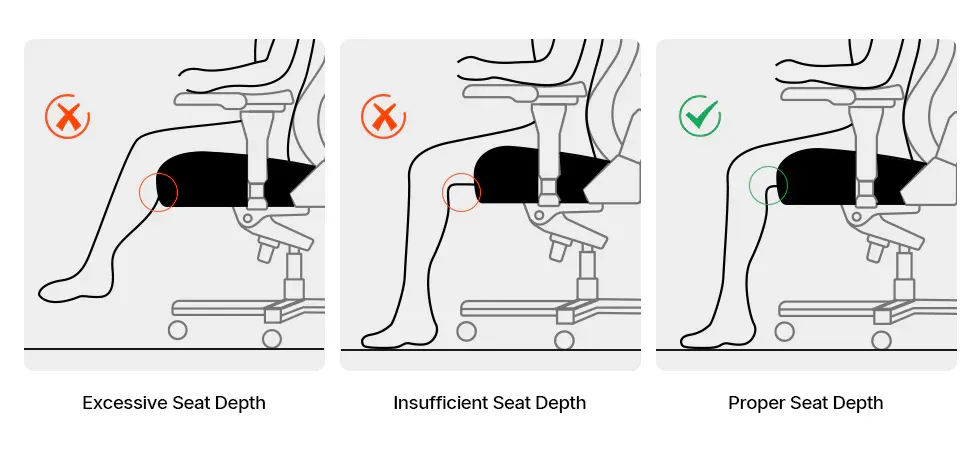
Seat width and backrest height affect stability and overall support. For women with wider hips, it’s important to check the actual usable seat width, not just the total width listed in specs — some chairs have raised bolsters that significantly reduce the functional sitting area. A seat that’s too narrow limits movement; one that’s too wide throws off armrest and lumbar alignment. A backrest that’s too tall pushes the neck forward, particularly noticeable for shorter users.
If possible, test a chair in person. If not, use a chair at home to simulate the experience and check how your legs and back align before committing to a purchase.
2. Back Support: Lumbar Design and Recline Tension
For long gaming or work sessions, spinal support isn’t optional — it’s essential. The spine naturally forms an “S” curve, and when that curve collapses during prolonged sitting, pressure concentrates in the lower back. If the backrest doesn’t support this curve, particularly around the third and fourth lumbar vertebrae, soreness and muscle fatigue follow.
For women, this is often more pronounced due to differences in body shape and natural posture. A lumbar cushion fixed too high, too low, or in the wrong position can cause more discomfort than it solves. A well-designed ergonomic chair addresses this with:
- Built-in or pop-out lumbar support that adjusts vertically to your spine
- Dynamic lumbar systems that move with your body
- Integrated raised lumbar zones that contour to the natural lower back curve
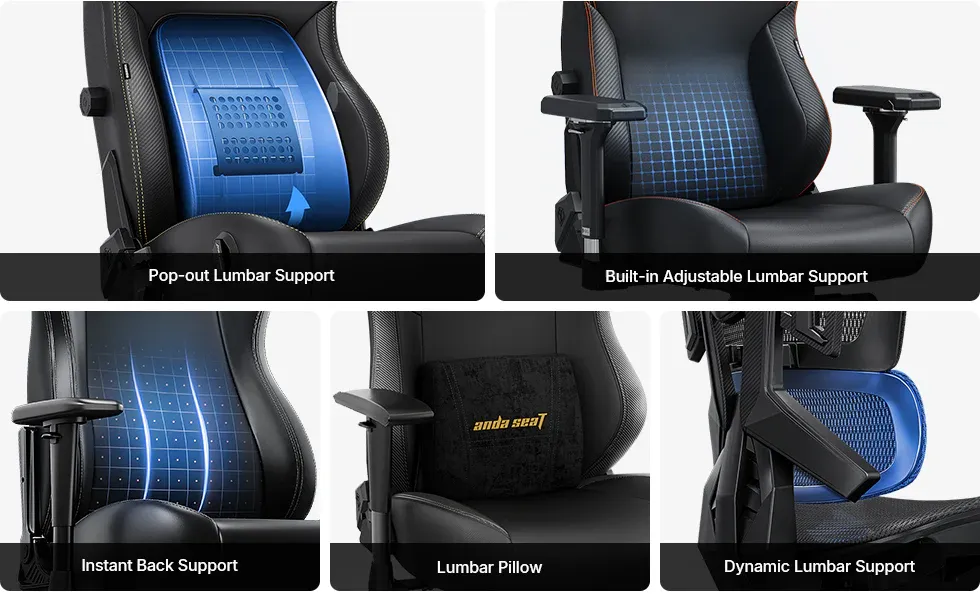
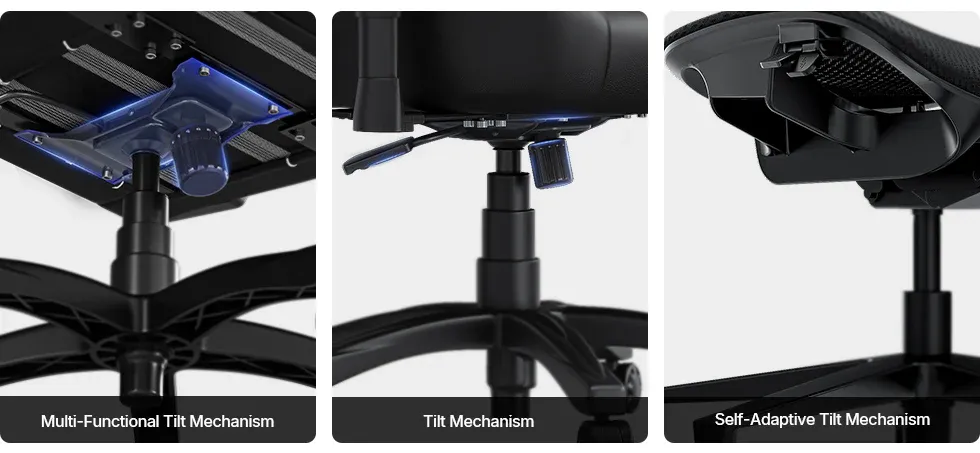
Static support, however, is only part of the equation. Recline tension matters just as much. Many women find standard gaming chair recline mechanisms too stiff to use comfortably. There are two main types to be aware of:
Manual recline tension uses a knob to adjust spring resistance based on your weight. It’s functional, but can be tricky to fine-tune for lighter users.
Self-adaptive recline systems automatically respond to body weight, providing smoother movement and less resistance — particularly useful if you prefer effortless adjustments or have less upper-body strength.
3. Armrests and Headrest
Armrests and headrests are frequently overlooked, but they significantly affect daily comfort — especially for women.
According to CDC anthropometric data, the average shoulder width for women is around 14 inches (36 cm). Accounting for natural variation and the way arms rest slightly outward, the ideal armrest support range generally extends 3–5 cm beyond shoulder width. A seat width of roughly 44–48 cm tends to feel most comfortable for the majority of women.
When evaluating armrests, look for at least 3D adjustability covering height, depth, and rotation. This lets you fine-tune positioning so your arms rest naturally without reaching forward or feeling cramped. Lateral (side-to-side) adjustment is especially helpful for accommodating different shoulder widths.
For headrests, many fixed designs fail women with shorter torsos because the neck curve doesn’t align properly. An adjustable headrest — ideally one that also tilts — provides meaningful neck support and helps maintain posture during extended sessions.
4. Upholstery and Color Options
The two most common upholstery choices for gaming chairs are leatherette and linen fabric, and each has distinct advantages depending on your priorities.
Leatherette is easy to clean, durable, and offers a polished aesthetic. It works well for those who want a sleek, unified setup. Linen fabric is softer and more breathable, making it noticeably more comfortable in warmer environments or during long hours of uninterrupted sitting.
For women who care about color and aesthetics, leatherette typically offers the widest variety — including white, pink, purple, orange, green, and limited-edition collaboration designs — making it easier to match a chair to a personal workspace theme.
Mesh upholstery, common in ergonomic chairs, offers the best airflow and breathability, though color options are usually more limited. For women who prioritize function and all-day comfort over bold styling, a well-designed mesh chair is an excellent alternative.
Top Ergonomic Chairs for Female Body Frames
Finding the right gaming chair often means looking beyond generic top-10 lists. A chair that truly fits should match your body shape, your sitting habits, and your comfort preferences. Here are two standout options from AndaSeat that offer ergonomic design tailored to a wide range of female users.
AndaSeat Novis — Best Budget Pick for Everyday Comfort
The AndaSeat Novis is the most accessible ergonomic chair in AndaSeat’s lineup, offering dependable support without unnecessary bulk. While not designed exclusively for petite users, its slightly slimmer frame makes it a practical everyday choice for women who want solid lumbar support without overspending.
Why it works for women:
- Built-in raised lumbar support promotes healthy posture throughout the day
- Relatively flat side bolsters provide subtle thigh support without restricting movement
- 60 kg/m³ cold-cure foam delivers the right softness for cross-legged sitting, leg-tucking, or sideways positioning
- Height-adjustable armrests for customized arm positioning
- Available in linen fabric or PVC leatherette
- 155° recline with 15° rocking function, ideal for breaks or relaxed viewing
- Full tilt mechanism with adjustable tension lets you control recline resistance by body weight
- L-size fits users between 5’1″ and 6’3″ (77–198 lbs), covering a wide range of builds
| Spec | Details |
|---|---|
| Upholstery | PVC Napa Leather, Linen Fabric |
| Sizes | L and XL |
| Colors | Elegant Black, Ash Gray |
| Adjustability | Height-adjustable armrests, 90°–155° backrest recline, seat height |
| Lumbar Support | 5 cm raised integrated lumbar |
| Recommended Weight (L) | 35–90 kg (77–198 lbs) |
| Recommended Height (L) | 155–190 cm (5’1″–6’3″) |
| Seat Height (L) | 17.5″–21.5″ |
AndaSeat Kaiser 3 — Best All-Around Chair for Most Women
The AndaSeat Kaiser 3 is AndaSeat’s most established model, delivering full adjustability and multiple size options to suit a wide range of female users. Its 4-way adaptive lumbar system and magnetic neck pillow respond to your posture throughout the day, making it equally effective for upright productivity sessions and relaxed gaming.
Why it works for women:
- 4-way adaptive lumbar system and magnetic neck pillow for personalized, posture-responsive support
- Available in L and XL sizes; the L size suits most average-height women
- 4D/5D armrests with precise, smooth adjustment range
- Wide seat base with high-density foam for flexible postures — including cross-legged, tucked-leg, and leaning positions
- Available in vibrant and soft-tone colors including pink, white, blue, orange, and more
- 155° recline with 15° rocking for transitions between focused and relaxed postures
- Multi-tilt mechanism with adjustable tension for body weight-based recline resistance
| Spec | Details |
|---|---|
| Upholstery | DuraXtra Leatherette, EverSoft Linen Fabric |
| Sizes | L and XL |
| Colors | Elegant Black, Robin Egg Blue, Creamy Pink, Bentley Brown, Cloudy White, Blaze Orange, Classic Maroon, Ash Gray, Carbon Black |
| Adjustability | 4D armrests, 90°–155° backrest recline, seat height |
| Lumbar Support | 4-way built-in adjustable lumbar |
| Head Pillow | Magnetic head pillow |
| Recommended Weight (L) | Up to 120 kg (260 lbs) |
| Recommended Height (L) | 150–190 cm (4’11″–6’2″) |
| Seat Height | 17.52″–20.08″ |
Extra Tips: How to Get the Most Out of Your Gaming Chair
Even the best gaming chair needs good habits to deliver its full potential:
- Use a footrest or cushion when sitting cross-legged or tucking your legs to maintain comfortable height alignment
- Change your posture regularly to avoid stiffness from holding one position too long
- Adjust armrests and monitor height together to reduce shoulder and neck strain
- Take a standing break every 45–60 minutes to promote circulation and reduce long-term fatigue
Small adjustments like these can significantly extend how long you sit comfortably, turning any well-fitted chair into a long-term investment in your health.
Conclusion
For women, finding a genuinely comfortable gaming chair isn’t just about aesthetics or brand name — it’s about dimensions that match your body, support that aligns with your spine, and flexibility that accommodates the way you actually sit. Whether you prioritize budget-friendly reliability like the AndaSeat Novis or full-featured adjustability like the Kaiser 3, the key is choosing a chair built around your needs, not someone else’s.
The right chair makes long sessions feel manageable. The wrong one makes every hour a reminder that it wasn’t designed for you. Now that you know what to look for, you’re equipped to make a choice that genuinely works.
Ready to find your fit? Explore the full range of AndaSeat gaming chairs and use the sizing guide to match your measurements before you buy.
References
- AndaSeat Official Product Pages: Novis Series, Kaiser 3 Series
- AndaSeat Blog: How to Choose the Right Gaming Chair in 2025, How to Choose the Right AndaSeat Gaming Chair Size
- CDC National Health Statistics Reports: Anthropometric Reference Data for Children and Adults