
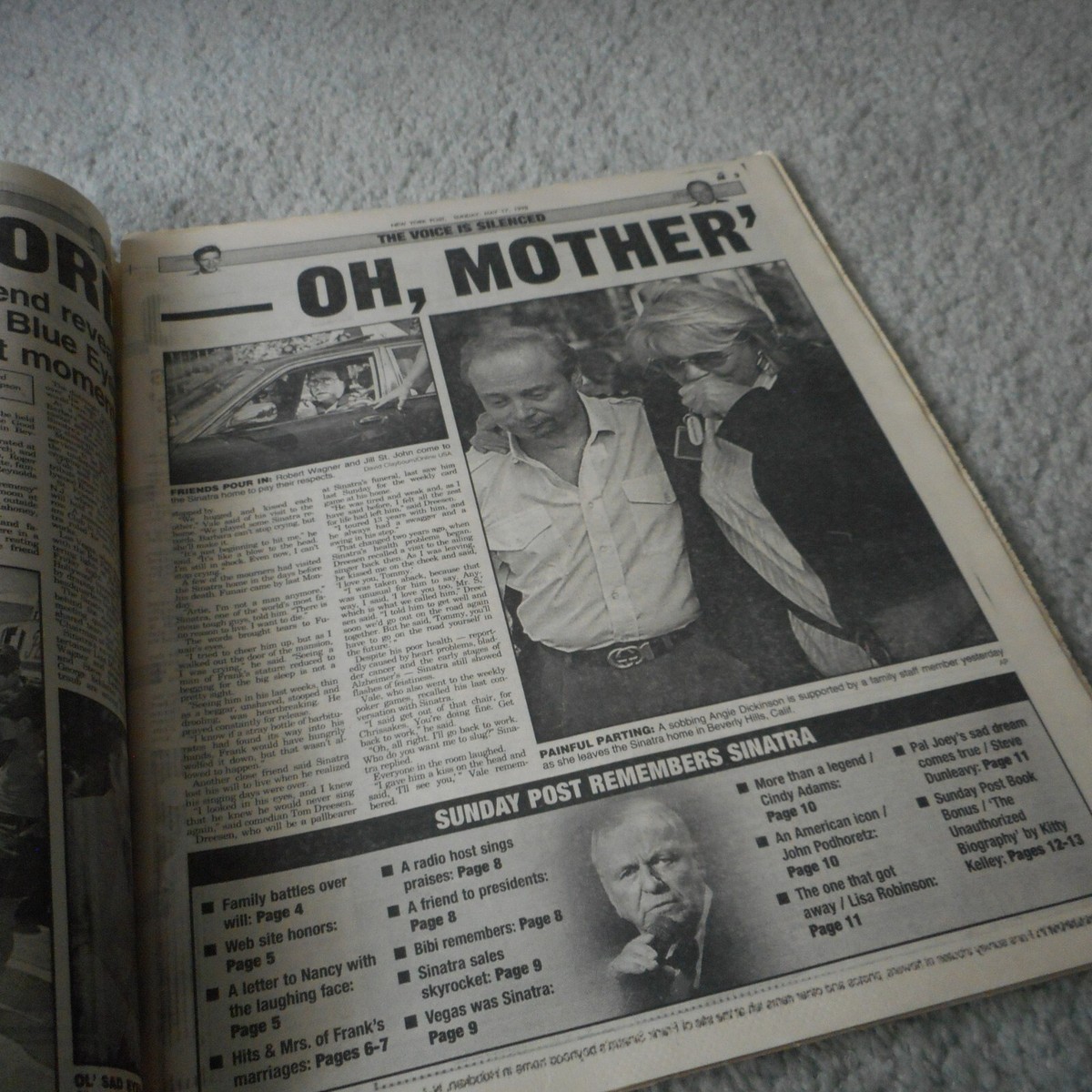
Frank Sinatra, an icon of American music and culture, passed away on May 14, 1998, at the age of 82. His death marked the end of an era, leaving a void in the entertainment world and a profound sense of loss for his millions of fans. This article delves into the poignant final days of Ol’ Blue Eyes, his passing, and the funeral arrangements that followed, offering a glimpse into the emotions and experiences of his family during this difficult time.
A Lingering Desire for the Future
As the millennium approached, Frank Sinatra harbored a strong desire to witness its dawn. In the months leading up to his death, he expressed his determination to be a part of it. When his daughter, Tina Sinatra, mentioned there were only eighteen months left, he responded with characteristic optimism, “Oh, I can do that. Nothin’ to it.” This sentiment underscored his enduring spirit and his refusal to be defined by his age or declining health.
The Call of May 14th, 1998
The evening of May 14, 1998, brought devastating news. At precisely 11:10 PM, Rex Kennamer, a close associate, contacted Tina Sinatra with the somber words, “I have bad news, we lost him.” The initial confusion quickly turned to heart-wrenching certainty as he confirmed, “Your father. I’m sorry.”
Earlier that evening, around 9:00 PM, Frank Sinatra’s condition had worsened, leading to his immediate hospitalization. Doctors at Cedars-Sinai Medical Center in Los Angeles attempted resuscitation for approximately 1.5 hours. Despite their tireless efforts, they were unable to revive him. At 10:50 PM, Frank Sinatra succumbed to a heart attack. It was shortly thereafter that Tina Sinatra received the call that would forever change her life.
A Daughter’s Farewell
Upon hearing the news, Tina Sinatra immediately called her sister Nancy, and together they rushed to the medical center. The scene that greeted them was one of profound grief and quiet dignity. Tina described finding her father lying peacefully, eyes closed, hands placed over his chest. “My father lay facing us, eyes closed, hands over his chest; he lay on a lowered gurney, ready to be wheeled away,” she recounted.
Kneeling beside him, Tina expressed her love and sorrow, pressing her forehead against his arm. “Oh, Poppa,” she whispered, tears flowing freely. She noted the absence of fear in his face, seeing instead a figure of command, his strain and torment gone in death. A fleeting thought of movement crossed her mind as she touched him, still warm. In that moment, she offered a silent prayer, filled with guilt and anger, but primarily focused on love and a plea for his peace. “I am so sorry I was not here for you,” she confessed.
Funeral Arrangements and Family Tensions
The period following Frank Sinatra’s death was reportedly marked by disarray in funeral arrangements, with tensions arising between Sinatra’s children and his widow, Barbara Sinatra. According to Tina Sinatra’s account, his children were not informed of his passing until after he had died, nor were they notified when he was taken to the hospital or during the resuscitation attempts. This lack of communication added another layer of pain to an already agonizing time.
A Solemn Farewell
Six days later, on May 20, 1998, Frank Sinatra’s funeral was held at the Church of the Good Shepherd in Beverly Hills. Amidst the sorrow, music played a significant role in honoring the legendary performer. Songs such as “In The Wee Small Hours,” “Moonlight In Vermont,” “Ave Maria,” and “Put Your Dreams Away” were featured during the religious service.
Nancy Sinatra shared the emotional significance of “Put Your Dreams Away,” noting it was the unanimous choice for the service’s closing song. “When my dad died, it was the only choice when the question came up which song of Frank’s should be played at the end of the services and of course it had to be Put Your Dreams Away and there wasn’t a dry eye in the church because it’s that kind of an emotional song.”
Frank Sinatra, born in Hoboken, New Jersey, on December 12, 1915, passed away in Los Angeles, California. His final resting place is at Desert Memorial Park in Cathedral City. He was buried with mementos reflecting his legendary persona: a pack of Camel cigarettes, a bottle of Jack Daniel’s, a Zippo lighter, and dimes. His headstone bears the poignant epitaph, “The Best Is Yet To Come.”
References
Sinatra, Tina. My Father’s Daughter.
CNN. (1998, May 15). Frank Sinatra’s Death.
The Frank Sinatra. (n.d.). Frank Sinatra’s Death Funeral Coffin.
The Frank Sinatra. (n.d.). Frank Sinatra Funeral Tina.
The Frank Sinatra. (n.d.). Frank Sinatra Grave.