
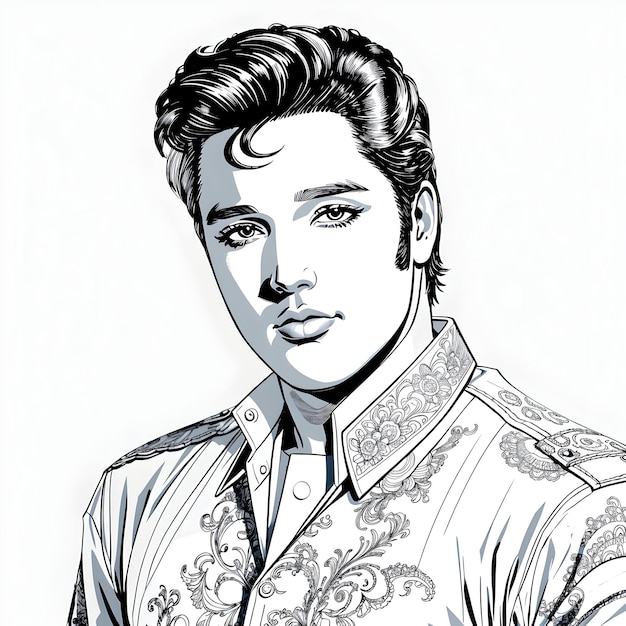
For generations of music lovers, the name Elvis Presley stands as a defining pillar of Oldies music, a genre that captures the golden era of American sound from the 1950s through the early 1970s. As an international audience seeks to understand the roots of this timeless music, understanding the life, career, and cultural impact of its most iconic figure is essential. Elvis wasn’t just a singer; he was a cultural phenomenon whose influence reshaped music, film, and fashion. From his humble beginnings in Mississippi to his reign as the King of Rock ‘n’ Roll at Graceland, his story is filled with milestones that continue to captivate fans across the globe. This comprehensive guide answers the most frequently asked questions about Elvis Presley, providing a detailed look at the man behind the legend and his unparalleled contribution to American oldies music and global pop culture.
Early Life and the Birth of a Legend
Humble Beginnings in Tupelo
Elvis Aaron Presley was born on January 8, 1935, in a two-room house in Tupelo, Mississippi. His entry into the world was marked by tragedy, as his stillborn twin brother, Jesse Garon, preceded him by 35 minutes. This humble start in the Deep South would shape the unique blend of musical influences—gospel, country, and rhythm and blues—that later defined his sound. The Presley family faced financial hardship, a common experience during the Great Depression, which instilled in Elvis a deep appreciation for success later in life.
A pivotal moment came on his 11th birthday when he received his first guitar. Purchased from the Tupelo Hardware Company on January 8, 1946, this gift was a turning point. While the young Elvis had hoped for a bicycle, his mother Gladys convinced him to accept the guitar, a decision that would alter the course of music history. This early introduction to the instrument laid the foundation for his future career.
In search of better opportunities, the Presley family moved to Memphis, Tennessee, in November 1948. Memphis was a vibrant musical melting pot, home to Beale Street and its rich blues scene, which would soon become a significant influence on the teenager. Before fame found him, Elvis worked a steady job as a delivery truck driver for Crown Electric in Memphis. It was during this time, as a young man balancing a blue-collar job with a passion for music, that he walked into a small recording studio to make what he thought was a personal gift for his mother.
The Sun Records Breakthrough
That studio was Sun Records, owned by Sam Phillips, who was famously searching for a white singer with a “Negro sound and a Negro feel.” On July 5, 1954, during a break in a recording session, Elvis, along with guitarist Scotty Moore and bassist Bill Black, began improvising on a blues song by Arthur Crudup called “That’s All Right.” The resulting track was a raw, energetic fusion of country and blues that is now considered by many to be the first rock ‘n’ roll record. The official recording of “That’s All Right” on that date marked the beginning of his professional recording career.
Elvis’s first billed live performance soon followed. On July 30, 1954, he took the stage at the Overton Park Shell in Memphis. This performance, opening for country star Slim Whitman, was a nervous but electrifying debut that saw him perform his new Sun Records hit. His popularity in the region grew quickly, leading to a regular spot on a prominent Saturday night radio show. He began performing regularly on the Louisiana Hayride, broadcast from Shreveport, Louisiana. This radio show gave him a massive regional audience and helped him build the stage presence that would soon captivate the nation. It was during his time on the Hayride that he made his only commercial, a simple radio jingle for Southern Made Doughnuts, a humble footnote in a career that would later be defined by multi-million-dollar ventures.
The Rise to Stardom and Cultural Impact
National Television and Chart Domination
Elvis’s move from regional sensation to national icon was swift. His first national television appearance was on the Tommy and Jimmy Dorsey Stage Show on January 28, 1956. This appearance, with his energetic and controversial hip movements, sent shockwaves through American living rooms. It was the beginning of a media frenzy that cemented his status as a cultural phenomenon. His first major commercial success followed shortly after, with “Heartbreak Hotel” becoming his first Gold Record—a milestone that signaled the arrival of a new force in the music industry.
This success allowed him to purchase his first home, a house located at 1034 Audubon Drive in Memphis, for his family. However, the growing crowds of fans swarming the property soon made it necessary to seek a more secluded residence. In March of 1957, Elvis purchased Graceland, a stately mansion on a 13.8-acre estate, for $102,500. He bought it from Mrs. Ruth Brown Moore, the former wife of Dr. Thomas Moore. Graceland would become his sanctuary, a place where he could escape the pressures of fame, and today it stands as the most iconic home in American music history, serving as a museum and a pilgrimage site for millions of fans.
The Movie Career and The King of Style
Elvis’s fame extended far beyond music. He starred in 31 feature films and 2 concert documentaries, creating a filmography that was a significant part of his career. His first movie was “Love Me Tender” in 1956, a Western for which the title song became a massive hit. While many of his films followed a popular formula of musical numbers and light drama, they were commercially successful and helped spread his image worldwide. His iconic style was also on full display, from his flashy jumpsuits to his love of cars, best exemplified by the 1955 Fleetwood Pink Cadillac now displayed in the Elvis Presley Car Museum at Graceland—a symbol of his flamboyant success and a favorite among fans.
Personal Life, Later Years, and Lasting Legacy
Marriage, Family, and The Meaning of TCB
Elvis’s personal life was as scrutinized as his career. His wife was Priscilla (Beaulieu) Presley. They met while he was stationed in Germany during his military service. After years of courtship, they were married at the Aladdin Hotel in Las Vegas on May 1, 1967. Their only child, Lisa Marie Presley, was born on February 1, 1968, at Baptist Memorial Hospital in Memphis. Lisa Marie would go on to become a musician herself, carrying on her father’s legacy until her passing in 2023.
In the later years of his career, Elvis adopted a personal motto that became synonymous with his Las Vegas era and his inner circle, known as the “Memphis Mafia.” The acronym TCB, accompanied by a lightning bolt, stood for “Taking Care of Business” and “in a flash.” This symbolized his approach to his work and his fast-paced lifestyle. His musical talent was recognized with prestigious awards. He received three Grammy Awards in his lifetime, all for his Gospel music recordings, a genre he held very close to his heart. His commercial success, however, was on a scale unlike any other. It is estimated that he has sold over one billion records worldwide, a testament to his enduring global popularity.
The Final Curtain
Despite his fame, his life was marked by health struggles and prescription drug dependency. His final performance took place at Market Square Arena in Indianapolis, Indiana, on June 26, 1977. It was a show filled with emotion, as he delivered a setlist of his classic hits, unaware that it would be his last. Less than two months later, on August 16, 1977, Elvis Presley passed away due to heart failure at his beloved Graceland in Memphis, Tennessee. He was 42 years old. His death was met with global mourning, underscoring the profound connection he had with people around the world.
Elvis’s life and career remain the subject of endless fascination. From his birth in Tupelo to his final days at Graceland, every detail of his journey contributes to the legend of the King of Rock ‘n’ Roll. For fans of Oldies music, he is not just a historical figure but a living presence whose recordings continue to inspire new generations. His influence is so pervasive that it forms a crucial part of understanding the golden era of American music, bridging the gap between rhythm and blues, country, and the birth of rock and roll. His music, his style, and his story are a rich tapestry that continues to invite exploration.
The story of Elvis Presley is a cornerstone of American cultural history. His journey from a delivery truck driver to an international icon is a testament to his unique talent and the transformative power of music. By revisiting the key moments of his life—his first guitar, his breakout at Sun Studio, his acquisition of Graceland, and his record-breaking career—we gain a deeper appreciation for the music that defined a generation. Elvis’s legacy lives on not only in the billion records sold but in every artist he influenced and every fan who still plays his music today. To understand oldies music is to understand Elvis, and to understand Elvis is to connect with the heart and soul of 20th-century popular culture.
References
- Elvis Presley Enterprises. (n.d.). Elvis: Frequently Asked Questions. Graceland. Retrieved from graceland.com
- Guralnick, P. (1994). Last Train to Memphis: The Rise of Elvis Presley. Little, Brown and Company.
- Guralnick, P. (1999). Careless Love: The Unmaking of Elvis Presley. Little, Brown and Company.