
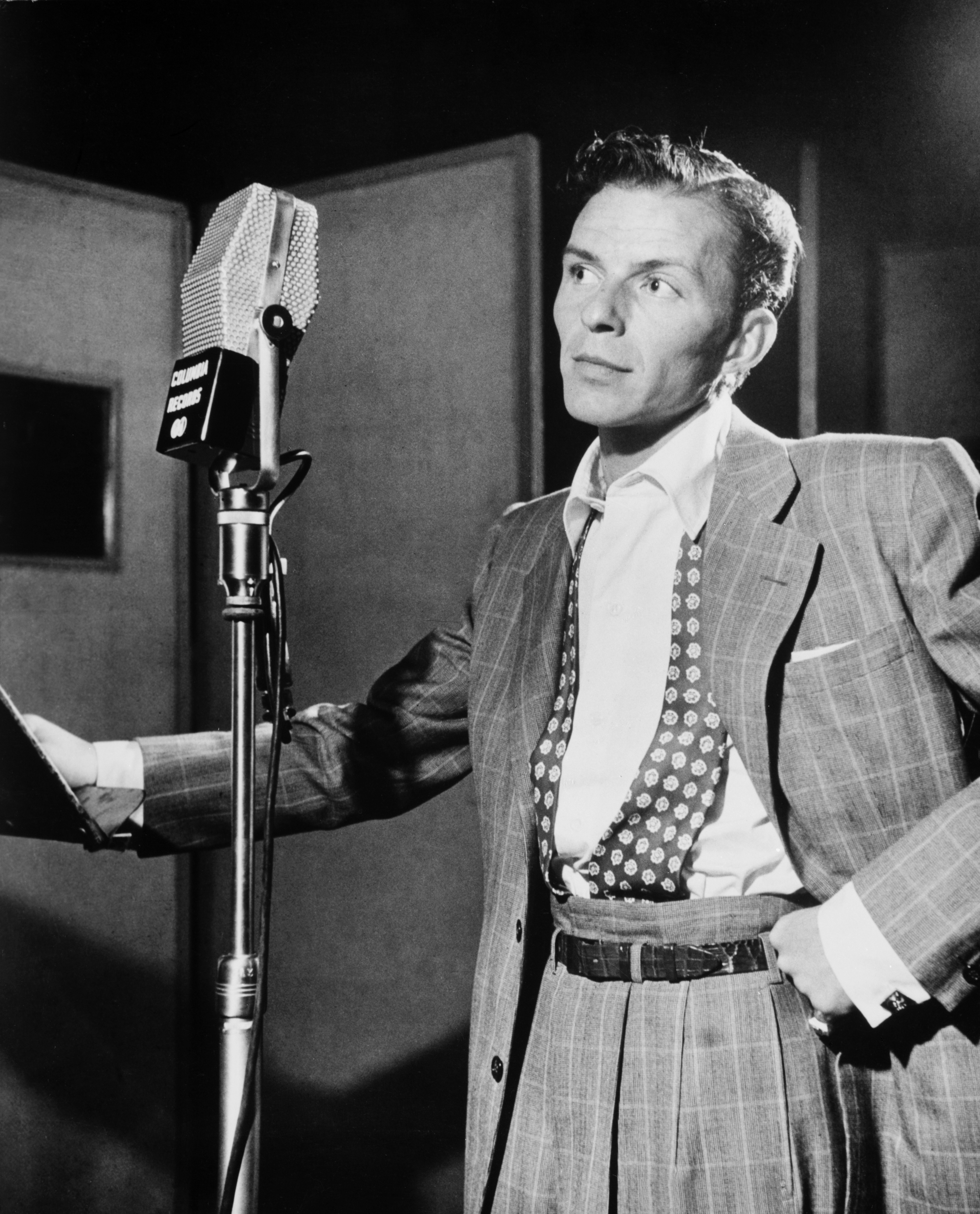
December 12th marks the centennial of Frank Sinatra’s birth. In honor of “Ol’ Blue Eyes,” this post delves into the cultural landscape of American popular music through the lens of Allison McCracken, author of Real Men Don’t Sing: Crooning in American Culture. McCracken, an Associate Professor of American Studies at DePaul University, provides a fascinating look at how the romantic crooner persona evolved and how Sinatra navigated these evolving standards of masculinity.
The Birth of the Crooner Idol and Early Backlash
The emergence of Rudy Vallée in 1929 as the first American romantic crooning idol established enduring affective structures and behaviors still associated with pop idols today. Vallée’s stardom, characterized by his devoted performance style and the swooning adoration of female fans, also provoked a significant cultural backlash. This backlash served to frame the reception of every subsequent pop idol, often involving the artistic devaluation of their work, the ridicule of their “hysterical” female audiences, and the perception of emasculation. During the formative years of pop music in the 1930s and 1940s, only Bing Crosby managed to achieve a long and respectable singing career by successfully balancing romantic crooning with established masculine norms. Crosby accomplished this by diversifying his musical repertoire, embracing a conventional family life and religious affiliation, and projecting a “cool” demeanor that downplayed the emotional vulnerability inherent in the romantic crooner’s performance.
Navigating Masculinity in the Golden Age of Music
A key factor in Crosby’s sustained dominance as “America’s Crooner” was his ability to synthesize contemporary codes of masculinity with his crooning voice. Throughout the period from the late 1930s into the early 1960s, young men who sang romantic songs to women in films or popular music were frequently depicted as immature, earnest, asexual, and often simple-minded. Figures like Dick Haymes, Eddie Fisher, and Frankie Avalon were seen as having a “crooning phase” they would eventually outgrow. Their music and the daydreams it inspired were largely treated as jokes, ripe for commercial exploitation but rarely taken seriously. Furthermore, their audiences were predominantly constructed as young, female, and uncritical.
Sinatra’s Early Portrayals: The Immature Crooner
Frank Sinatra serves as a prime example of this dynamic. The exchange from MGM’s On The Town (1950) between Gene Kelly and Frank Sinatra humorously illustrates the prevailing notion that a crooner needed to mature—for his “voice to change”—before he could embody adult masculinity. In this context, adult masculinity was defined by an aggressive pursuit of women, contrasting with the passive adoration displayed by crooners. Sinatra’s early, asexual crooner persona is particularly evident in his MGM films with Gene Kelly: Anchors Aweigh (1945), Take Me Out to The Ballgame (1949), and On the Town (1950). The portrayal of Sinatra as an unsuitable mate due to his immaturity, precisely at a moment when he was the beloved “swooner crooner” idol for millions of young women, highlights how deeply entrenched these conventions had become by the mid-to-late 1940s. In Take Me Out to The Ballgame and On the Town, he is notably paired with comedian Betty Garrett, whose character aggressively pursues him. Garrett’s role implicitly comments on the inappropriate sexual assertiveness and gender deviance associated with the swooner-crooner fan.
The Swooner Crooner Cartoon and Shifting Perceptions
A classic illustration of the cultural divide between the young romantic crooner Sinatra and the robustly masculine crooner Bing Crosby is found in the brilliant animated cartoon Swooner Crooner, directed by Frank Tashlin. In this short, crooning fans are depicted as hens whose wartime duty is to produce eggs. These hens are so captivated by Sinatra’s voice that they abandon their workplaces, swooning in pleasure as they follow his singing. The distressed farmer, Porky Pig, attempts to lure the hens back to work by auditioning various singers. It is only Bing Crosby’s performance, however, that successfully entices the hens back to the nest to fulfill their domestic responsibilities. The cartoon effectively contrasts the Sinatra crooner and his fans, who embody the paradigm of social deviance (vulnerable masculinity, feminine aggression, and self-pleasure), with Crosby’s masculine normativity, which guides women back to their prescribed feminine roles as social subordinates and domestic producers. The short concludes with Sinatra joining Crosby, leading to a surge in egg production.
Sinatra’s Transition to “Adult” Masculinity
Similar to Crosby, Sinatra eventually attained “adult” masculinity, largely by appealing to straight men in the 1950s. To lend artistic legitimacy to his emotionally raw and sensitive performances, he drew upon method acting discourses prevalent at the time, associated with actors like James Dean and Marlon Brando, and embraced “authentic” Italian bel canto art singing. He also collaborated with respected musicians and arrangers. Concurrently, his public persona shifted to reflect hyper-masculine behaviors, including womanizing, drinking, gambling, and alleged ties to organized crime. Like Crosby before him, Sinatra recognized the necessity of demonstrating adherence to the 1950s standards of cultural legitimacy and white masculinity to secure a lasting career as a romantic singer. This evolution demonstrates how deeply intertwined artistic success in popular music was with prevailing societal definitions of masculinity and cultural acceptance.
Frank Sinatra’s journey from a swooning idol to a symbol of mature masculinity is a compelling narrative within the broader history of American popular music. His ability to adapt and redefine his persona ensured his enduring legacy.
To explore Allison McCracken’s Real Men Don’t Sing at a 30% discount, use coupon code E15MCCRA at checkout.
References
McCracken, Allison. Real Men Don’t Sing: Crooning in American Culture. Duke University Press.
MGM. On The Town. 1950.
Tashlin, Frank. Swooner Crooner. 1944.