
Fleas are a common cause of skin problems in pets and can lead to itching, infections, anemia, and even tapeworm transmission. Protecting your dog or cat from fleas requires understanding the flea lifecycle, spotting early signs, and combining pet treatments with environmental control. This guide covers practical, vet-aligned steps to prevent and treat flea infestations so you can keep your pet comfortable and healthy.
Who this is for
Pet owners (dog and cat) looking for reliable, actionable flea prevention and treatment advice that balances safety, effectiveness, and everyday practicality.
Quick signs your pet may have fleas
- Persistent scratching, especially at the base of the tail, hind legs, neck, and belly.
- Small black specks in the fur (flea dirt); part the coat and check the skin.
- Hair loss, red or scabby skin, or small raised bumps—possible secondary infection or flea allergy dermatitis.
- Visible live fleas: tiny, fast-moving, dark brown insects on the coat.
Understanding the flea lifecycle (why one treatment isn’t enough)
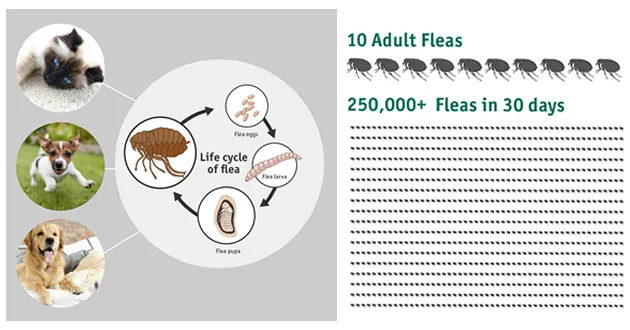
- Only about 5–10% of the total flea population are adult fleas on the pet; 90–95% are eggs, larvae, and pupae in the environment (carpets, bedding, furniture, yard).
- A single female can lay ~30 eggs per day; populations explode quickly—ten adult fleas can multiply to hundreds of thousands within weeks under ideal conditions.
- Stages:
- Adult fleas: jump onto hosts, feed and lay eggs.
- Eggs: fall into the environment (carpets, bedding, soil).
- Larvae: move into dark areas, feed on organic debris (including flea faeces), then form pupae.
- Pupae: can remain dormant for weeks to months until conditions trigger emergence.
Breaking the lifecycle requires treating both the pet and the environment.
How pets get fleas
- Flea eggs, larvae, and pupae persist in home and garden environments and hatch when conditions are favourable.
- Fleas can also transfer from other animals, wildlife, or visiting pets.
- Fleas can jump large distances relative to their size to reach hosts.
Prevention: year-round strategy
- Use a veterinarian-recommended preventative consistently (monthly or as directed). Options include:
- Spot-on treatments (monthly; easy to apply).
- Oral tablets (fast knockdown, some provide monthly control and lifecycle interruption).
- Long-lasting collars for continuous protection where appropriate.
- Treat all in-contact animals simultaneously to avoid re-infestation. Use species-specific products (dog products for dogs, cat products for cats).
- Regular grooming and checks: use a flea comb to inspect the coat weekly—early detection stops outbreaks.
- Discuss product choice, safety, and dosing with your veterinarian, especially for young, old, pregnant, or medically sensitive animals.
Treatment when you find fleas
- For mild infestations: a combination of pet treatment (spot-on, oral or collar) plus environmental cleaning may suffice.
- For heavy infestations: treat the pet AND the home and yard. Consider professional pest control for severe household infestations.
- If using shampoos or rinses, follow product instructions precisely; avoid washing with detergent-based shampoos that can reduce efficacy immediately before/after some topical treatments unless directed by the product label or your vet.
- Treat all pets and continue prevention after the initial knockdown to prevent re-establishment.
Environmental control (essential to break the lifecycle)
- Vacuum carpets, rugs, upholstery, and pet bedding 2–3 times weekly to remove eggs and larvae; empty vacuum bag/canister contents outside.
- Wash pet bedding and any removable furniture covers weekly in hot water.
- Use environmental insecticides or household treatments labeled for flea eggs, larvae, and adults for indoor and outdoor problem areas—follow label directions and safety precautions.
- For persistent problems, fogging or professional treatment may be necessary—seek a licensed pest control service.
Special considerations and health risks
- Flea allergy dermatitis: some pets are hypersensitive—one flea bite can trigger intense inflammation requiring veterinary care.
- Secondary infections: scratching can lead to open sores and bacterial infections; see a vet if skin looks weepy, scabby, or if your pet is unwell.
- Tapeworms: flea larvae can ingest tapeworm eggs; pets that eat infected fleas risk tapeworm infection. Deworming may be needed if fleas are present.
Choosing products safely
- Always choose age- and species-appropriate products.
- Speak with your veterinarian for tailored recommendations based on your pet’s age, weight, health status, lifestyle, and local parasite pressure.
- Follow dosing schedules exactly and avoid mixing topical products unless advised by your vet.
Monitoring and follow-up
- After treatment, re-check your pet’s coat regularly for fleas or flea dirt and monitor skin for signs of irritation or secondary infection.
- Maintain year-round prevention—fleas can survive and reproduce whenever conditions are suitable.
- If control fails despite correct product use, consult your veterinarian to review product choice, application, household measures, and to rule out underlying skin disease.
Conclusion
Effective flea control combines consistent, vet-recommended pet prevention with diligent environmental management. Early detection, treating all animals in the household, washing bedding, regular vacuuming, and professional advice when needed will break the flea lifecycle and protect your pet’s skin and overall health. Speak with your veterinarian to select the safest, most effective products and create a year-round flea control plan tailored to your home and pets.