
In modern Japan, the metric system dominates everyday life — meters, centimeters, and kilograms are the standard in schools, stores, and workplaces. Yet step into the world of traditional architecture, kimono tailoring, or classical literature, and you’ll encounter a completely different system: the shakkan-ho (尺貫法), Japan’s ancient measurement framework. Understanding units like bu, sun, shaku, and ken unlocks a deeper appreciation of Japanese culture and history — and remains practically useful in several specialized fields today.
You’ll encounter shakkan-ho measurements in contexts such as:
- Traditional Japanese architecture: column spacing expressed in ken (間)
- Kimono tailoring: body measurements given in shaku (尺) and sun (寸)
- Historical documents and period fiction: distances and heights written in classical units
- Rakugo storytelling and haiku poetry: old-fashioned units that evoke the texture of Edo-era life
Whether you’re renovating a traditional townhouse, studying a historical text, or simply curious about Japan’s cultural heritage, a working knowledge of shakkan-ho is invaluable.
What Is Shakkan-ho?
Shakkan-ho is the traditional Japanese system for measuring length, weight, and area. It was used across all aspects of daily life — from construction to commerce — until the Meiji government introduced the metric system in the late 19th century.
For measuring length specifically, the key units are:
- Bu (分)
- Sun (寸)
- Shaku (尺)
- Ken (間)
These units are arranged in a clear hierarchy, each defined in relation to the others.

Core Length Units at a Glance
| Unit | Reading | Relationship | Metric Equivalent |
|---|---|---|---|
| 分 | bu | 1/10 of a sun | ~3.03 mm |
| 寸 | sun | 1/10 of a shaku | ~3.03 cm |
| 尺 | shaku | Base unit | ~30.3 cm |
| 間 | ken | 6 shaku | ~1.818 m |
A Note on “Shaku” vs. “Kan”
The term shakkan-ho combines two different unit categories: shaku (尺), which measures length, and kan (貫), which measures weight. These are entirely separate systems:
- Shaku: length unit (1 shaku ≈ 30.3 cm)
- Kan: weight unit (1 kan ≈ 3.75 kg)
The name shakkan-ho simply refers to the traditional Japanese measurement system as a whole, encompassing both length and weight conventions.
Detailed Breakdown and Metric Conversion Table

All shakkan-ho length units trace back to the shaku as the foundational reference point. Here is a precise breakdown of each unit:
| Shakkan-ho Unit | Reading | Relation to Shaku | Metric Conversion |
|---|---|---|---|
| 一分 | ichi-bu | 1/100 of a shaku | ~3.03 mm (0.00303 m) |
| 一寸 | is-sun | 1/10 of a shaku | ~3.03 cm (0.0303 m) |
| 一尺 | is-shaku | Base unit | ~30.3 cm (0.303 m) |
| 一間 | ik-ken | 6 shaku | ~1.818 m |
One Bu (一分)
The bu is one of the smallest units in shakkan-ho, equivalent to roughly 3.03 mm. It represents one-tenth of a sun and is used in contexts requiring fine precision, such as kimono fitting adjustments and detailed woodworking.
One Sun (一寸)
At approximately 3 cm, the sun is perhaps the most culturally familiar unit — it appears in the beloved Japanese folktale Issun-boshi (“One-Inch Boy”), whose name literally means “one sun tall.” This unit is easy to visualize and remains in active use in kimono craftsmanship.
One Shaku (一尺)
The shaku is the backbone of the entire system at 30.3 cm. Traditional bamboo rulers (takejaku) and tape measures were calibrated in shaku, and it served as the primary size reference for buildings, furniture, and everyday objects throughout Japan’s premodern history.
One Ken (一間)
Equal to 6 shaku, or approximately 1.818 m, the ken is the defining unit of Japanese architectural planning. It corresponds to the standard spacing between structural columns and directly informs the dimensions of tatami mats and room layouts.
Where Shakkan-ho Is Still Used Today
Far from being a museum curiosity, these units continue to appear in living traditions across Japan.
Japanese Architecture and the Ken
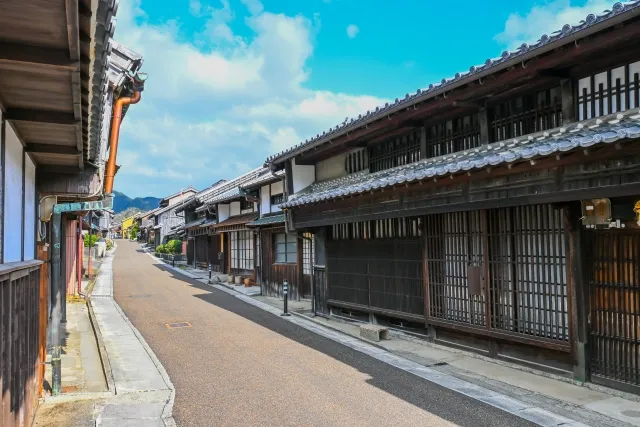
In traditional wooden construction, one ken (約1.818 m) functions as the fundamental modular unit. Architects and carpenters work with multiples and fractions of ken to plan column placement, corridor widths, and veranda dimensions.
Tatami mat sizing is also derived from this unit. A standard tatami measures one ken by half a ken — though regional variations exist:
- Kyoma (Kyoto style): approximately 191 × 95.5 cm
- Edomma (Tokyo style): approximately 176 × 88 cm
This modular system allowed traditional Japanese architecture to achieve remarkable spatial consistency and aesthetic harmony across diverse building types.
Kimono Tailoring and the Shaku and Sun
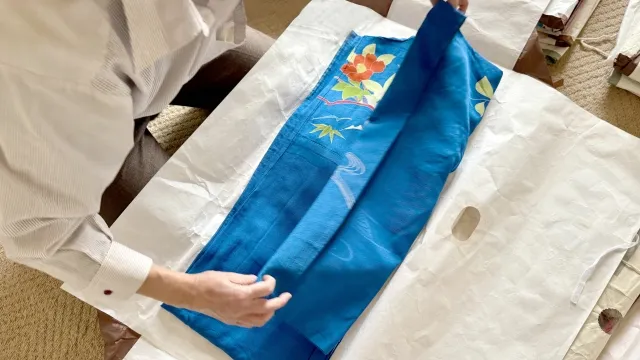 A beautifully crafted kimono laid out for measurement
Kimono tailors (wasaishi) measure the human body and fabric in shaku and sun:
- Mitake (overall garment length): typically around 4 shaku 2 sun (~127 cm)
- Yuki (shoulder to wrist): typically around 1 shaku 7 sun (~51.5 cm)
Experienced tailors work in bu increments when making fine adjustments, demonstrating how the system’s layered precision remains practically indispensable in this craft.
Classical Literature, Rakugo, and Haiku
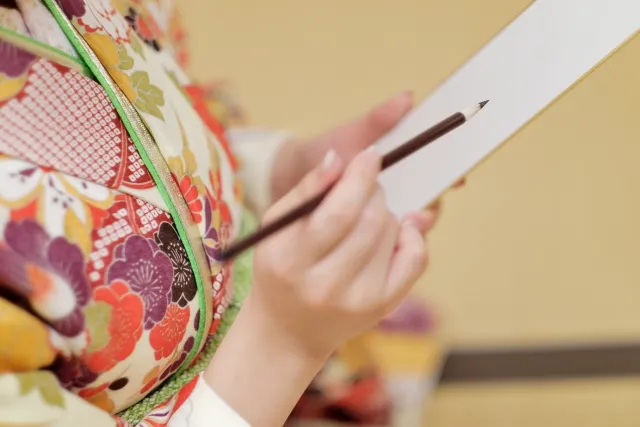
Shakkan-ho units permeate Japan’s literary and performing arts traditions:
- Proverb: “Issun saki wa yami” (“One sun ahead is darkness”) — meaning the future is uncertain. That “one sun” is just about 3 cm, making the metaphor all the more vivid.
- Edo-period land surveys and architectural drawings routinely expressed measurements in ken, shaku, and sun. Reading these documents accurately requires familiarity with the system.
- The shakuhachi flute (尺八) takes its name from its length: one shaku eight sun (~54.5 cm).
Traditional Crafts and Household Objects
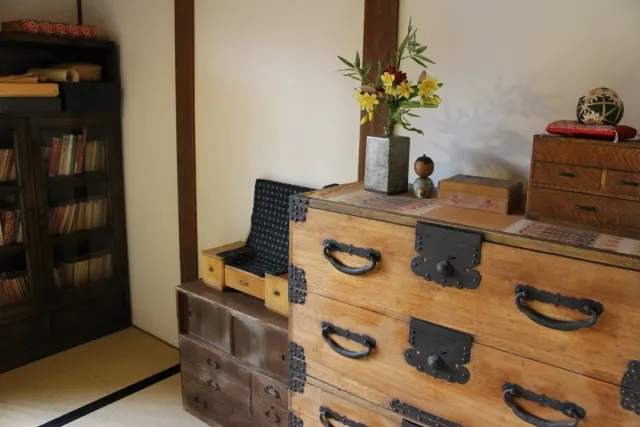 An antique Japanese tansu chest showcasing traditional furniture proportions
Traditional furniture, tea ceremony utensils, and scroll paintings also reflect shakkan-ho proportions:
- Tea rooms: designed in units of one ken square or one-and-a-half tatami
- Hanging scrolls and calligraphy paper: sized in traditional units, such as hansetsu (半切), measuring approximately 1 shaku 6 sun
Frequently Asked Questions

Q1. Is it still legal to use shakkan-ho in Japan?
Yes. The 1959 Measurement Act requires metric units for official transactions and commercial labeling, but cultural and customary use of shakkan-ho is fully permitted. Kimono tailors and traditional architects regularly use these units without issue.
Q2. How many centimeters is exactly one shaku?
One shaku is precisely defined as 0.3030303 meters (approximately 30.30303 cm). In everyday practice, it is commonly rounded to 30.3 cm.
Q3. Why do tatami sizes differ by region?
The variation stems from different local interpretations of “one ken.” Kyoto’s standard is slightly larger (~191 cm) than Tokyo’s (~176 cm), reflecting centuries of distinct regional building traditions and spatial sensibilities.
Q4. What is the easiest way to remember the metric equivalents?
For practical purposes, these three approximations cover most situations:
- 1 sun ≈ 3 cm
- 1 shaku ≈ 30 cm
- 1 ken ≈ 180 cm
For more precise conversions, a dedicated conversion app or printed reference chart is recommended.
Q5. What does the “kan” in shakkan-ho mean? Is it related to length?
Not at all. Kan is a unit of weight (1 kan ≈ 3.75 kg), completely separate from the length-based shaku units. The term shakkan-ho simply uses both words to represent the entire traditional Japanese measurement system, encompassing both length (shaku) and weight (kan) conventions.
Conclusion
The units of shakkan-ho — bu, sun, shaku, and ken — are far more than historical relics. They are living expressions of Japanese aesthetic sensibility, embedded in the proportions of traditional buildings, the precision of kimono craft, and the imagery of classical poetry and storytelling.
While the metric system has largely replaced these units in modern daily life, shakkan-ho remains an essential thread in the fabric of Japanese cultural identity. Understanding it enriches your reading of historical texts, deepens your appreciation of traditional arts, and offers a new lens through which to see Japan’s architectural and artistic heritage.
Whether you’re a student of Japanese history, a craftsperson working with traditional materials, or simply a curious reader, a grasp of these fundamental units brings you closer to the world that shaped Japan’s enduring cultural traditions.
References
- Agency for Cultural Affairs, Japan. Traditional Crafts and Measurement Systems in Japanese Culture.
- National Diet Library, Japan. Historical Surveying and Land Records from the Edo Period.
- Japan Meteorological / Standards Agency. Measurement Act (1959) and Its Cultural Exemptions.
- Wasan and Traditional Japanese Mathematics, Tokyo University Press.