
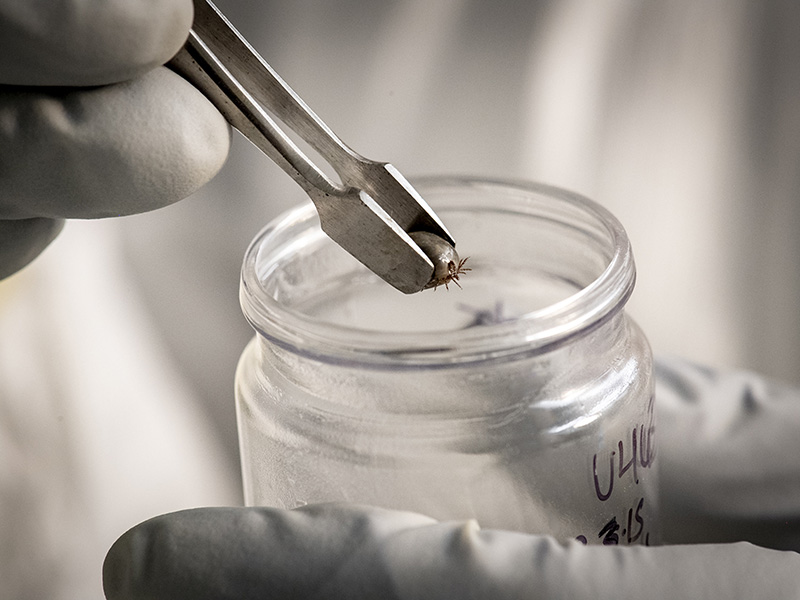
For pet owners, administering a flavored chewable tablet for tick prevention to dogs and cats is a common practice. Imagine a similar approach for humans, a pill that could shield us from Lyme disease for several weeks. Tarsus Pharmaceuticals is currently developing such a human-grade medication. In February, the Irvine, California-based biotech company released promising results from a small, early-stage trial. The study indicated that a single dose of the drug can kill ticks on humans within 24 hours, with protective effects lasting up to 30 days.
Bobby Azamian, CEO of Tarsus, shared his vision: “What we envision is something that would protect you before the tick would even bite you.”
Lyme disease represents a rapidly escalating health concern in the United States. Approximately 476,000 individuals are diagnosed and treated for it annually, according to the latest data from the Centers for Disease Control and Prevention. While this figure might be an overestimate, as many are treated post-tick bite even without confirmed infection, it highlights the significant burden Lyme disease places on the healthcare system, estimated by researchers at the CDC and Yale University to cost nearly $1 billion per year.
The culprit behind Lyme disease is the bacterium Borrelia burgdorferi, transmitted to humans via the bite of an infected tick. Typically, a tick must remain attached for about 36 to 48 hours for transmission to occur. Initial symptoms often include fever, headache, fatigue, and a distinctive bullseye-shaped skin rash.
Currently, without an available vaccine for Lyme disease, prevention strategies focus on using insect repellents like DEET and permethrin, and wearing protective clothing such as closed shoes, long pants, and long sleeves when in tick-prone areas. Dr. Paul Auwaerter, a professor of medicine at Johns Hopkins University School of Medicine specializing in Lyme disease research, notes, “We’ve seen increasing rates of tick-borne diseases over the years, despite being told to do tick checks, use DEET, and impregnate your clothes with permethrin.”
Dr. Auwaerter emphasizes that a more effective treatment strategy is highly desirable, especially considering the potential for Lyme disease to cause severe health complications. While early antibiotic treatment is generally effective, a notable percentage of patients, around 5 to 10 percent, may experience lingering symptoms for weeks or months. If left untreated, the infection can progress to affect the joints, leading to arthritis. It can also impact the heart and nervous system, resulting in persistent fatigue, numbness, or weakness.
The experimental pill being tested by Tarsus Pharmaceuticals is a formulation of lotilaner. This drug functions by paralyzing and eliminating parasites by disrupting nerve signal transmission. Lotilaner is already an established veterinary medicine, marketed as Credelio, for controlling fleas and ticks in dogs and cats.
“Our animals have better options than we do for tick prevention,” commented Linden Hu, a professor of immunology at Tufts Medical School who led the Tarsus trial. “There are quite a few drugs and vaccines available for dogs and cats, but there’s nothing for us.”
Tarsus initially developed lotilaner for human application as an eye drop to treat Demodex blepharitis, an eyelid inflammation caused by tiny mites. This formulation, Xdemvy, received approval from the US Food and Drug Administration in July 2023 and works by stunning and killing mites on the eyelids. It was from this development that Azamian and his team conceived the idea of testing lotilaner against ticks in humans. The oral version of the drug circulates in the bloodstream, and when a tick bites and begins to feed, it ingests the medication.
The development of this oral lotilaner marks a significant step forward in addressing the growing threat of Lyme disease. As existing preventative measures have limitations, a readily available and effective oral medication could revolutionize how individuals protect themselves from tick-borne illnesses. This advancement offers hope for a future where Lyme disease is more manageable and preventable, providing much-needed relief for those living in or visiting high-risk areas. The potential for a human-grade over the counter flea and tick medicine for dogs equivalent for humans underscores the ongoing innovation in public health. As research progresses, understanding the efficacy and safety profile of such treatments will be crucial for widespread adoption and impact.
Further research and clinical trials will be essential to confirm the long-term effectiveness and safety of this promising new pill. If successful, it could become a vital tool in the fight against Lyme disease, complementing existing prevention strategies and offering a convenient, proactive defense mechanism for the public. The focus on developing such treatments highlights a critical need for more robust preventative measures against tick-borne diseases. The ongoing advancements in veterinary medicine, such as readily available best over the counter flea and tick medicine for dogs, have paved the way for exploring similar solutions for human health. This innovative approach could significantly reduce the incidence of Lyme disease and its associated health complications, improving the quality of life for many.