
The dog and his master story is a group of traditional animal tales about a dog’s relationship with a human owner or guide. Different versions teach lessons about loyalty, duty, temptation, trust, and judgment, including the dinner basket tale, the search for a new master, and faithful dog rescue stories.
Readers searching for the dog and his master story often run into a problem: the phrase can describe several different fables rather than one fixed tale. This guide helps identify the main versions, follow each plot correctly, and understand how the dog’s choices create different moral lessons about loyalty, temptation, trust, and judgment.
The dog and his master story is a name used for several traditional animal tales about a dog and the human who owns or guides him. The most common versions include The Dog and His Master’s Dinner, where a dog loses his master’s food because of temptation, How the Dog Found Himself a New Master, where a dog searches for stronger protection, and faithful dog rescue stories where loyalty is misunderstood. Each version uses the dog and master relationship to teach a different moral lesson.
The dog and his master story: plot and main versions
The search phrase does not point to only one universal fable. Before reading a summary, it helps to identify the conflict at the center of the story because the conflict reveals which tale is being discussed.
A quick way to classify the story is to look at what the dog does and what problem follows from that action.
Story Identification Guide
| If | Then |
|---|---|
| The dog carries a basket of food for his master but abandons it after seeing something tempting | It is the dinner basket version, focused on greed, temptation, and consequences. |
| The dog leaves one master to find a stronger protector among animals or humans | It is the new master version, focused on security, fear, and loyalty. |
| The dog protects a child or companion but is punished because the master misunderstands what happened | It is the faithful dog rescue version, focused on trust and quick judgment. |
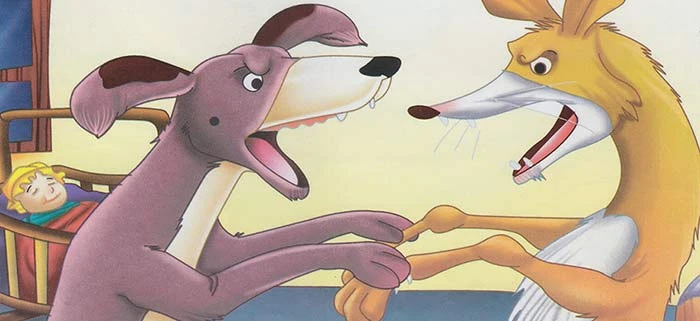
A short summary of the faithful dog fable usually describes a loyal dog protecting a human family member. In one commonly retold version, a dog guards a child while the hunter and his wife are away. A wolf enters the house, the dog fights the attacker, and the dog kills the wolf. When the hunter returns and sees blood on the dog’s mouth, he assumes the dog harmed the child and kills the dog before discovering the child is safe. The ending turns the story into a warning about acting without checking the truth.

The main conflict changes from version to version: one dog fails because of temptation, another struggles with choosing a master, and another suffers because a human makes a rushed decision.
Main characters and roles in the classic tales
The dog is usually more than a pet character. In these fables, the animal represents a human quality that the story wants readers to examine, such as loyalty, desire, fear, or obedience.
The master represents authority, responsibility, and the relationship between humans and animals. Depending on the version, the master can be a person who gives the dog a duty, a figure the dog wants to trust, or someone whose judgment creates the final lesson.
A useful way to analyze the characters is to track the dog’s duty before judging the dog’s action.
- Identify the dog’s assigned duty, such as carrying food, serving a master, or protecting a child.
- Check whether the dog’s action completes that duty or creates a conflict.
- Notice the dog’s motivation: hunger in the dinner story, fear in the search-for-a-master story, or devotion in rescue stories.
- Connect the behavior to the moral: desire can create mistakes, fear can lead to poor choices, and devotion can be damaged by misunderstanding.
The supporting characters also shape the lesson. A wolf, hunter, child, or other animal is not included only for action; each one creates a situation that tests the dog’s relationship with the master.
Three versions of the dog and master tale
Similar titles can hide very different plots. Comparing the central conflict, the dog’s action, and the final lesson makes it easier to recognize the correct tale.
Comparison of Dog and Master Tale Versions
| Story version | Main conflict | Dog’s action | Moral lesson |
|---|---|---|---|
| The Dog and His Master’s Dinner | Temptation versus duty | The dog leaves his task and drops the dinner basket while chasing food. | Desire without control can cause loss; a duty should not be abandoned for immediate temptation. |
| How the Dog Found Himself a New Master | Search for stronger protection | The dog leaves his current master while seeking a more powerful protector. | Security based only on power does not always create true loyalty or trust. |
| The Faithful Dog (child-rescue) | Loyalty tested by misunderstanding | The dog protects a child, but the master misreads the evidence and punishes the dog. | Careful judgment matters because a loyal act can be destroyed by a rushed decision. |
The Dog and His Master’s Dinner version
The dinner basket tale is often connected with Aesop-style fables. Traditional attribution should be treated carefully because many animal stories have been retold and adapted across cultures rather than preserved as one unchanged text.
In this version, the dog has a clear responsibility: carry his master’s dinner. The problem begins when the dog encounters a temptation stronger than his sense of duty. The important event is not simply that the dog wants food; it is that he abandons the role he was given and loses what he was trusted to protect.
The moral centers on self-control. The dog’s failure shows how a small desire can interrupt a larger responsibility.
How the Dog Found Himself a New Master
This tale explores a different question: what happens when loyalty is replaced by the search for safety? The dog is not mainly defeated by hunger but by the belief that a stronger master will provide a better life.
The dog’s journey through different possible protectors shows a repeated pattern: changing masters does not automatically solve insecurity. The lesson is about understanding the value of a relationship instead of judging it only by visible power.
When identifying this version, look for the dog’s reason for leaving. If the central action is searching for a stronger protector, it belongs to the new-master tradition rather than the dinner basket story.
The faithful dog and master rescue stories
In rescue versions, the dog’s loyalty becomes the central theme. The dog’s action can be understood by checking observable events: the dog protects a vulnerable person, an alarming sign is misread, and the master reacts before discovering the full situation.
From an editorial review of classic animal fables, the recurring failure mode in this type of story is confusing appearance with evidence. The blood on the dog’s mouth appears threatening, but the later discovery of the safe child and the dead attacker changes the meaning of that detail.
The moral is therefore different from the dinner basket tale. The dog is not defeated by temptation; the tragedy comes from a human mistake in judging a loyal companion.
Moral lessons created by the dog’s choices
The moral of the dog and his master story depends on which version is being discussed. A simple statement such as "be loyal" does not explain why the characters succeed or fail.
A stronger reading connects the dog’s action to the result that follows. The dinner dog loses the meal because desire overrides duty. The searching dog learns that stronger-looking masters do not necessarily provide better relationships. The rescue dog shows loyalty, but the master learns too late that a quick conclusion can destroy trust.
How loyalty, trust, and duty appear across versions
The dog’s loyalty has different meanings depending on the conflict.
In the dinner version, loyalty is measured by responsibility. The dog is expected to complete a task, and the failure happens when personal desire interrupts that task.
In the rescue version, loyalty is shown through protection. The dog does not simply stay near the family; the dog acts during danger. The master’s mistake changes the lesson from obedience to the importance of verifying facts before punishment.
In practical literary analysis, the easy-to-miss step is separating the dog’s behavior from the human interpretation of that behavior. The same action, such as leaving a position or showing aggression, can mean different things depending on the events before and after it.
Why some tales focus on temptation and judgment
Animal fables often create a conflict that is easy to recognize. A temptation story asks, "Can the character control desire?" A misunderstanding story asks, "Can people judge fairly before reacting?"
A useful plot-to-moral chain is:
Situation: A faithful dog protects an infant but returns with blood on its mouth after the fight.
Steps:
- Dog’s action: The dog kills the attacker and remains beside the child.
- Master’s reaction: The master sees the blood and assumes the worst without checking.
- Final consequence: The master discovers the child is safe and realizes the mistake.
- Moral extracted: Rushed judgment can harm those who are loyal and create regret that cannot be reversed.
This same method can be used with other versions: identify the dog’s action, observe the master’s response, and connect the outcome to the lesson.
Origins and traditions behind dog and master fables
The origin of the dog and his master fable is difficult to assign to one single source because animal stories have traveled through oral traditions, collections, and later adaptations. Some versions are linked with Aesop, while others belong to broader folktale traditions.
Aesop fables are generally known for using animals as symbols in short stories with a moral purpose. However, a similar title does not automatically mean every dog-and-master tale was written by Aesop or belongs to the same collection.
The difference between Aesop fables and traditional folktales can often be seen in structure. Aesop-style stories commonly focus on one clear conflict and a direct lesson, while folktales may expand the characters, setting, and emotional consequences.
Interpreting the tale for literary discussions
The dog and master relationship works as an allegory, meaning the characters represent ideas beyond their literal roles. The dog can symbolize loyalty, instinct, desire, or dependence. The master can symbolize authority, trust, responsibility, or human judgment.
For classroom discussions, focus on the choices that create the ending rather than only describing the characters. Ask questions such as: What duty was the dog given? What evidence did the master use? Was the final consequence caused by the dog’s choice, the master’s reaction, or both?
Different versions also show that loyalty is not a single idea. A loyal character may follow orders, protect someone in danger, or remain committed despite uncertainty. The moral changes because the story changes the test placed before the dog.
Read the version you have in front of you and mark the dog’s duty, the conflict, and the final consequence; this three-part check will help you identify the exact fable and explain its moral without mixing different dog-and-master tales together.
FAQ
What is the moral of the dog and his master story?
The moral depends on the version being told. The dinner basket tale teaches that temptation can cause a person to abandon responsibility, while rescue versions show the importance of careful judgment and trust. Across the stories, loyalty, duty, and the consequences of choices are the main lessons.
Is the dog and his master story an Aesop fable?
Some versions of the dog and his master story are connected with Aesop-style fables, but the title does not identify one single confirmed Aesop tale. Many animal stories have been retold through oral traditions, collections, and adaptations across different cultures.
Why are there different versions of the dog and master tale?
There are different versions because animal stories have been passed through oral traditions and later adaptations. Similar dog-and-master titles can describe different conflicts, such as temptation, the search for security, or a misunderstanding involving a faithful dog’s actions.
What makes the dog a symbol of loyalty in fables?
The dog often represents loyalty because many fables place it in situations involving duty, protection, or trust. Depending on the story, the dog may show loyalty by completing a task, protecting a vulnerable person, or remaining devoted despite uncertainty and danger.