
The term holy grail muscle cars represents the absolute peak of American automotive history—machines so rare, powerful, and historically significant that they have become unattainable icons for collectors worldwide. These vehicles are not just classic cars; they are rolling artifacts from an era when Detroit engineers pushed performance to its limits without modern restrictions.
From the late 1960s through the early 1970s, American manufacturers engaged in an intense horsepower race. The result was a handful of extraordinary models that today define what enthusiasts call the “holy grail” tier of muscle cars.
What Defines a Holy Grail Muscle Car?
Holy grail muscle cars are not simply old or fast—they represent a perfect intersection of rarity, performance, and cultural importance.
The primary factors include:
- Extremely limited production numbers (often fewer than 100 units)
- Race-bred or high-performance engineering packages
- Strong historical or motorsport relevance
- Verified originality and documentation
- Market values reaching millions of dollars at auction
These vehicles are often considered the ultimate expression of the “horsepower wars” era, when manufacturers prioritized speed and displacement over efficiency or emissions compliance.
Why Rarity Alone Is Not Enough
Scarcity is the foundation, but not the only requirement. A car may be rare yet not desirable unless it delivers exceptional performance or historical value.
To reach holy grail status, a muscle car typically must:
- Deliver factory performance that rivaled or exceeded race cars
- Feature advanced or experimental engineering for its time
- Be tied to motorsport success or cultural relevance (films, racing, or media)
- Retain authenticity with original components and documentation
Without these factors, rarity alone does not guarantee collector prestige.
The Role of Engineering and Performance
During the peak muscle car era, manufacturers like Chevrolet, Chrysler, and Oldsmobile produced engines that pushed boundaries. Big-block V8s such as the 426 Hemi and 427 L88 became legendary due to their raw power output and racing pedigree.
Many of these engines were underrated on paper for insurance reasons, meaning real-world performance often exceeded official specifications. Cars could run quarter-mile times that rivaled dedicated drag machines straight from the showroom floor.
Cultural Impact and Historical Timing
The holy grail muscle cars also represent a specific cultural moment in American history. These vehicles were built before the 1973 oil crisis and before strict emissions regulations changed automotive design forever.
They appeared in films, dominated drag strips, and symbolized freedom, power, and innovation. Today, they serve as time capsules from an era when performance was the ultimate priority.
Survivability and Documentation
Another defining factor is originality. A fully restored car is valuable, but a fully original one is exponentially more desirable.
Collectors look for:
- Factory build sheets
- Original window stickers
- Matching numbers engines and drivetrains
- Verified ownership history
- Expert authentication from marque specialists
These elements confirm authenticity and significantly influence auction pricing.
Rarest Muscle Cars That Define the Category
1971 Plymouth Hemi ’Cuda Convertible – The Ultimate Prize
The 1971 Plymouth Hemi ’Cuda Convertible is widely considered the pinnacle of holy grail muscle cars.
Only 12 units were ever produced, making it one of the rarest production muscle cars in history.
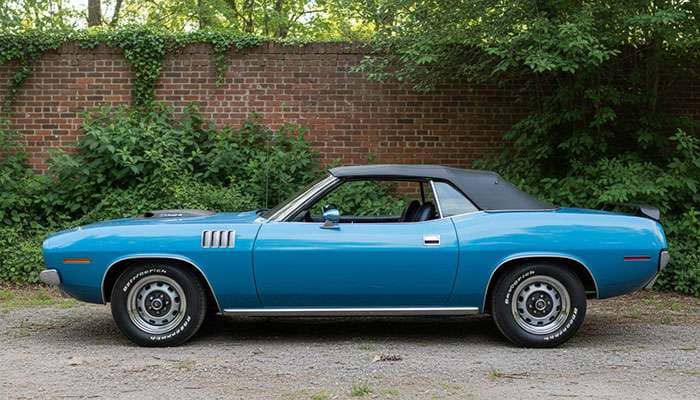
Powered by the legendary 426 Hemi V8, this model represents the final chapter of Chrysler’s muscle car dominance. Auction prices regularly reach between $3 million and $5 million, depending on condition and provenance.
Its rarity is compounded by the fact that post-1971 emissions regulations effectively ended this level of factory performance.
1967 Chevrolet Corvette L88 – A Street-Legal Race Car
The 1967 Chevrolet Corvette L88 was never intended for casual driving. Chevrolet designed it as a race-focused machine disguised as a production car.
Only 20 units were built in its debut year.
Although officially rated at 430 horsepower, real output exceeded 550 horsepower in race trim. The L88 required high-octane fuel and deliberately removed comfort features like radios and heaters to reduce weight.
It was, in every sense, a competition car for the street.
1969 Chevrolet Camaro ZL1 – Aluminum Powerhouse
The 1969 Chevrolet Camaro ZL1 is one of the most technologically advanced muscle cars ever built.
Only 69 units were produced under Chevrolet’s COPO special-order system.
Its all-aluminum 427 cubic-inch engine dramatically reduced weight while producing over 550 horsepower in real-world conditions. The result was extraordinary acceleration, with quarter-mile times in the low 11-second range—astonishing for a factory car in 1969.
The ZL1 remains one of the most respected drag-racing homologation specials ever created.
1970 Oldsmobile 442 W-30 Convertible – Factory Precision Muscle
The 1970 Oldsmobile 442 W-30 Convertible represents a different philosophy: refined factory performance with engineering precision.
Only 96 manual transmission convertibles were built.
Oldsmobile’s W-30 package included factory blueprinting, improved airflow systems, and a high-performance 455 cubic-inch V8. Despite conservative factory ratings, real-world performance placed it among the fastest production convertibles of its time.
Collectors value it for its balance of rarity, usability, and engineering sophistication.
Market Value and Collector Demand
The collector market for holy grail muscle cars has surged dramatically over the past two decades. Auction results consistently reflect growing demand from global buyers.
Key market trends include:
- Multi-million-dollar sales for ultra-rare Mopar models
- Strong appreciation for documented original cars
- Increasing interest from international collectors
- Rising value of race-proven examples
Cars like the Hemi ’Cuda and ZL1 Camaro are now considered blue-chip automotive investments, often outperforming traditional asset classes in long-term appreciation.
Why These Cars Still Matter Today
Despite modern cars being faster, safer, and more efficient, holy grail muscle cars remain unmatched in emotional and historical appeal.
They represent:
- Mechanical purity without electronic intervention
- A golden era of American manufacturing ambition
- The peak of naturally aspirated V8 engineering
- A cultural identity tied to freedom and performance
These vehicles continue to inspire modern performance design, influencing everything from retro-styled muscle cars to high-performance engineering philosophies.
Conclusion
The world of holy grail muscle cars is defined by extreme rarity, uncompromising performance, and irreplaceable historical significance. Models like the 1971 Hemi ’Cuda Convertible, 1967 Corvette L88, and 1969 Camaro ZL1 are not just collectible—they are benchmarks of automotive history.
As time passes and surviving examples become even rarer, their status only grows stronger. For enthusiasts and collectors, these machines represent the ultimate goal: owning a piece of an era that can never be recreated.
If you are passionate about classic performance machines, explore more deep dives into legendary American muscle cars and share your thoughts on which model deserves the true “holy grail” title.
References
- Barrett-Jackson Auction Company. (2024). Collector car auction results and historical data.
- Mecum Auctions. (2024). Muscle car market performance reports.
- Chevrolet Historical Archives. (2023). Corvette L88 and Camaro COPO production records.
- Chrysler Heritage Center. (2023). Plymouth Barracuda Hemi production documentation.
- Oldsmobile Division GM Archives. (2022). 442 W-30 performance engineering specifications.