
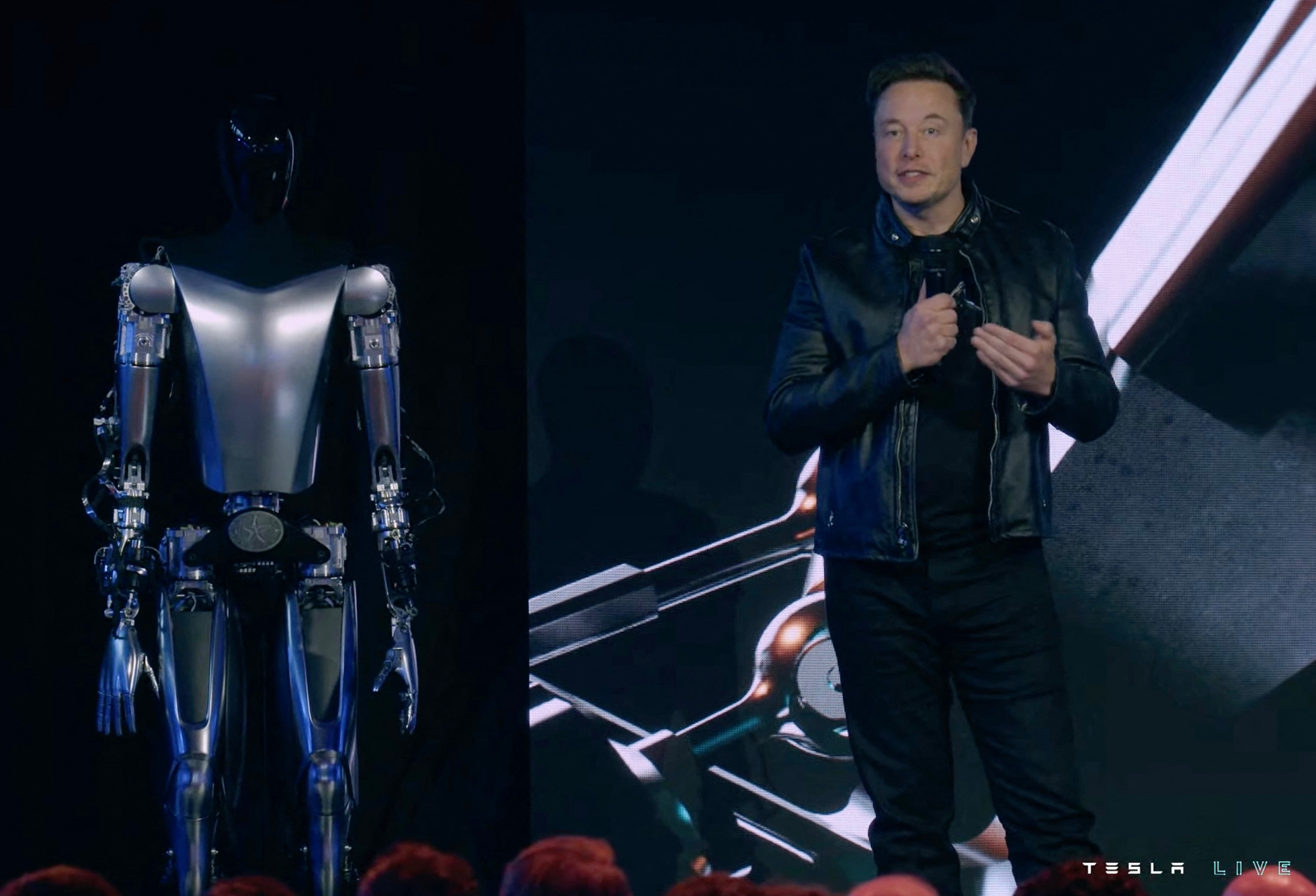
Tesla, widely recognized for revolutionizing the electric vehicle market, is pursuing an even more ambitious vision: a humanoid robot named Optimus. For CEO Elon Musk, this robot isn’t just a side project; it represents the core of Tesla’s future valuation and a fundamental shift in the role of physical labor. First conceptualized in 2021 and evolving through multiple generations, Optimus is designed to assist with everyday tasks, leveraging Tesla’s expertise in artificial intelligence and autonomous systems. Musk has boldly predicted that Optimus could account for up to 80% of Tesla’s market value, positioning the robot as a cornerstone of the company’s long-term strategy and a potential driver to a $25 trillion market capitalization.
The Genesis of Tesla Bot
Elon Musk first introduced the concept of a Tesla humanoid robot, initially called the Tesla Bot, during the company’s AI Day event in 2021. While Tesla had established itself as a dominant force in the automotive industry, this announcement signaled a significant expansion into the realm of general-purpose robotics. The initial concept outlined a robot standing 5 feet 8 inches tall and weighing 125 pounds, designed to be friendly and capable of performing dangerous, repetitive, or boring tasks.
Musk emphasized that the robot would be built using the same technology that powers Tesla’s vehicles, including its Autopilot software and a suite of eight cameras for environmental perception. The stated goal was ambitious: to make physical work a choice rather than a necessity. However, the initial unveiling was notable for its lack of a working prototype. Instead, a dancer in a robot-themed bodysuit entertained the audience, leaving many to question the timeline for a real, functional machine.
Optimus V1: The First Steps
By early 2022, Musk had shifted his focus, declaring during a Tesla earnings call that the humanoid robot, now officially named Optimus, was the company’s most important product development priority for the year. This was a striking statement from a company deeply involved in scaling electric vehicle production. The official prototype was unveiled eight months later at Tesla’s 2022 AI Day. Unlike the theatrical debut in 2021, this event showcased a working, walking prototype.
The first-generation Optimus walked onto the stage, waved to the crowd, and demonstrated basic limb movements. A video presentation further illustrated its capabilities, showing it performing simple tasks like delivering a package and watering plants. While acknowledging the work still required, Musk presented this as a foundational step. This prototype was built from the ground up, using custom-designed actuators, batteries, and a control system, proving that Tesla was serious about moving beyond the conceptual phase.
Advancements with Optimus Gen 2
Just over a year later, Tesla unveiled Optimus Gen 2, demonstrating rapid iteration and significant hardware improvements. A promotional video released in December 2023 highlighted key upgrades, including a 30% increase in walking speed and enhanced full-body control. The footage was particularly effective in showing the robot’s refined dexterity, performing tasks that required both strength and precision, such as doing squats and carefully picking up an egg.
Tesla emphasized that the video was real, with no CGI or speed adjustments, underscoring the tangible progress made by its engineering team. The improvements in balance, coordination, and tactile sensitivity marked a clear evolution from the first prototype. This generation focused on making the robot more capable of interacting with the physical world in a human-like manner, addressing one of the core challenges in humanoid robotics.
The “We, Robot” Event: A Social Debut
Tesla’s 2024 “We, Robot” event was intended to showcase the company’s autonomous future, including the unveiling of the Robotaxi and Robovan. However, the Optimus robots became the unexpected stars of the show. For the first time, the public had direct, interactive experiences with the robots. They were seen serving drinks, answering questions, and playing rock-paper-scissors with attendees, creating a flurry of social media activity.
Musk encouraged guests to interact with the robots, stating that Optimus was not a pre-recorded video but would walk among them. While the demonstration was effective in generating excitement, subsequent reports revealed a crucial limitation: the robots were not operating fully autonomously. Analysts noted that the Optimus units at the event relied heavily on “tele-ops,” meaning human operators were controlling them remotely. This revelation tempered some of the initial hype, as it highlighted the gap between a choreographed demonstration and true, independent artificial intelligence.
Production Plans and Scaling Ambitions
Despite the challenges, Musk’s long-term vision for Optimus involves massive scale. In May, he stated that Tesla planned to have thousands of Optimus robots working within its own factories by the end of the year. This internal deployment is seen as a crucial first step for real-world testing and iterative improvement. Looking further ahead, Musk has set a goal of producing one million units per year by 2030, a target he believes is achievable within four to five years.
This aggressive scaling plan is built on Tesla’s manufacturing expertise. The company aims to leverage its experience in high-volume production to reduce costs and accelerate deployment. However, this ambition has faced immediate obstacles. In April, Musk acknowledged that Optimus production was impacted by supply chain issues related to rare-earth magnets sourced from China, which are critical for the robot’s actuators. Geopolitical tensions and export license requirements forced Tesla to seek alternative sources, highlighting the vulnerability of even the most advanced tech companies to global supply chain disruptions.
Evolving Training Methods and Future Developments
Tesla has recently refined its approach to training the Optimus robot, signaling a strategic shift. The company is moving away from using motion capture suits and teleoperation for training data collection. Instead, it will primarily rely on video recordings of humans performing tasks. This change is intended to allow Tesla to scale its data collection efforts much faster, a crucial element for training advanced AI models.
This approach mirrors the strategy used for Tesla’s autonomous driving software, which relies heavily on camera-based visual data. It underscores Musk’s conviction that AI can learn complex physical tasks through visual observation and neural network training. Looking forward, Musk continues to hype upcoming iterations. He has stated that Optimus V3 will have agility roughly equal to that of an agile human, a claim that suggests a significant leap in capability from current models. In a recent post on X, he described this third version as “sublime,” hinting at a major advancement in the robot’s performance and potential.
In conclusion, Tesla’s Optimus project represents one of the most ambitious and closely watched developments in the field of robotics. From its conceptual beginnings to the latest versions with improved dexterity and agility, Optimus embodies Elon Musk’s vision for Tesla beyond electric vehicles. While significant hurdles remain—including achieving full autonomy, resolving production supply chains, and proving the utility of a general-purpose humanoid robot—the pace of iteration is undeniable. As Tesla continues to refine its training methods and scale production, Optimus stands as a test case for whether a humanoid robot can truly transform industry and daily life. The coming years will be critical in determining if this bold vision can meet its lofty expectations and redefine the future of work.
References
- Business Insider. (2025, September). Elon Musk says 80% of Tesla’s value could come from Optimus robot.
- Business Insider. (2024, October). Elon Musk’s ‘We, Robot’ event fails to impress Wall Street.
- Business Insider. (2024, October). Tesla’s Optimus robots at the ‘We, Robot’ event were controlled by humans.
- Business Insider. (2025, May). What Elon Musk said about robotics and Optimus during his media blitz.
- Business Insider. (2025, August). Tesla changes strategy for training Optimus robots.
- Business Insider. (2022, January). Elon Musk says Optimus humanoid is the most important product for Tesla.
- Business Insider. (2025, April). Elon Musk says China supply chain issues are affecting Optimus production.
- Business Insider. (2025, May). Former Tesla robot lead questions Optimus form factor for factories.