
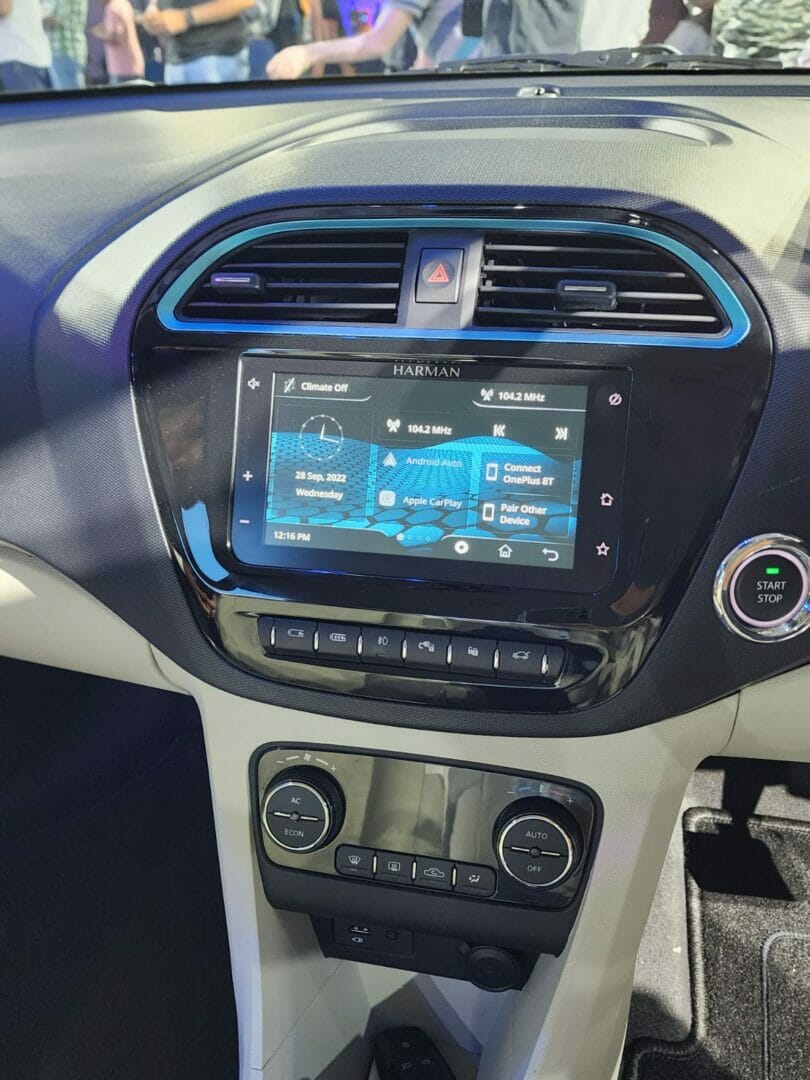
The Tata Tiago EV, while making strides in the electric vehicle market, presents a mixed bag when it comes to its interior design and overall cabin experience. This analysis delves into the specifics of its cabin, focusing on design elements, seat comfort, space, practicality, and available features, aiming to provide an in-depth understanding for potential buyers.
Interior Design and Quality: A Step Backwards?
Tata has implemented several design changes in the newer model of the Tiago EV. Notably, the cabin experience appears to have been a casualty of these updates, potentially to manage costs and integrate new features. This shift raises questions about whether the EV truly delivers the premium feel it once offered.
The dashboard immediately showcases two significant visual alterations. Firstly, a new two-spoke steering wheel now features an illuminated Tata logo, lending a modern touch. Secondly, the central dash area has been redesigned to accommodate a free-floating touchscreen, aligning the Tiago EV’s aesthetics with contemporary Tata models like the Curvv and Punch.
The interior maintains a black-grey dual-tone color scheme, accented with chrome details to add visual interest. Considering the vehicle’s price point, the plastic quality is deemed acceptable, despite being hard and scratchy. The textures, however, offer a pleasing tactile experience. Some observed fit and finish issues and loose wiring during testing detracted from an otherwise satisfactory impression.
A significant change is the removal of leatherette upholstery, previously a highlight in the XZ+ Lux variant, which contributed to an upmarket feel. The current offering is a grey-black fabric upholstery, which, while of acceptable quality, signifies a downgrade. Positively, the steering wheel retains its leatherette wrap.
Seating Comfort and Space
Front Seats
Accessing the Tiago EV is straightforward, thanks to doors that open wide. The EV’s floor is slightly elevated compared to its petrol counterpart, resulting in a marginally higher seating position. The steering wheel offers tilt adjustment, but a height-adjustable driver’s seat is exclusive to the top variant. Finding a comfortable driving posture should not be an issue for most drivers, and the seats themselves provide adequate support for the back and shoulders. However, taller occupants might find the underthigh support less than ideal, and the absence of a central armrest is a noticeable omission. The co-driver’s seat is positioned quite high, which can limit headroom for taller passengers, potentially forcing a less-than-ideal reclined seating position.
Rear Seat Space
The rear seats offer sufficient space for comfortable adult occupancy. By subcompact car standards, the footroom and kneeroom are acceptable. However, due to the raised floor, underthigh support and headroom are somewhat compromised. The cabin’s width limits comfortable seating for three adults; hence, the Tiago EV is best utilized as a four-seater.
Several key features are missing in the rear. Adjustable headrests are a significant oversight, given the large, fixed headrests offer minimal support for taller individuals. The addition of a central armrest would have greatly enhanced rear passenger comfort. Furthermore, rear AC vents have not been included.
Storage and Practicality
Despite being a small electric vehicle, the Tiago EV demonstrates considerable practicality. Storage solutions include a small cubby to the right of the steering wheel, suitable for a wallet; twin cupholders near the handbrake; and a small compartment beneath the climate control panel. All four doors are equipped with bottle holders and map pockets, and a chilled glovebox is also provided. Rear seat occupants may miss seatback pockets, though a central cubby hole can accommodate a bottle.
Charging and Connectivity
For charging personal devices, the Tiago EV offers a 12V socket and both USB Type-A and Type-C ports for front occupants. Unfortunately, rear-seat passengers are not provided with any charging points.
Feature Set: Familiar Territory
Given the price differential between the petrol and electric Tiago, one might anticipate a more extensive feature list in the EV. However, the Tiago EV largely mirrors the equipment of its petrol-powered sibling. Standard features include passive keyless entry, a start/stop button, automatic headlamps, automatic wipers, and auto-folding outside mirrors. Automatic climate control and cruise control are also part of the package.
A prominent upgrade is the new 10.25-inch touchscreen infotainment system, shared across various Tata models. This system supports wireless Android Auto and Apple CarPlay, boasting an intuitive user interface and commendable display quality. The system demonstrated stability during testing, with no apparent lags, glitches, or crashes. The touchscreen also relays the feed from the reverse camera, offering acceptable video quality and dynamic guidelines to aid in precise parking maneuvers.
A notable downgrade is the audio system. The previously excellent 8-speaker setup has been replaced by a more modest 4-speaker system, which is described as average in sound quality.
The instrument cluster features a 4-inch black and white MID (Multi-Information Display). It’s felt that Tata could have opted for the 7-inch LCD screen found in lower variants of the Nexon EV. While the current cluster provides essential information such as door status and tire pressure monitoring, its overall aesthetic is considered crude and cost-driven.
In conclusion, the Tata Tiago EV offers a practical interior with a modern design language and a stable infotainment system. However, the downgrades in upholstery and the audio system, along with the omission of certain rear-seat amenities, warrant careful consideration for potential buyers.
Share your thoughts on the Tata Tiago EV’s interior and features in the comments below!