
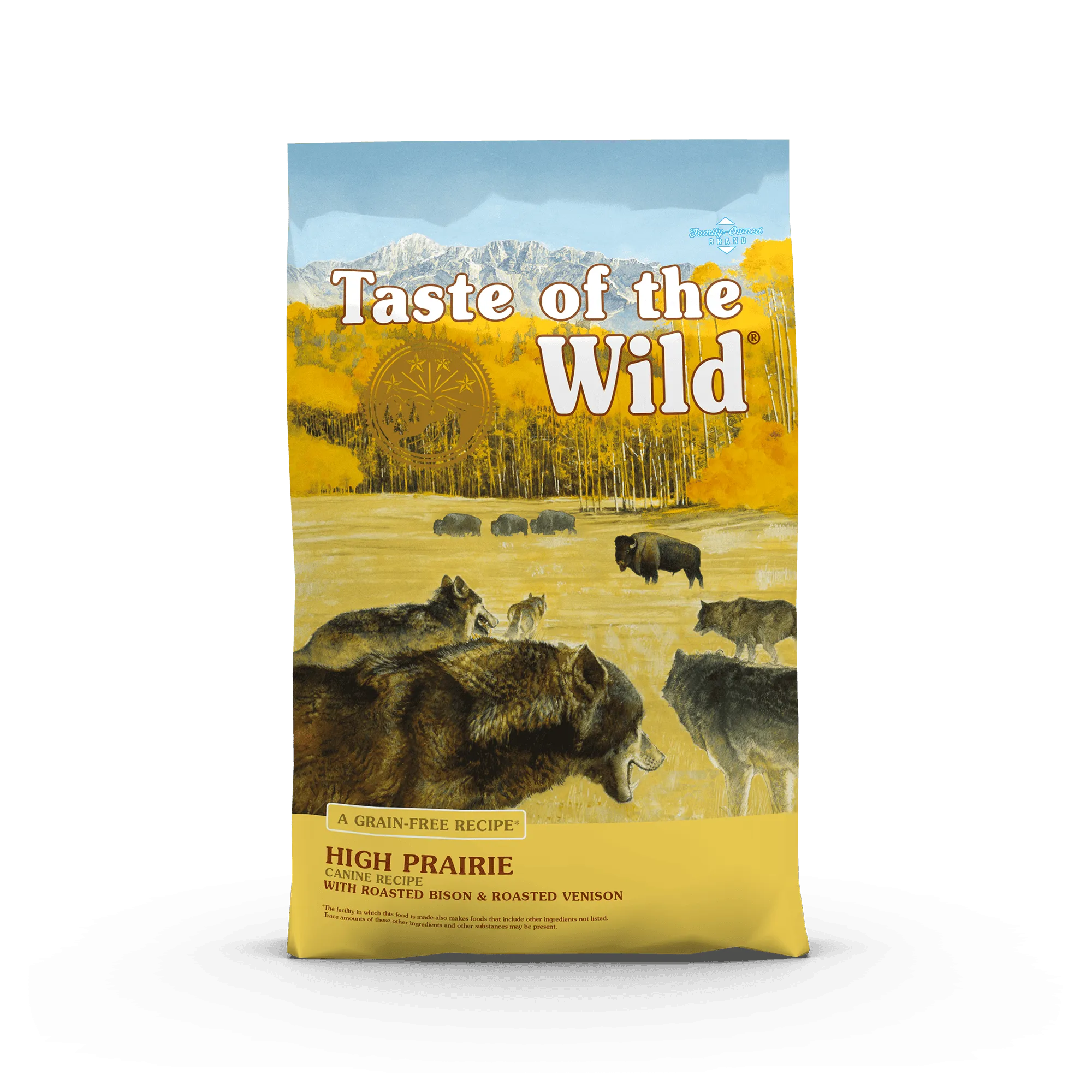
If you’re searching for a dog food that channels a dog’s ancestral diet while still delivering complete, balanced nutrition, the High Prairie Canine Recipe with Roasted Bison & Roasted Venison is worth a close look. Built around roasted bison and roasted venison as primary proteins, this grain-free formula is formulated to meet the nutritional needs of adult dogs, combining high protein content with fruits, vegetables, and legumes rich in natural antioxidants. Whether you’re comparing dog food options for an active retriever or a german shepherd that needs sustained energy, this recipe is designed to support overall vitality from the inside out.
What Makes High Prairie Canine Recipe Different
At the center of this formula are two novel-for-many proteins: roasted bison and roasted venison. Both are highly digestible protein sources that are roasted during preparation to boost palatability, giving the kibble a flavor many dogs find especially appealing. With 32% crude protein as a guaranteed minimum, the recipe is built to help maintain lean muscle and provide the energy active adult dogs rely on throughout the day.
Beyond the headline proteins, the ingredient list leans on whole-food nutrition. Sweet potatoes contribute dietary fiber, vitamins A and C, iron, and beta carotene as a complex carbohydrate source, while peas and pea flour round out the plant-based protein and fiber content. Dried tomato pomace, blueberries, and raspberries are included specifically for their antioxidant properties, and guaranteed levels of zinc, selenium, and vitamin E help support a healthy immune system.
Digestive Support Through Species-Specific Probiotics
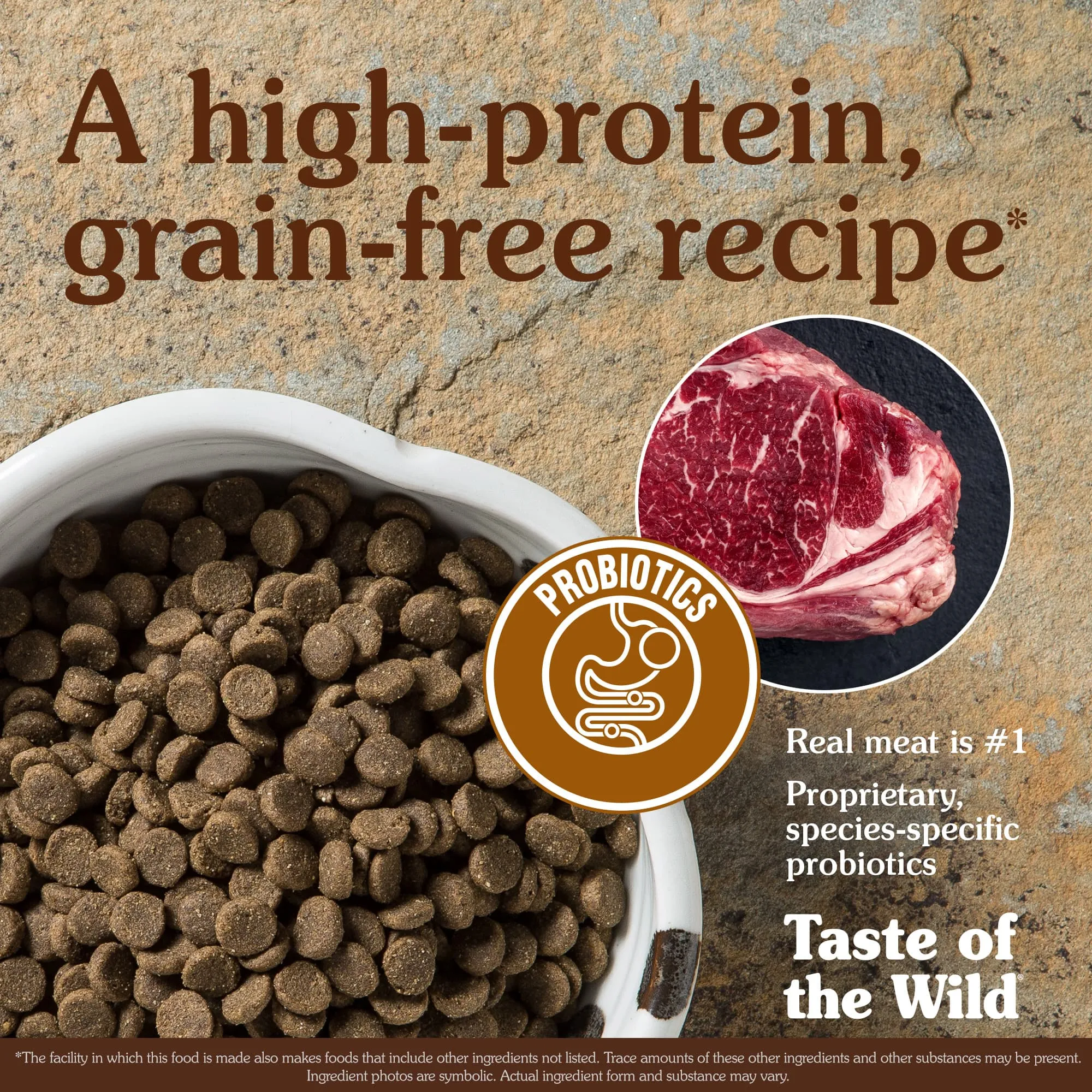
One of the more notable aspects of this formula is its focus on digestive health. Taste of the Wild adds its proprietary K9 Strain Probiotics after the cooking process, which helps preserve their viability. Each pound of finished food is formulated to provide roughly 80 million live, active cultures, a level intended to support both digestive and immune system function.
The recipe also includes dried chicory root, a prebiotic fiber source. Prebiotic fiber isn’t a probiotic itself, but it acts as fuel for the beneficial bacteria already living in a dog’s digestive tract, helping the whole system work more efficiently. For owners who have dealt with a dog’s sensitive stomach or irregular stools, this combination of prebiotics and probiotics is often one of the more meaningful features to weigh when comparing grain-free formulas.
Balanced Fats for Skin and Coat
Alongside protein, the formula includes a balanced blend of omega-6 and omega-3 fatty acids, guaranteed at a minimum of 2.8% and 0.3% respectively. These fatty acids work together to help support healthy skin and a shiny coat, which is often one of the more visible signs of a dog’s overall nutritional status. Chicken fat, preserved with mixed tocopherols rather than synthetic preservatives, serves as a concentrated and digestible energy source within the recipe.
Taurine is also included at a guaranteed minimum of 0.12%, an amino acid associated with maintaining healthy eyes and heart function. While taurine isn’t classified as an essential nutrient by AAFCO for dogs, many premium formulas include it as an added layer of cardiac support, particularly relevant given ongoing conversations in the veterinary community about diet and heart health in dogs.
Feeding Guidelines and Portion Control
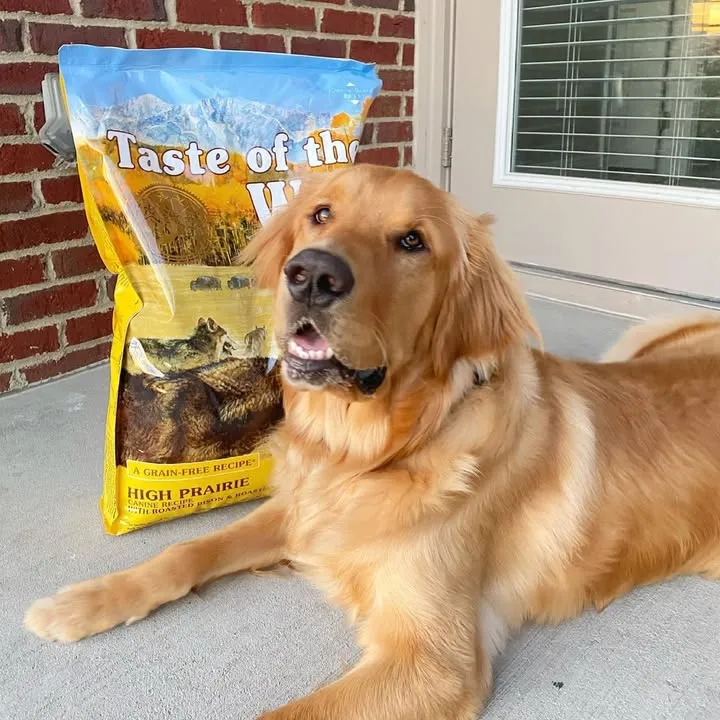
Like any commercial dog food, correct portioning matters just as much as ingredient quality. Taste of the Wild provides a standard feeding chart based on a dog’s current body weight:
| Current Weight (lbs.) | Amount (Adult Dog) |
|---|---|
| 3 | ⅓ cup |
| 5 | ½ cup |
| 10 | ¾ cup |
| 20 | 1 ⅓ cups |
| 30 | 2 cups |
| 40 | 2 ⅓ cups |
| 60 | 3 ¼ cups |
| 80 | 4 cups |
| 100 | 4 ⅔ cups |
For dogs over 100 pounds, the general guidance is to add approximately ⅓ cup for every additional 10 pounds of body weight. That said, this chart is only a starting point. A dog’s actual caloric needs vary based on age, activity level, metabolism, and any treats or extra food given throughout the day. It’s worth working with a veterinarian to determine your dog’s ideal body condition and adjusting portions accordingly, rather than relying solely on a generic chart. Fresh water should always be available alongside any dry feeding routine.
With a calculated metabolizable energy of 3,719 kcal/kg, or about 422 kcal per cup, portion awareness becomes especially important for dogs prone to weight gain.
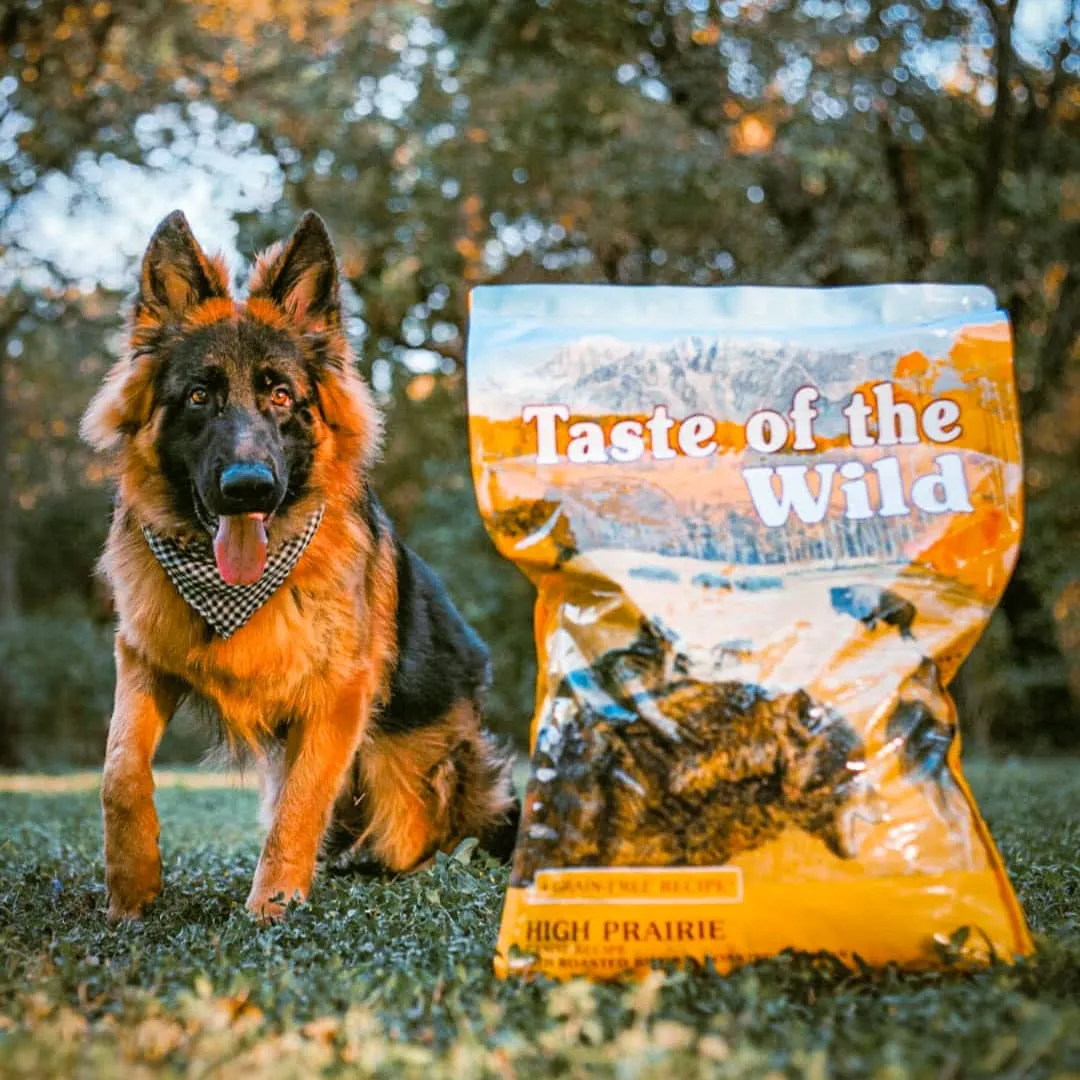 A German shepherd dog sitting in the grass next to a bag of High Prairie Canine Recipe.
Available Sizes and Related Recipes
High Prairie Canine Recipe is sold in multiple bag sizes, typically including 5-pound, 14-pound, and 28-pound options, making it accessible whether you’re testing the formula with a smaller dog or feeding a larger, more active breed long term. The brand also offers related formulas built on the same bison and venison profile, including an ancient-grains version for owners who prefer some grain content, a canned wet-food option with bison in gravy for added moisture and palatability, and a puppy-specific recipe formulated for growth rather than maintenance.
Final Thoughts
Choosing a dog food ultimately comes down to matching a formula’s protein sources, fiber content, and caloric density to your individual dog’s needs, activity level, and any sensitivities they may have. High Prairie Canine Recipe with Roasted Bison & Roasted Venison stands out for its novel protein combination, added digestive support through prebiotics and probiotics, and a nutrient profile built around whole-food ingredients rather than fillers. As with any diet change, it’s best to transition gradually and consult your veterinarian, especially if your dog has existing health conditions or dietary restrictions, to confirm this recipe is the right fit for their long-term wellbeing.